" "
Whatsapp
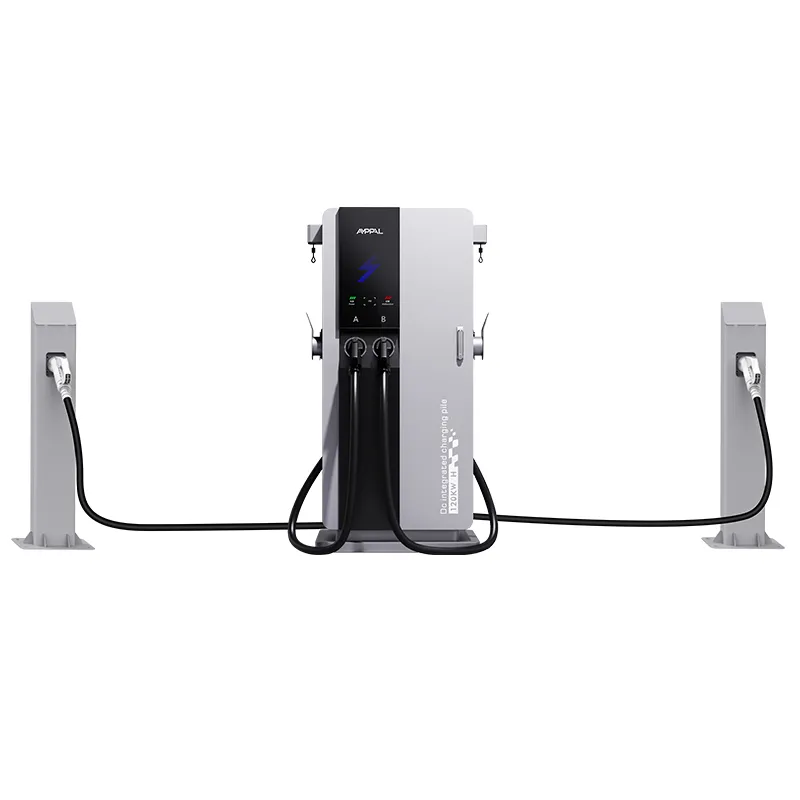
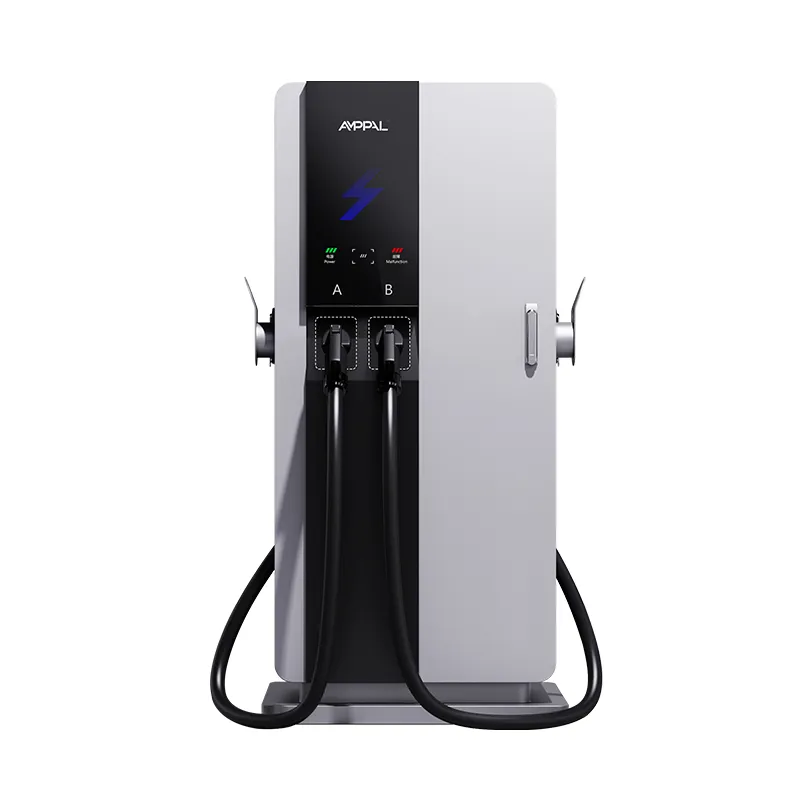
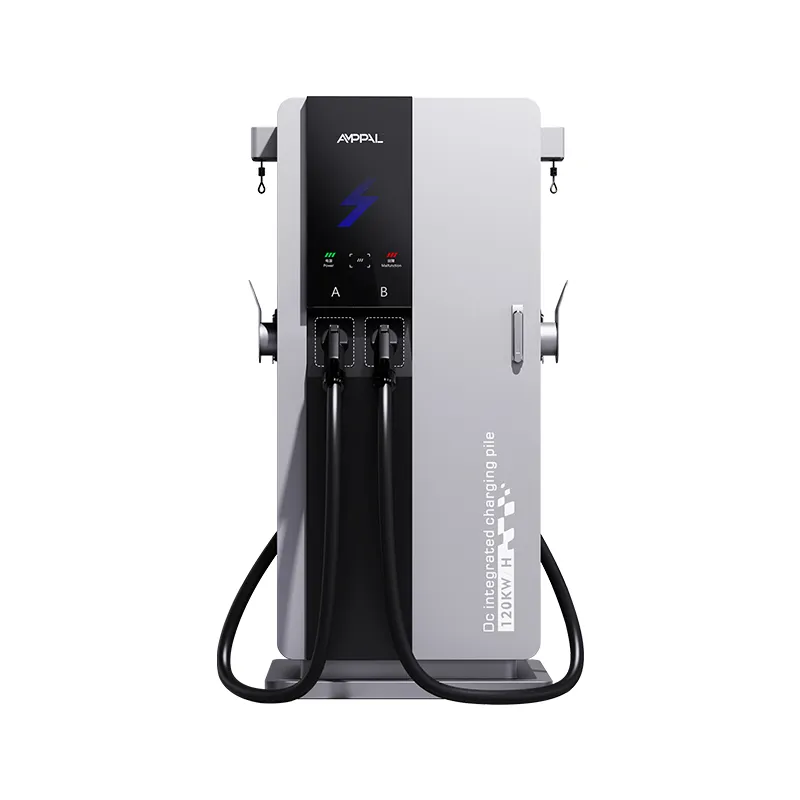
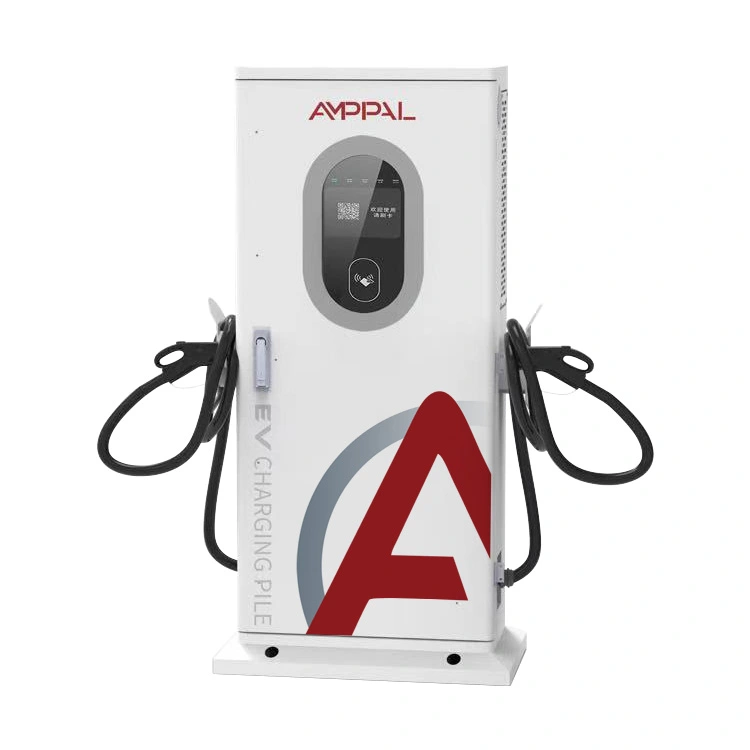
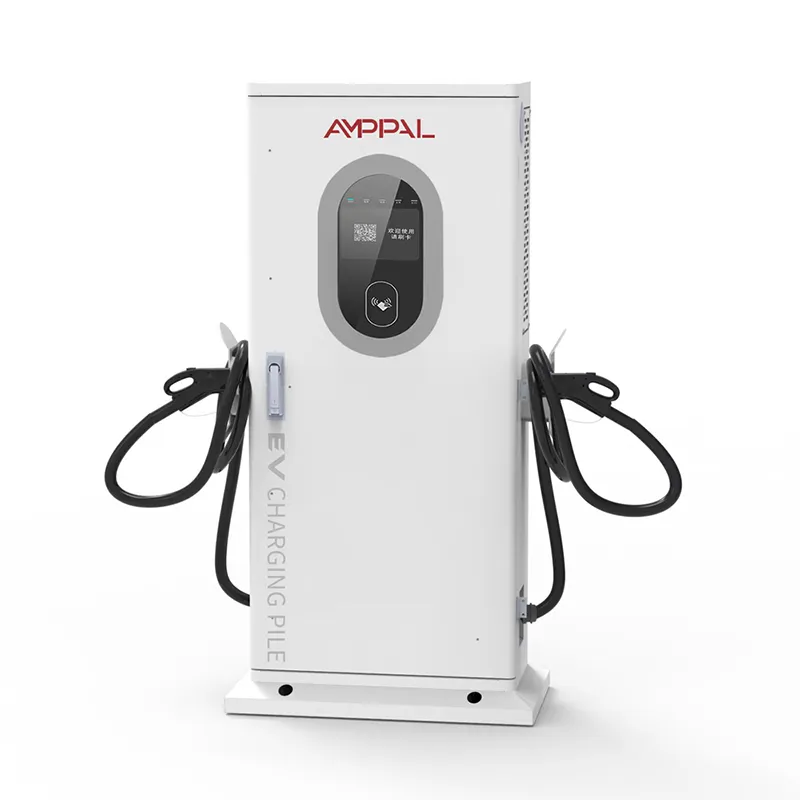
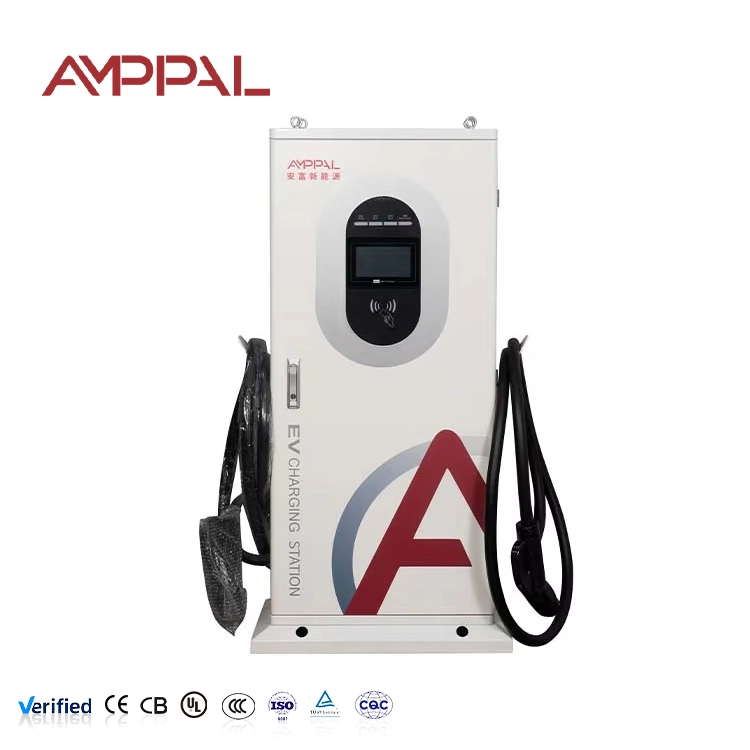
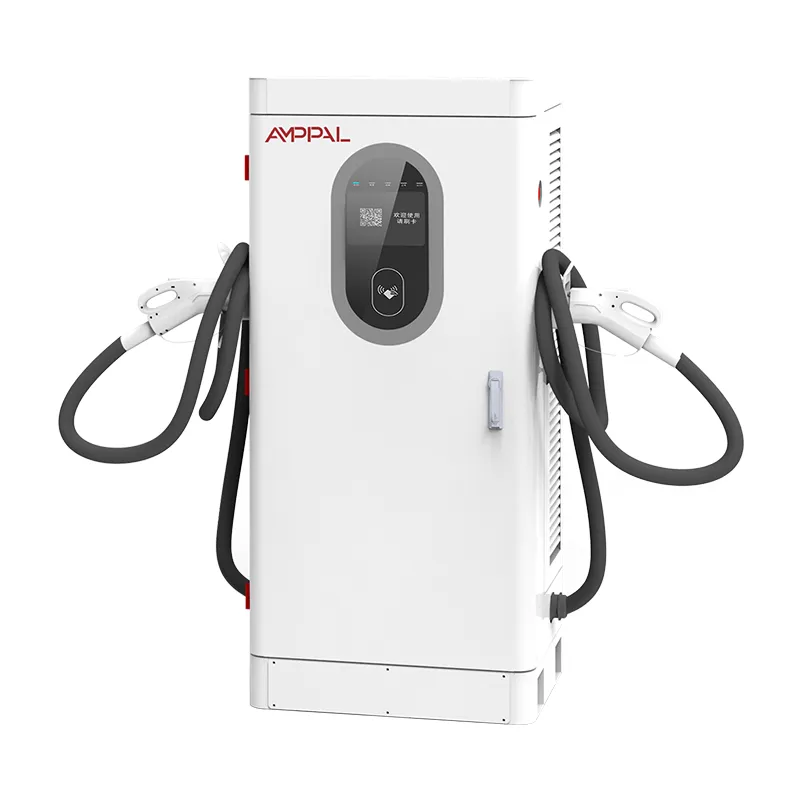
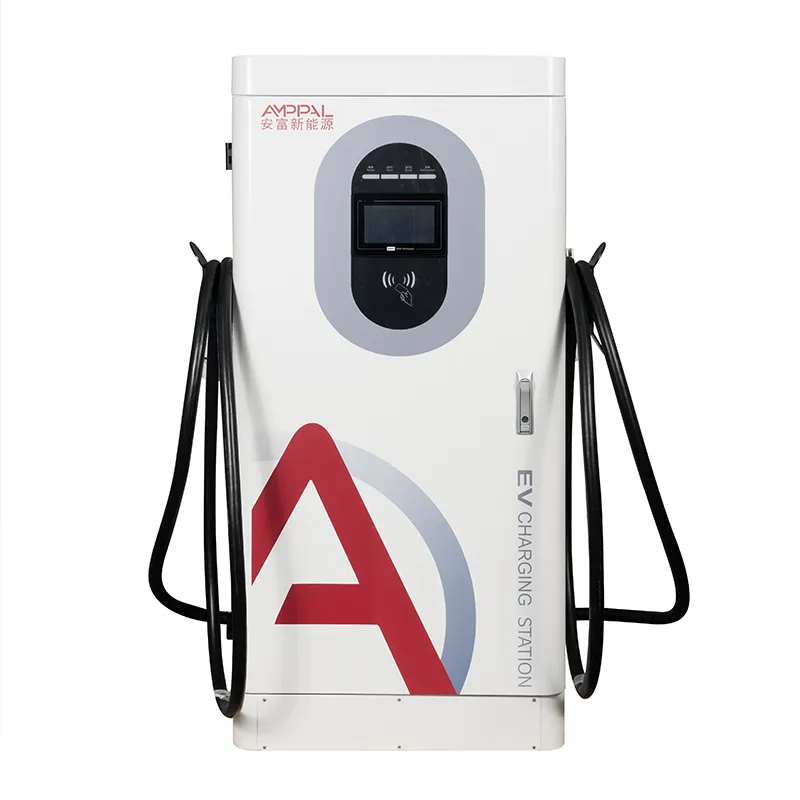
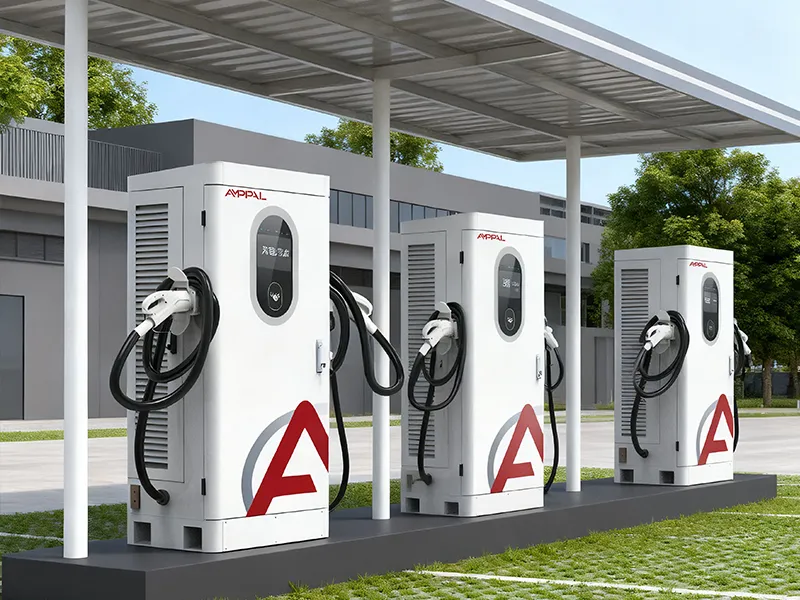
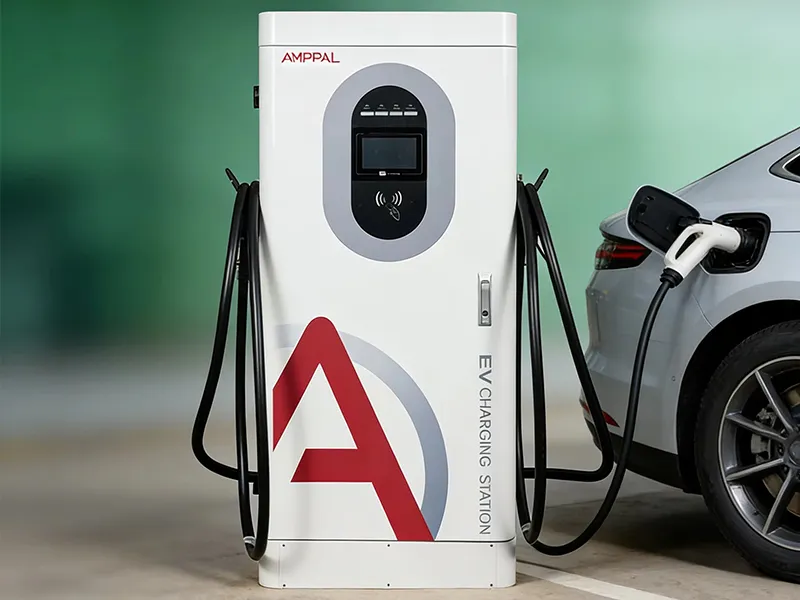
The honest number to quote a driver is not 120kW - it is the minutes between plugging in and pulling away, and those minutes depend more on the car than on the charger. AMPPAL AF-DC-120-Y-B-O-4-H is a 120kW floor-standing integrated DC fast charger, 1620 x 750 x 560 mm, whose real job is holding its rated power across the widest voltage band: constant power from 300 to 1000VDC, full range 200-1000V.
The physics in one paragraph. Battery packs accept power according to their own limits - voltage class, pack size, state of charge, temperature. A charger that maintains full output from 300V to 1000V removes itself from that equation; the car becomes the bottleneck, as it should be.
We build this cabinet in Yueqing, Zhejiang. Below: the timing math, the curves, and the honest way to communicate expectations - because a driver promised '10 minutes' who waits 35 will not come back.

Constant power 300-1000V: the charger holds 120kW across the band most EVs actually request - the spec that separates real 120kW from label 120kW.
800V vehicles take full advantage: a modern 800V sedan with a warm battery sits near 120kW until the mid-70% SOC; 20-80% lands in the low-to-mid 20-minute range in our lab curves.
400V vehicles still get their request: most 400V cars peak between 50 and 100kW anyway, so the cabinet delivers what they ask without derating above 500V.
The 200V floor welcomes old and small packs: small urban EVs and early Leaf-style packs charge down at 200-300V without an error stop.
95% peak efficiency means less heat and less fan noise, and more of each session's kWh actually reaches the battery.
The 7" screen shows live kW, which is the first step in honest expectation-setting with drivers.

|
Parameter |
Specification |
|
Model |
AF-DC-120-Y-B-O-4-H |
|
Rated Output Power |
120kW |
|
Overall Dimensions (mm) |
1620 × 750 × 560 |
|
Input Voltage |
AC380V±15% |
|
Output Voltage Range |
200-1000VDC (Constant power 300-1000V) |
|
HMI |
7" touch screen |
|
User Authentication |
RFID/APP/Plug & Charge |
|
Payment Methods |
Credit card/QR/Payment terminal |
|
Connectivity |
OCPP 1.6j, Ethernet/4G/WiFi |
|
Power Factor |
≥0.99 |
|
THD |
≤5% |
|
Peak Efficiency |
95% |
|
Protection Grade |
IP54 |
|
Noise Level |
≤65dB |
|
Safety Functions |
13 functions including insulation monitoring, polarity reverse, lightning protection |
|
Compatible Connectors |
CCS1/CHAdeMO/CCS2/GB/T/NACS |
|
Operating Temperature |
-25°C ~ +50°C |
|
Warranty |
2 Years Standard |
Highway corridor stops in France, Spain and Italy, where drivers arriving at 15% SOC expect a coffee stop, not a lunch break.
800V taxi and ride-hail hubs in the UAE and Saudi Arabia, where turnaround time directly equals driver income.
Car dealership delivery bays in Germany and the UK, topping up new EVs that arrive at low charge.
Regional bus and van depots in Thailand and Vietnam, cutting shift-change charging from hours to minutes.
Office garages in Mexico and Brazil, future-proofing for the next generation of 800V passenger EVs.
When a car plugs in, the charger and vehicle talk over the cable using the charging protocol (CCS, CHAdeMO, GB/T or NACS). The vehicle states its maximum voltage and current; the charger answers with what it can supply. Delivered power is the lower of the two wishes.
The battery's charge curve does the rest. Below roughly 20% SOC many packs accept less current; the 20-70% band is most generous; above 80% the taper kicks in as the pack protects itself. So '20-80% time' is the metric operators quote because it skips the slow tail.
The cabinet reports delivered kW live on the screen and in OCPP MeterValues, so you and the driver both see the truth. When a driver asks 'why only 95?', the answer is on the display: the car asked for 95.
TUV, CE, UL, CB and CCC are all in force at AMPPAL; the certificates tied to this model are available on request.
Every cabinet spends 48 hours at full load with thermal data captured from modules and connectors.
Charge-curve verification: each model revision is tested against 400V and 800V battery simulators to confirm the constant-power band.
Conformance to IEC 61851-1:2019 and IEC 61851-23:2014 encloses the 13 safety functions.
We pull a coating sample from each batch for 96 hours of salt-spray testing and verify IP54; the unit works from -25C to +50C.
Station 1: the enclosure starts as coils of steel cut, punched and bent by CNC machines next to FANUC robots, then powder-coated.
Station 2: a batch sample goes into the 96-hour salt spray chamber while the rest of the line moves on.
Station 3: AC input stage and DC power modules built on separate lines with dedicated test benches.
Station 4: incoming inspection on SiC modules, contactors, connectors and the metering board.
Station 5: final wiring with torque-controlled terminations and a full visual QC pass.
Station 6: each unit runs 48 hours at 40C ambient while we log output, efficiency and communication stability.
Station 7: firmware flash, OCPP 1.6j conformance test, then a battery-simulator run at 400V and 800V.
Station 8: packaging, palletizing and the pre-shipment photo report.
Choose the AF-DC-120-Y-B-O-4-H when your cars mix 400V and 800V, sessions should land in the 20-40 minute range, and the site has a three-phase AC380V feed with capacity. It is the sweet spot for corridor stops, dealer sites and ride-hail hubs.
This product is not for you if your customers are mostly small 40kWh city cars that finish in 25 minutes at 60kW - a 60kW or 80kW unit earns the same revenue for less hardware. It is also the wrong choice for heavy trucking that needs sustained 160kW+, or for a site whose transformer cannot support 120kW.
Honest expectation-setting is part of the sale: post the realistic 20-80% time for your local fleet rather than the marketing number. Drivers forgive a 35-minute session promised as 35; they do not forgive a 35-minute session promised as 10.
Negotiation happens with the manufacturer in Yueqing - no reseller margin stacked on your price.
OEM/ODM: your color, your logo, your app branding, preconfigured at the plant by our 260+ employee team.
Lead time for standard units is 15-20 working days; OEM work stretches it by roughly 7-10 days.
MOQ flexibility: 1-unit trial orders for new markets, container pricing for 10+ units.
The 2-year warranty covers modules and the whole control chain; spares ship express and diagnostics run remotely via OCPP.
The touch screen travels in a recessed foam pocket inside a plywood case, so it arrives without a single scratch - we have shipped thousands this way. Unit weight is around 320 kg; the crate adds 60-80 kg, and a 40HQ container holds 10-14 crates.
Default terms are FOB Ningbo or Shanghai; CIF, CFR and DDP available. A pallet diagram goes out before packing so your forwarder can confirm the truck.
Every order travels with invoice, packing list, origin certificate, CE/TUV copies and the OCPP guide.
Two years, modules included. If output drops below rated power outside of thermal derating, that is a warranty case and we treat it as one.
Spares are dispatched by express courier 48 hours after claim approval, arriving in Europe within 3-5 working days.
Firmware updates and OCPP configuration changes pushed over the network link, including charge-curve improvements.
First installations include a video commissioning session where wiring, grounding and backend pairing are checked live.
Maintenance: air filters cleaned twice a year, AC input terminals retorqued annually, vents kept clear.
Wrong: Telling every driver 'ten minutes to 80%' because the label says 120kW. Right: quote the band - '20-40 minutes depending on your car' - and let the live kW display explain.
Wrong: Installing the charger at the end of a long thin cable run and watching voltage sag under load. Right: size the AC cable for 120kW and keep the run short; the manual gives the minimum spec.
Wrong: Blocking the air intake with a sign or scooter in summer. Right: keep 50cm clearance; the forced-air cooling needs it to hold full power at 50C ambient.
Wrong: Treating a slow session as a charger fault immediately. Right: check the vehicle's request in the log first - most slow sessions are car-side, and the log proves it.
Wrong: Connecting a non-BMS vehicle to this unit. Right: this charger is for EVs with a functioning BMS and a DC inlet only; if in doubt, do not connect.

A motorway service operator in southern France installed four AF-DC-120-Y-B-O-4-H units in June 2025 next to a bakery. Average session is 28 minutes across mixed 400V and 800V traffic, and store turnover rose because drivers stay for coffee while the screen shows the countdown.
A ride-hail operator in Dubai runs eight units for a 200-car electric taxi fleet. Their 800V taxis do 20-80% in about 22 minutes per the backend logs, and drivers now plan shifts around the 25-minute bay slot. The gripe: the RFID cards supplied are a bit flimsy.
A dealer group in Germany uses two units in its delivery center. New EVs arrive at 10-15% SOC and leave at 80% within 35 minutes, which cleared their pre-delivery bottleneck. The service director notes the screen is bright outdoors, but fingerprints build u

p.
A: Because the vehicle asked for 90kW. The charger delivers what the car requests up to 120kW; pack size, SOC, temperature and voltage class set the car's limit. The live display and OCPP log show the car-side request.
A: For a typical 75-80kWh pack, moving 45-48kWh at an average of 80-90kW means roughly 30-40 minutes on most 400V cars and 20-25 minutes on 800V cars. Test one session and read the log for your fleet's exact number.
A: The charger holds its full 120kW output for any battery voltage between 300 and 1000V. Many cheaper units only hit rated power at one voltage, silently delivering less elsewhere.
A: No - the vehicle's BMS controls current draw and tapers above 80% SOC. The charger simply follows the BMS request; degradation is governed by the car's thermal management.
A: Yes. Output starts at 200V, so small and older packs charge normally, just at the lower power they request.
A: The cabinet holds rated output up to 50C ambient with forced-air cooling. Above that, the protection curve reduces power gradually rather than cutting out - a safety feature, not a defect.
A: Post the realistic band (e.g. '20-40 min to 80%'), show live kW on the screen, and avoid printing a single number on signage.
A: No, this cabinet is single-connector, optimized for full 120kW to one vehicle. For two connectors sharing a power pool, look at our MultiGun series.
Address
No. 237, Weisan Road, Yueqing, Zhejiang, China
Tel
Talk Directly to Our EV Charger Factory
Get factory-direct pricing, custom solutions, and expert support.
- Fast Response – Reply within 24 hours.
- OEM/ODM – Flexible customization and sample orders.
- Certified Quality – CE, TÜV, CB, and CCC options.
- Custom Quotes – Tailored to your specifications.
- Technical Support – Expert help with OCPP, DLB, and system integration.