" "
Whatsapp
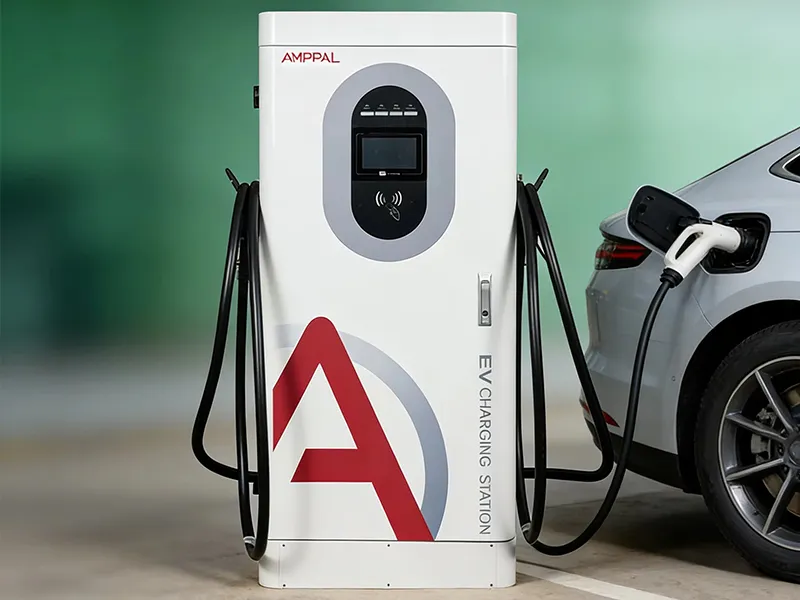
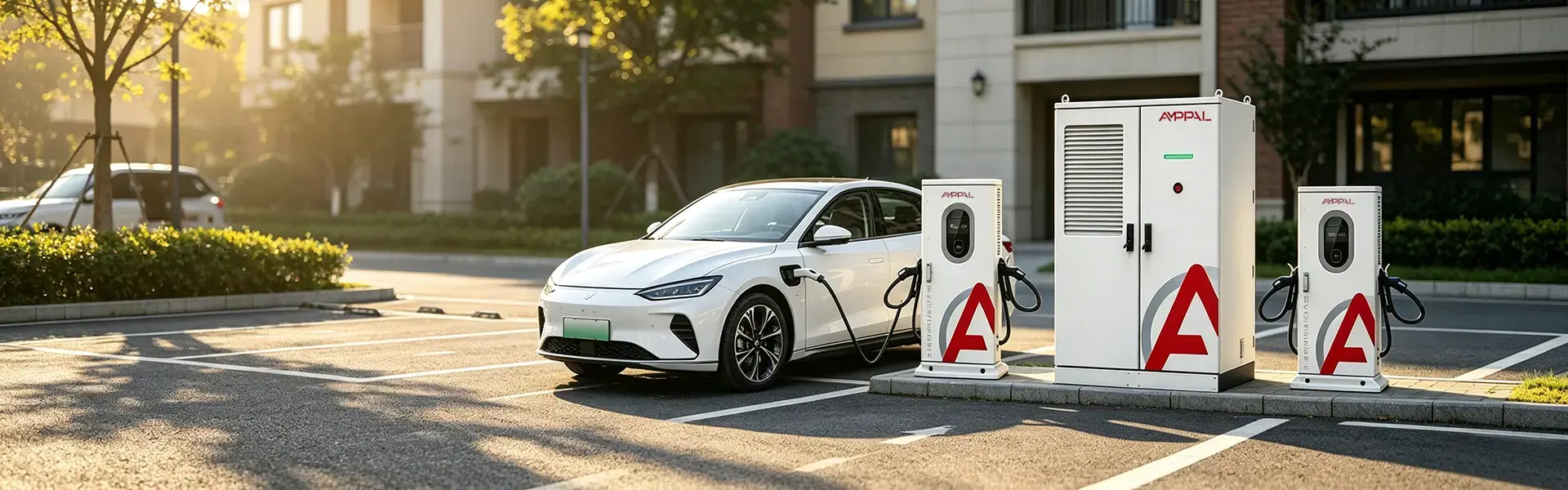
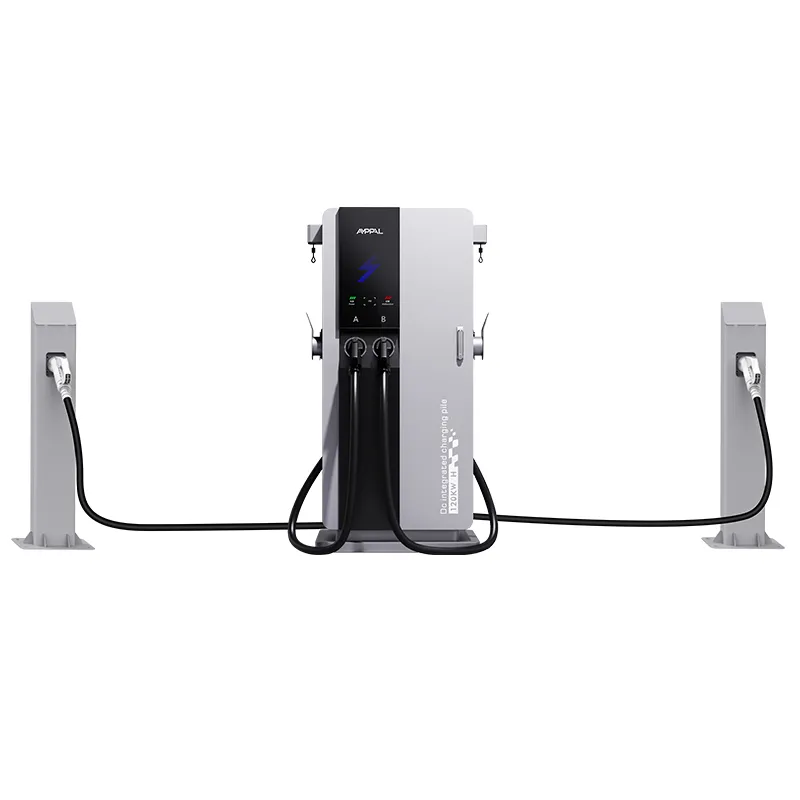
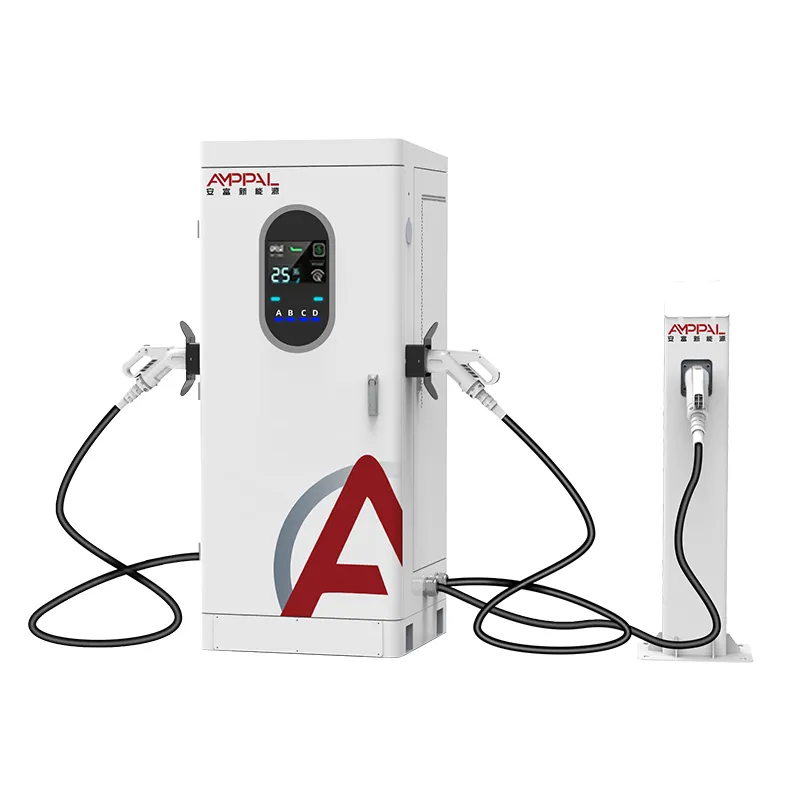
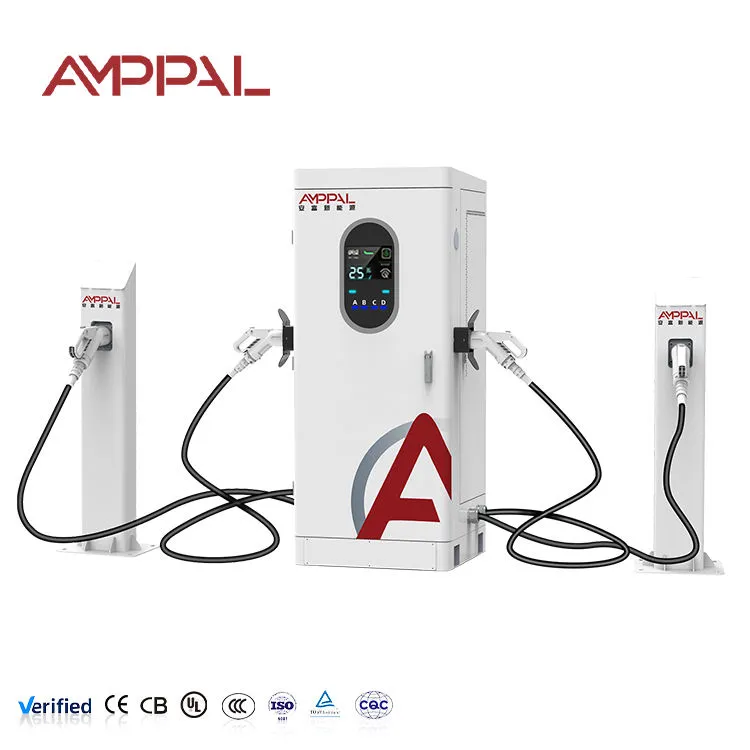
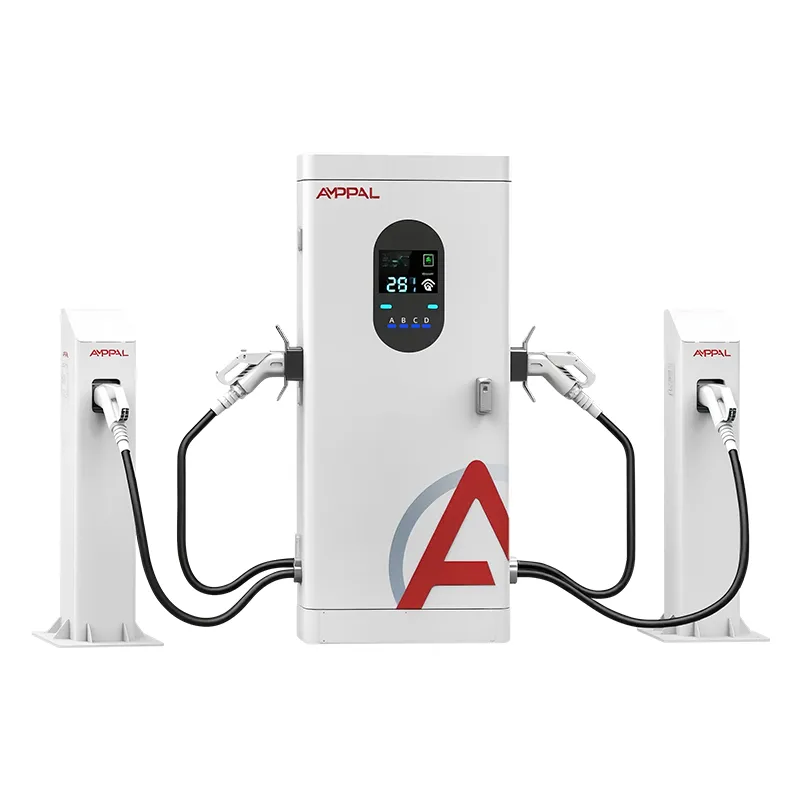
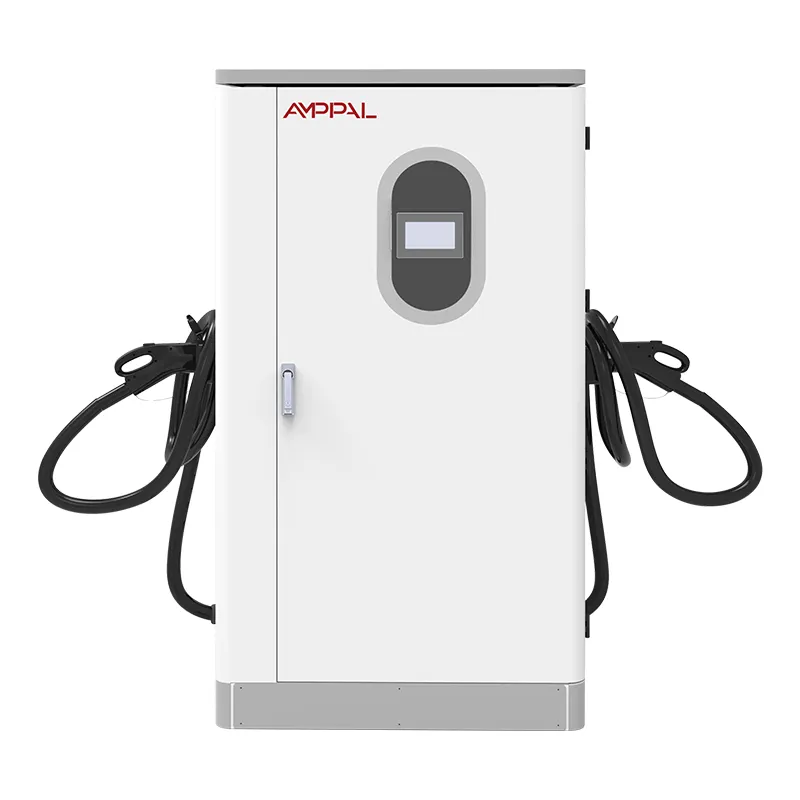
Most station builders start with the wrong question: "how big is the charger?" instead of "how many vehicles a day must it serve?" This page does the arithmetic a banker would do before signing. The AF-DC-160-Y-D-Z-4-H is a four-gun integrated DC cabinet — 160kW of output, positions A/B/C/D, one 380V input — and its whole economic argument is that gun count, not peak power, sets your revenue ceiling. A single 160kW gun serves one car at a time.
Think of it as capacity insurance. The cars arriving at a real station are a lottery: a taxi that wants 40 minutes, a commuter that wants 20, a truck that wants 90. A one-gun unit serializes that lottery — every car waits its turn.

Same power, up to four concurrent sessions: this cabinet and a single-gun 160kW draw the same feed; the cabinet just stops one car from blocking the whole queue.
Gun utilization rises because the bar to occupy a gun is lower: any car can take any position, while an 800V-only fast lane rejects older 400V cars outright.
Average wait time falls without buying more grid: queue theory in practice — four short services beat one long service for the same energy.
Per-gun revenue targets are easier to hit: 160kW divided by four guns is 40kW average per position, and a day of steady sessions pays back better than the same kWh through one gun.
Lower installation cost per served vehicle: one cabinet, one feeder, one foundation, one OCPP registration — versus two single-gun units.
The 250A ceiling is generous enough: at 400V a lone gun can pull 100kW; at 800V a lone car takes up to 160kW. The pool is rarely the bottleneck in mixed traffic.

|
Parameter |
Specification |
|
Model |
AF-DC-160-Y-D-Z-4-H |
|
Rated Output Power |
160kW |
|
Overall Dimensions (mm) |
1820 × 750 × 735 |
|
Input Voltage |
AC380V±15% |
|
Output Voltage Range |
DC200-1000V |
|
Output Current |
0-250A |
|
HMI |
7" touch screen + LED |
|
Cable Length |
5m/7m |
|
Charging Outlets |
Multi-gun (A/B/C/D) |
|
Protection Grade |
IP54 |
|
Compatible Connectors |
CCS1/CHAdeMO/CCS2/GB/T/NACS |
|
Operating Temperature |
-25°C ~ +50°C |
|
Warranty |
2 Years Standard |
Workplace and depot parking where cars sit for 30-90 minutes — dwell time is long enough that 40kW average is not a compromise.
Municipal curbside or supermarket lots with unpredictable arrival bursts.
Sites with a hard grid cap: 160kW is often the largest draw a modest allowance tolerates without a transformer upgrade.
Franchise fuel stations adding their first EV islands on existing electrical capacity.
Fleet yards whose vehicles are 400V-class; the four-gun layout keeps every vehicle charged without a high-voltage lane.
The cabinet keeps the pool at 160kW total and hands it out by the rule you set — first-come-first-served, even split, or priority. Under even split, four occupied guns each run near 40kW; a 50kWh car joining at 40% state of charge leaves in roughly 60-75 minutes.
The money detail is utilization. A one-gun 160kW charger earns nothing while idle; this cabinet earns something whenever any of four positions is busy. Run the arithmetic with your own tariff: 40 sessions a day averaging 20kWh each is 800kWh through the cabinet.
Session data comes back per gun over OCPP 1.6/2.0, so you watch utilization week by week and move allocation rules when one position underperforms. That feedback loop is the difference between owning a charger and owning a revenue line.
Full-cabinet EMC and dielectric type tests, not module-only samples — the file a European tender officer actually wants to read.
96-hour salt spray on the IP54 enclosure and gun housings, with photos inside the report.
A 50C thermal-soak run showing where output derates, so the site plan never discovers the limit in August.
IP54 ingress verification on seals and glands, plus mechanical shock on the enclosure.
CE, TUV, UL, CB and CCC certificates current and available on request, with the serialized as-built test record per unit.
1. Sheet metal: TRUMPF laser cutting and CNC press brakes in Yueqing; the enclosure starts as a coil of steel, not a catalog part.
2. Powder coating with batch salt-spray sampling.
3. PCBA on the dedicated DC line — AC and DC assembly floors are separate, so tooling and cleanliness never mix.
4. Busbar and power-module assembly with torque-controlled tools; every joint is recorded.
5. Four-gun wiring: per-position contactors, metering and strain relief.
6. Firmware and OCPP handshake testing against a test platform.
7. Full-load burn-in on a load bank, logged per cabinet.
8. Final QC, serialization and handover to packing — this is why the standard quote says 15-20 working days, and why we usually beat it.

Compare three options on your site. One single-gun 160kW: cheapest cabinet, best single-vehicle experience, worst queue behavior. Two 80kW single-gun units: two lanes, but each caps near 80kW and you pay for two feeders and two foundations. One 160kW four-gun: four lanes from one feeder; a lone car still gets up to 160kW (250A ceiling permitting at 800V).
When it does not: if your drivers are all trucks needing 150kW-plus per session, four 40kW-average lanes is the wrong shape — buy dedicated big units. If sessions must finish under 15 minutes, nothing in the 160kW class fixes that. And if your site never sees more than two cars at once, a two-gun unit costs less.
Lead time: 15-20 working days from deposit and artwork approval — written in the quotation, not discovered later.
MOQ: stated per model in the quote; sample units ship first so the quality claim is testable before volume.
Warranty: two years, module and gun level — the parts that fail, not the paint.
Customization: OEM branding, color, gun labels and backend naming at order time; the factory has done OEM/ODM for buyers in 40+ countries.
Reference scale: 1 million+ units cumulative delivered by 2024, 200+ stations operated by our own team, 500 liquid-cooled units for Saudi NEOM — the factory has skin in the game.
Crate envelope is about 2.0 x 0.95 x 1.0 m including foam-lined gun compartments; the cabinet travels upright, guns secured against movement. Gross weight appears on the packing list, which we send before the truck leaves so your freight forwarder can plan without surprises.
Sea freight is standard: FOB, CIF, CFR or DDP from Zhejiang. A 40 ft HQ holds six crates in a row under our standard stow plan; final loading diagrams are confirmed per order because mixes vary.
Documents — commercial invoice, packing list, bill of lading, certificate of origin — come from our export desk, which ships to 40+ countries yearly. First-time importers get a document checklist in advance; we have seen which customs desks ask for what.
Two-year term. For an operator running utilisation numbers, the relevant figure is our 48-hour parts dispatch, not the warranty length itself.
48-hour dispatch on stocked spares — gun assemblies, modules, controllers — from the Yueqing plant.
Remote OCPP diagnostics for configuration and firmware issues; most tickets close without a site visit.
Annual checklist: filter cleaning, busbar re-torque, gun contact inspection — we send it with every order.
Commissioning call with an engineer on the first session.
Module-level spares kept for the full warranty window, so a failed module is a swap, not a repair ticket.
Wrong: letting drivers yank the connector out by the cable. Right: gripping the handle, and mounting a small sign — gun contacts are a wear item, and the two-year warranty does not cover abuse.
Wrong: coiling a 7m cable tight around the holster in freezing weather. Right: loose loops, and a spring inspection of the jacket for cracks.
Wrong: setting even split when one gun sits in a dead zone nobody uses. Right: checking per-gun OCPP data monthly and switching a low-use position to priority or moving its rule.
Wrong: running the cabinet on a generator without a proper neutral-earth bond. Right: a stable AC380V+-15% feed; the manual's wiring diagram covers the bonding detail.
Wrong: cleaning the touch screen with solvent sprays. Right: a dry microfibre cloth; solvents cloud the display over a season.
A fuel-station franchisee in Poland put one cabinet beside two existing single-gun units and watched the four-gun cabinet out-earn both on weekend peaks — the queue spread across four lanes instead of stacking behind one. His complaint: the first firmware's even-split default underfed his priority taxi bay, which he fixed with a rule change in the app.
A warehouse operator in Mexico runs eight delivery vans through one cabinet overnight. He told us the 15-20 working day lead time mattered more than price — the old charger died in December and the new one shipped before the holiday break. The gripe: his electrician wanted the input terminals on the left side; ours sit on the bottom, so conduit routing took an extra hour.
A municipal buyer in Chile tested the sample unit for a month at a bus depot before ordering volume. The 48-hour spare dispatch was cited in his tender evaluation as the reason AMPPAL won. Minor note: he wished the LED band had a steady "reserved" pattern; a firmware note went into our backlog.

A: It depends on dwell time, but a realistic planning figure is 30-60 sessions on a 14-hour operating day with 20-30kWh per session on average. Below 30kWh average, the pool rarely sits idle for long.
A: For a 50kWh car from 20% to 80%, about 45 minutes at 40kW. If your audience expects sub-30-minute sessions, size up — this cabinet is an economics play, not a record-breaker.
A: Up to the 250A output ceiling — at 800V that is the full 160kW; at 400V a lone car caps near 100kW. The screen shows the live figure.
A: Model revenue per gun: occupied hours times average power times tariff margin. Run it for one gun and for four; the four-gun cabinet usually wins above roughly 15 sessions a day.
A: Yes — it draws the same AC380V feed as a single 160kW unit. The difference is purely inside the cabinet.
A: Two years, modules and guns included, with 48-hour dispatch on stocked spares. Cable damage from driver abuse is not covered.
A: Keep this cabinet and add a second; each is independent on its own feeder. Many operators build capacity in 160kW steps for exactly this reason.
A: Both are supported. We test the handshake against your platform before shipment.
Address
No. 237, Weisan Road, Yueqing, Zhejiang, China
Tel
Talk Directly to Our EV Charger Factory
Get factory-direct pricing, custom solutions, and expert support.
- Fast Response – Reply within 24 hours.
- OEM/ODM – Flexible customization and sample orders.
- Certified Quality – CE, TÜV, CB, and CCC options.
- Custom Quotes – Tailored to your specifications.
- Technical Support – Expert help with OCPP, DLB, and system integration.