Whatsapp
Most 7kW chargers you find are AC wall boxes. This one is not. The AF-DC-7-B-A-O-4-H converts power inside the charger and pushes DC straight into the battery pack, bypassing the car's onboard charger completely. That single difference matters more than the kilowatt number suggests.
Why does it matter? Plenty of vehicles ship with a 3.3kW onboard charger. Plug them into a 7kW AC box and they still only draw 3.3kW — half your capacity sits idle. Feed the same car 7kW of DC and it takes the full 7kW, because the bottleneck is gone. Electric logistics vans, low-speed EVs, and older models with weak onboard chargers benefit the most.
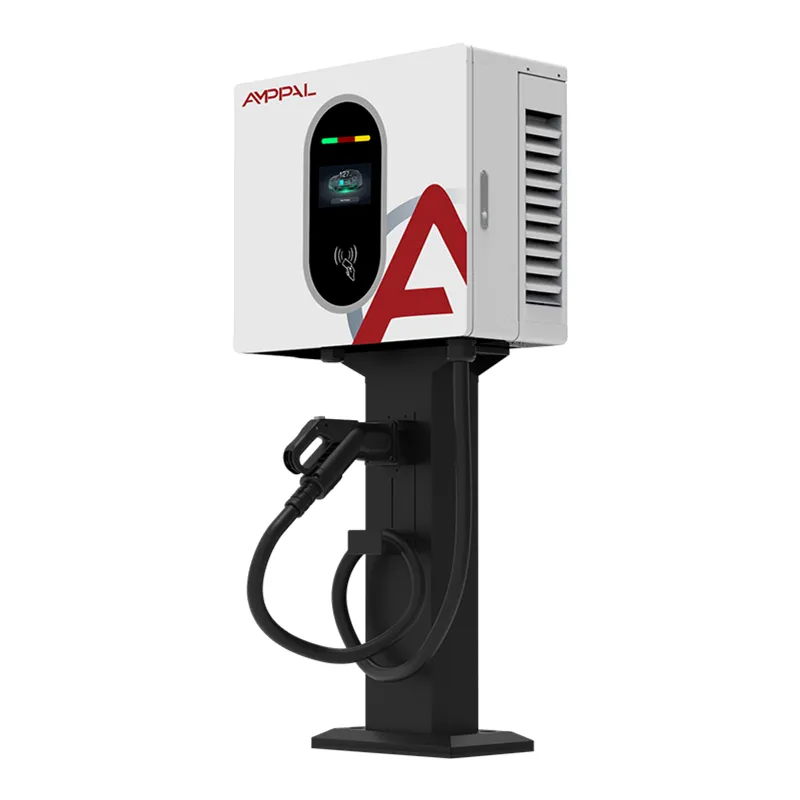
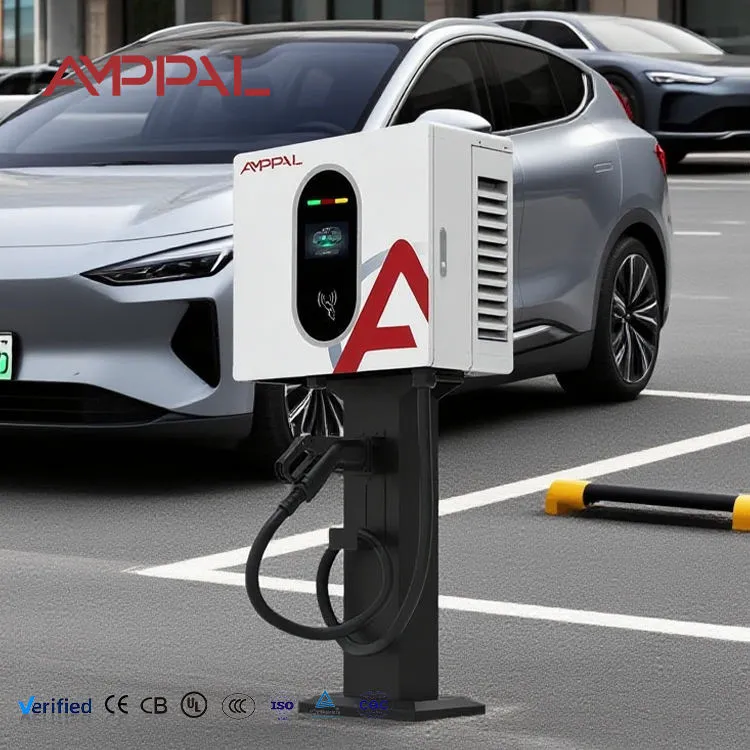
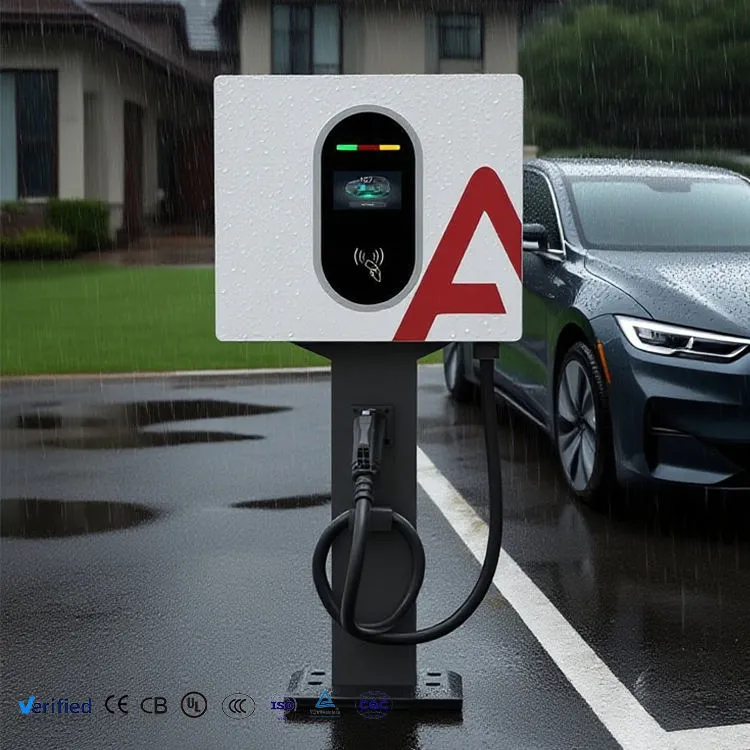
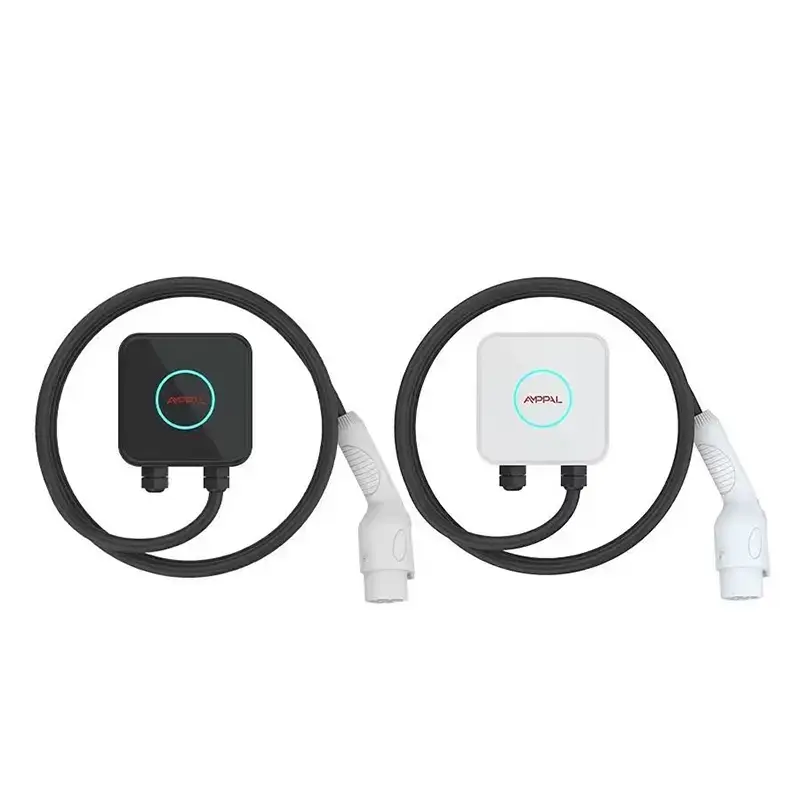
7kW Wall-Mounted DC EV Fast Charger for Home and Workplace runs off a normal AC220V single-phase supply, so you can install it where three-phase power simply isn't available. Weight and depth are kept low (92mm deep) so it mounts flat against a wall without eating into a parking bay.

No onboard charger bottleneck: DC output goes directly to the pack, so vehicles with 3.3kW onboard chargers still receive the full 7kW.
Single-phase friendly: runs on AC220V±15%. No three-phase application, no transformer upgrade, no waiting on the utility company.
Slim 92mm profile: at 540 × 320 × 92mm it sits closer to the wall than most DC units, which keeps narrow garages and alleys usable.
Wide 200-750VDC window: covers low-voltage LSEVs and standard 400V passenger platforms from one unit.
Full connector coverage: CCS1, CCS2, CHAdeMO, GB/T and NACS. Pick the gun at order time; the internals stay the same.
Networked from day one: 4G plus OCPP 1.6j means you can bill, monitor and update remotely even at a site with no fixed internet line.
|
Parameter |
Specification |
|
Model |
AF-DC-7-B-A-O-4-H |
|
Rated Output Power |
7kW |
|
Overall Dimensions (mm) |
540 × 320 × 92 |
|
Protection Grade |
IP54 |
|
Input Voltage |
AC220V±15% |
|
Output Voltage Range |
200-750VDC |
|
HMI |
7" touch screen |
|
Connectivity |
4G, OCPP 1.6j |
|
Peak Efficiency |
95% |
|
Cooling Method |
Forced air cooling |
|
Noise Level |
≤65dB |
|
Standards |
EN IEC 61851-1:2019, EN IEC 61851-23:2014 |
|
Compatible Connectors |
CCS1/CHAdeMO/CCS2/GB/T/NACS |
|
Operating Temperature |
-25°C ~ +50°C |
|
Warranty |
2 Years Standard |
Villa and townhouse owners with a weak onboard charger: you get DC speed at home without upgrading the grid connection.
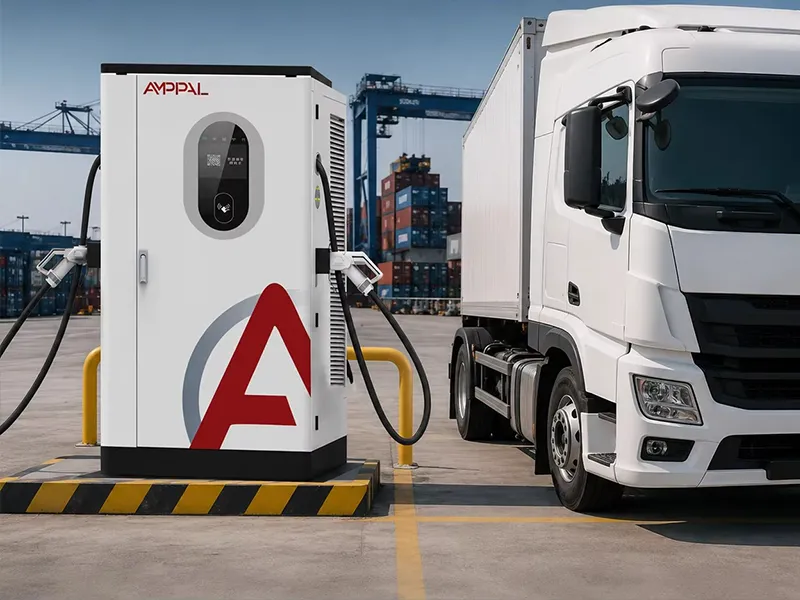
Small logistics operators: electric vans parked overnight at a depot with only single-phase supply. Two or three of these units cover a small fleet.
Roadside shops, guesthouses and rural filling stations: a low-cost way to offer paid DC charging as a side service. The 4G module handles billing.
Property managers piloting EV charging: cheap enough to trial in one building before committing to a 60kW+ rollout.
Distributors serving markets where three-phase power is rare: a DC product that installs almost anywhere.

Incoming single-phase AC first passes through EMI filtering and surge protection. The rectifier stage converts it to an intermediate DC bus, then a SiC-based DC/DC stage steps that bus to whatever voltage the vehicle's BMS asks for — anywhere between 200V and 750V.
Communication runs in parallel with power delivery. Before any current flows, the charger and the vehicle negotiate over the control pilot line: the BMS states its target voltage and maximum current, the charger confirms it can supply it, insulation is checked, and only then do the contactors close. That handshake repeats continuously during the session, which is why DC charging can taper smoothly as the pack fills.
Heat from the power stage is pulled out by forced air cooling with temperature-controlled fans. At light load the fans idle, so noise stays well under the ≤65dB rating in a residential setting.

Built to EN IEC 61851-1:2019 and EN IEC 61851-23:2014, the two standards European inspectors check first on any DC unit.
Every unit runs a full-load burn-in before it ships. We log output voltage, current stability and module temperature across the run rather than spot-checking a sample.
Insulation resistance and dielectric strength are tested on 100% of production, not by batch.
IP54 verification covers dust ingress and splashing water from every direction — the realistic failure mode for a wall-mounted unit under a dripping eave.
Enclosures go through 96-hour salt spray. Coastal installations in the Gulf and Southeast Asia are where cheap powder coating fails first.
1. Incoming inspection — power modules, contactors and connectors are checked against spec on arrival. Anything out of tolerance goes back to the supplier.
2. CNC punching and bending — enclosure panels are cut and formed on TRUMPF equipment, holding tight tolerances so the door seals evenly.
3. Welding and surface treatment — robotic welding, then degreasing, phosphating and electrostatic powder coating for corrosion resistance.
4. Module and harness assembly — power modules, control board and wiring loom are fitted on a dedicated DC line. Torque values on all power terminals are recorded.
5. Firmware flashing and calibration — output voltage and current sensors are calibrated against a reference load.
6. Full-load run-in — the unit charges a simulated battery load at rated power while temperatures are monitored.
7. Safety and IP verification — insulation, ground continuity, emergency stop response and enclosure sealing.
8. Packing — foam-cushioned carton, then palletised for export.

Choose this unit when the vehicle sits for several hours and your site has only single-phase power. A typical 60kWh pack takes roughly 8 hours from near-empty — fine overnight, too slow for a public forecourt.
If your vehicles have a 6.6kW or 11kW onboard charger and you have three-phase available, a plain AC box will cost less and do the same job. Be honest about that; we would rather you buy the right product.
If you need turnaround measured in minutes rather than hours, skip to our 20kW or 30kW wall-mounted DC models, or the 60kW+ floor-standing range. And if the site has three-phase power but you still want DC, the 20kW AF-DC-020-B-A-O-2-H is usually the better value per kilowatt.
Genuine DC at 7kW: many suppliers relabel a 7kW AC box as 'fast charging'. Check the output voltage spec — if it says 230VAC, it is not a DC charger.
MOQ of 1 unit for the standard build: you can test one before ordering a container.
Custom enclosure colour and screen branding from 50 units, with no tooling charge on colour changes.
Lead time is 15-20 working days for standard configurations, 25-30 for custom firmware or branding.
Two-year warranty with spare power modules shipped by DHL or FedEx, typically arriving in 3-5 working days.
Each charger ships in a five-layer corrugated carton with EPE foam corners, inner poly bag against humidity, and desiccant. Carton size is roughly 630 × 410 × 190mm; gross weight around 18kg including the cable.
Standard export pallets hold 20 units, shrink-wrapped and strapped, fumigation-free plywood. For LCL shipments we can palletise smaller quantities on request.
We ship EXW, FOB Ningbo or Shanghai, CIF and DDP. Sea freight is the norm for 20+ units; air or DHL express makes sense for samples and urgent spares. Documentation includes commercial invoice, packing list, CE declaration of conformity and test report.
Two years standard, covering power modules, control board, contactors and the HMI. Extension to three or five years is available at order time.
Remote diagnostics over OCPP 1.6j — in most cases we can read fault codes and push a firmware fix without anyone visiting the site.
Replacement parts ship within 48 hours of a confirmed fault; typical door-to-door transit is 3-5 working days by express courier.
English installation manual, wiring diagrams and commissioning checklist are included. Video commissioning support is free for the first installation.
Wrong: connecting to a shared 16A domestic circuit. Right: run a dedicated feed sized for the full 7kW draw with its own breaker and RCD.
Wrong: skipping the earth rod because 'the building is already earthed'. Right: verify earth resistance meets local code — DC insulation monitoring depends on a solid ground reference.
Wrong: mounting under an unguttered roof edge. Right: IP54 handles splashing, not a continuous stream. A small canopy adds years to the screen and gasket life.
Wrong: coiling excess charging cable on the ground. Right: use the holster and hook. Cable damage from being driven over is the single most common out-of-warranty repair.
Wrong: assuming any vehicle will pull 7kW. Right: DC output is limited by whichever is lower — charger capacity or the BMS request.
A guesthouse owner in Chiang Mai bought two units in early 2025. His note after six months: 'Three-phase would have cost more than the chargers themselves. These run on the same supply as the kitchen. Guests with older Nissan vans finally charge at full speed instead of trickling.'
A distributor in Kazakhstan ordered 40 units for rural filling stations. Their feedback was blunt and useful — the original screen brightness was hard to read in direct sun, so we switched them to the high-brightness display option on the second order. Nothing else was changed.
A small courier company in Guangdong runs six of these overnight at a depot with a 60A single-phase supply. Their operations manager reported zero downtime across the first fourteen months, and noted that the fan noise is low enough that neighbours have not complained.
A: Genuine DC. Output is 200-750VDC measured at the gun. An AC box outputs 230VAC and relies on the car's onboard charger.
A: Yes — AC220V±15% single phase, which is the whole point of this model. You need a dedicated circuit rated for the full load.
A: Roughly 8 hours from 10% to 90%, assuming the BMS accepts the full 7kW throughout. Suited to overnight or long-dwell parking.
A: With the NACS gun option, yes for North American models. European Teslas use CCS2. Tell us the market and we fit the correct connector.
A: Contactors open safely, the session is logged, and the unit restarts and re-handshakes when power returns. No damage to the pack.
A: Yes. OCPP 1.6j connects to most third-party billing platforms; RFID cards and PIN codes work offline if the 4G signal drops.
A: Yes, a 5-metre cable with the gun is standard. Longer cables are available on request.
A: One unit for standard builds, 15-20 working days. Custom branding needs 50 units and 25-30 working days.
Address
No. 237, Weisan Road, Yueqing, Zhejiang, China
Tel
Talk Directly to Our EV Charger Factory
Get factory-direct pricing, custom solutions, and expert support.
- Fast Response – Reply within 24 hours.
- OEM/ODM – Flexible customization and sample orders.
- Certified Quality – CE, TÜV, CB, and CCC options.
- Custom Quotes – Tailored to your specifications.
- Technical Support – Expert help with OCPP, DLB, and system integration.