News

Industry News

What Should You Know Before Choosing Wall-Mounted DC Chargers?2026-11-16

What Should You Know Before Choosing Wall-Mounted DC Chargers?

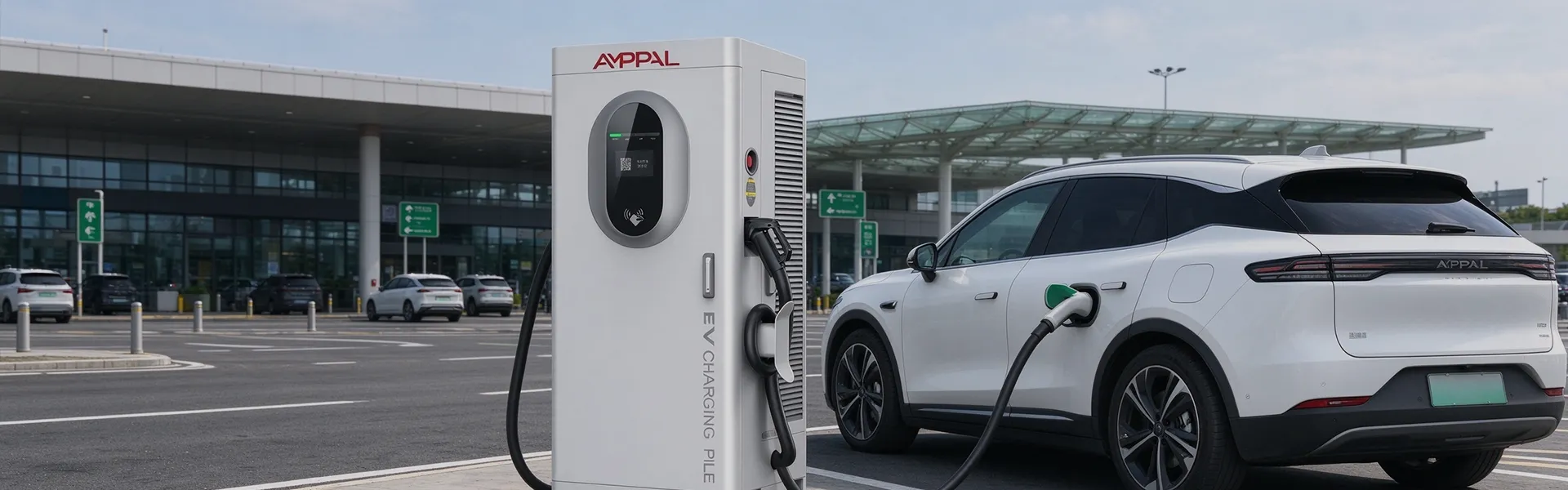
As electric vehicle adoption accelerates, businesses and charging infrastructure operators are looking for charging equipment that delivers reliable performance without occupying excessive installation space. Wall-mounted DC chargers provide a practical solution by combining compact installation, direct current charging technology, and flexible power configurations.
Factory‑Integrated Storage For Large‑Scale Projects: Understanding Utility‑Scale Containerized Battery Energy Storage System2026-10-15

Factory‑Integrated Storage For Large‑Scale Projects: Understanding Utility‑Scale Containerized Battery Energy Storage System

Large‑scale battery energy storage deployments traditionally involve extensive on‑site assembly work, bringing scheduling risks, wiring faults and extended commissioning timelines for project teams. Utility‑Scale Containerized Battery Energy Storage System delivers pre‑tested, factory‑integrated megawatt‑class storage units ready for on‑site placement and connection. This article explores its dual‑capacity variants, built‑in safety architecture, manufacturing workflows, real‑world project feedback and key considerations for developers and EPC teams evaluating container‑format energy‑storage assets.
Space‑Saving EV Charging: Getting To Know 3.5kW Compact Wallbox AC EV Charger for Home and Office Charging2026-10-15

Space‑Saving EV Charging: Getting To Know 3.5kW Compact Wallbox AC EV Charger for Home and Office Charging

Many residential and small‑scale commercial locations face physical limitations when installing EV charging hardware. Traditional wall‑mounted EV chargers often require generous wall real‑estate, making them impractical for older apartment basements, narrow parking bays and compact office parking spaces. 3.5kW Compact Wallbox AC EV Charger for Home and Office Charging brings a tiny footprint while maintaining full Mode 3 safety compliance, opening charging possibilities for sites ruled out for standard‑size wall‑boxes. This article walks through physical advantages, engineering design, suitable installation environments, quality validation processes and real‑world deployment feedback for compact AC wall‑box hardware.
How to Choose the Right Home EV Charger Power: 7kW, 11kW or 22kW?2026-07-21

How to Choose the Right Home EV Charger Power: 7kW, 11kW or 22kW?

For most residential users, a 7kW AC EV charger is the most practical choice. An 11kW charger requires three-phase power support, while a 22kW charger is usually not necessary for standard home charging.
AC vs DC EV Charger How to Choose the Right Charging Solution for Different Applications2026-07-21

AC vs DC EV Charger How to Choose the Right Charging Solution for Different Applications

Installing a 7kW AC charger in a privately owned residential parking spot allows for overnight charging during off-peak hours; the vehicle is fully charged by morning—an ideal choice for daily commuting that minimizes long-term battery degradation.
What are the respective advantages and disadvantages of AC slow charging and DC fast charging for electric vehicles?2026-07-21

What are the respective advantages and disadvantages of AC slow charging and DC fast charging for electric vehicles?

Choosing between AC slow charging and DC fast charging depends on charging speed, installation conditions and application requirements. AC EV Charger solutions are widely used for homes, workplaces and long parking scenarios because of their lower cost and stable charging performance, while DC Fast Charger systems are designed for public charging stations, commercial fleets and applications that require rapid energy replenishment.
X
We use cookies to offer you a better browsing experience, analyze site traffic and personalize content. By using this site, you agree to our use of cookies. Privacy Policy
RejectAccept