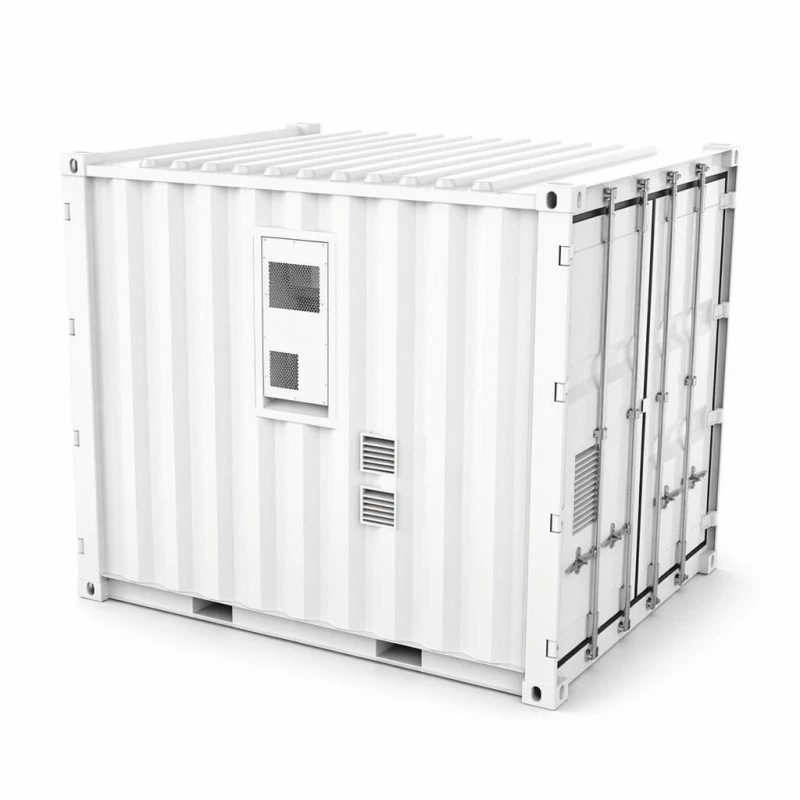
Containerized Energy Storage Systems (Container ESS) have become the backbone of modern grid-scale and commercial energy storage projects. These systems package battery modules, power conversion equipment, thermal management, fire suppression, and control systems into standard ISO shipping containers. This approach dramatically reduces on-site installation time, lowers civil engineering costs, and ensures consistent performance across different locations. AMPPAL has refined the Container ESS platform to deliver high energy density, robust safety, and seamless integration with solar, wind, and utility grids. The following sections detail the technical parameters, performance specifications, and practical benefits of AMPPAL Container ESS units.
Core Technical Parameters of AMPPAL Container ESS
AMPPAL designs its Container ESS lineup around modularity and scalability. Each unit is factory-assembled and tested before dispatch, which means the system arrives on site ready for connection. The key parameters below define the operating envelope and help project developers match the right model to their power and energy requirements.
-
Rated Power Range: 500 kW to 2,000 kW per container, expandable in parallel for multi-megawatt installations.
-
Rated Energy Capacity: 1,000 kWh to 4,000 kWh per container, with DC-side voltage up to 1,500 V on request.
-
Battery Chemistry: Lithium Iron Phosphate (LFP) cells, selected for long cycle life, thermal stability, and low degradation.
-
Round-Trip Efficiency: Typically 92% to 94% at the point of common coupling, depending on ambient temperature and charge/discharge profile.
-
Cycle Life: ≥ 6,000 cycles at 0.5C charge/discharge, 80% depth of discharge, and 25°C ambient temperature, with end-of-life capacity retention above 70%.
-
Operating Temperature Range: -20°C to +55°C ambient, with optional cold-weather package for -35°C operation.
-
Ingress Protection: IP54 standard for enclosure, optional IP65 for coastal or desert environments.
-
Communication Protocols: Modbus TCP, CAN 2.0B, IEC 61850, and optional DNP3 for SCADA integration.
-
Certifications: UL 9540, UL 9540A, IEC 62619, UN38.3, CE, and optional NFPA 855 compliance documentation.
Detailed Model Comparison
|
Parameter
|
CESS-500/1000
|
CESS-1000/2000
|
CESS-2000/4000
|
|
Rated Power
|
500 kW
|
1,000 kW
|
2,000 kW
|
|
Rated Energy
|
1,000 kWh
|
2,000 kWh
|
4,000 kWh
|
|
Battery Type
|
LFP
|
LFP
|
LFP
|
|
Nominal DC Voltage
|
768 V
|
768 V
|
768 V / 1,500 V optional
|
|
DC Voltage Range
|
672–864 V
|
672–864 V
|
672–864 V or 1,050–1,500 V
|
|
Round-Trip Efficiency
|
≥ 92%
|
≥ 93%
|
≥ 94%
|
|
Cycle Life
|
≥ 6,000 cycles
|
≥ 6,000 cycles
|
≥ 6,000 cycles
|
|
Enclosure Size
|
20 ft ISO container
|
40 ft ISO container
|
40 ft ISO container
|
|
External Dimensions (L×W×H)
|
6,058 × 2,438 × 2,591 mm
|
12,192 × 2,438 × 2,591 mm
|
12,192 × 2,438 × 2,896 mm
|
|
Approximate Weight
|
18,000 kg
|
35,000 kg
|
60,000 kg
|
|
Cooling Method
|
HVAC forced air
|
Liquid cooling / HVAC
|
Liquid cooling
|
|
Fire Suppression
|
Aerosol + optional water mist
|
Aerosol + optional water mist
|
Aerosol + optional water mist
|
|
Communication
|
Modbus TCP, CAN, IEC 61850
|
Modbus TCP, CAN, IEC 61850
|
Modbus TCP, CAN, IEC 61850
|
|
Operating Temperature
|
-20°C to +55°C
|
-20°C to +55°C
|
-20°C to +55°C
|
|
IP Rating
|
IP54
|
IP54
|
IP54 (optional IP65)
|
|
Certifications
|
UL 9540, UL 9540A, IEC 62619, UN38.3, CE
|
UL 9540, UL 9540A, IEC 62619, UN38.3, CE
|
UL 9540, UL 9540A, IEC 62619, UN38.3, CE
|
All AMPPAL Container ESS models use the same battery management system (BMS) architecture, which monitors cell voltage, temperature, and state of charge at module level. This allows precise balancing and early fault detection. The power conversion system (PCS) is integrated in a separate compartment within the container, reducing cable losses and simplifying AC connection to the grid or load.
Battery Modules and Rack Configuration
Each Container ESS contains multiple battery racks connected in parallel to achieve the target energy capacity. AMPPAL uses a standardized battery module with 5.12 kWh nominal energy and 51.2 V nominal voltage. The modules are connected in series within a rack to reach the system voltage. Key module-level parameters include:
-
Module Energy: 5.12 kWh
-
Module Nominal Voltage: 51.2 V DC
-
Module Operating Voltage Range: 44.8–57.6 V DC
-
Module Weight: 47 kg
-
Cell Type: Prismatic LFP, 3.2 V / 100 Ah
-
Module Cycle Life: ≥ 6,000 cycles at 0.5C, 80% DoD, 25°C
-
Module Communication: CAN, isolated RS485
-
Module Protection: Overcharge, overdischarge, overcurrent, short circuit, over/under temperature
A typical 20 ft container houses 10 to 12 battery racks, depending on the model. The 40 ft container can accommodate up to 20 racks. Each rack includes an independent battery management unit (BMU) that reports to the central BMS. This layered monitoring architecture increases reliability and allows hot-swapping of individual modules without shutting down the entire system.
Power Conversion System and Grid Integration
The PCS inside an AMPPAL Container ESS converts DC battery power to AC power for grid injection or load consumption. The standard PCS has a three-phase output at 400 V AC, 480 V AC, or 690 V AC, depending on regional grid codes. The PCS supports both grid-following and grid-forming modes, making the system suitable for microgrid applications and black start capability.
-
AC Output Voltage: 400 V / 480 V / 690 V, ±10% adjustable
-
Output Frequency: 50 Hz or 60 Hz, auto-sensing
-
Total Harmonic Distortion (THD): < 3% at rated power
-
Power Factor Range: 0.99 leading to 0.99 lagging
-
Grid Support Functions: Low voltage ride-through (LVRT), high voltage ride-through (HVRT), reactive power control, frequency droop
-
Anti-Islanding Protection: Active and passive methods compliant with IEEE 1547 and UL 1741
-
Efficiency: 98.5% maximum at nominal load
The integrated transformer option steps up the PCS output to medium voltage (e.g., 13.8 kV, 34.5 kV) for direct grid connection. This eliminates the need for a separate transformer station and simplifies site design. The PCS and battery system are coordinated by an energy management system (EMS) that optimizes charge/discharge schedules based on time-of-use tariffs, demand charges, or renewable generation forecasts.
Safety Systems and Thermal Management
Safety is the highest priority in any Container ESS deployment. AMPPAL integrates multiple layers of protection that begin at the cell level and extend to the container enclosure. The LFP chemistry provides intrinsic thermal stability, with a thermal runaway threshold above 270°C compared to 150–200°C for some nickel-based chemistries. On top of that, the system includes:
-
Battery Management System (BMS): Three-level architecture with cell, module, and rack monitoring. The BMS enforces voltage, current, and temperature limits and isolates faulty strings within milliseconds.
-
Thermal Management: Liquid cooling is standard on larger models, maintaining cell temperature spread within ±3°C. HVAC forced air is used on smaller units. The cooling system automatically adjusts based on real-time load and ambient temperature.
-
Fire Detection and Suppression: Multi-zone smoke and heat detectors trigger aerosol fire suppression. Optional water mist systems provide additional cooling and extinguishing capability. The container is divided into fire compartments to prevent propagation.
-
Explosion Venting: Pressure relief panels are installed on the container roof and doors, sized according to NFPA 68 guidelines to safely release gas in the event of a thermal event.
-
Emergency Stop: Multiple E-stop buttons on the exterior of the container instantly disconnect the battery from the PCS and grid.
-
Ground Fault Protection: Continuous insulation monitoring detects DC and AC ground faults and triggers alarms at configurable thresholds.
AMPPAL performs UL 9540A fire propagation testing on its Container ESS units to validate that a single-cell thermal runaway does not spread to adjacent modules or racks. Test reports are available to project owners and authorities having jurisdiction (AHJs) to streamline permitting.
Typical Applications
The AMPPAL Container ESS platform serves a wide range of use cases. The same hardware can be reconfigured through software for different revenue streams, making it a versatile asset for project developers and utilities.
-
Utility-Scale Energy Shifting: Charge during periods of low electricity prices or excess renewable generation, discharge during peak demand. This reduces curtailment of solar and wind plants and improves project economics.
-
Frequency Regulation: Fast response times of less than 100 ms allow the system to participate in ancillary service markets, providing frequency regulation and spinning reserves.
-
Commercial and Industrial Peak Shaving: Reduce demand charges by discharging stored energy during the facility’s peak consumption windows. The EMS can learn load patterns and optimize dispatch accordingly.
-
Microgrid and Off-Grid Support: Combine with diesel generators or renewable sources to form a stable island grid. The PCS can operate in grid-forming mode to establish voltage and frequency reference.
-
Renewable Smoothing: Buffer short-term fluctuations in solar or wind output, improving power quality and allowing higher renewable penetration in weak grids.
-
Backup Power: Provide uninterrupted power to critical loads during grid outages, with seamless transfer to island mode.
Installation and Commissioning
One of the main advantages of a Container ESS is the minimal on-site work required. The unit arrives pre-wired, pre-commissioned, and fully tested. Site preparation typically involves a level concrete pad or compacted gravel base, AC and communications conduits, and a perimeter fence. After the container is set in place, the connection to the grid transformer and BESS controller is completed by a licensed electrician following AMPPAL-approved drawings.
-
Delivery: Standard ISO corner castings allow transport by flatbed truck, rail, or ship. The container can be lifted from the top or bottom using spreader bars.
-
Foundation Requirements: Minimum soil bearing capacity of 150 kPa. For areas with high seismic activity, AMPPAL offers a certified anchorage kit.
-
Connection Time: Typical AC and communication connection takes 2 to 3 working days after the container is placed.
-
Commissioning: AMPPAL provides remote commissioning support. The on-site technician follows a step-by-step checklist in the controller HMI, which includes insulation checks, polarity verification, and initial charge/discharge test.
-
Warranty: Standard 5-year product warranty and 10-year performance warranty, with optional extended service agreements.
The system is designed for outdoor installation with no additional shelter required. The IP54 enclosure protects against dust, rain, and snow. For coastal environments with high salinity, AMPPAL recommends the IP65 option with corrosion-resistant coating on all exposed metal parts.
Why Choose AMPPAL for Your Container ESS Project
AMPPAL has more than a decade of experience delivering energy storage solutions across North America, Europe, and Asia-Pacific. The company’s engineering team works closely with EPC contractors and developers to adapt the Container ESS to local grid codes and site conditions. Several factors set AMPPAL apart:
-
Factory Acceptance Testing: Every container undergoes a 72-hour full-load cycle test before shipping. Customers receive a detailed test report including capacity, efficiency, and communication verification.
-
Modular Design: Battery racks and PCS modules can be replaced individually without welding or heavy rigging inside the container. This reduces downtime and maintenance costs.
-
Global Compliance: AMPPAL maintains current certifications for major markets, including UL, CE, IEC, and UN38.3. The documentation package supports fast permitting and utility interconnection approval.
-
Local Support: AMPPAL has regional service centers and spare parts hubs in the United States, Germany, and Australia. Remote diagnostics are standard, with 24/7 monitoring available through the AMPPAL Cloud platform.
-
Scalability: Multiple Container ESS units can be connected in parallel on the AC side to create systems of 10 MW / 20 MWh or larger. The EMS coordinates all units as a single virtual power plant.
Frequently Asked Questions About Container ESS
What is a Container ESS and how does it work?
A Container ESS is a complete energy storage system housed in a standard shipping container. It includes battery racks, a battery management system, a power conversion system, thermal management, fire suppression, and control electronics. During charging, the PCS converts AC electricity from the grid or a renewable source into DC electricity that is stored in the batteries. During discharging, the PCS converts the stored DC electricity back into AC electricity for use by loads or export to the grid. The EMS controls when to charge and discharge based on user settings, grid prices, or renewable generation forecasts.
How long does an AMPPAL Container ESS last?
The usable life of an AMPPAL Container ESS is primarily determined by the battery cells and their operating conditions. The LFP cells are rated for at least 6,000 cycles at 0.5C rate, 80% depth of discharge, and 25°C ambient temperature. At one full cycle per day, this translates to more than 16 years of service before the capacity drops to 70% of the original rating. Actual lifespan may be longer if the system operates at partial depth of discharge or lower average temperatures. The PCS and other electronics have a design life of 20 years with recommended preventive maintenance every 12 months.
What are the main safety risks of Container ESS and how does AMPPAL address them?
The primary safety risks for any Container ESS are electrical shock, fire, and thermal runaway propagation. AMPPAL mitigates these risks through a multi-layer approach. Electrical safety is ensured by ground fault detection, arc flash protection, and insulated busbars. Fire risk is reduced by using LFP chemistry, which is less prone to thermal runaway than NMC or NCA chemistries. The container includes smoke and heat detectors, aerosol fire suppression, and optional water mist. Pressure relief panels prevent explosive gas buildup. UL 9540A testing verifies that a single-cell failure does not spread to neighboring modules, and the BMS continuously monitors temperature and voltage at every cell to catch anomalies before they escalate.
Can multiple Container ESS units be connected together?
Yes. AMPPAL Container ESS units are designed for parallel operation on the AC side. Up to 20 containers can be connected to a common AC bus, creating a system of up to 40 MW / 80 MWh. The EMS acts as a master controller, coordinating the power output of each container to meet the total setpoint. Communication between containers uses fiber optic Ethernet, which is immune to electromagnetic interference. For larger projects, AMPPAL can provide a central control room with redundant servers and SCADA software.
What is the delivery time for an AMPPAL Container ESS?
Standard lead time for a single Container ESS is 10 to 14 weeks from order confirmation to factory shipment, depending on the model and optional features. Larger multi-unit orders may require 16 to 20 weeks. Shipping time is additional and depends on the destination port and inland logistics. AMPPAL provides a detailed project schedule at the quotation stage, including manufacturing milestones and factory acceptance test dates. For urgent projects, AMPPAL maintains a limited inventory of standard 20 ft Container ESS units in regional warehouses.
What maintenance does a Container ESS require?
Routine maintenance for an AMPPAL Container ESS includes quarterly visual inspections, semi-annual filter replacement for the HVAC or liquid cooling system, and annual torque checks on electrical connections. The BMS automatically performs cell balancing and reports any abnormal voltage or temperature trends. The PCS fans and air filters should be cleaned every 6 to 12 months depending on dust levels. Fire suppression system cartridges are inspected annually and replaced every 10 years or after activation. AMPPAL offers a preventive maintenance service plan where trained technicians perform all tasks and provide a signed inspection report for insurance and compliance purposes.
Is the Container ESS compatible with solar and wind power plants?
Yes. The AMPPAL Container ESS is fully compatible with solar PV and wind power plants. The system can charge directly from the DC side of a solar array through an optional DC-DC converter, or it can charge from the AC side using the power conversion system. In AC-coupled configurations, the EMS can prioritize charging during periods of excess renewable generation and discharge when renewable output is low. The grid support functions, such as frequency droop and voltage regulation, help stabilize weak grids with high renewable penetration. AMPPAL has supplied Container ESS units for solar-plus-storage projects from 5 MW to 100 MW.



 Whatsapp