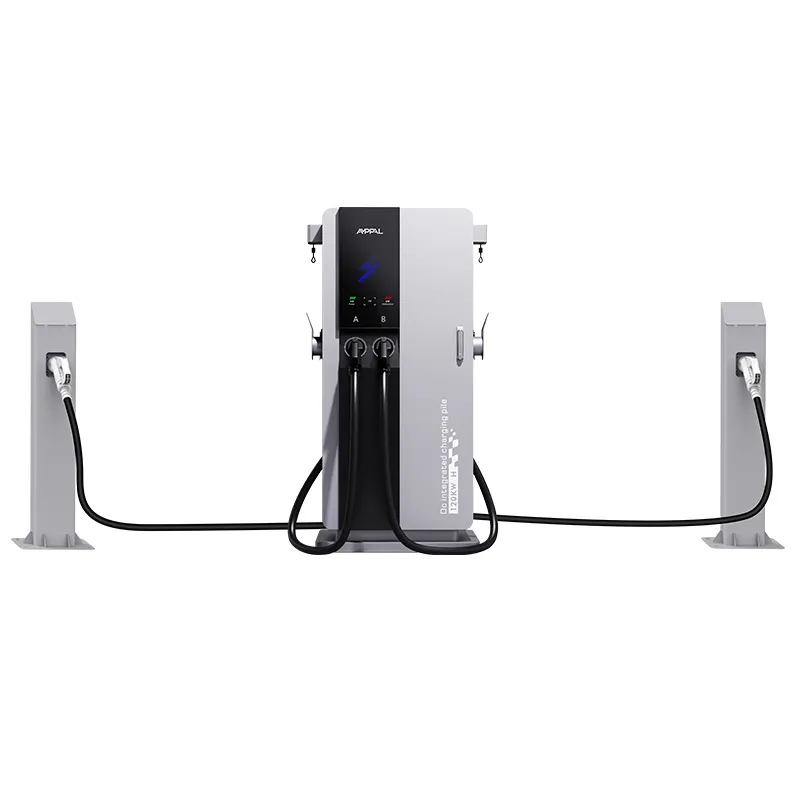
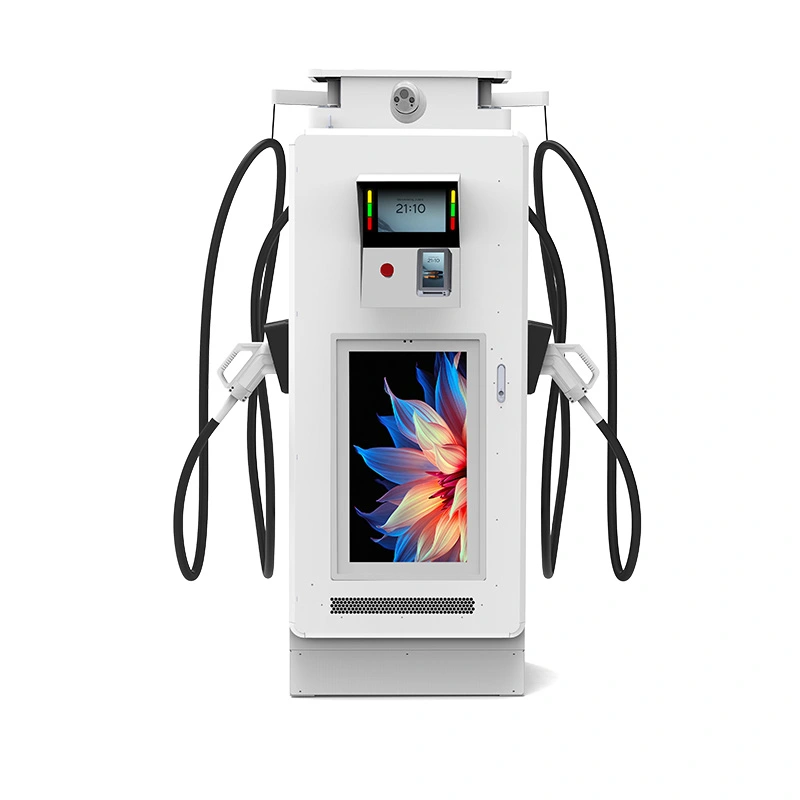
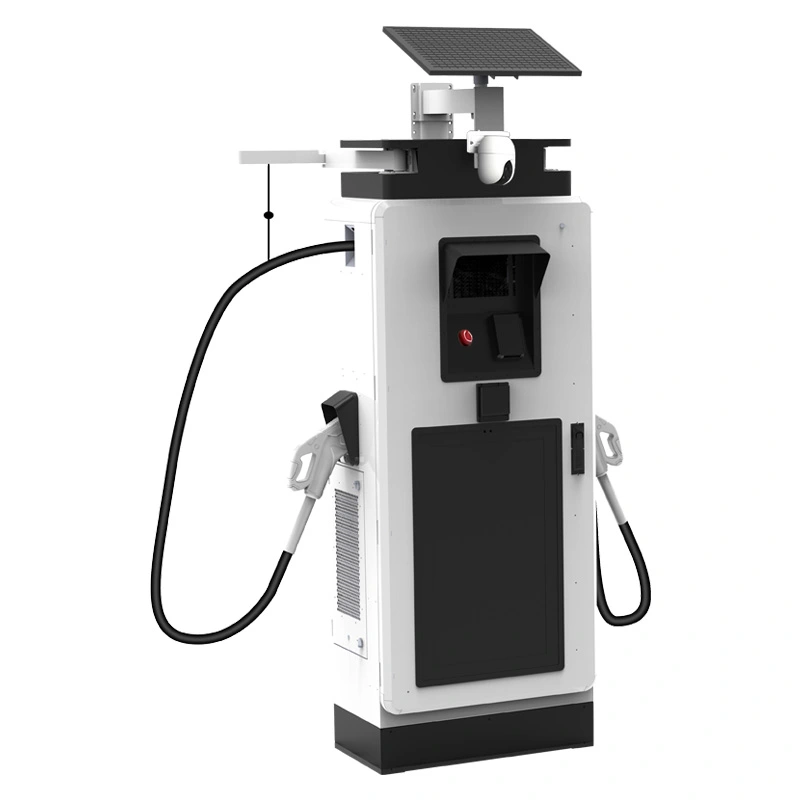
The electric vehicle market has moved far beyond early adoption, and charging infrastructure now faces intense pressure to deliver faster, more reliable, and more compact power delivery in both public and commercial settings. Among the most significant advancements in this space are Integrated DC Chargers, which combine power conversion, thermal management, and communication modules into a single enclosure. This design approach removes many of the traditional barriers associated with split architecture chargers, such as complex cabling, large installation footprints, and multiple points of failure.
AMPPAL has refined this category with a range of integrated DC chargers engineered for real-world conditions. The focus is not only on delivering high power output but also on simplifying installation, reducing total cost of ownership, and ensuring long-term performance across varied climates and usage profiles. For fleet operators, retail locations, highway service areas, and workplace charging hubs, integrated systems offer a practical path to scalable electrification.
What Makes an Integrated DC Charger Different
Traditional DC fast chargers often separate the power cabinet from the dispenser unit. The power cabinet houses the rectifiers, power modules, and cooling equipment, while the dispenser holds the cable, connector, and user interface. This split design requires substantial civil works, longer cable runs, and additional commissioning time. Integrated DC chargers consolidate these components into one enclosure, which can be wall-mounted or installed on a compact pedestal.
The benefits extend beyond the physical footprint. With fewer external connections, the system has fewer points where moisture, dust, or thermal stress can compromise performance. Maintenance becomes more straightforward because the technician accesses the power electronics, cooling system, and control board from a single service panel. For site owners, this translates into reduced downtime and lower service costs over the life of the equipment.
AMPPAL designs integrated DC chargers with modular power stages inside the enclosure. This modularity means a single unit can be configured for different power levels, and if a module needs replacement, the process takes minutes rather than hours. The compact form factor also makes the units suitable for locations where space is limited, such as urban parking structures, dealership lots, and commercial building frontages.
Core Technical Parameters of AMPPAL Integrated DC Chargers
The following list details the key electrical, mechanical, and environmental specifications that define AMPPAL integrated DC charger performance. These parameters are critical for site planners, electrical engineers, and fleet managers who need to match charger capability with vehicle requirements and grid constraints.
-
Rated output power: Available in 30 kW, 60 kW, 90 kW, and 120 kW configurations, with scalable power modules inside the enclosure.
-
Input voltage range: 380 to 480 VAC, three-phase, 50/60 Hz, supporting standard commercial and light industrial electrical services.
-
Output voltage range: 150 to 1000 VDC, covering all current EV battery architectures from 400 V to 800 V platforms.
-
Maximum output current: Up to 200 A per connector, depending on the model, with dynamic current sharing across parallel modules.
-
Full-load efficiency: Greater than 95 percent at nominal output, reducing energy waste and operating costs over time.
-
Power factor: Greater than 0.99 at full load, minimizing reactive power penalties and improving grid compatibility.
-
Standby power consumption: Less than 30 W in idle mode, lowering energy draw when no vehicle is connected.
-
Cooling method: Forced air cooling with intelligent fan speed control or optional liquid cooling for high-power 120 kW models in hot climates.
-
Operating temperature range: -30°C to +55°C ambient, with automatic derating above 45°C to protect internal components.
-
Storage temperature range: -40°C to +70°C, ensuring safe storage and transport without damage.
-
Relative humidity: 5 to 95 percent non-condensing, suitable for coastal and humid environments.
-
Enclosure rating: IP54 for outdoor use, with optional IP55 for dusty or high-pressure wash areas.
-
Communication protocols: OCPP 1.6J, OCPP 2.0.1, Modbus TCP, and Ethernet, allowing integration with all major charging network management platforms.
-
Connector types: CCS2, CHAdeMO, and optional GB/T configurations, with dual-port options available on 60 kW and higher models.
-
Cable length: 4 to 7 meters, with an integrated cable management system that reduces strain on the connector and improves user handling.
-
Noise level: Below 55 dB at one meter, making the units suitable for noise-sensitive locations such as hotels and residential complexes.
-
Safety certifications: CE, UL 2202, IEC 61851-1, IEC 61851-23, and ISO 15118 ready for plug-and-charge functionality.
-
Ground fault protection: Integrated 30 mA AC and 6 mA DC residual current detection, ensuring user safety without external RCD devices.
-
Surge protection: Type 2 surge protective device on the AC input, with optional Type 1 for high-lightning areas.
-
Weight: Ranges from 180 kg for 30 kW models to 350 kg for 120 kW dual-port models, allowing installation with standard lifting equipment.
Detailed Parameter Comparison Across AMPPAL Models
The table below provides a side-by-side view of three representative AMPPAL integrated DC charger models. These specifications help system integrators and site owners select the right unit based on expected daily utilization, vehicle mix, and available electrical capacity.
|
Parameter
|
IC-30
|
IC-60
|
IC-120
|
|
Rated output power
|
30 kW
|
60 kW
|
120 kW
|
|
Number of DC outputs
|
1
|
2
|
2
|
|
Input voltage
|
380-480 VAC, 3P+N+PE
|
380-480 VAC, 3P+N+PE
|
380-480 VAC, 3P+N+PE
|
|
Input frequency
|
50/60 Hz
|
50/60 Hz
|
50/60 Hz
|
|
Output voltage range
|
150-1000 VDC
|
150-1000 VDC
|
150-1000 VDC
|
|
Maximum current per output
|
100 A
|
150 A
|
200 A
|
|
Full-load efficiency
|
95.2%
|
95.5%
|
95.8%
|
|
Power factor at full load
|
0.99
|
0.99
|
0.99
|
|
Cooling method
|
Forced air
|
Forced air with smart fan control
|
Liquid cooling with air-assisted heat exchanger
|
|
Connector type
|
CCS2 or CHAdeMO
|
CCS2 + CCS2 or CCS2 + CHAdeMO
|
CCS2 + CCS2 or CCS2 + CHAdeMO
|
|
Cable length
|
5 m
|
5 m per connector
|
7 m per connector
|
|
Display
|
7-inch touchscreen
|
10-inch touchscreen
|
10-inch touchscreen with anti-glare coating
|
|
RFID reader
|
ISO 14443 A/B, MIFARE, NFC
|
ISO 14443 A/B, MIFARE, NFC, ISO 15693
|
ISO 14443 A/B, MIFARE, NFC, ISO 15693, Plug and Charge
|
|
Communication
|
OCPP 1.6J, Ethernet, 4G
|
OCPP 1.6J, OCPP 2.0.1, Ethernet, 4G, Wi-Fi
|
OCPP 1.6J, OCPP 2.0.1, Ethernet, 4G, Wi-Fi, Modbus TCP
|
|
Enclosure rating
|
IP54
|
IP54
|
IP55
|
|
Operating temperature
|
-30°C to +55°C
|
-30°C to +55°C
|
-30°C to +55°C
|
|
Noise level at 1 m
|
≤50 dB
|
≤53 dB
|
≤55 dB
|
|
Dimensions (H x W x D)
|
1500 x 560 x 300 mm
|
1650 x 600 x 400 mm
|
1850 x 700 x 500 mm
|
|
Weight
|
180 kg
|
250 kg
|
350 kg
|
|
Surge protection
|
Type 2
|
Type 2
|
Type 1 and Type 2
|
|
Energy metering
|
MID certified meter
|
MID certified meter per output
|
MID certified meter per output with revenue-grade accuracy
|
|
Safety standards
|
IEC 61851-1, IEC 61851-23, CE
|
IEC 61851-1, IEC 61851-23, UL 2202, CE
|
IEC 61851-1, IEC 61851-23, UL 2202, CE, ISO 15118
|
|
Peak output under shared load
|
N/A
|
60 kW total, dynamically split
|
120 kW total, dynamically split with priority logic
|
|
Remote monitoring
|
Cloud Basic
|
Cloud Pro with diagnostics
|
Cloud Enterprise with predictive maintenance
|
|
Warranty
|
2 years
|
3 years
|
5 years with optional extended coverage
|
Why These Parameters Matter for Site Planning
Electrical engineers and site developers often focus on the maximum power rating, but the real-world performance of an integrated DC charger depends on a combination of factors. Input voltage tolerance determines whether the charger can operate reliably on a site with voltage fluctuations caused by nearby industrial loads. Output voltage range directly affects compatibility with both current 400 V EVs and emerging 800 V platforms, making the charger future-ready.
Efficiency above 95 percent is not just a technical bragging point. Over a year of heavy use, a charger that operates at 95 percent efficiency instead of 92 percent can save hundreds of kilowatt-hours in wasted energy. Those savings multiply across a fleet depot with ten or twenty chargers. AMPPAL engineers optimize the power modules to maintain high efficiency across a wide load range, not just at peak output, because real-world charging sessions rarely stay at maximum power for the entire duration.
Cooling method also plays a crucial role in long-term reliability. Forced air cooling works well in moderate climates and offers lower upfront cost. Liquid cooling in the 120 kW model allows sustained operation at high power in hot environments where air-cooled systems might derate. The intelligent fan control in air-cooled models reduces dust ingress and extends fan life by varying speed based on internal temperature sensors.
Communication protocol support is another parameter that impacts daily operations. OCPP 2.0.1 enables advanced features such as smart charging, remote firmware updates, and detailed transaction reporting. For fleet operators who need to integrate charging data with existing telematics platforms, Modbus TCP support is essential. AMPPAL includes multiple communication interfaces as standard, avoiding the need for external protocol converters or additional hardware.
Installation and Commissioning Advantages
One of the most overlooked aspects of charging infrastructure is the total cost of installation, which can exceed the hardware cost in complex sites. Integrated DC chargers reduce installation complexity because the power electronics and dispenser are housed together. A single unit requires only one AC input connection, one communication line, and a concrete base or wall-mount bracket. There is no need to run DC cables between a remote power cabinet and a separate dispenser, which can add significant material and labor costs.
AMPPAL integrated DC chargers are delivered with pre-configured settings based on the installation country and site requirements. Commissioning typically takes less than two hours per unit, including network configuration, RFID card testing, and safety verification. The built-in commissioning wizard guides technicians through each step using the touchscreen display. For sites with multiple chargers, AMPPAL provides a centralized commissioning tool that configures all units from a single mobile device.
The compact footprint also matters for urban locations. A wall-mounted 30 kW unit occupies less than 0.3 square meters of floor space. Pedestal-mounted 60 kW and 120 kW models require only a 600 x 700 mm base plate. This allows more chargers to be placed in a given area, increasing site revenue potential without requiring additional real estate.
Smart Charging and Grid Integration
Integrated DC chargers are not just power delivery devices. They are active nodes in the energy ecosystem. AMPPAL units support dynamic load management, which automatically reduces charging power when the site's total energy consumption approaches the limit set by the utility connection. This prevents overload trips and eliminates the need for expensive grid upgrades in many cases.
Smart charging schedules can be configured to take advantage of time-of-use electricity rates. For example, a fleet depot with predictable vehicle return times can program the chargers to begin charging after 11 PM when electricity is cheaper, while still ensuring all vehicles reach full charge by the morning departure time. The AMPPAL Cloud platform provides a graphical interface for creating and adjusting these schedules without needing to visit each charger.
Demand response capabilities allow site operators to participate in utility programs that pay for reducing load during peak grid events. The charger receives a signal from the utility or aggregator and temporarily lowers or pauses charging. This functionality is built into the OCPP 2.0.1 implementation and requires no additional hardware. For businesses looking to maximize the financial return on their charging investment, these grid services represent an additional revenue stream.
Safety and Compliance in Integrated DC Charger Design
High-power DC charging involves significant electrical hazards, and safety cannot be an afterthought. AMPPAL integrated DC chargers incorporate multiple layers of protection, starting with the enclosure design. The IP54 or IP55 rating prevents water and dust ingress, while the powder-coated steel cabinet resists corrosion in coastal and industrial environments. Door interlocks disconnect high-voltage components when the service panel is opened, protecting maintenance personnel from accidental contact.
Electrical safety features include continuous insulation monitoring, which detects degradation in the DC output circuit before it becomes a hazard. The charger performs a self-test of the ground fault protection circuit at every startup, ensuring the residual current detection is functional. Overcurrent protection, overvoltage protection, undervoltage protection, and short circuit protection are all implemented in hardware and firmware with response times under 10 milliseconds.
Thermal management safety includes multiple temperature sensors on the power modules, DC contactors, and connector pins. If any sensor detects abnormal temperature rise, the charger reduces output power first. If the temperature continues to climb, the charging session is terminated and an alert is sent to the network operator. This proactive approach prevents damage to the charger and the vehicle.
Cybersecurity is another critical compliance area. AMPPAL chargers use encrypted communication for all remote management functions. Firmware updates are digitally signed to prevent unauthorized code execution. The local touchscreen interface requires role-based authentication for configuration changes, preventing tampering by unauthorized users. These measures align with the requirements of ISO 15118 and emerging regulations in Europe and North America.
Application Scenarios for Integrated DC Chargers
Integrated DC chargers serve a wide range of use cases, each with specific requirements that the AMPPAL product line addresses through configuration options and accessories.
Fleet depots: Commercial delivery vans, ride-hailing vehicles, and municipal fleets often return to a central depot overnight. Integrated DC chargers with smart scheduling and dynamic load management allow depots to charge many vehicles without exceeding the existing electrical service. The dual-port models can charge two vehicles simultaneously or deliver full power to one vehicle for faster turnaround during the day.
Public parking facilities: Shopping centers, airports, and municipal parking garages need chargers that are easy to use and reliable. The touchscreen display, contactless payment via RFID or NFC, and clear status indicators make the AMPPAL integrated DC charger suitable for drivers with varying levels of EV experience. The compact footprint allows installation in standard parking spaces without reducing capacity.
Highway rest areas: Long-distance travel requires high-power charging with minimal downtime. The 120 kW model can add up to 300 kilometers of range in about 20 minutes for vehicles with 800 V architecture. Liquid cooling keeps the cable and connector at safe temperatures even during consecutive high-power sessions in summer conditions.
Workplace charging: Employers offering charging as an employee benefit often face limited electrical capacity. The 30 kW wall-mounted unit provides a good balance between charging speed and infrastructure cost. Employees can recover a meaningful amount of range during an eight-hour workday, while the smart charging feature prevents peak demand charges from increasing the company's electricity bill.
Dealerships and service centers: Automotive retailers need reliable charging for new vehicle preparation and customer handovers. Integrated DC chargers allow dealerships to quickly charge inventory vehicles and demonstrate fast charging capability to prospective buyers. The compact design fits neatly in service bays or customer parking areas without major civil construction.
Maintenance and Serviceability
A charger is only valuable if it remains operational. Integrated DC chargers from AMPPAL are designed with serviceability in mind. The front access panel provides clear access to the power modules, control board, cooling fans, and DC contactors. Power modules are hot-swappable, meaning a failed module can be replaced while the other modules continue to deliver reduced power. This reduces downtime and keeps the charger earning revenue during repairs.
Predictive maintenance is enabled through continuous data logging. The charger monitors parameters such as fan speed, internal temperature, power module output, and connector cycles. Machine learning algorithms in AMPPAL Cloud identify anomalies that precede component failures, allowing maintenance to be scheduled proactively. For example, a gradual increase in fan current draw may indicate bearing wear, giving the operator time to replace the fan before it fails completely.
Regular maintenance tasks include visual inspection of the enclosure and cables, cleaning of air filters, and verification of the ground fault protection circuit. These tasks can be performed by on-site facility staff with basic training. AMPPAL provides detailed maintenance manuals and video tutorials for all models. For operators who prefer a hands-off approach, AMPPAL offers service contracts with remote monitoring and on-site response within 24 to 48 hours across major markets.
AMPPAL Quality Assurance and Manufacturing Standards
Every AMPPAL integrated DC charger undergoes rigorous testing before leaving the factory. The test procedure includes a full power burn-in test at maximum output for a minimum of four hours, during which the charger is subjected to elevated ambient temperatures. After burn-in, each unit is tested for insulation resistance, ground fault protection, communication functionality, and user interface operation. Only units that pass all tests receive a unique serial number and calibration certificate.
The manufacturing process follows ISO 9001 quality management standards. Critical components such as power modules, DC contactors, and connectors are sourced from recognized suppliers with long-term reliability data. Incoming inspection verifies component specifications, and each batch is traceable to the individual charger serial number. This traceability allows AMPPAL to quickly identify and address any quality issues that may arise in the field.
The design has been validated through accelerated life testing, including temperature cycling, humidity exposure, vibration testing, and salt spray testing for coastal environments. The results show a mean time between failures of over 100,000 hours for the power electronics, based on reliability prediction models and field data from early installations.
Frequently Asked Questions About Integrated DC Chargers
Q: What is the main advantage of an integrated DC charger compared to a split system?
A: The primary advantage is simplicity. An integrated DC charger combines the power electronics, cooling system, and user interface in one enclosure, which reduces installation complexity, saves space, and lowers the total cost of ownership. Split systems require a separate power cabinet and dispenser, with DC cabling between them that adds cost and potential points of failure. Integrated units also have fewer external connections, improving reliability and reducing commissioning time. For most commercial and public charging sites, the integrated approach delivers faster deployment and easier maintenance without sacrificing performance.
Q: Can AMPPAL integrated DC chargers charge 800 V electric vehicles?
A: Yes. All AMPPAL integrated DC charger models support an output voltage range from 150 to 1000 VDC. This covers both 400 V and 800 V battery architectures. For 800 V vehicles, the charger automatically adjusts the output voltage to match the vehicle's battery voltage. The high output voltage range also ensures compatibility with future EV platforms that may use even higher voltages, making the charger a future-ready investment. The charger performs a voltage matching process during the initial communication with the vehicle, ensuring safe and efficient power transfer.
Q: How does dynamic load management work in AMPPAL integrated DC chargers?
A: Dynamic load management continuously monitors the total energy consumption of the site where the chargers are installed. Each AMPPAL charger is connected to a central controller, either through the cloud or through a local Modbus TCP connection, which tracks the site's main electrical meter output. When the total site load approaches the capacity limit set by the utility connection, the controller sends a signal to reduce charging power. The chargers then lower their output in real time, prioritizing safety and preventing the main circuit breaker from tripping. Once the site load decreases, the chargers automatically ramp back up to full power. This system allows more chargers to be installed on an existing electrical service without expensive grid upgrades.
Q: What communication protocols are supported for integration with charging networks?
A: AMPPAL integrated DC chargers support OCPP 1.6J and OCPP 2.0.1 as the primary communication protocols for charging network management. This allows the chargers to connect to all major back-end management systems without custom software development. The units also include Modbus TCP for building management systems and industrial control integration. Ethernet and 4G cellular connectivity are standard, with Wi-Fi available on 60 kW and higher models. This multi-protocol approach ensures that the charger can be integrated into virtually any existing charging network or energy management platform.
Q: What maintenance is required for an integrated DC charger installed outdoors?
A: The maintenance requirements are relatively low, but regular attention extends the service life and ensures safety. Recommended tasks include inspecting the enclosure for physical damage or corrosion every three months, cleaning the air intake filters every six months, and checking the charging cable and connector for wear every month. The ground fault protection circuit should be tested annually using the built-in test function. The cooling fans should be inspected for abnormal noise or vibration during each service visit. Most of these tasks can be performed by trained facility staff, and AMPPAL provides detailed checklists for each model. For operators with multiple sites, remote monitoring through AMPPAL Cloud can identify potential issues before they require on-site intervention.
Q: Are AMPPAL integrated DC chargers compatible with all electric vehicle brands?
A: Yes. The chargers use industry-standard connector types, primarily CCS2 and CHAdeMO, which are compatible with all mainstream EV brands sold in Europe, North America, and Asia. The charging process follows IEC 61851 and ISO 15118 standards, ensuring interoperability with vehicles from different manufacturers. The chargers perform automatic communication handshakes with each vehicle to negotiate voltage, current, and charging speed. For vehicles with plug-and-charge capability, the ISO 15118 implementation allows automatic authentication and payment without RFID cards or mobile apps. This broad compatibility makes AMPPAL integrated DC chargers suitable for public charging locations that serve diverse vehicle fleets.
Q: What is the expected lifespan of an AMPPAL integrated DC charger in high-usage public environments?
A: AMPPAL designs integrated DC chargers for a service life of at least ten years under normal operating conditions, which is defined as up to eight hours of active charging per day at an average ambient temperature of 25°C. In high-usage public environments where chargers may operate for more than twelve hours per day, the expected lifespan remains above seven years. Critical components such as power modules are designed for a mean time between failures of over 100,000 hours. The enclosure and mechanical components are tested against corrosion and UV degradation to maintain structural integrity over the full service life. To maximize longevity, AMPPAL recommends the annual maintenance schedule and the use of genuine AMPPAL spare parts for any repairs.
Q: Can integrated DC chargers be installed on existing electrical infrastructure without upgrades?
A: In many cases, yes. The key factor is the available capacity of the existing electrical service and the desired charging power. A 30 kW integrated DC charger can often be connected to a standard commercial electrical panel with a 63 A three-phase breaker. For higher-power models, dynamic load management can allow multiple chargers to operate within the limits of an existing service by automatically reducing charging power during periods of high site load. However, any installation should be reviewed by a qualified electrical engineer to verify that the existing service, cabling, and protective devices are adequate. AMPPAL provides detailed electrical planning guides and pre-sales support to help site owners determine the feasibility of installation without major upgrades.
Q: How does the AMPPAL Cloud platform enhance the operation of integrated DC chargers?
A: AMPPAL Cloud provides a centralized dashboard for monitoring and controlling all connected chargers from a single web interface. Operators can view real-time status, charging session data, energy consumption, and fault alerts. The platform supports remote firmware updates, configuration changes, and reboot commands, reducing the need for on-site visits. Advanced features include dynamic pricing configuration, user management, and detailed energy reports for billing or sustainability reporting. The platform also includes predictive maintenance analytics, which use historical data to identify components that are likely to fail in the near future. For large networks, role-based access control allows different team members to manage different aspects of the operation, from technical maintenance to customer support. The platform is available in cloud-hosted or on-premises deployment options, depending on the operator's data security requirements.



 Whatsapp