News

How to Choose the Right Home EV Charger Power: 7kW, 11kW or 22kW?

2026-07-21 0 Leave me a message

Quick Recommendation

For most residential users, a 7kW AC EV charger is the most practical choice. An 11kW charger requires three-phase power support, while a 22kW charger is usually not necessary for standard home charging.

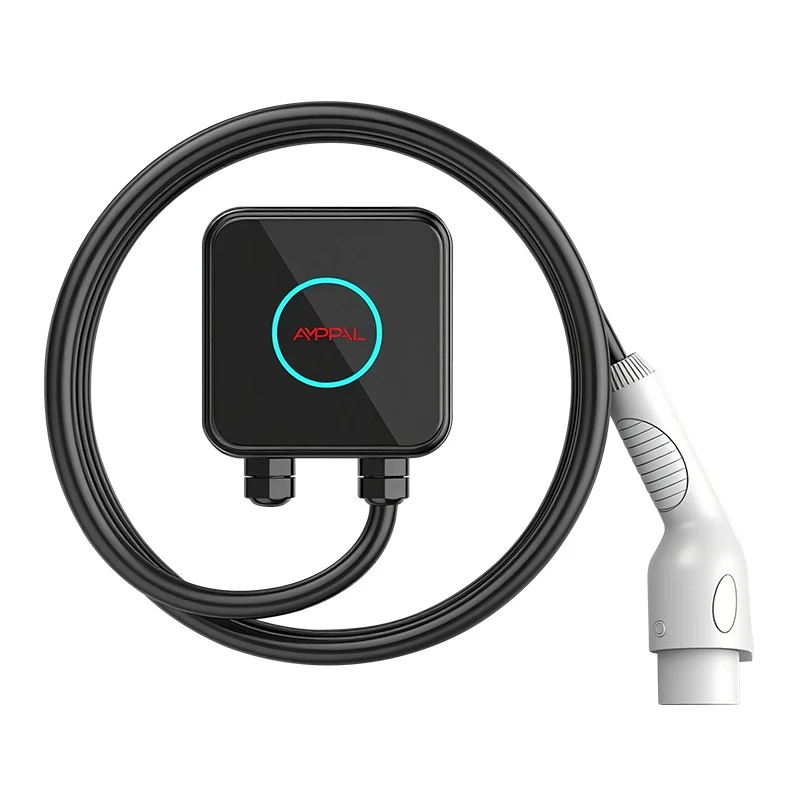
Choosing the right home EV charger is not only about charging speed. Residential power conditions, vehicle compatibility and installation requirements all affect the final charging experience. As an EV charging solutions provider, AMPPAL focuses on developing reliable charging products for different application scenarios.

1. 7kW AC EV Charger The Most Practical Home Choice

Compatibility Requirements

A 7kW AC EV charger is suitable for most residential areas with standard 220V household power supply. In many cases, there is no need to apply for 380V three-phase power or upgrade the existing grid capacity.

For installation, 6mm² pure copper cable is commonly used according to national standards, and the wiring requirements can be achieved in most residential parking spaces.

Charging Speed

For a vehicle equipped with a 60kWh battery, a 7kW charger can usually complete a full charge within around 8–10 hours. This makes it suitable for overnight charging and daily commuting needs.

Main Advantages

  • Lower charger and installation costs
  • Suitable for most residential power conditions
  • Reduced impact on residential transformers
  • Stable charging helps support long-term battery usage

Recommended Users

How to Choose the Right Home EV Charger Power

A 7kW charger is ideal for single-car households, residents in older residential communities, users without access to three-phase power and plug-in hybrid vehicle (PHEV) owners.

2. 11kW AC EV Charger A Choice for Specific Applications

Strict Installation Requirements

An 11kW charger requires a 380V three-phase power supply. Users usually need approval from property management and the local power utility before installation, which can be difficult in older residential buildings.

Key Limitation

The actual charging power depends on the vehicle's On-Board Charger (OBC). If the vehicle only supports single-phase 7kW charging, an 11kW charger may not provide additional charging speed.

Recommended Users

Suitable for new residential communities with three-phase power availability, vehicles supporting three-phase charging and users requiring faster charging.

3. 22kW AC EV Charger Usually Not Necessary for Home Charging

Higher Electrical Requirements

A 22kW charger requires stronger electrical infrastructure, including higher-capacity meters, thicker cables and sufficient grid capacity. For many standard residential properties, installation may involve additional complexity and cost.

Vehicle Compatibility Limitations

Only certain high-end electric vehicles support 22kW AC charging. Many EV models have charging power limits and cannot fully utilize a 22kW charger.

Recommended Users

A 22kW charger may be considered for villas, self-built houses, multi-EV households or users with frequent long-distance driving requirements.

Quick Decision Guide

  • 220V residential power supply: Choose a 7kW AC EV charger.
  • 380V three-phase power supply and compatible vehicle: Consider an 11kW charger.
  • Standard apartment with one EV: A 22kW charger is usually unnecessary.

Selecting the right charger requires considering both electrical conditions and vehicle requirements. AMPPAL provides EV charging products and solutions designed for different residential and commercial applications. Learn more about our company through our About Us page.

Related News
Leave me a message
X
We use cookies to offer you a better browsing experience, analyze site traffic and personalize content. By using this site, you agree to our use of cookies. Privacy Policy
RejectAccept