Products
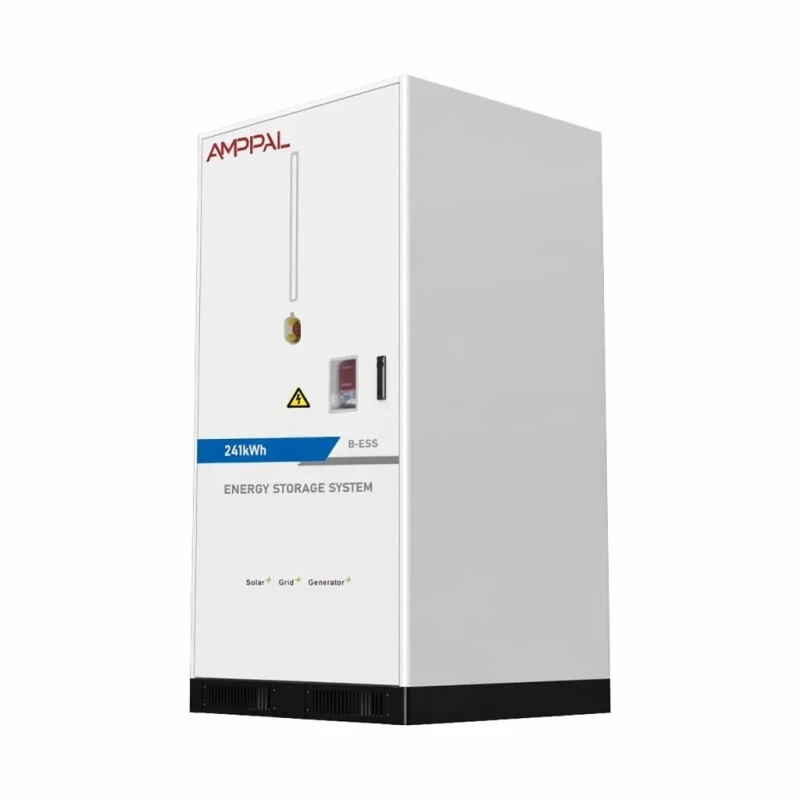
130kW Industrial Battery Energy Storage System for Factory Energy Management
  • 130kW Industrial Battery Energy Storage System for Factory Energy Management130kW Industrial Battery Energy Storage System for Factory Energy Management
  • 130kW Industrial Battery Energy Storage System for Factory Energy Management130kW Industrial Battery Energy Storage System for Factory Energy Management
  • 130kW Industrial Battery Energy Storage System for Factory Energy Management130kW Industrial Battery Energy Storage System for Factory Energy Management

130kW Industrial Battery Energy Storage System for Factory Energy Management

Air-cooled 130kW Industrial Battery Energy Storage System for Factory Energy Management with 257kWh capacity, on-grid and off-grid operation, LFP 314Ah cells and dual-agent fire suppression. Built for factories and commercial buildings paying demand charges on a 380/400V supply.

What This System Is For

Most commercial electricity bills carry two separate charges: the energy you consume, and a demand charge set by your highest half-hour of draw in the billing period. One bad afternoon in July can set the demand charge for the whole month. That is the problem this 130kW Industrial Battery Energy Storage System for Factory Energy Management is built to solve.

The AF 130kW/257kWh cabinet charges when tariffs are low or your solar array is producing surplus, then discharges into the building when load approaches your demand ceiling. At 0.5C it can deliver 130kW for roughly two hours — long enough to cover a typical industrial peak window.

It works on-grid and off-grid, so the same asset also covers you during an outage. For sites where a power cut halts production, that second function often justifies the purchase on its own.

130kW 257kWh Industrial Battery Energy Storage System for Factory Energy Management130kW 257kWh Industrial Battery Energy Storage System for Factory Energy Management130kW 257kWh Industrial Battery Energy Storage System for Factory Energy Management

Specification Choices That Affect Payback

LFP 3.2V/314Ah cells in a 1P256S string: large-format cells mean fewer connections, and fewer connections mean fewer failure points across an eight-year service life.

>8000 cycles at 0.5C and 25°C with 80% energy retention: at one cycle per working day that is over twenty years of nominal life, so cycling is rarely the limiting factor.

THDi below 3% at rated power: your building's other equipment does not pay a harmonics penalty for hosting the battery.

Power factor adjustable across the full -1 to 1 range, which lets the system correct site power factor while it is idle rather than sitting as a dead asset.

Dual fire protection — aerosol plus perfluorohexanone — at both PACK and cabinet level. Insurers increasingly ask for two-stage suppression on commercial installations.

Intelligent air conditioning rather than passive cooling: cell temperature stays even across the string, which is what actually determines whether you reach 8000 cycles.

Technical Specifications

Category

Parameter

Specification

DC side

Battery cell type

LFP 3.2V/314Ah

Battery system string

1P256S

System capacity

257kWh

Rated voltage

819.2VDC

Voltage range

691~921VDC

AC side (On grid)

Rated power

130kW

Rated frequency

50/60Hz

Rated current

189A

Rated grid voltage

380/400VAC

Grid voltage range

360~420VAC

Adjustable range of PF

-1(Speed-up)~1(Delay)

THDi

<3%(Rated power)

AC side (Off grid)

Rated power

130kW

Rated frequency

50/60Hz

Rated current

189A

AC voltage range

360~420VAC

THDi

<3%(Rated power)

On/Off Grid

STS(optional)

Standard: 240~500kW(Customized > 1MW solution)

System efficiency

MAX.efficiency 88% @0.5C / 1 Charge 1 Discharge

System lifespan

>8000Times (0.5C@25°C) Energy retention rate ≥ 80%

Wiring method

AC bottom entry/3-phase 4-wire(3L+N+PE)

Charge & discharge rate

0.5CP

System parameters

Thermal management method

Intelligent air-cooled air conditioner

Communication protocol

CAN/Eth/RS485(4G Optional)

Fire protection system

Aerosol & Perfluorohexanone

IP rating

IP54

Product size

1550*1268.5*2185mm

Product weight

2800kg

Environmental Requirements

Operating temperature range

0°C~+50°C

Operating humidity range

0~95%RH(No condensation)

Operating altitude

2000m (>2000m Derating)

Certification

PACK: CE ROHS Equipment: UN38.3 MSDS

Warranty

5 Years


Sites Where the Numbers Work

Manufacturing plants with heavy motor starts: demand charges driven by short peaks are the clearest payback case for storage.

Commercial buildings with high afternoon HVAC load: charge overnight on cheap tariff, discharge through the cooling peak.

Sites with existing rooftop solar and export limits: store surplus generation rather than curtailing it or exporting at low feed-in rates.

Facilities running diesel backup: the EMS coordinates PV, battery and generator, cutting generator run hours and fuel spend.

EV charging depots: buffer the grid connection so a bank of chargers does not force a costly supply upgrade.

How Peak Shaving Actually Runs

The EMS watches the site meter continuously. You set a demand threshold — typically just below your contracted capacity — and the system discharges whenever measured load would otherwise cross it. Response is fast enough to catch motor starts and similar short peaks.

Recharging is scheduled rather than opportunistic. The controller looks at your tariff calendar and refills the battery during off-peak hours, or earlier if the PV array is generating more than the building consumes.

In off-grid mode the optional STS transfers the site to battery supply when the grid fails. Standard capacity is 240-500kW with larger units available, and the transfer is fast enough that IT equipment and control systems stay up rather than rebooting.

Safety Engineering and Certification

Battery packs are certified to CE and RoHS; the complete system carries UN38.3 and MSDS documentation for shipping and site approval.

Two-stage fire suppression: aerosol acts at pack level while perfluorohexanone protects the cabinet volume, addressing the two different failure scales.

IP54 enclosure with the electrical compartment separated from the battery compartment, so a thermal event in one does not propagate through the other.

Every pack is capacity-graded and internal-resistance matched before assembly. Mismatched cells in a 256-series string are the classic cause of premature capacity loss.

Insulation and dielectric testing is performed on 100% of assembled systems, with results recorded against the serial number.

Operating envelope is verified across 0°C to +50°C and up to 95% humidity without condensation.

Build Sequence at Our Yueqing Plant

1. Cell intake — every batch is sampled for capacity and internal resistance against the supplier's declared values.

2. Cell grading and matching — cells are sorted so that each string is built from a narrow performance band.

3. PACK assembly — busbar welding, BMS wiring and pack-level insulation testing.

4. Cabinet fabrication — sheet metal cut, formed and welded, then pre-treated and powder-coated.

5. Integration — packs, PCS, air conditioning, fire suppression and EMS installed and wired into the cabinet.

6. Commissioning test — full charge and discharge at 0.5C with cell-level temperature and voltage logging.

7. Grid simulation — on-grid and off-grid transfer verified against a programmable AC source.

8. Packing — cabinet secured to a reinforced pallet, shock indicators fitted, then crated for sea freight.

Is 130kW/257kWh the Right Size?

Sizing follows your load profile, not your building area. Pull twelve months of half-hourly meter data and look at the shape of your peaks: how high above baseline, and for how long. A 130kW/257kWh system covers peaks up to 130kW lasting up to about two hours.

If your peaks are shorter but higher — say 250kW for twenty minutes — you need more power and less energy, and a different configuration suits better. If they run all day, this system will discharge early and leave you exposed in the afternoon.

Be honest about the tariff too. Where demand charges are low or absent, peak shaving alone rarely pays back within a reasonable period. In that case the business case has to come from backup value or solar self-consumption, and we would rather establish that before you commit.

What to Compare Against Other Suppliers

Ask for cycle life at 0.5C with the retention threshold stated. A cycle figure without temperature, rate and retention percentage is meaningless.

Ask what fire protection is included at pack level, not just cabinet level. Many quotes cover only one.

Ask whether the stated efficiency is round-trip at system level or DC-side only. Ours is 88% maximum at 0.5C, measured across the full system.

Ask about EMS integration with existing PV inverters and generators — retrofitting an incompatible EMS later costs more than the controller itself.

Commercial terms: production 25-35 working days for standard configurations, 5-year warranty, with extended cover available at order.

Shipping a 2800kg Cabinet

The cabinet measures 1550 × 1268.5 × 2185mm and weighs 2800kg, so it ships as a single unit on a reinforced steel-framed pallet with lifting points accessible for a forklift or crane.

Two cabinets fit a 20-foot container; five to six fit a 40-foot high cube depending on bracing. Batteries are classified as UN3480 dangerous goods for sea freight — we handle the declaration, and the UN38.3 test report and MSDS ship with the paperwork.

Terms are FOB Ningbo or Shanghai, with CIF available. Air freight is not practical at this weight and classification. Allow additional time for dangerous-goods booking, which typically adds a week to the sailing schedule compared with general cargo.

Warranty and Long-Term Service

Five-year warranty covering battery packs, PCS, EMS, thermal management and fire suppression as a complete system.

Remote monitoring over CAN, Ethernet or RS485, with optional 4G. We can read cell-level data and identify a weak module before it affects system capacity.

Annual service visit recommended: air filter replacement, fire suppression inspection, terminal torque check and capacity verification.

Replacement packs are held in stock and ship within 5-7 working days; a single failed pack can be swapped without taking the whole cabinet offline.

Extended warranty to eight or ten years is available at the time of order, priced against your expected cycling profile.

Installation and Operating Mistakes

Wrong: siting the cabinet against a wall with no clearance. Right: follow the ventilation clearances in the manual. Air-cooled systems reject heat to the surrounding air and need room to do it.

Wrong: setting the demand threshold from a single month's bill. Right: use twelve months of interval data. Seasonal peaks are what catch operators out.

Wrong: assuming the battery covers the whole site during an outage. Right: size your critical load circuit deliberately. 130kW is substantial but it is not unlimited.

Wrong: skipping the annual filter change to save cost. Right: restricted airflow raises cell temperature, and elevated temperature is the fastest route to capacity loss.

Wrong: installing where flood risk exists. Right: IP54 protects against dust and splashing, not standing water. Raise the plinth if the site has any history of flooding.

What Operators Report

A textile plant in Bursa, Turkey commissioned one of these systems in early 2025 to manage demand charges from loom motor starts. Their electrical engineer reported the demand peak dropped by around 90kW in the first full billing month, and noted that the EMS took a few weeks of tuning before the threshold was set correctly for their load pattern.

A cold-storage operator in Nairobi bought the system primarily for backup rather than peak shaving. Their feedback was practical: grid outages that previously meant starting a generator within minutes now pass unnoticed, though they did ask us to adjust the low-SOC alarm threshold upward after a long outage.

A commercial landlord in Kazakhstan running two cabinets across an office complex commented on the air conditioning noise — audible in an adjacent car park, which they had not anticipated. We supplied a recommended acoustic screen layout rather than modifying the unit.

Frequently Asked Questions

Q: How long can it supply 130kW?

A: Around two hours from full charge at 0.5C, giving 257kWh usable at the stated depth of discharge.

Q: Does it work without the grid?

A: Yes, in off-grid mode with the optional STS. Standard transfer capacity is 240-500kW; larger is customisable.

Q: What is the real round-trip efficiency?

A: Maximum 88% at 0.5C measured at system level, including conversion and auxiliary loads.

Q: Can it charge from solar directly?

A: Yes, through the EMS, which coordinates PV, battery, grid and generator.

Q: How long will the batteries last?

A: More than 8000 cycles at 0.5C and 25°C with at least 80% retention. Higher ambient temperatures shorten this.

Q: What certifications does it carry?

A: CE and RoHS at pack level, UN38.3 and MSDS for the complete equipment.

Q: What maintenance does it need?

A: Annual filter change, fire suppression check, torque verification and a capacity test. Roughly half a day per cabinet.

Q: What is the lead time?

A: 25-35 working days for standard configurations; custom EMS integration or non-standard voltages take longer.


Send Inquiry
Contact Info

Talk Directly to Our EV Charger Factory

Get factory-direct pricing, custom solutions, and expert support.

- Fast Response – Reply within 24 hours.

- OEM/ODM – Flexible customization and sample orders.

- Certified Quality – CE, TÜV, CB, and CCC options.

- Custom Quotes – Tailored to your specifications.

- Technical Support – Expert help with OCPP, DLB, and system integration.

X
We use cookies to offer you a better browsing experience, analyze site traffic and personalize content. By using this site, you agree to our use of cookies. Privacy Policy
RejectAccept