" "
Whatsapp
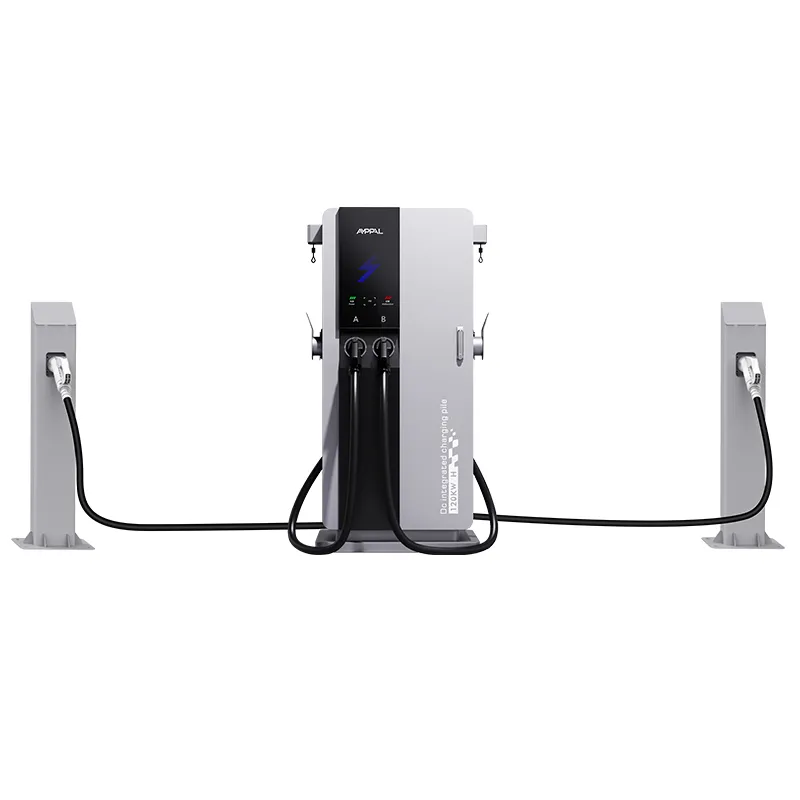
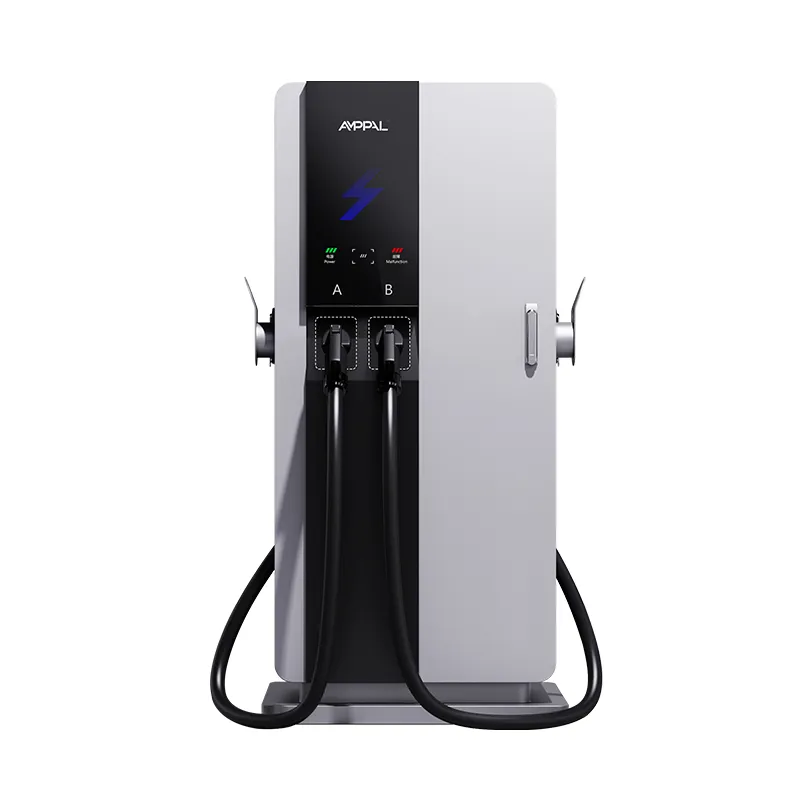
Buyers argue about 60 and 120, and the AMPPAL 80kW Smart DC EV Charging Station for Shopping Centers and Parking Lots sits between them like a compromise nobody asked for — but the arithmetic says otherwise. The AF-DC-80-Y-B-O-3/4/5-H delivers 33% more power than a 60kW unit while asking for less feeder capacity than a 120kW one. For a medium station, that is the difference between upgrading the service entrance and not upgrading it.
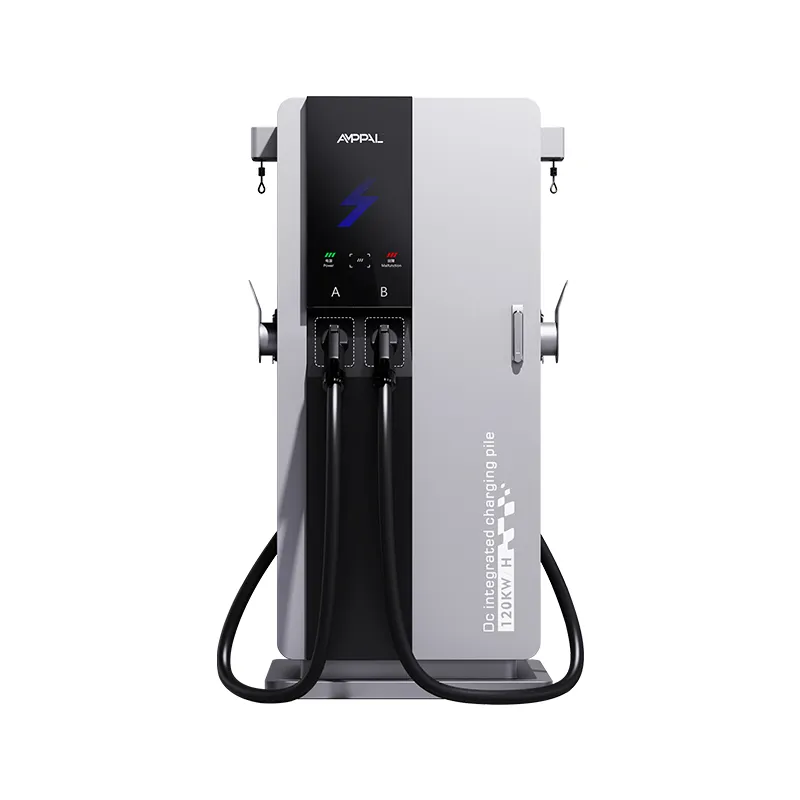
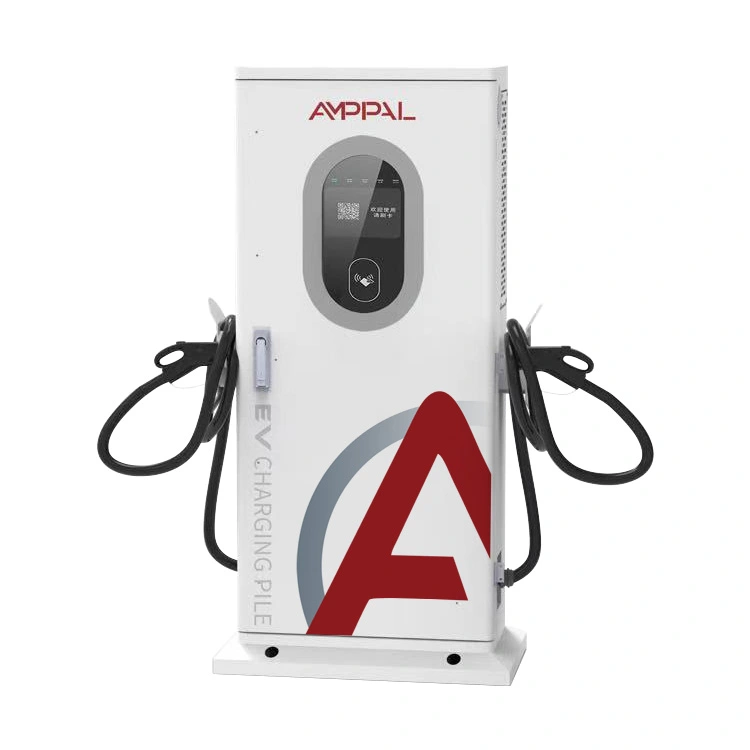
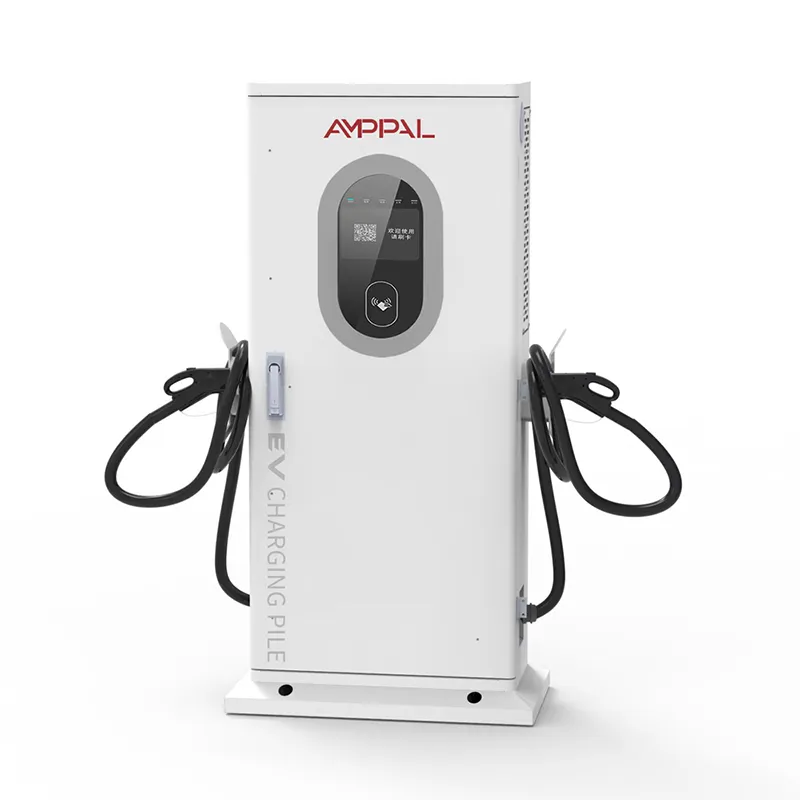
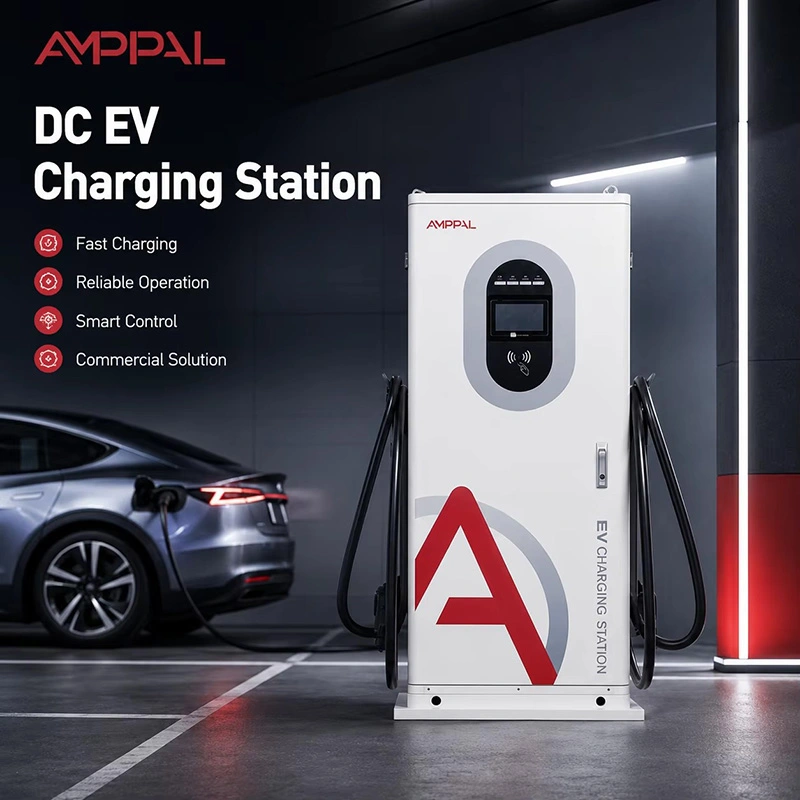
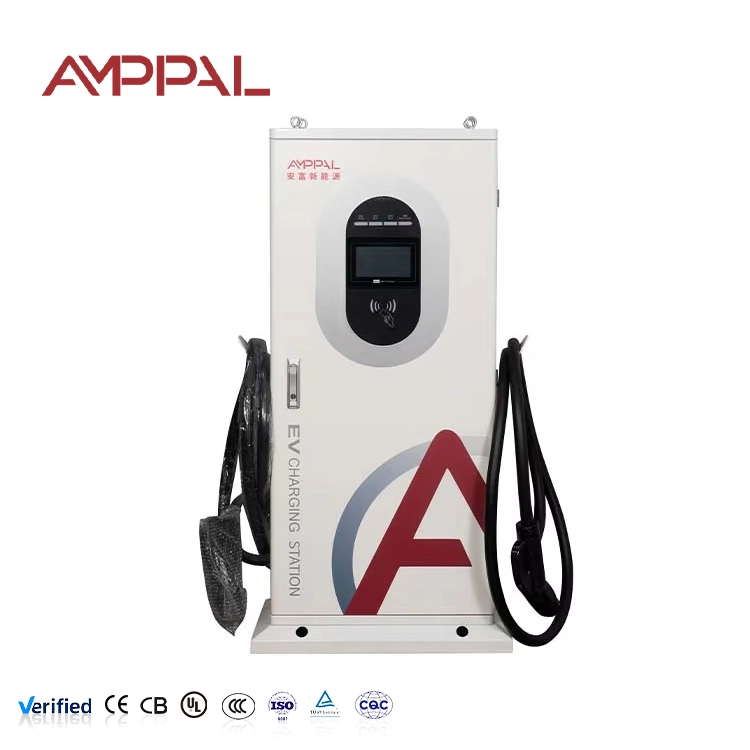
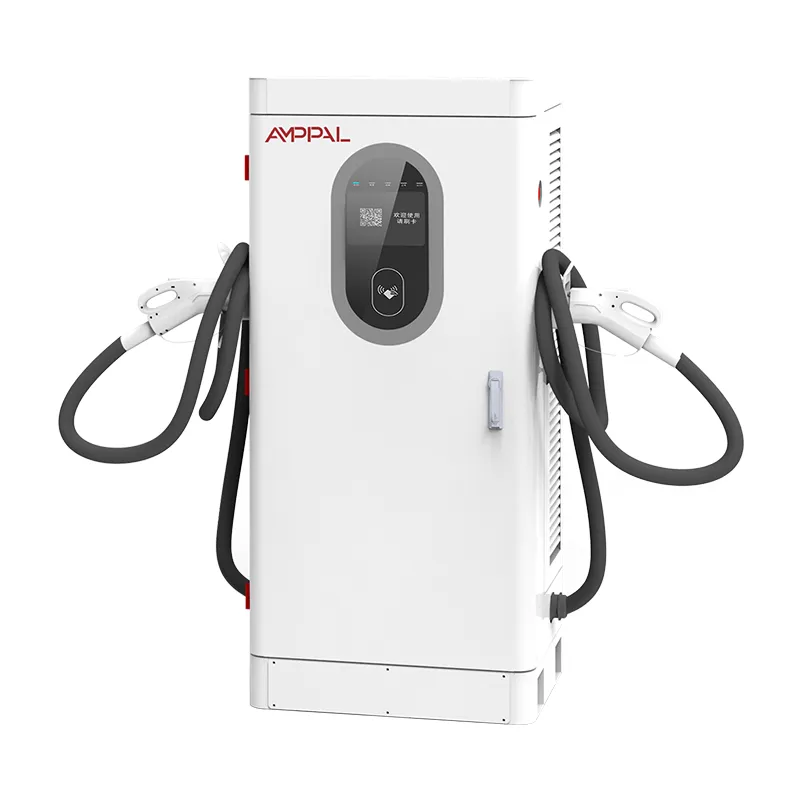
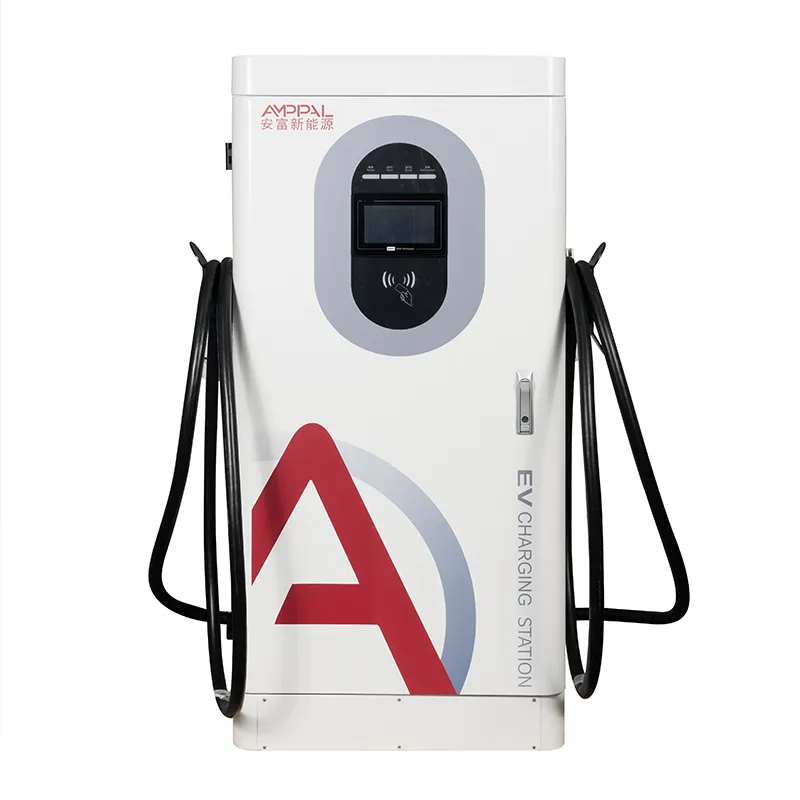
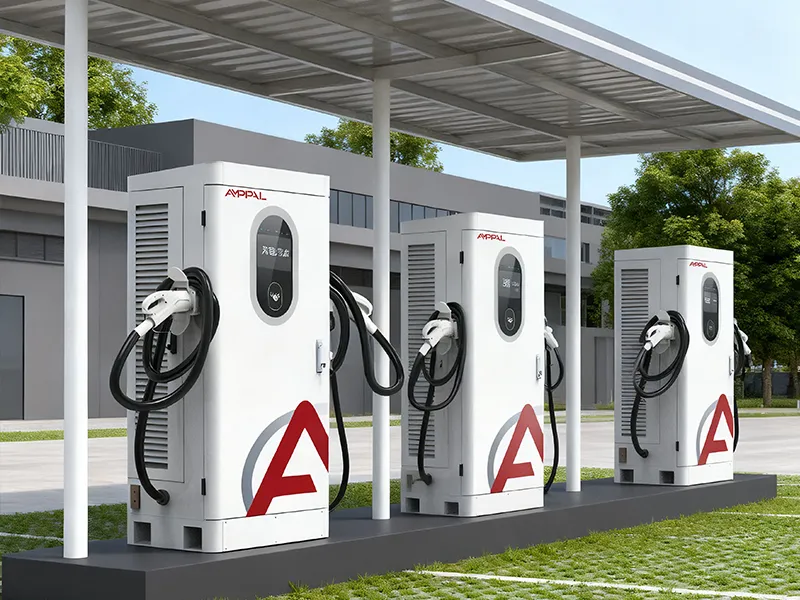
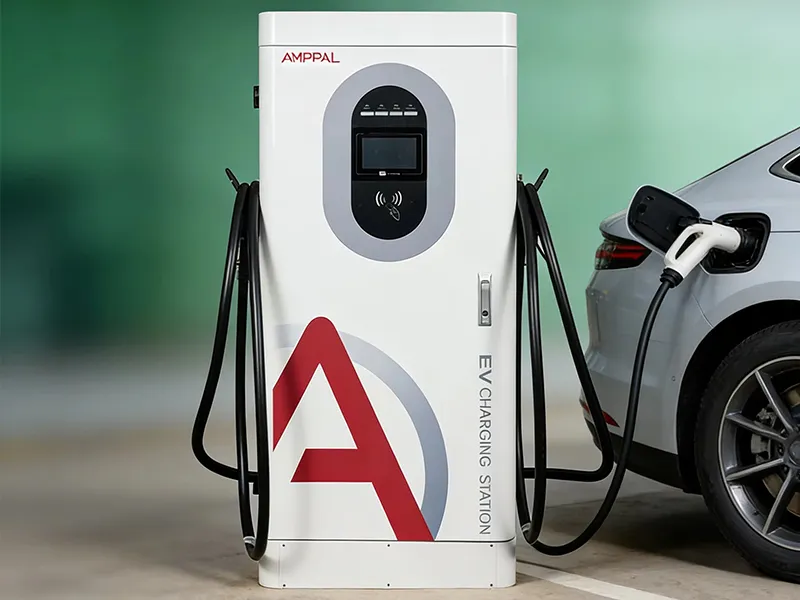
The 80kW Smart DC EV Charging Station for Shopping Centers & Parking Lots stands 1700 mm tall on a 750 × 550 mm base, runs a 7-inch touch screen, and covers five connector standards in one compact tower. It is the same 3-Series body as our 60kW model, so the pad and civil works are identical — only the rectifier stage is bigger.
Most sites do not need the biggest number on the spec sheet. They need the biggest number the wiring already supports, and that number is often 80.
That is why the 80kW 3-Series exists: it is the answer to the question “how much station can I build without rebuilding the electrical room.”

33% more throughput than 60kW for a modest price step — the best dollars-per-kilowatt in the range.
Lower feeder demand than 120kW: many sites run 80kW on the existing 380V service without a transformer change.
Session times that suit retail: 20–40 minutes for most passenger EVs, long enough for a coffee stop, short enough for turnover.
The same compact footprint as the 60kW 3-Series, so the pad drawing and civil work stay identical.
One tower, five connectors: CCS1, CCS2, CHAdeMO, GB/T, and NACS from the same SKU.
95% peak efficiency keeps losses low even when the unit is not pushed to its limit.
Factory specification of the AF-DC-80-Y-B-O-3/4/5-H exactly as shipped.
|
Parameter |
Specification |
|
Model |
AF-DC-80-Y-B-O-3/4/5-H |
|
Rated Output Power |
80kW |
|
Overall Dimensions (mm) |
750 × 550 × 1700 |
|
Input Voltage |
AC380V±15% |
|
Output Voltage Range |
200-1000VDC |
|
HMI |
7" touch screen |
|
Peak Efficiency |
95% |
|
Protection Grade |
IP54 |
|
Compatible Connectors |
CCS1/CHAdeMO/CCS2/GB/T/NACS |
|
Operating Temperature |
-25°C ~ +50°C |
|
Warranty |
2 Years Standard |
Mid-size retail car parks with 30–60 bays: 80kW per stall balances throughput against the landlord's electrical budget.
Supermarket and shopping strips: drivers arrive with 20–60% charge and need a top-up, not a full tank.
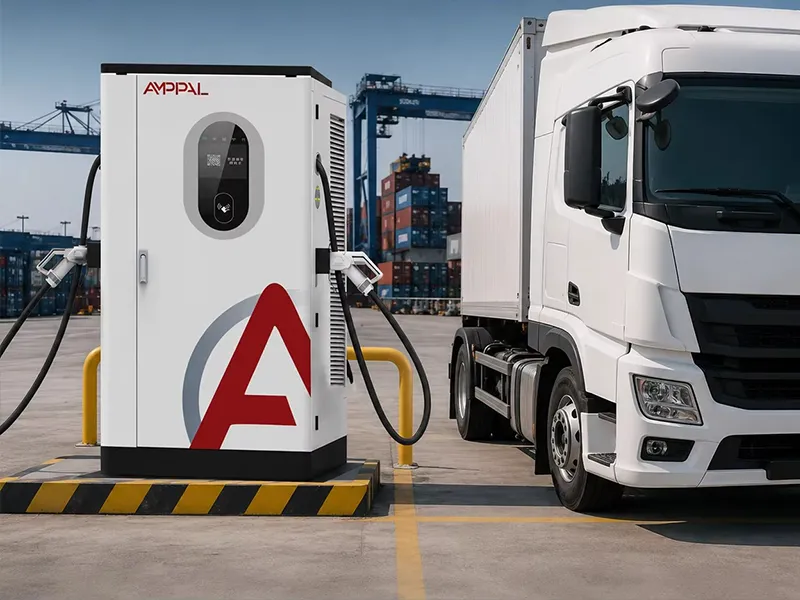
Taxi and ride-hail hubs: short dwell sessions turn stalls over without the grid cost of 120kW-plus units.
Small fleets of vans and hatchbacks: 80kW covers shift-turnaround charging on one 380V feed.
Franchise fuel sites: 80kW slots into existing canopy power where 120kW would force a service upgrade.
The unit rectifies AC380V three-phase and converts it to 200-1000VDC, matching the vehicle's request through the CCS, CHAdeMO, GB/T, or NACS handshake. The 80kW rating is continuous, not a marketing peak — the machine holds it through the session instead of boosting briefly and throttling back.
Feeder math is where 80kW wins. At 380V, full output draws roughly 120A per phase before losses and margin, which many existing commercial services already carry. A 120kW plan pushes that current up by about half and often tips the service over.
OCPP 1.6/2.0 reporting, remote diagnostics, and over-the-air firmware run over Ethernet, WiFi, or 4G, so the unit joins the same backend as the rest of your network. Operators typically set a session cap in the portal to keep the 80kW asset from being blocked by a single slow-charging car.
Type approval covers CE and TUV at unit level; we release UL and CB reports for customers assembling an export file.
Full-load endurance testing at 80kW verifies the continuous rating, not just a short burst on the test bench.
96-hour salt-spray on the enclosure for roadside and coastal sites, where compact towers sit closer to splash zone than their bigger cousins.
48-hour production burn-in with efficiency logs bound to each serial number.
Thermal camera inspection during load test catches hot spots in the module stack before shipping.
The power modules themselves are qualified from -30°C to +55°C. We publish the cabinet at -25°C to +50°C because the enclosure, not the module, sets the limit.
Step 1. The 750 mm-wide enclosure is laser-cut and robot-welded on FANUC lines.
Step 2. Panels are formed on TRUMPF press brakes and powder-coated in-house.
Step 3. The module bay receives the higher-rated rectifier set for 80kW, not a 60kW set tuned up past its design point.
Step 4. Input wiring, contactors, and surge protection are assembled on the AC line with torque-controlled terminations.
Step 5. The HMI, controller, and communication boards are installed on the DC line.
Step 6. Load testing at 80kW records efficiency, power factor, and temperature rise per unit.
Step 7. A 48-hour burn-in cycles sessions across the power range.
Step 8. Final inspection and crating; cumulative shipments passed one million units in 2024.
Choose 80kW when you have a medium site, an existing 380V service with some headroom, and a vehicle mix that needs 20–40 minute sessions. It is the smallest rating that makes a retail station feel fast, and the largest that usually avoids a service entrance upgrade.
Stay with 60kW if every session is an overnight or depot charge and speed is not a selling point; the savings are real. Step up to 120kW or more if you run a corridor site where drivers expect a 15–30 minute top-up and will pay for the feeder cost.
Be honest about growth: if the site will double its traffic within two years, buy the feeder capacity for the bigger unit now, even if the charger starts life at 80kW. Swapping a charger later is a day's work; upgrading a buried feeder is a construction project.
One more case to avoid: a single 80kW unit advertised as a “high-power hub” will disappoint drivers who queued expecting 150kW-plus. Name the station honestly and the unit will earn its keep.
Factory-direct pricing with CE, TUV, UL, and CB certificates in the quotation package.
15–20 working days delivery after drawing approval; MOQ from one container.
OEM/ODM branding, custom HMI language, and connector mix per market, all settled at the drawing-approval stage.
Five-connector support from one SKU, which reduces inventory risk for distributors covering several countries.
A 2-year warranty with modules cross-shipped within 5 working days.
The tower ships upright in a steel-framed crate of roughly 1850 × 750 × 700 mm. The cable and connector travel in a padded accessory box, and the crate base has fork pockets for standard pallet trucks.
Narrow crates load without waste into 40ft high-cube containers, and the loading plan goes out with the quotation so forwarders can quote the exact trucking leg. For one-off trials, LCL shipment is arranged without special equipment.
Pricing is FOB Ningbo, or CIF if you want us to arrange the sailing. The document set — invoice, packing list, bill of lading, origin certificate and test reports — is issued inside three working days of loading.
2-year standard warranty on the complete unit.
Spare rectifier modules and HMI boards cross-shipped within 5 working days.
Remote OCPP diagnostics and firmware updates over the air.
Load-profile advice: we help you set session caps and time-of-use schedules for the 380V feeder.
A quarterly maintenance checklist covering filters, fans, and terminal torque.
Wrong: assuming 80kW needs the same feeder as 120kW. Right: at 380V, 80kW draws roughly 120A per phase before margin — check your service, it may already cope.
Wrong: buying 60kW because it is cheaper when the site already has headroom for 80kW. Right: the price step is small and the throughput gain is 33%.
Wrong: setting no session cap and letting one vehicle idle on the stall. Right: configure idle fees and session limits in the OCPP backend.
Wrong: tucking the unit into a corner with blocked intakes to save space. Right: keep the manual's clearance so the cooling curve holds at rated power.
Wrong: assuming 80kW charges every car at 80kW. Right: the vehicle's own request decides; 80kW is the ceiling, not the guarantee.
A regional operator in Kuala Lumpur, Malaysia runs six units at two supermarket car parks. The existing 380V services handled the load with only a breaker change, and the stations turn over 12–16 sessions a day; the only annoyance was that the Malay language pack needed a remote update on the first batch, which took one afternoon.
A taxi cooperative in Tashkent, Uzbekistan installed four towers at its depot. Drivers charge between shifts in 25–40 minutes, and the cooperative saved the transformer cost a 120kW plan would have required. Their gripe: two drivers find the cable heavier than the AC chargers they used before.
A supermarket chain in Zagreb, Croatia fitted 80kW units at three stores in 2025. The finance lead calculates the extra spend over 60kW paid back in seven months of added sessions; the only complaint is that the fans become audible on the hottest afternoons, which the nightly schedule mostly avoids.

A: 33% more power for a modest price step, and usually no feeder upgrade on an existing 380V service.
A: 120kW needs roughly 50% more feeder current; if your service is marginal, 80kW avoids the upgrade cost.
A: Most passenger EVs add 40–80 km of range in 20–40 minutes, depending on the battery's acceptance curve and its state of charge.
A: No. The vehicle requests its own rate, and older models may accept less; 80kW is the ceiling, not the guarantee.
A: The 3-Series tower is single-gun per unit; for twin-gun layouts we recommend pairing two towers or a larger cabinet.
A: CCS1, CCS2, CHAdeMO, GB/T, and NACS; specify your market when ordering.
A: Yes. The input is AC380V±15%, which covers nominal 380–400V grids.
A: Reckon on 15-20 working days once drawings are signed off. Container-quantity orders get scheduled slots.
A: 2 years standard on the complete unit, modules included.
Address
No. 237, Weisan Road, Yueqing, Zhejiang, China
Tel
Talk Directly to Our EV Charger Factory
Get factory-direct pricing, custom solutions, and expert support.
- Fast Response – Reply within 24 hours.
- OEM/ODM – Flexible customization and sample orders.
- Certified Quality – CE, TÜV, CB, and CCC options.
- Custom Quotes – Tailored to your specifications.
- Technical Support – Expert help with OCPP, DLB, and system integration.