Products
20–50kW All-in-One Battery Energy Storage System for Commercial and Solar Applications
  • 20–50kW All-in-One Battery Energy Storage System for Commercial and Solar Applications20–50kW All-in-One Battery Energy Storage System for Commercial and Solar Applications
  • 20–50kW All-in-One Battery Energy Storage System for Commercial and Solar Applications20–50kW All-in-One Battery Energy Storage System for Commercial and Solar Applications
  • 20–50kW All-in-One Battery Energy Storage System for Commercial and Solar Applications20–50kW All-in-One Battery Energy Storage System for Commercial and Solar Applications
  • 20–50kW All-in-One Battery Energy Storage System for Commercial and Solar Applications20–50kW All-in-One Battery Energy Storage System for Commercial and Solar Applications
  • 20–50kW All-in-One Battery Energy Storage System for Commercial and Solar Applications20–50kW All-in-One Battery Energy Storage System for Commercial and Solar Applications
  • 20–50kW All-in-One Battery Energy Storage System for Commercial and Solar Applications20–50kW All-in-One Battery Energy Storage System for Commercial and Solar Applications
  • 20–50kW All-in-One Battery Energy Storage System for Commercial and Solar Applications20–50kW All-in-One Battery Energy Storage System for Commercial and Solar Applications
  • 20–50kW All-in-One Battery Energy Storage System for Commercial and Solar Applications20–50kW All-in-One Battery Energy Storage System for Commercial and Solar Applications
  • 20–50kW All-in-One Battery Energy Storage System for Commercial and Solar Applications20–50kW All-in-One Battery Energy Storage System for Commercial and Solar Applications

20–50kW All-in-One Battery Energy Storage System for Commercial and Solar Applications

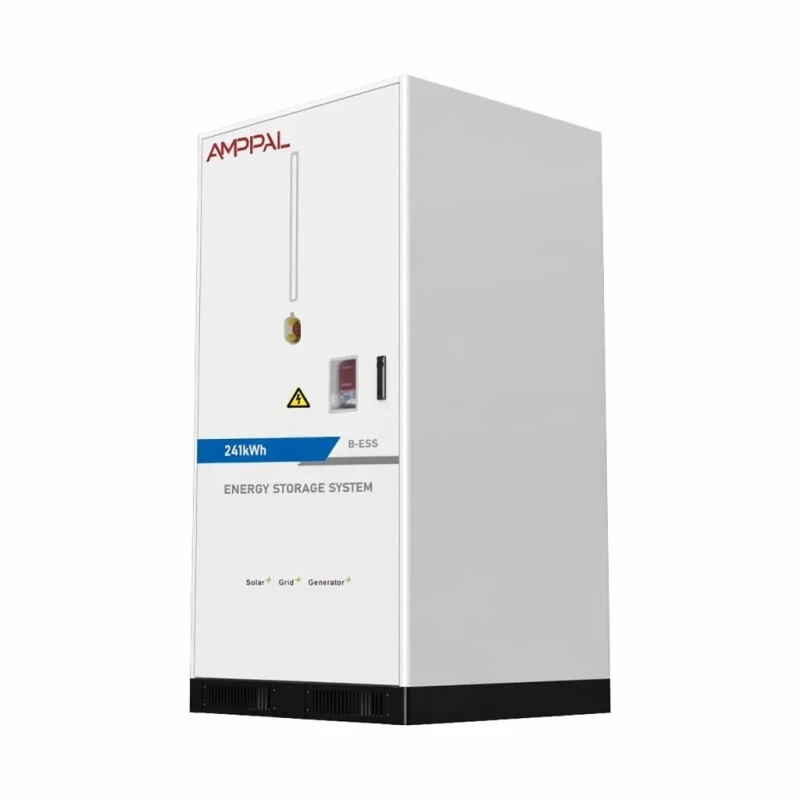
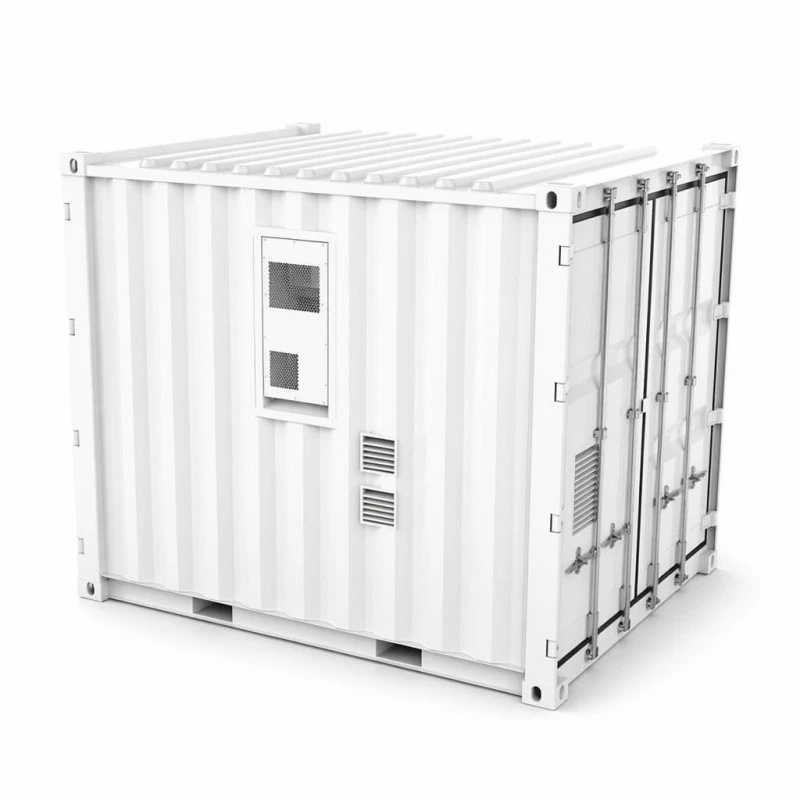
A 20–50kW All-in-One Battery Energy Storage System for Commercial and Solar Applications, LFP battery and local EMS for small and medium commercial sites. Up to 26kW of solar connects directly to the built-in MPPT, so one cabinet replaces separate inverter, battery and controller procurement. Models at 20kW/51.2kWh, 30kW/61.44kWh and 50kW/107kWh.

One Cabinet Instead of Three Procurement Lists

A solar-plus-storage project normally means three vendors: a PV inverter, a battery rack and a controller that speaks to both. Each has its own warranty, its own commissioning engineer and its own blame game when the system underperforms. This 20–50kW All-in-One Battery Energy Storage System for Commercial and Solar Applications collapses all three into a single delivery.

The inverter stage accepts up to 26kW of DC from your rooftop array (39kW on the 30kW model, 65kW on the 50kW model) across 2/4 MPPT trackers, so the battery charges from solar without a separate hybrid inverter or an additional string box.

Inside is a 51.2kWh LFP battery built from five 10.24kWh packs, plus local control logic that runs self-consumption, time-of-use shifting and grid backup from the same screen. For a site that just wants solar self-use plus outage cover, this is the shortest path from order to export.

20–50kW All-in-One Battery Energy Storage System for Commercial & Solar Applications20–50kW All-in-One Battery Energy Storage System for Commercial & Solar Applications20–50kW All-in-One Battery Energy Storage System for Commercial & Solar Applications

Why the Solar Input Rating Matters

26kW maximum PV input on the 20kW model lets the array exceed the inverter rating; the MPPT clamps surplus instead of clipping daytime yield.

2/4 MPPT ways: two trackers as standard, four where your roof faces different azimuths — one shaded side does not stall the other.

Rated grid voltage is 380V AC with 50/60Hz ±5Hz tolerance, so the same cabinet serves 50Hz and 60Hz markets without a factory variant.

At 97% maximum efficiency and 90% depth of discharge, more of each solar kilowatt-hour reaches the load instead of being lost in conversion.

Communication over CAN/RS485/WiFi covers local monitoring, inverter handshakes and remote readouts without buying a separate gateway.

AC bottom entry, three-phase four-wire (3L+N+PE), keeps cable routing inside the plinth and shortens the run to the main switchboard.

Technical Specifications

Parameter

20kW Model

30kW Model

50kW Model

System specification

20kW/51.2kWh

30kW/61.44kWh

50kW/107kWh

System battery DC voltage

512V

614V

716V

Battery voltage range

432~576VDC

490~690VDC

582~806VDC

Cell type

LFP 3.2V/100Ah

LFP 3.2V/100Ah

LFP 3.2V/150Ah

Single PACK configuration

102.4V100Ah/10.24kWh

102.4V100Ah/10.24kWh

102.4V150Ah/15.36kWh

Number of system PACKs

5PCS

6PCS

7PCS

Total system capacity

51.2kWh

61.44kWh

107kWh

Inverter rated power

20kW

30kW

50kW

MAX. PV input power

26kW

39kW

65kW

Charge and discharge rate

≥0.5C

≥0.5C

≥0.5C

MPPT ways

2/4Ways

2/4Ways

2/4Ways

Rated grid voltage

380V AC

380V AC

380V AC

Rated grid frequency

50/60Hz ±5Hz

50/60Hz ±5Hz

50/60Hz ±5Hz

Battery cycle life

>6000 times (0.5C@25°C) Energy retention rate ≥ 80%

>6000 times (0.5C@25°C) Energy retention rate ≥ 80%

>6000 times (0.5C@25°C) Energy retention rate ≥ 80%

System efficiency/discharge depth

MAX efficiency 97% / DOD90%

MAX efficiency 97% / DOD90%

MAX efficiency 97% / DOD90%

Thermal management

Intelligent air cooling

Intelligent air cooling

Intelligent air cooling

Firefighting

PACK aerosol/cabinet aerosol

PACK aerosol/cabinet aerosol

PACK aerosol/cabinet aerosol

Control method

Local control system

Local control system

Local control system

Operating mode

On/off-grid

On/off-grid

On/off-grid

Communication

CAN/RS485/WiFi

CAN/RS485/WiFi

CAN/RS485/WiFi

Access method

AC bottom entry/3-phase 4-wire(3L+N+PE)

AC bottom entry/3-phase 4-wire(3L+N+PE)

AC bottom entry/3-phase 4-wire(3L+N+PE)

Use ambient temperature

0°C~+50°C

0°C~+50°C

0°C~+50°C

Use ambient humidity

0~95%RH

0~95%RH

0~95%RH

Storage temperature

-20°C~+60°C

-20°C~+60°C

-20°C~+60°C

Working altitude

2000m (>2000m derated use)

2000m (>2000m derated use)

2000m (>2000m derated use)

IP rating

IP54

IP54

IP54

Product size

1000*1106*1640mm

1000*1106*1640mm

1100*1205*2200mm

Product weight

850kg

950kg

1200kg

Certification

PACK: CE ROHS Equipment: UN38.3 MSDS

PACK: CE ROHS Equipment: UN38.3 MSDS

PACK: CE ROHS Equipment: UN38.3 MSDS

Warranty

5 Years

5 Years

5 Years

Where a 20-50kW Cabinet Earns Its Keep

Small factories with rooftop solar and afternoon production peaks: the 20kW/51.2kWh model covers a 20kW demand spike for roughly two and a half hours.

Hotels and guesthouses running air conditioning against a time-of-use tariff: charge overnight, discharge through the cooling window.

Agricultural processing sites with intermittent grid quality — the cabinet rides through voltage dips on local control without external EMS software.

Retail chains and workshops that lease space: one cabinet needs no dedicated battery room, just a flat concrete pad and cable access.

EV forecourts with modest charge loads: buffer 2-4 slow chargers off a weak grid connection without upgrading the transformer.

20–50kW All-in-One Battery Energy Storage System for Commercial & Solar Applications20–50kW All-in-One Battery Energy Storage System for Commercial & Solar Applications20–50kW All-in-One Battery Energy Storage System for Commercial & Solar Applications

How the Hybrid Topology Runs a Day

In the morning the MPPT trackers feed solar into the building load first. Surplus goes into the battery until it reaches the programmed SOC ceiling, typically 90-100% depending on your tariff plan.

When load exceeds solar plus battery the grid covers the balance seamlessly — one conversion stage, not two boxes negotiating over a bus.

At night the battery discharges during peak tariff hours and the EMS reserves a floor SOC for grid backup. Because the local controller holds the schedule, a lost internet connection does not stop the shifting logic — it just stops the remote dashboard.

What the Safety File Contains

Fire protection is aerosol at PACK level and aerosol again at cabinet level — two independent stages aimed at the two different places a thermal event can start.

LFP 3.2V/100Ah cells carry CE and RoHS at pack level, and the complete equipment ships with UN38.3 and MSDS documentation for customs and insurance.

Intelligent air cooling keeps the five packs within a narrow temperature band; the fan curve follows cell temperature rather than running at full speed all day.

IP54 enclosure suits outdoor canopy positions and covered plant rooms; the electrical bay is separated from the battery bay inside the cabinet.

Cycle life is stated at >6000 times at 0.5C and 25°C with at least 80% energy retention — one full cycle per working day is roughly twenty years before the threshold is reached.

Ambient window is 0°C to +50°C with 0-95%RH humidity and 2000m altitude (derated above); most unheated plant rooms sit inside it.

How the 850kg Cabinet Is Built in Yueqing

1. Cell intake — incoming LFP cells are batch-sampled for capacity and internal resistance before any pack assembly begins.

2. Pack assembly — 102.4V/10.24kWh packs are welded, wired and insulation-tested with the pack BMS fitted.

3. Cabinet fabrication — steel sheet is CNC-cut, bent and welded, then pre-treated and powder-coated on the same line used for the charging products.

4. Inverter integration — the PV stage, battery DC stage and AC terminals are wired with the local controller into one bus.

5. Fire and thermal fit-out — aerosol generators, air ducts and temperature sensors are installed and functionally checked.

6. Commissioning run — every cabinet completes a full 0.5C charge and discharge with pack-level voltage and temperature logged.

7. Grid simulation — on-grid and off-grid transitions are verified against a programmable AC source before release.

8. Packing — the cabinet is bolted to a reinforced pallet with shock indicators, wrapped and prepared for container loading.

Picking Between 20, 30 and 50kW

Match the model to your worst-case import, not your average. Measure the half-hourly demand that actually drives your bill: the 20kW model carries up to 20kW of load from battery, the 30kW model 30kW, and the 50kW model 50kW. Energy follows: 51.2, 61.44 and 107kWh respectively.

The 50kW cabinet is physically different — 1100*1205*2200mm and 1200kg against 1000*1106*1640mm and 850kg for the smaller two — so check your door widths, floor loading and crane access before committing.

If your site has no grid import problem and no time-of-use spread, this cabinet is likely the wrong spend. It pays back through self-consumption and tariff shifting; without those, a battery is a parked asset. We would tell you that before we take your order.

Comparing Quotes Across Suppliers

Ask whether the quoted efficiency is system-level or inverter-only. Ours is 97% maximum, measured at the cabinet boundary including auxiliary loads.

Ask whether fire protection covers both pack level and cabinet level — a quote with cabinet aerosol only leaves the packs unprotected.

Ask what the MPPT input ceiling is; a '20kW hybrid' that accepts only 15kW of PV forces you to buy a second inverter later.

Ask about the EMS: can the local controller run without the cloud? Ours does, which matters in markets with flaky connectivity.

Commercial terms: 25-35 working days for standard models, five-year warranty on the complete cabinet, MOQ of one unit for evaluation orders.

Shipping a One-Piece Cabinet

The 20kW and 30kW models are 1000*1106*1640mm and weigh 850-950kg; the 50kW model is 1100*1205*2200mm at 1200kg. Each ships on a reinforced steel pallet with forklift pockets, ready for a tail-lift truck at the destination.

One unit takes roughly a third of a 20-foot container; two fit comfortably with bracing. Because the battery is installed, the shipment is classified UN3480 dangerous goods — we prepare the UN38.3 report and MSDS, and you should budget roughly one extra week for dangerous-goods booking at the port.

Terms are FOB Ningbo or Shanghai as standard, CIF available on request. For single-unit air freight, the weight and battery class make it uneconomic; sea or land freight is the practical route.

Warranty, Degradation and Pack Swaps

Five-year warranty on the complete cabinet — packs, inverter stage, thermal fans and the local controller — not just the battery.

Capacity is warranted to hold at least 80% of rated energy across the first five years under normal 0.5C cycling; degradation beyond that is covered under the same terms.

Packs are interchangeable modules: a failed pack is swapped in hours without returning the whole cabinet, and the BMS re-balances automatically on restart.

Annual service covers filter cleaning, terminal torque check, fan inspection and a capacity verification run; our remote diagnostics can flag a weak pack first.

Spare packs and control boards are held in stock and ship within 5-7 working days; extended warranty to eight or ten years is priced at order time.

Installation Mistakes We See Repeated

Wrong: assuming the 380V output feeds single-phase equipment directly. Right: the cabinet is three-phase; split the load across L1/L2/L3 and keep the neutral bonded per local code.

Wrong: mounting it on a wooden floor or thin screed. Right: the 850-1200kg weight needs a concrete pad or reinforced floor rated for the point load.

Wrong: running PV strings of mixed orientations into one tracker expecting full output. Right: use the 4-way MPPT configuration and assign each azimuth its own tracker.

Wrong: storing the battery below -20°C or charging above +50°C. Right: respect the storage temperature window of -20°C to +60°C and the 0-95%RH operating humidity.

Wrong: burying the bottom cable entry in water or debris. Right: keep the plinth clear — AC bottom entry (3L+N+PE) assumes the gland area stays accessible.

What Installers and Owners Report

A garment workshop in Dhaka, Bangladesh put a 30kW model behind a 40kWp roof in early 2025. The owner reported diesel generator hours dropped from daily to a few per month, and the installer noted the integrated MPPT saved them a week of commissioning compared with separate equipment — though they wished the WiFi antenna had a longer lead for their metal-roof warehouse.

A supermarket operator in Sofia, Bulgaria runs a 20kW unit against a night/day tariff spread. Their facility manager confirmed the cabinet pays for roughly a third of its monthly electricity delta, and added a complaint: the fan is audible in the adjoining store room, so they moved it to the loading bay.

A mining supply depot in Lima, Peru bought the 50kW model for backup after repeated grid cuts. Their electrical engineer praised the on/off-grid handover speed but asked for a louder local alarm — the panel LED alone was easy to miss during a night shift.

20–50kW All-in-One Battery Energy Storage System for Commercial & Solar Applications20–50kW All-in-One Battery Energy Storage System for Commercial & Solar Applications20–50kW All-in-One Battery Energy Storage System for Commercial & Solar Applications

Frequently Asked Questions

Q: Can it charge purely from solar with no grid?

A: Yes, in off-grid mode; the MPPT routes PV to the battery and the load, with the grid only for backup.

Q: How much roof for the 20kW model?

A: Around 4kWp per 20m2 of good roof, so 26kW of PV input is roughly 130m2 of panels.

Q: What happens during a grid outage?

A: The cabinet transfers to off-grid mode automatically; the reserve SOC you set in the EMS defines how long the building runs.

Q: How long do the packs last?

A: Over 6000 cycles at 0.5C and 25°C to 80% retention — about twenty years at one cycle per working day, less if cycled harder.

Q: Is the inverter replaceable separately?

A: Yes, the inverter stage and packs are independent modules, serviceable without returning the cabinet to the factory.

Q: What is the round-trip efficiency?

A: Maximum 97% at cabinet level with 90% depth of discharge — the 10% DOD reserve also extends cycle life.

Q: Do we need a battery room?

A: No. IP54 and the internal fire suppression allow plant-room or covered outdoor installation on a concrete pad.

Q: What is the lead time?

A: 25-35 working days for standard 20/30/50kW models; custom voltages add time.


Send Inquiry
Contact Info

Talk Directly to Our EV Charger Factory

Get factory-direct pricing, custom solutions, and expert support.

- Fast Response – Reply within 24 hours.

- OEM/ODM – Flexible customization and sample orders.

- Certified Quality – CE, TÜV, CB, and CCC options.

- Custom Quotes – Tailored to your specifications.

- Technical Support – Expert help with OCPP, DLB, and system integration.

X
We use cookies to offer you a better browsing experience, analyze site traffic and personalize content. By using this site, you agree to our use of cookies. Privacy Policy
RejectAccept