" "
Whatsapp
The moment a 400kWh truck battery is parked in front of a 120kW charger, the fleet's economics start leaking. A day cab that needs ninety minutes per session ties up one bay for six trucks a shift.
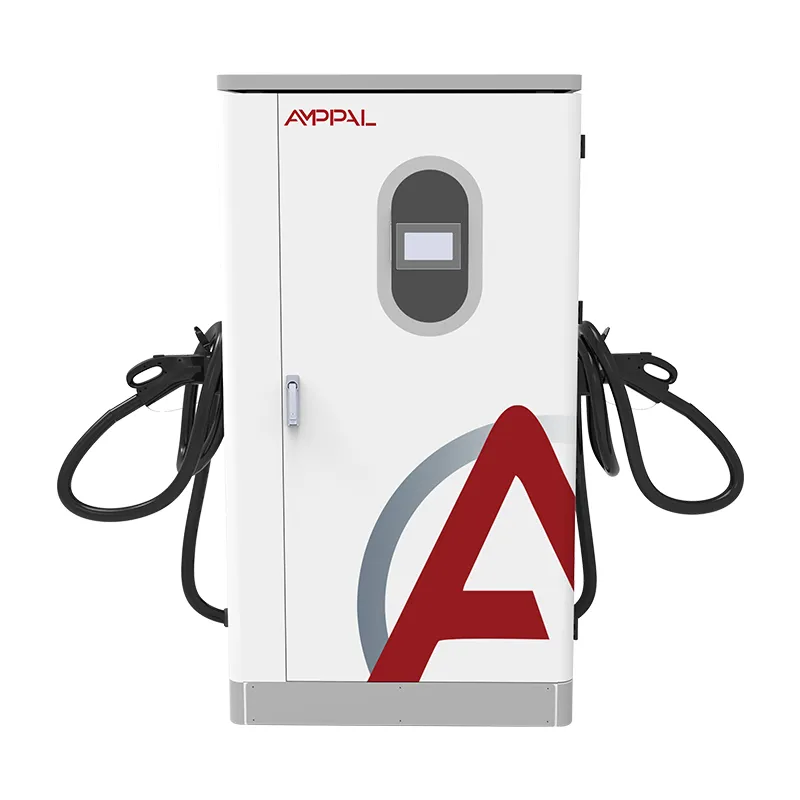
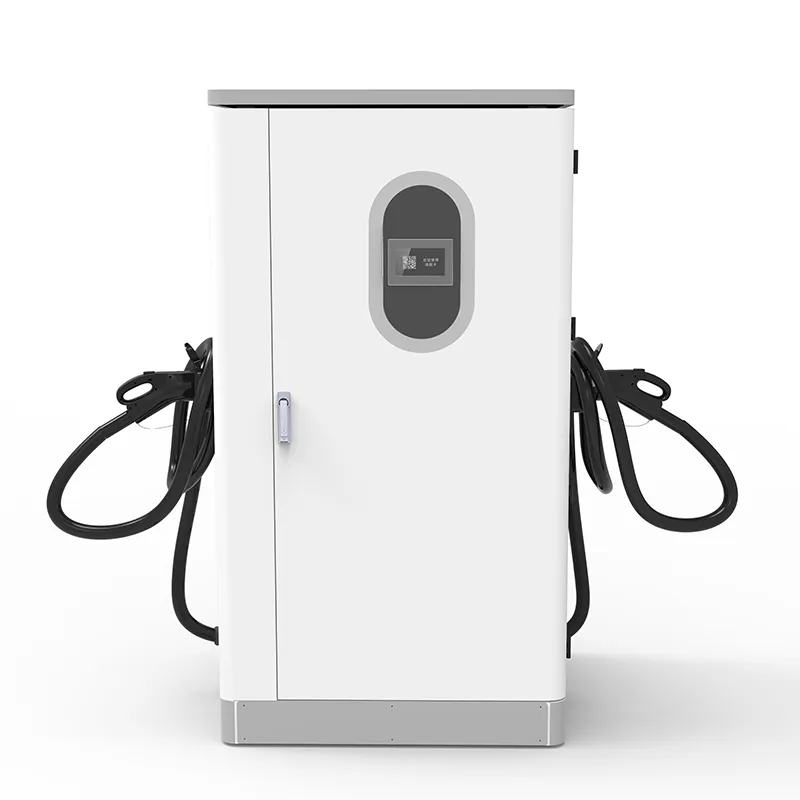
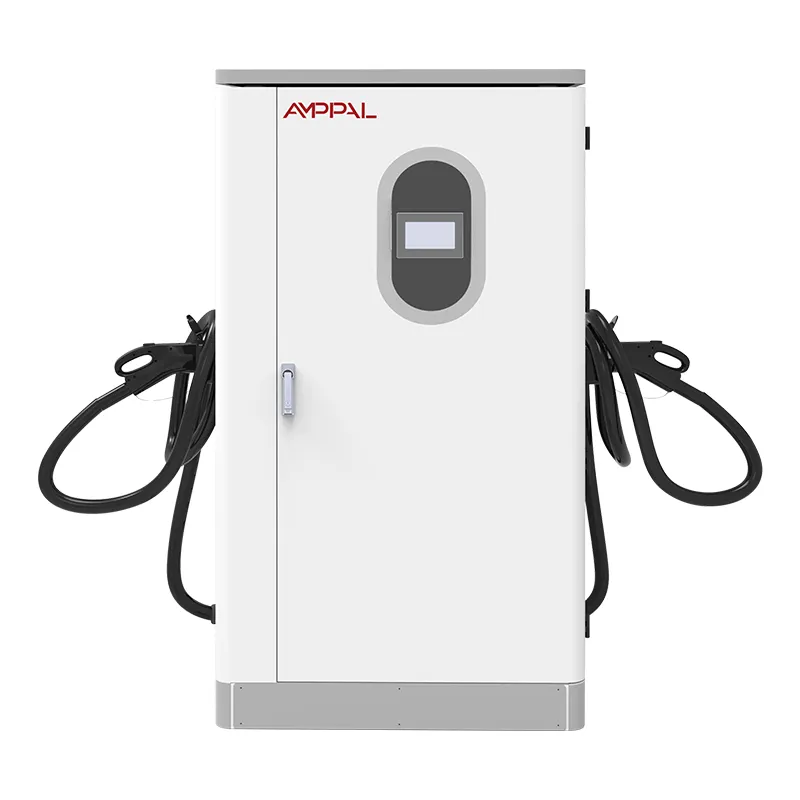
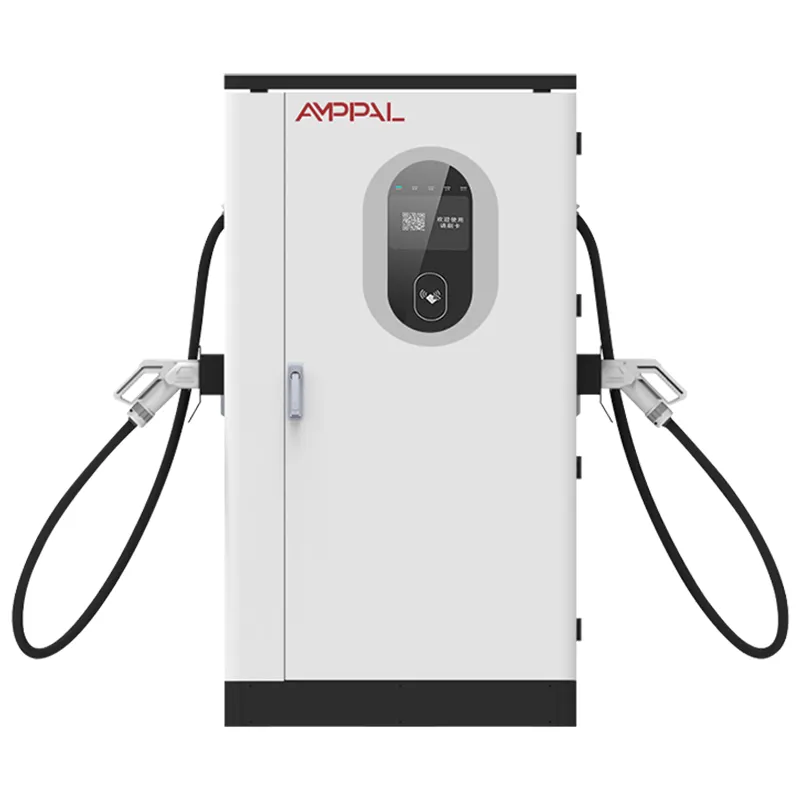
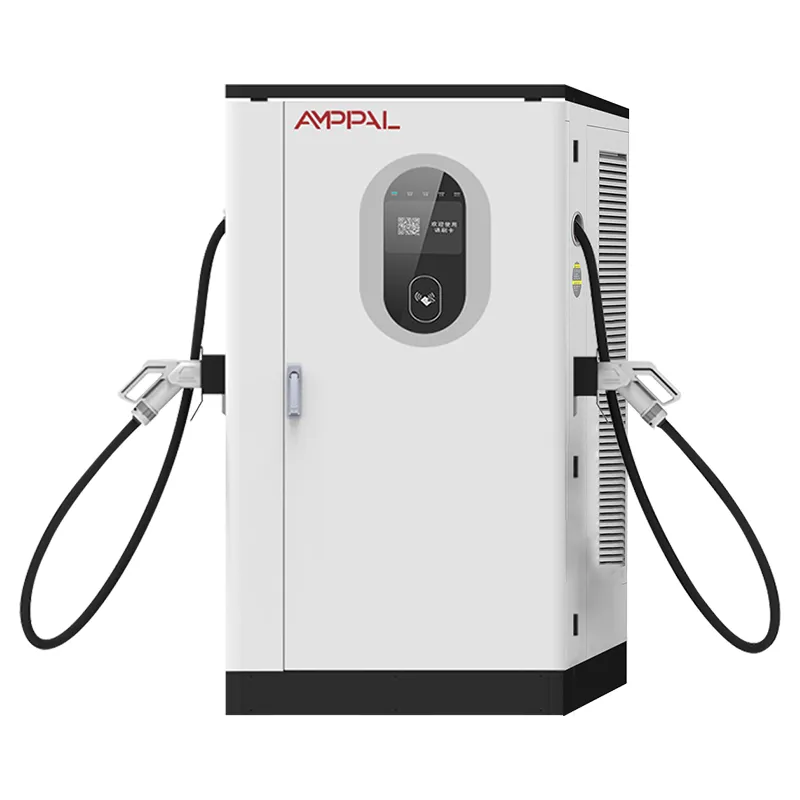
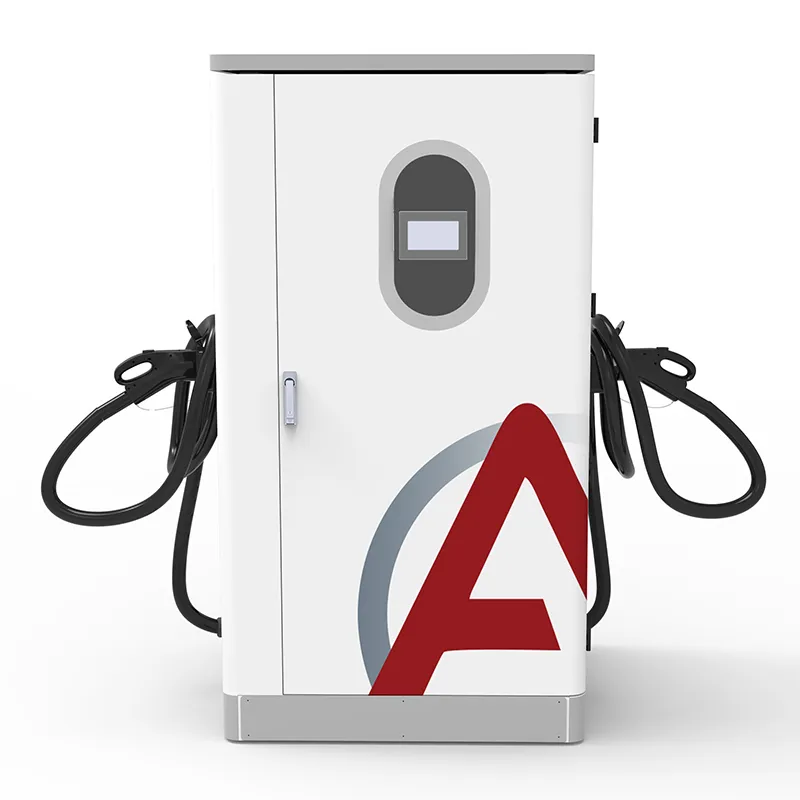
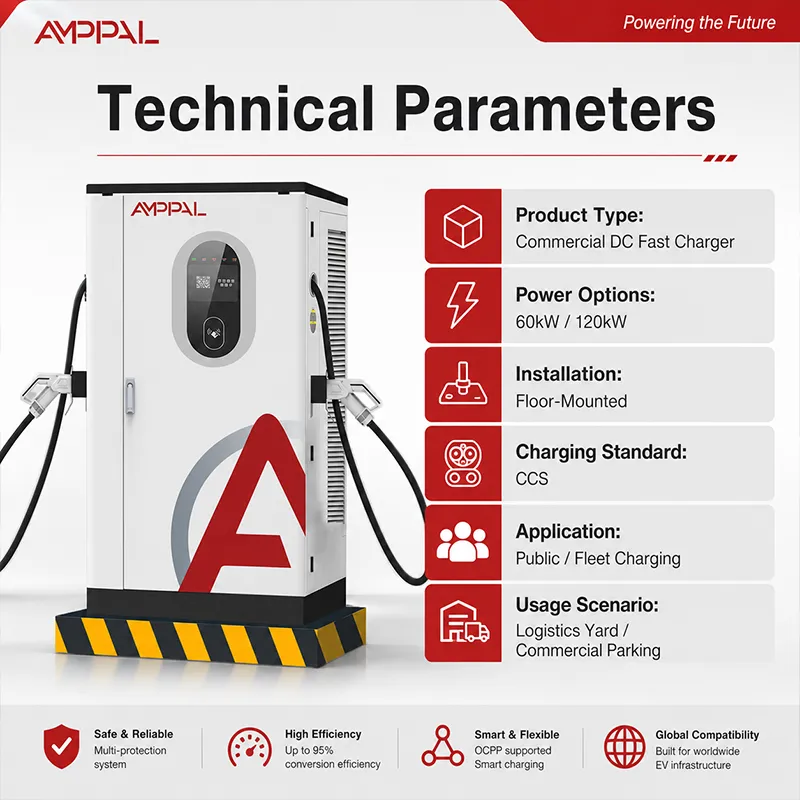
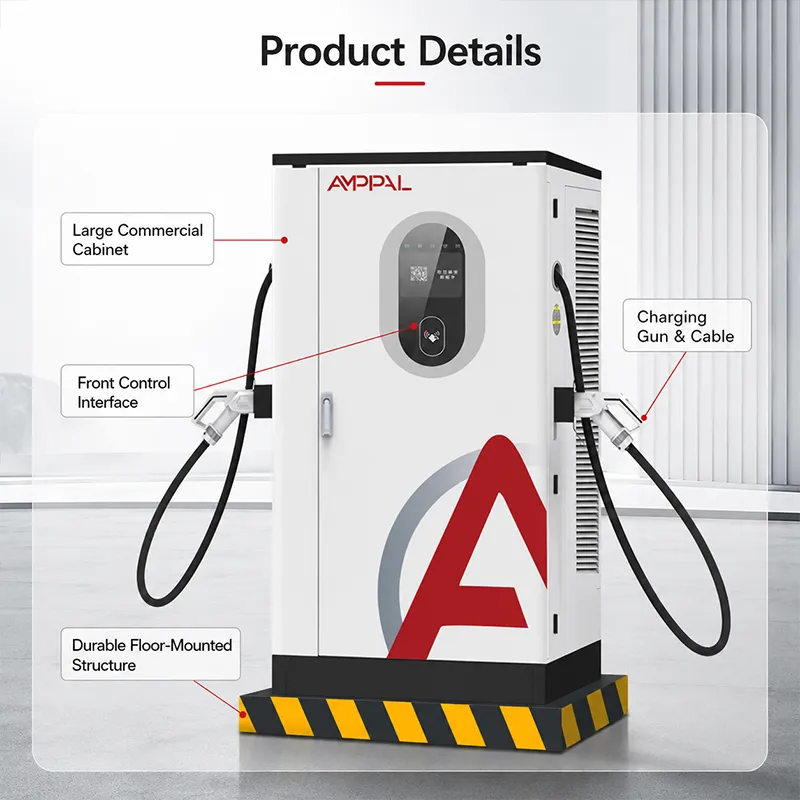
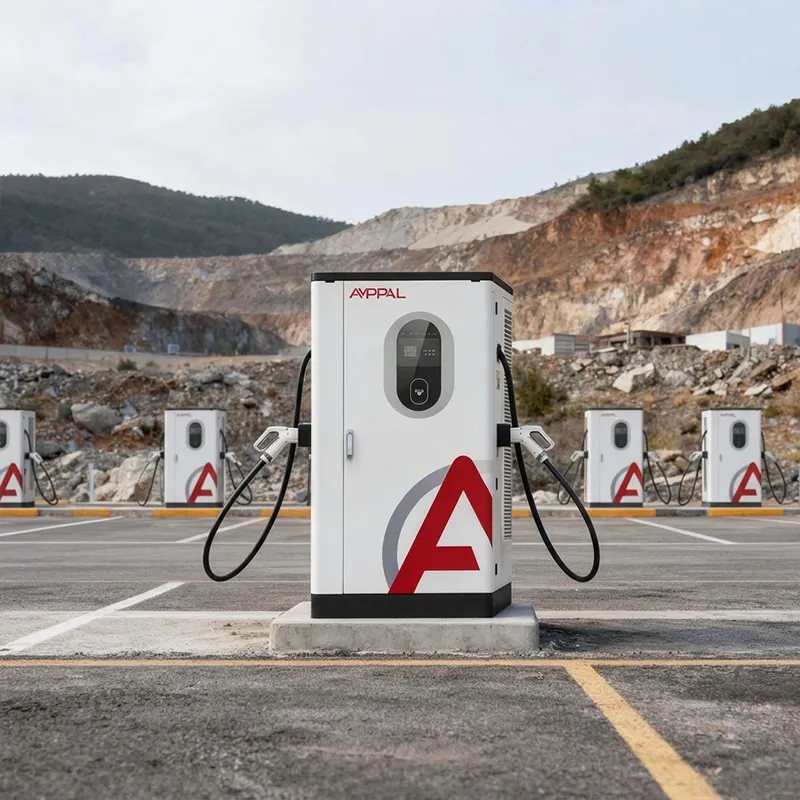
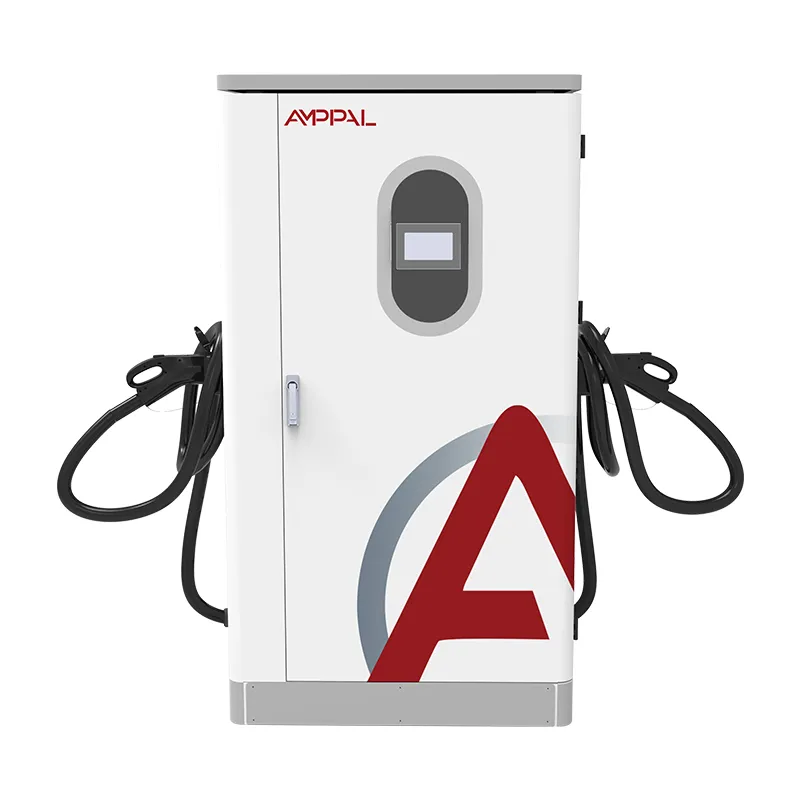
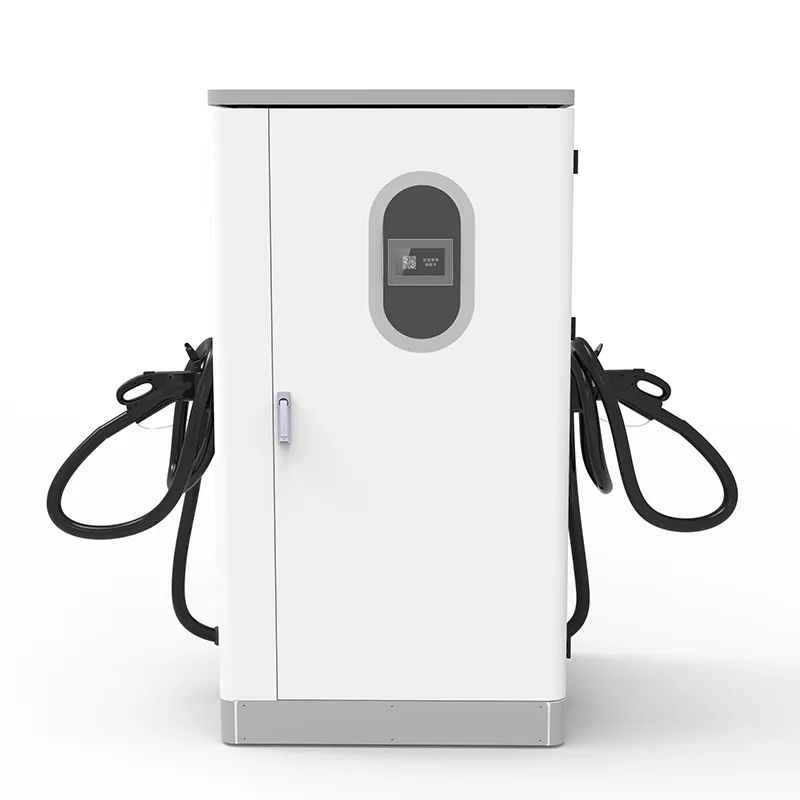
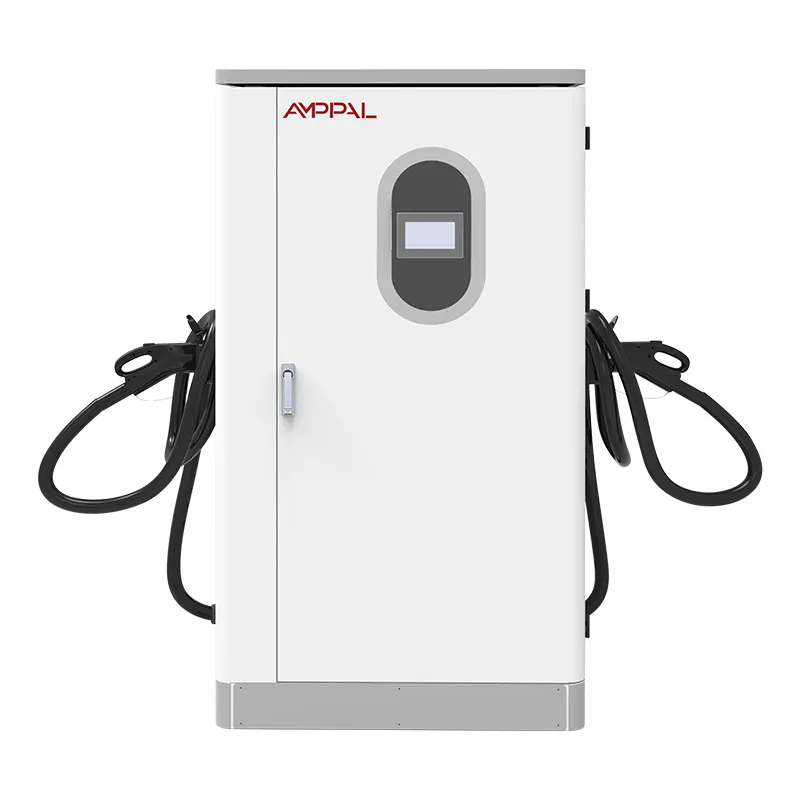
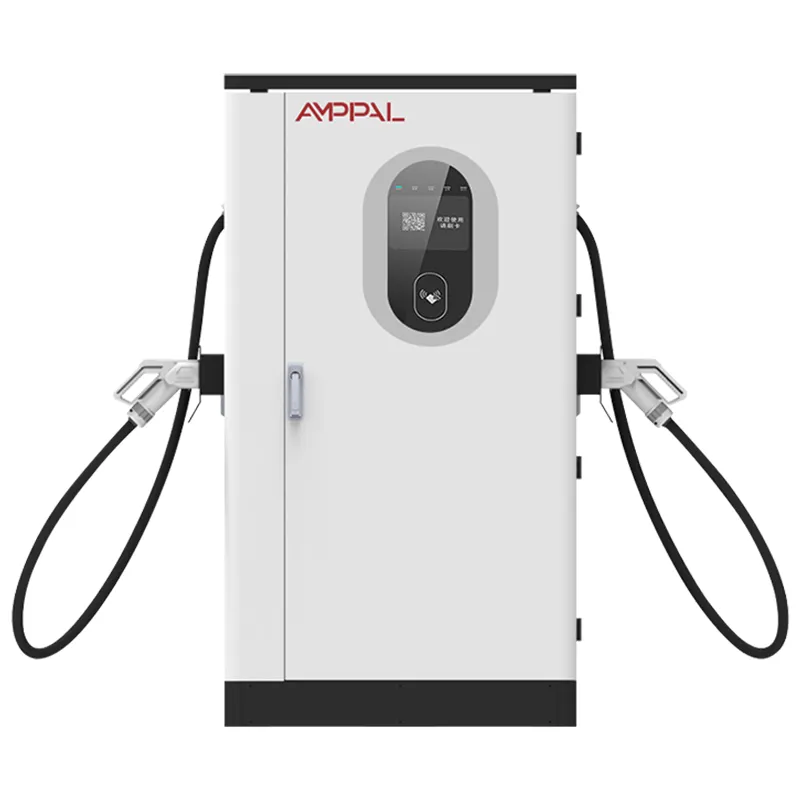
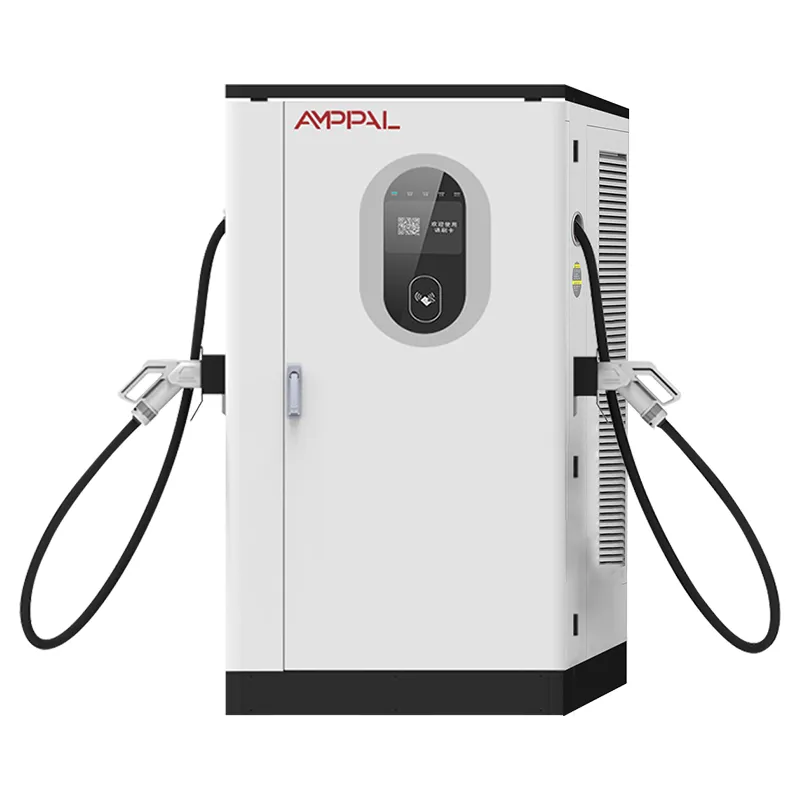
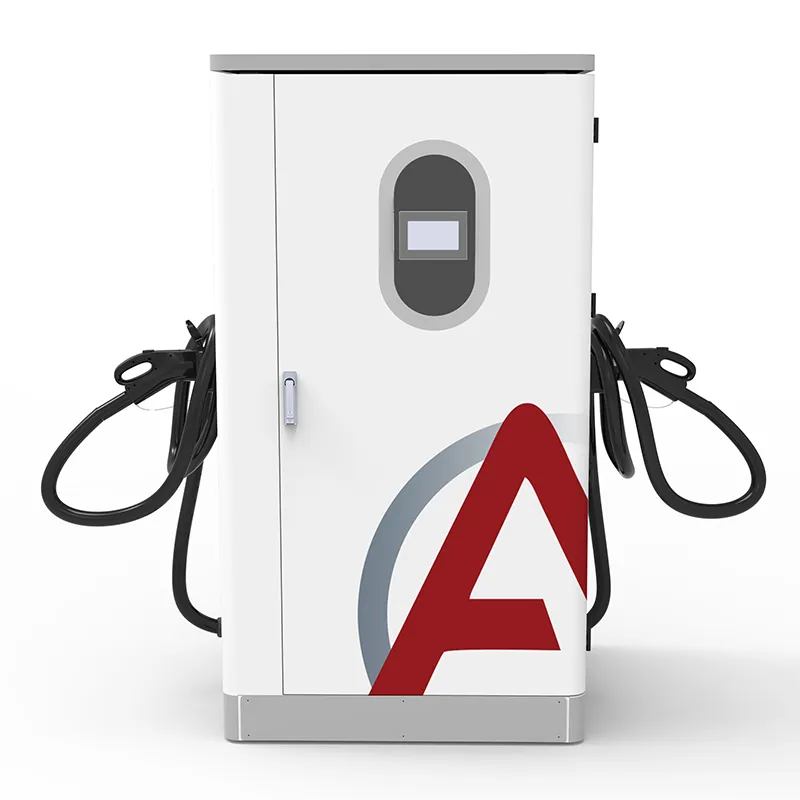
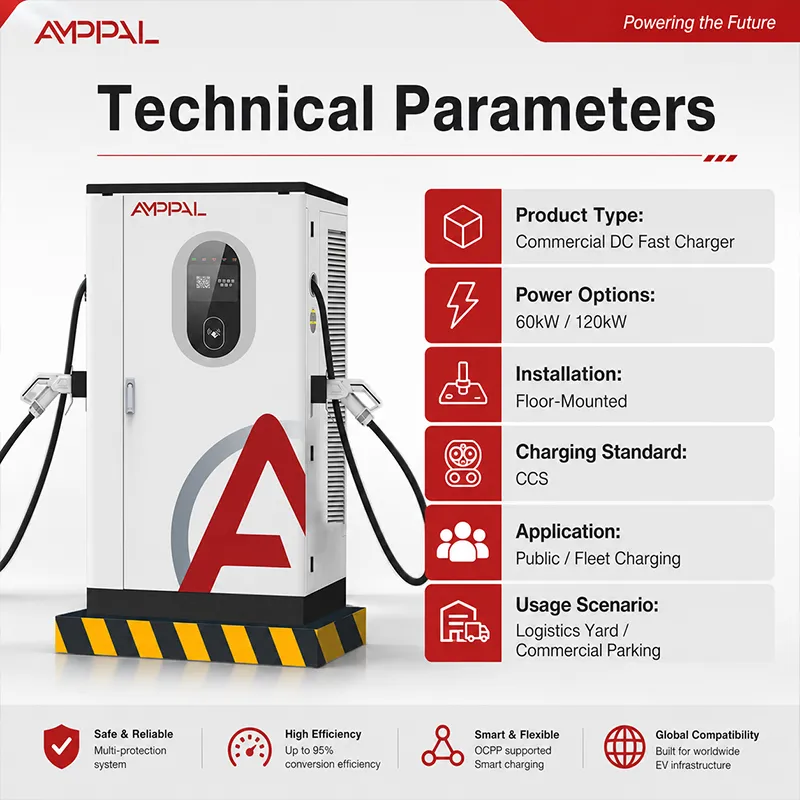
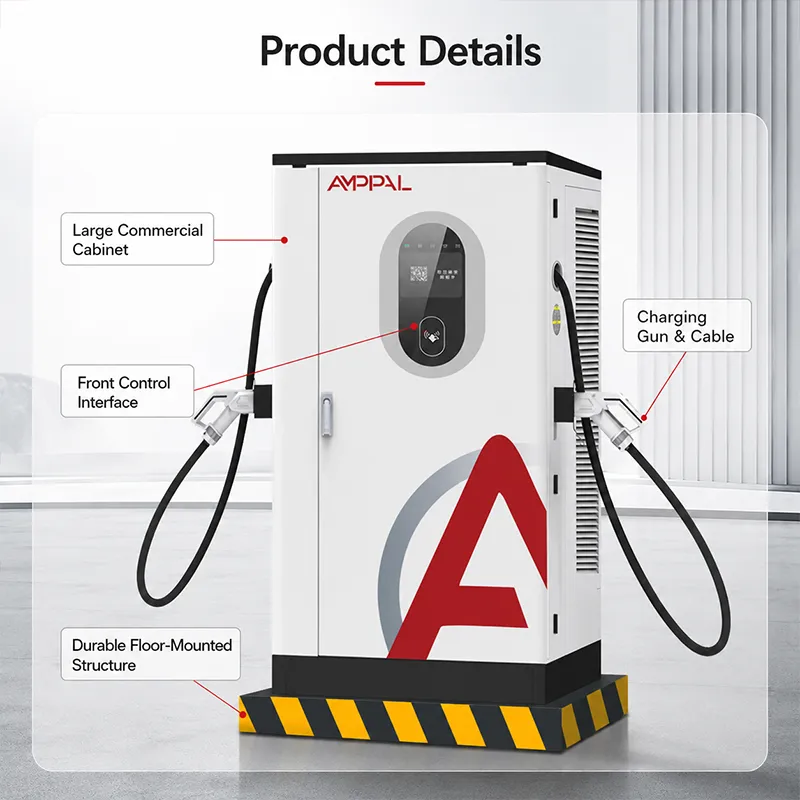
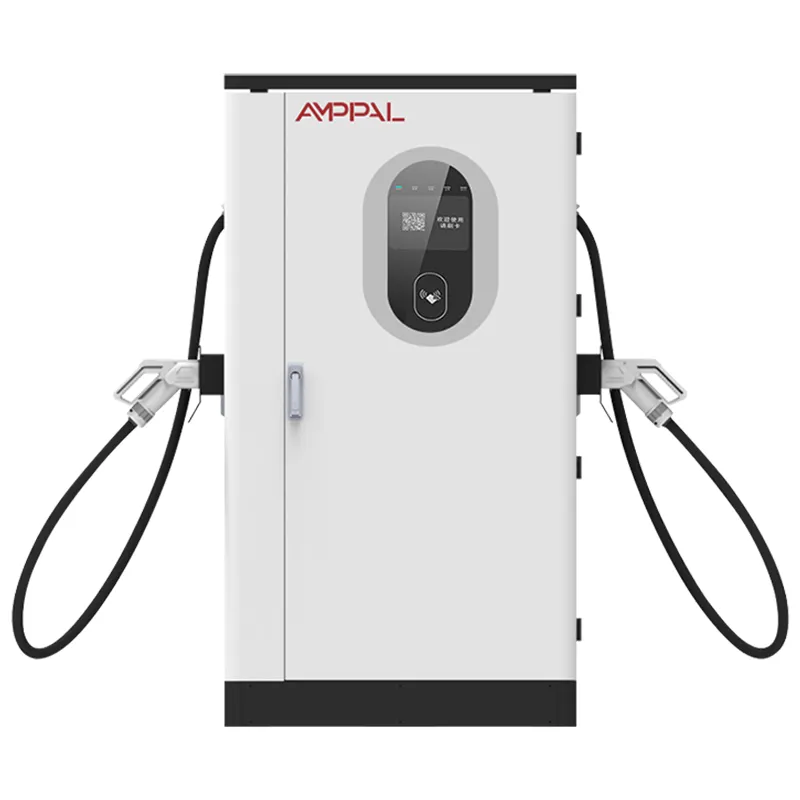
This is a 1000 × 900 × 1850 mm floor-standing cabinet — a large enclosure, not a wall box. It draws AC380V±15% at 45-65Hz and delivers DC200-1000V at up to 200A, built for depots, mining sites and ports where the vehicles are big and the dirt is real.

Charge-time fit: a 423kWh pack, common in regional haulers, hits 20% to 80% in 50-70 minutes including taper — short enough to fit a driver's rest break without doubling your bay count.
Built for 300-500kWh batteries: the DC200-1000V window covers today's 400V-class Class 8 packs and the 800V platforms arriving in 2026-2027.
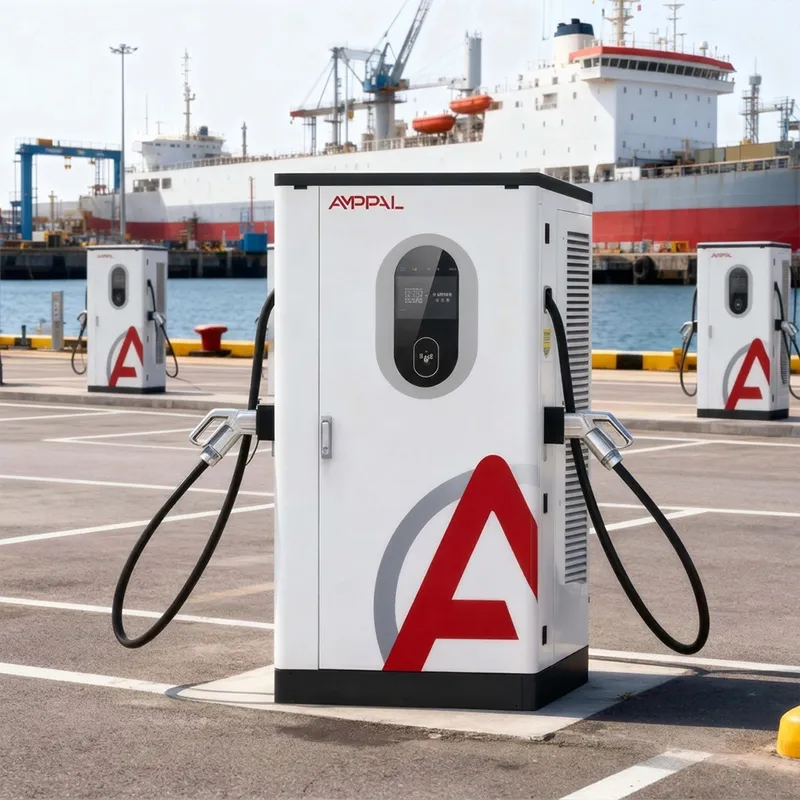
IP54 enclosure rated -25°C to +50°C: mining dust and port salt spray stay outside, through a northern winter or a desert summer.
Cable and connector flexibility: order 5m or 8m cables and pick CCS1, CCS2, GB/T, CHAdeMO or NACS at purchase time — truck ports sit higher and further from the curb than car ports, so reach is a real specification.
95% peak efficiency: at a yard doing 400-600kWh a day, the gap against a 90% unit is 20-30kWh of waste heat you are not paying for twice.
OCPP 1.6/2.0 as standard: session data feeds your fleet management software, so dispatch sees which truck is ready without walking the yard.

|
Parameter |
Specification |
|
Model |
AF-DC-320-Y-B-O-4-H |
|
Rated Output Power |
320kW |
|
Overall Dimensions (mm) |
1000 × 900 × 1850 |
|
Input Voltage |
AC380V±15%, 45-65Hz |
|
Output Voltage Range |
DC200-1000V |
|
Output Current |
0-200A |
|
HMI |
7" touch screen |
|
Peak Efficiency |
95% |
|
Protection Grade |
IP54 |
|
Compatible Connectors |
CCS1/CHAdeMO/CCS2/GB/T/NACS |
|
Operating Temperature |
-25°C ~ +50°C |
|
Warranty |
2 Years Standard |
Logistics parks and distribution hubs: trucks returning between two delivery waves pick up 60-80% inside the driver's break window.
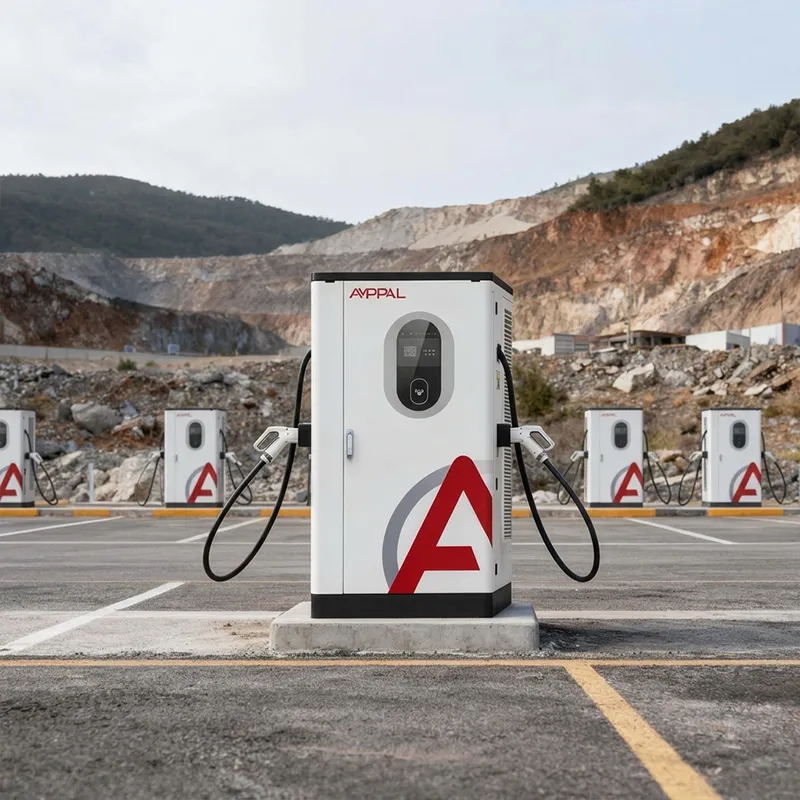
Open-pit and quarry operations: shift-change charging keeps the haul cycle running without a second charger fleet.
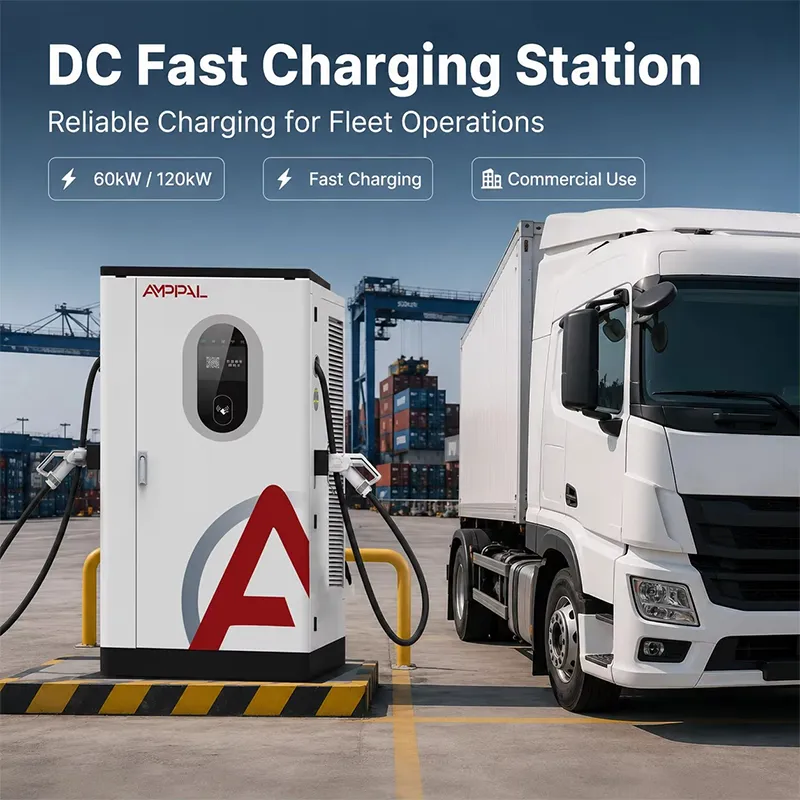
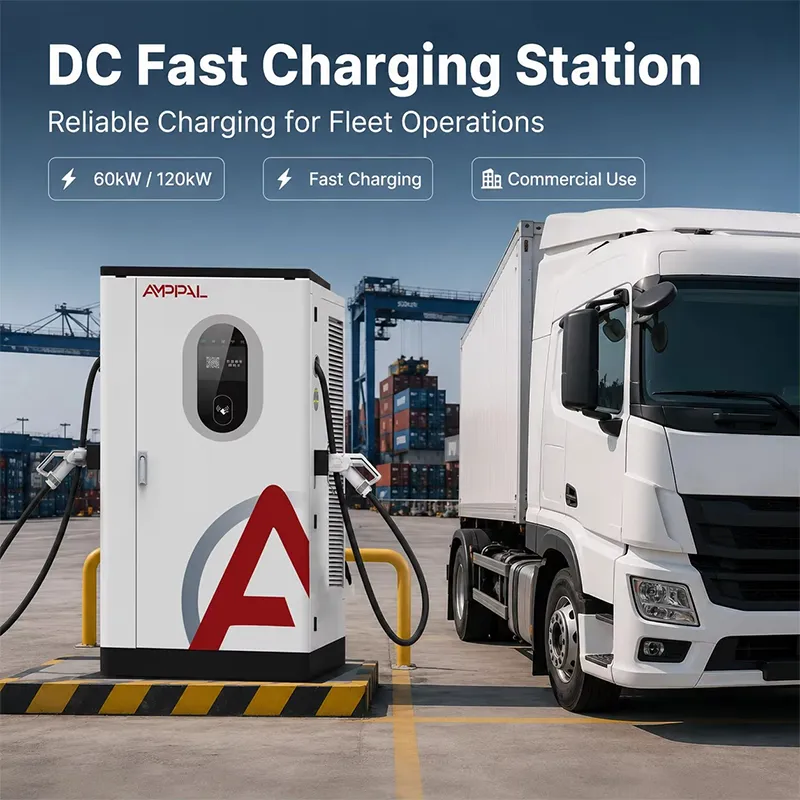
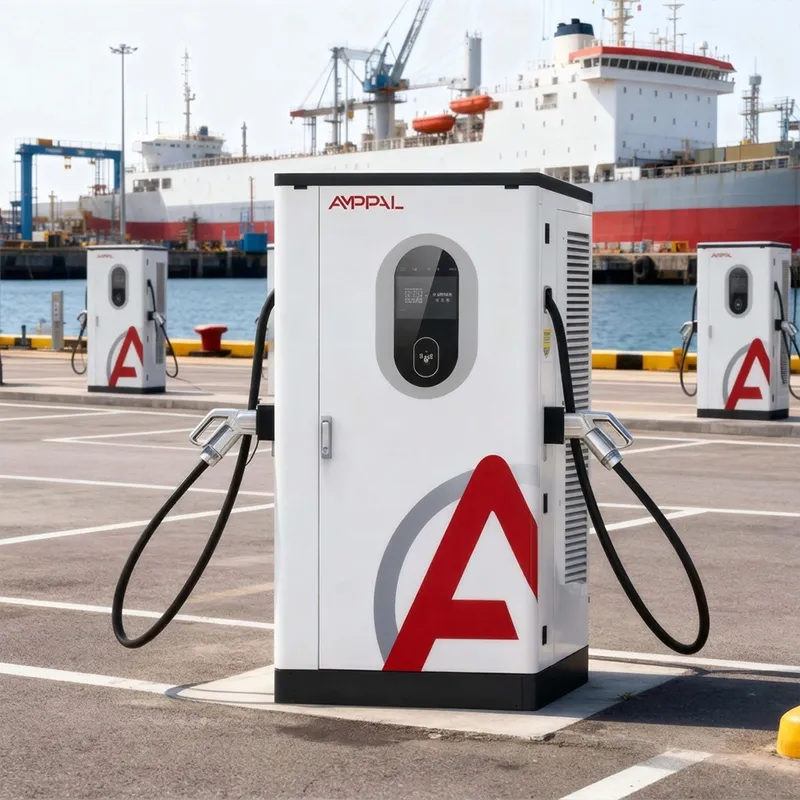
Port terminals: container tractors on 16-hour double shifts top up 30-40% between moves without leaving the gate.
Municipal dump trucks and waste collection on fixed routes: predictable return times let one cabinet cover 8-10 vehicles on a rotation.
Construction and mining camps on generator or weak grid supply: the ±15% input tolerance absorbs genset and rural-line swings.

Incoming three-phase AC is rectified to a DC bus, then converted to the regulated DC voltage the vehicle asks for. The cabinet negotiates with the truck's battery management system over the CCS or GB/T handshake — target voltage, current limit, state of charge — and adjusts output as the pack fills.
Charging curves matter more for trucks than cars. A 400kWh pack accepts high current at low state of charge, then tapers sharply past 80%. The cabinet's wide 200-1000V window stays useful through both the 400V and 800V generations of truck platforms without a hardware swap.
At the depot you treat it like a fuel island: position the cabinet so the gun reaches the port from the driver's side, add bollards and signage, and let OCPP carry the session data. Drivers scan and plug; the cabinet does the rest, and a 7-inch touch screen shows local status when the network link drops.
CE and CB certification: electrical safety and EMC testing against the IEC 61851 charging series and IEC 61000 immunity standards.
TÜV line inspection: sample units are pulled from regular batches and run through a full load profile, not a one-off show unit.
UL certification for North American fleet projects, which many US grants and utility programs require.
CCC certification for the Chinese market, where AMPPAL has delivered over one million units by 2024.
96-hour salt spray on the enclosure and fasteners — the same test we apply to marine-adjacent equipment — because port yards are coastal in all but the tide.
Power modules rated -30°C to +55°C are temperature-cycled on the line, so the cabinet's -25°C to +50°C envelope has margin behind it.
Step 1: sheet steel is cut on CNC laser and punched on CNC turret presses; FANUC robots weld the frame.
Step 2: the enclosure passes through a pretreatment line and powder coating, then a curing pass.
Step 3: rectifier and DC/DC modules are assembled on the dedicated DC line, separated from AC production for ESD control.
Step 4: each module is tested alone — output accuracy, ripple, efficiency at 20%, 50% and 100% load.
Step 5: cable looms are built to your order (length per your site drawing) and terminated with torque-controlled tools.
Step 6: final assembly installs modules, contactors, the 7-inch HMI and the OCPP control board into the cabinet.
Step 7: every unit runs a 4-hour full-load burn-in before it leaves the bay; the data file is archived under the serial number.
Step 8: final inspection, IP54 seal verification, and packing — 15-20 working days from order confirmation to dispatch.

Match the cabinet to the pack and the shift pattern, not the brochure. Trucks with 200-260kWh packs on short city loops need smaller units and two bays, not 320kW. If packs are 350kWh and above and shifts run back-to-back, this is the size we would spec.
Then check your site power. The cabinet asks for AC380V±15% three-phase. If your depot transformer is sized for 150kW of load, adding this unit means an upgrade before anything else. We will walk your load sheet with you before quoting — it saves both sides a bad install.
Be honest about what this product is not: if you need sub-30-minute turnaround for 500kWh packs, you are shopping for a megawatt-class liquid-cooled system, not this cabinet. The AF-DC-320 is the right tool for depot-scale daily charging, and the wrong tool for that edge case.
Delivery: 15-20 working days, with the date written into the purchase order.
MOQ: one unit. Prototype fleets order one cabinet, validate for a month, then scale.
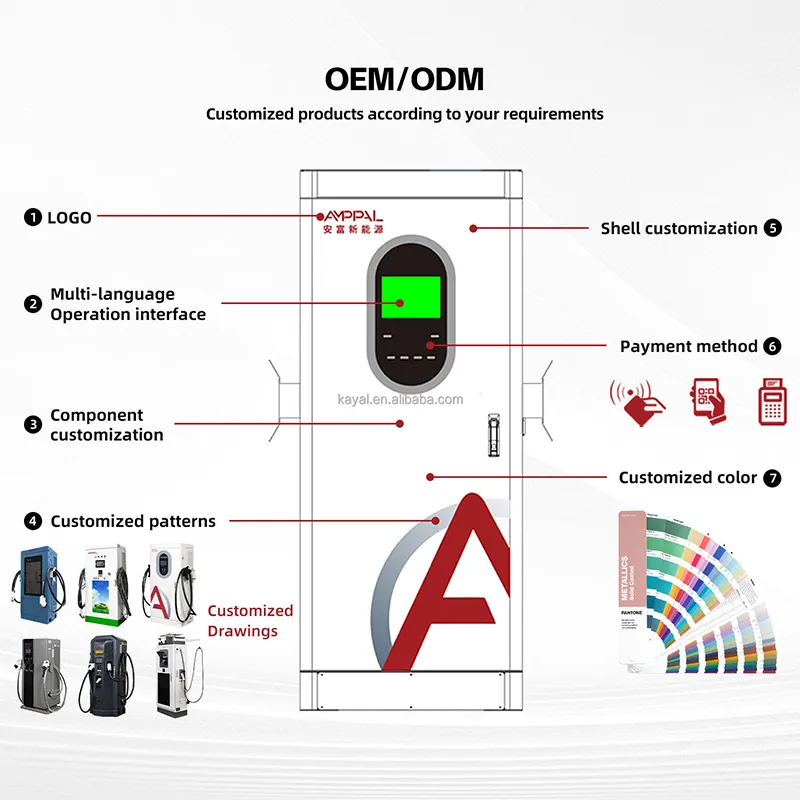
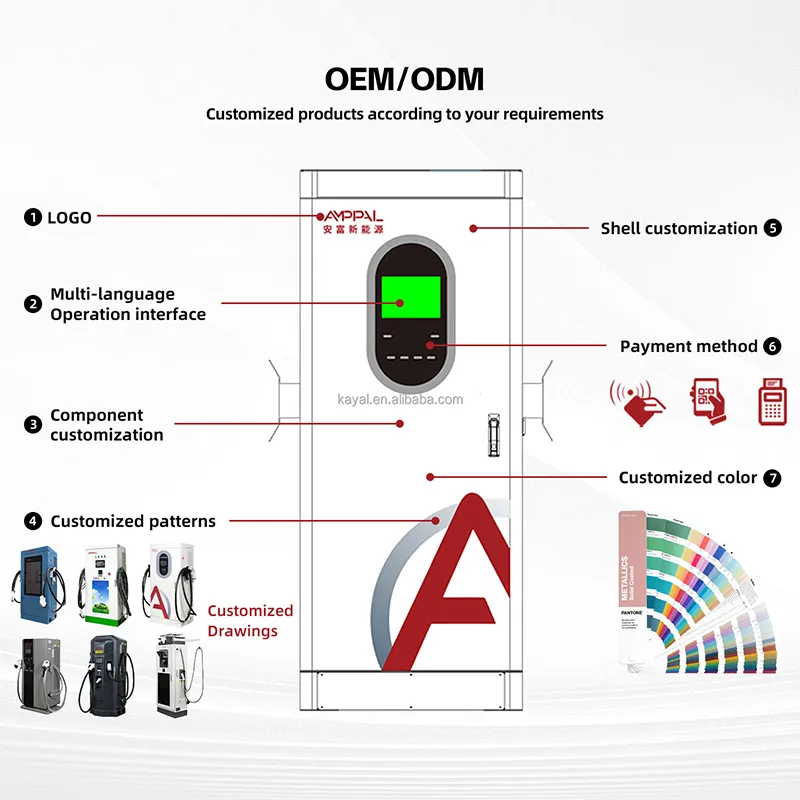
OEM/ODM: livery color, logo, cable length and connector mix customized at order time; 40+ countries of export history means your local plug standards are already in the build sheet.
Certificates ship with the unit: CE, TÜV, UL, CB and CCC documents in the export folder, not after three follow-up emails.
Track record: over 1,000,000 units delivered by 2024 and 200+ stations we operate ourselves — the people answering your spare-parts email run chargers too.
The cabinet ships upright in a plywood crate with foam corner blocks and a waterproof shroud, strapped to a pallet with forklift channels underneath. We confirm the container loading plan with your forwarder before the truck leaves.
We ship FOB Ningbo or CIF to your port. The export pack contains the commercial invoice, packing list and the CE/TÜV declarations, so customs clearance and your commissioning schedule do not fight each other.
For long sea legs — the Middle East, Africa, Latin America — we add desiccant bags and a humidity indicator card. A cabinet that sits in a container for thirty days should arrive drier than many that flew.

Two years on the cabinet. Heavy-duty sites cycle contactors far harder than passenger car sites — that is the part to watch, and it is covered.
Spare parts stocked: contactors, fans, the HMI and the control board ship within 3-5 working days.
Remote diagnostics over OCPP: our engineers read session logs and fault codes before you open the door.
A spare-module recommendation at delivery: one rectifier module in your store keeps mean time to repair under a shift.
A one-page quarterly checklist: filter cleaning, torque re-check, contactor wear inspection — printable, in the manual.
Wrong: mounting the cabinet where the gun cable drags across the truck's mud flap line. Right: position it so the cable arcs over the bumper and reaches the port with 30cm spare — measure with the truck that uses it, not the sales drawing.
Wrong: running an undersized input feeder and blaming the charger when voltage sags below 323V. Right: size the feeder for full load plus 20% and confirm the site transformer before install.
Wrong: letting dust build on the intake grilles in a mining yard. Right: blow out the filters weekly; IP54 keeps dust out only while the filter is clean.
Wrong: leaving the HMI face in direct afternoon sun on hot sites until the screen overheats. Right: shade the cabinet face or plan for shorter display life in strong sun.
Wrong: mixing gun standards across the fleet and ignoring connector wear. Right: match spare guns to your vehicle mix and inspect the connector surfaces for burn marks monthly.
Mining contractor in Chile: “We run 14 trucks on two of these cabinets. The first week our site electrician wired the feed wrong and the unit shut down cleanly instead of cooking itself — that sold me more than the efficiency number.
Port operator in Ningbo, China: “Our container tractors do 16-hour shifts. The 320kW cabinet gives a 30-minute top-up between moves. The OCPP data stopped our dispatcher from guessing when a truck was ready. The gun cable gets heavy in winter — that is our only gripe.”
Regional hauler in Germany: “We compared this against a European brand at nearly double the price. Six months in, the only fault was a fan that started buzzing in week 20; the replacement arrived in four days under warranty. The manual assumes you have an electrician; we had to teach our own guy the OCPP side.”

A: Yes — the DC200-1000V output covers both 400V and 800V platforms; the BMS handshake sets the operating voltage.
A: 20% to 80% runs roughly 50-70 minutes depending on the pack's acceptance curve; a 30-minute top-up between shifts adds meaningful range.
A: CCS1, CCS2, GB/T, CHAdeMO or NACS, with 5m or 8m cables — specify your fleet mix at order time.
A: IP54 enclosure, -25°C to +50°C operation and a 96-hour salt spray tested shell; keep the filters clean and it stays outside the grime.
A: AC380V±15% three-phase at 45-65Hz; we review your load sheet before quoting.
A: OCPP 1.6 and 2.0 are standard; session data exports to your fleet management platform.
A: 15-20 working days from confirmed PO, and the MOQ is one unit.
A: Two years on the cabinet including contactors; consumables like cables and filters are excluded but stocked as spares.
Address
No. 237, Weisan Road, Yueqing, Zhejiang, China
Tel
Talk Directly to Our EV Charger Factory
Get factory-direct pricing, custom solutions, and expert support.
- Fast Response – Reply within 24 hours.
- OEM/ODM – Flexible customization and sample orders.
- Certified Quality – CE, TÜV, CB, and CCC options.
- Custom Quotes – Tailored to your specifications.
- Technical Support – Expert help with OCPP, DLB, and system integration.