" "
Whatsapp
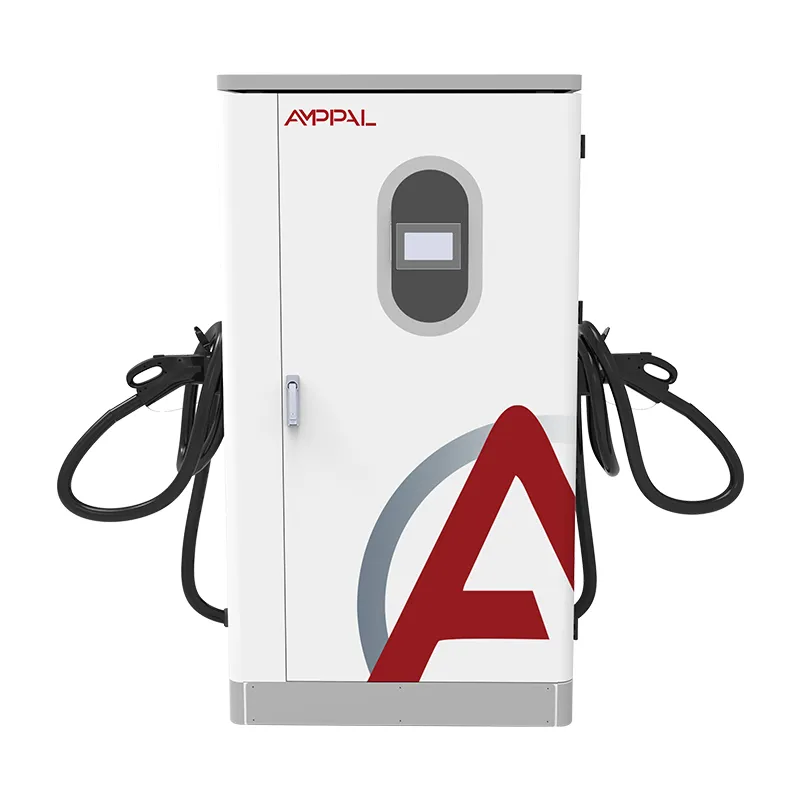
Nobody walks past a 480kW cabinet and asks what it does. The question is why the station next door does not have one. AMPPAL has built and operates 200+ charging stations, and the 480kW units are the ones anchoring the flagship sites — the visible statement that a station is not a row of boxes but an infrastructure landmark.
This cabinet is the top of the AF-DC integrated line: a 1000 × 900 × 1850 mm floor-standing unit that takes AC380V±15% at 45-65Hz and delivers DC200-1000V at up to 200A with 95% peak efficiency. It is the machine we point to when a client asks what our own flagship stations run on.

480kW of nameplate power puts a number on the station: 800V vehicles draw current at rates most competitors' cabinets cannot sustain, and the spec sheet becomes a marketing asset before the first car arrives.
Ready for the 800V wave: the DC200-1000V window already covers the 2025-2026 generation of 800V passenger cars, so the cabinet needs no mid-life hardware upgrade.
95% peak efficiency at flagship duty: a station doing 1,500kWh a day saves real money against 90% units — roughly 75kWh of waste heat not generated.
IP54 with -25°C to +50°C operation: flagship sites sit outdoors in city squares and highway plazas, in weather that quietly kills lesser enclosures.
Full connector set — CCS1, CCS2, GB/T, CHAdeMO and NACS — so one flagship cabinet serves mixed international fleets and rental EV traffic without a second purchase.
OCPP 1.6/2.0 with remote management: our own station operations team uses the same dashboard you would get, and the 7-inch HMI covers local fallback when the link drops.

|
Parameter |
Specification |
|
Model |
AF-DC-480-Y-B-O-4-H |
|
Rated Output Power |
480kW |
|
Overall Dimensions (mm) |
1000 × 900 × 1850 |
|
Input Voltage |
AC380V±15%, 45-65Hz |
|
Output Voltage Range |
DC200-1000V |
|
Output Current |
0-200A |
|
HMI |
7" touch screen |
|
Peak Efficiency |
95% |
|
Protection Grade |
IP54 |
|
Compatible Connectors |
CCS1/CHAdeMO/CCS2/GB/T/NACS |
|
Operating Temperature |
-25°C ~ +50°C |
|
Warranty |
2 Years Standard |
Flagship highway plazas: a 480kW cabinet in the front row is the difference between “a charging stop” and “the charging stop” on that corridor.
Airport and hotel forecourts: premium guests and rental fleets judge the property by the charging experience, and short sessions mean high bay turnover.
City-center supercharging hubs: land is expensive, so power per square meter is the metric — one 480 cabinet concentrates output where space is scarce.
Showroom and OEM partner sites: brand events, test-drive fleets and media days need a charger that never makes the car look slow.
Corridor planning for network operators: flagship cabinets anchor a new route and measure real 800V demand before the network densifies.
At the core sits the same architecture as our other integrated cabinets, pushed further: three-phase AC in, rectified to a DC bus, then regulated DC out at the voltage the vehicle's BMS requests. The control board arbitrates sessions so peak demand is managed rather than fought.
The station-level story is where the 480 earns the flagship word. Because it speaks OCPP 1.6/2.0, sessions, idle time and power sharing feed the station dashboard in real time; operators see queue behavior and adjust pricing or bay allocation the same afternoon.
The 800V readiness is a power-stage fact, not a slogan. The same DC bus that tops a 400V car at its request steps to 800V-class output for the next vehicle in the bay.

CE, CB, UL, TÜV and CCC: the full certificate set, and the TÜV inspection covers our production line, not a golden sample.
Every cabinet runs a 4-hour full-load burn-in with fault logging before it leaves the bay; the data file is archived under the serial number.
Input stages are swept across the 45-65Hz band on the variable-frequency bench, because flagship stations also live on imperfect grids.
96-hour salt spray on the enclosure and fasteners, plus a water-jet test on the door seals during final inspection to verify the IP54 claim.
Modules rated -30°C to +55°C are temperature-cycled before assembly, giving the cabinet's -25°C to +50°C rating genuine margin.
Each serial number links to its test records — when a flagship station calls, we pull the file, not our memory.
Step 1: steel frames are laser-cut and robot-welded on the FANUC and TRUMPF cells in Leqing, where our AC and DC lines share the same tooling discipline.
Step 2: enclosures pass through pretreatment and powder coating, with the color matched to your station livery if you order OEM.
Step 3: power modules are assembled on the dedicated DC line, isolated from AC production for ESD and cleanliness control.
Step 4: each module is load-tested and temperature-cycled — output accuracy, ripple, efficiency at 20%, 50% and 100%.
Step 5: cabinet assembly installs the modules, contactors, bus bars, control board and 7-inch HMI.
Step 6: the wiring harness is built to the site drawing with torque-controlled termination, then the door seals face the water jet.
Buy the 480 when the station is the product — a branded hub, a corridor anchor, a site you will put on a billboard. If your site's identity is “convenient top-up” rather than “destination”, a 360kW or 320kW cabinet delivers most of the utility for less money.
Site power is the real gatekeeper. A 480kW nameplate asks for a serious three-phase feed; if the utility caps your plot at 250kW, a 480 cabinet is a paper tiger.
Be honest about the vehicle mix. If your traffic is 90% 400V cars that taper around 100kW, the 480's headroom mostly sits idle; you are paying for future demand.

We run 200+ stations ourselves — the 480 is the cabinet we stake our own uptime on, not a brochure model.
15-20 working days lead time with the date in the PO, and an MOQ of one unit so flagship rollouts scale from a single validated cabinet.
OEM/ODM without friction: station livery, cable length, connector mix and even dashboard branding customized at order time.
Certificates and test files ship with the unit; the serial number links to burn-in and frequency-sweep data for your auditors.
Reference depth: NEOM's 500-unit liquid-cooled order, Sime Darby in Malaysia, RHG Enerturk in Turkey — partners who put our hardware on their most visible sites.
A 1000 × 900 × 1850 mm cabinet ships upright in a plywood crate with foam corners and a waterproof shroud; pallet channels keep forklift moves clean. For long sea legs we add desiccant and a humidity indicator card.
We ship FOB Ningbo or CIF to your port. The export folder contains the commercial invoice, packing list and the CE/TÜV/UL/CB/CCC declarations, so customs clearance and your opening schedule do not fight each other.
Flagship rollouts often combine cabinets, spare modules and brand-matched accessories in one container; we plan the pallet map with your forwarder and confirm the loading plan before the truck leaves the factory.
Two years standard. On flagship sites we normally agree an extended service contract instead — uptime on a landmark station is worth more than the warranty line.
Spare modules, contactors, HMI and control boards stocked, with 3-5 working days dispatch — or a 24-hour airfreight option for contract sites.
Remote monitoring by our own station ops team: we see the same OCPP dashboard your operator sees and flag anomalies before your customers do.
A commissioning day with our engineer, remote or on-site, included on first orders — flagship sites run at launch, not after launch.
A quarterly health report: session data, derating events, connector wear — reviewed with your team over a video call.

Wrong: positioning the flagship cabinet in the far corner “out of the way” where no driver sees it. Right: put it on the front row — the cabinet is the station's signage, and part of its job is being looked at.
Wrong: buying 480kW of cabinet on a 250kW utility cap and blaming the charger when sessions run slow. Right: confirm the feed first; we size expectations from the transformer, not the nameplate.
Wrong: ignoring queue design and letting one slow 400V vehicle occupy the flagship bay for an hour. Right: set session policies and idle fees in OCPP so the bay turns over.
Wrong: mounting the cabinet where the gun cable cannot reach the second-row port. Right: measure reach with the longest vehicle in your traffic; cable length is specified at order for a reason.
Wrong: treating the 7-inch HMI as a billboard and leaving it in direct sun all day. Right: shade the face — the screen is an operator tool, and it lasts longer out of the sun.
Highway corridor operator in Saudi Arabia: “We opened with one 480 cabinet and watched the queue form at our gate instead of the competitor's. Six months of 800V traffic, zero charging failures. The paint showed dust rings in the desert sun within weeks — cosmetic, but we care about appearances at a flagship.”
Airport parking operator in Malaysia: “Rental EVs and chauffeur cars arrive in bursts. The 480 clears a bay in under 20 minutes for premium models, so our turnover jumped. We had to teach our maintenance crew the OCPP side; the cabinet itself has not faulted once in four months.”
OEM showroom partner in Germany: “Media day with 800V test cars — the 480 never became the story, which is exactly what you want from a charger. Delivery matched the 15-20 working days promised. The commissioning manual is dense; budget half a day with your electrician.”

A: Both. 800V vehicles are already on sale; the DC200-1000V window serves them today and covers the next platform generation without hardware changes.
A: DC200-1000V at up to 200A, 95% peak efficiency, from AC380V±15%, 45-65Hz input.
A: Yes — CCS1, CCS2, GB/T, CHAdeMO and NACS are configured at order time.
A: OCPP 1.6/2.0 with a remote dashboard, plus the 7-inch HMI for local fallback; our own station ops team uses the same stack.
A: CE, TÜV, UL, CB and CCC, with test files linked to the serial number.
A: 15-20 working days from confirmed PO; the MOQ is one cabinet.
A: The input stage tolerates ±15% voltage and 45-65Hz; beyond that, we will tell you the site needs a transformer or battery buffer before you order.
A: Two years standard; flagship sites usually move to an extended service contract with faster spare dispatch.
Address
No. 237, Weisan Road, Yueqing, Zhejiang, China
Tel
Talk Directly to Our EV Charger Factory
Get factory-direct pricing, custom solutions, and expert support.
- Fast Response – Reply within 24 hours.
- OEM/ODM – Flexible customization and sample orders.
- Certified Quality – CE, TÜV, CB, and CCC options.
- Custom Quotes – Tailored to your specifications.
- Technical Support – Expert help with OCPP, DLB, and system integration.