" "
Whatsapp
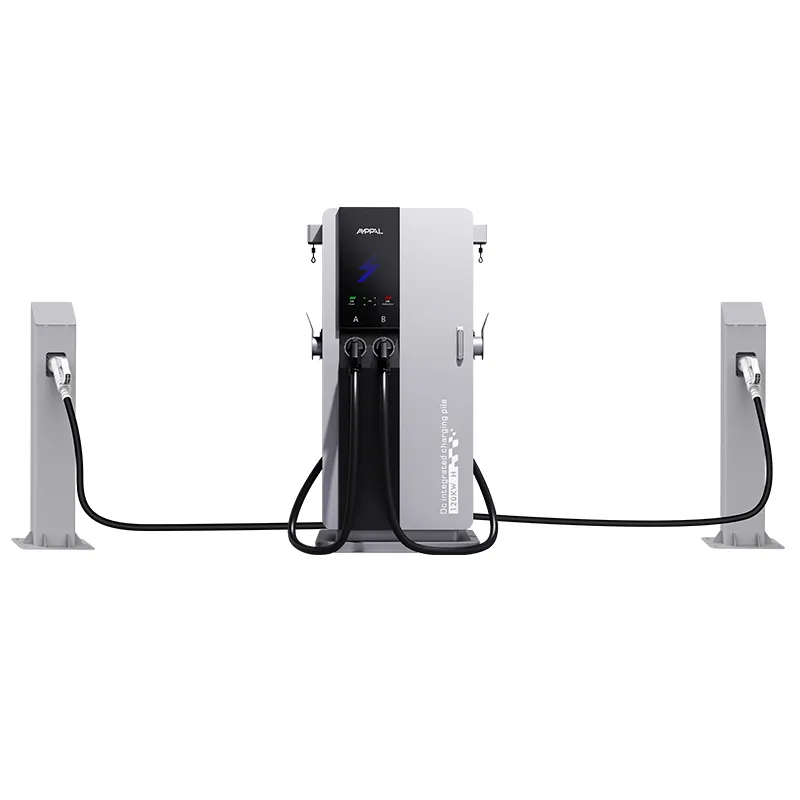
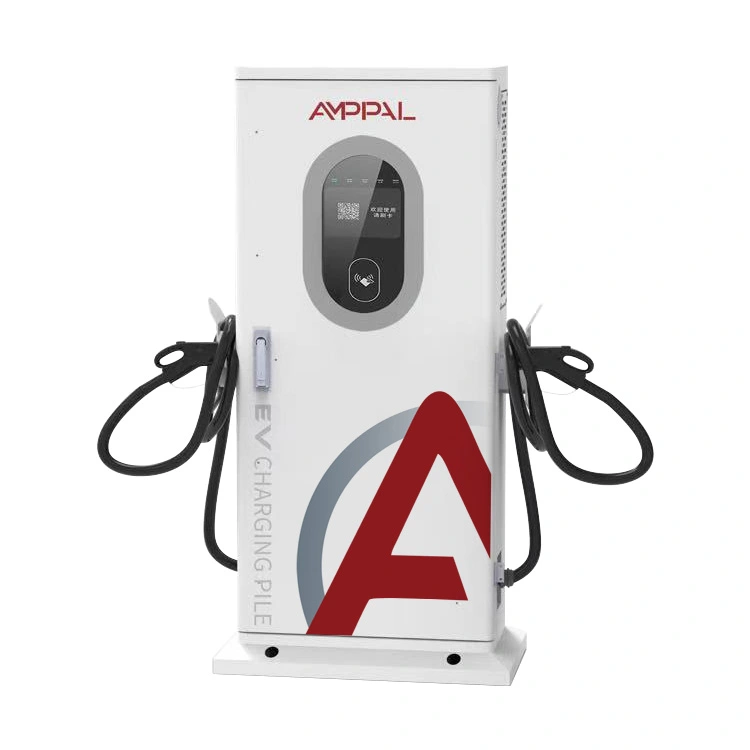
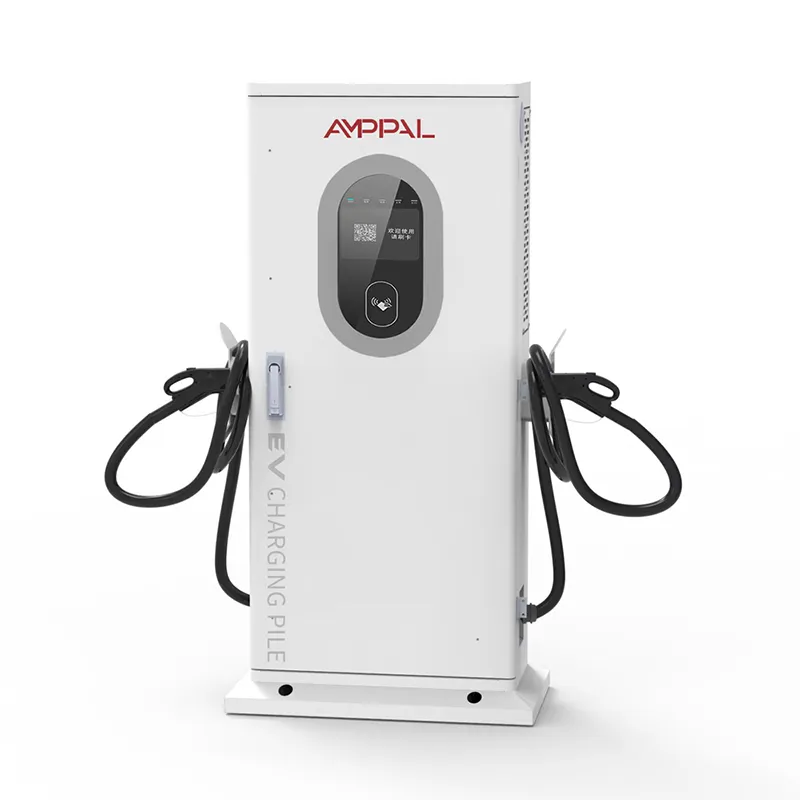
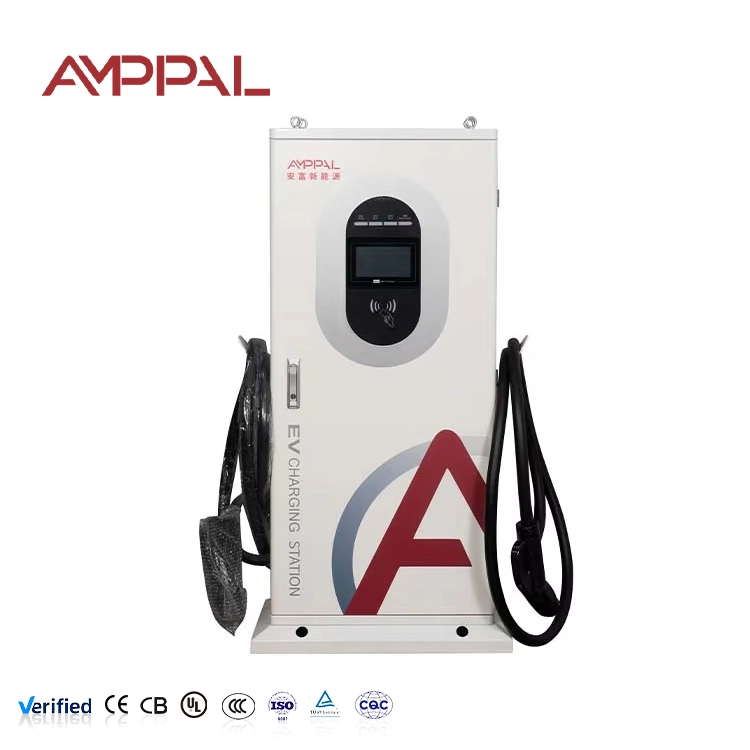
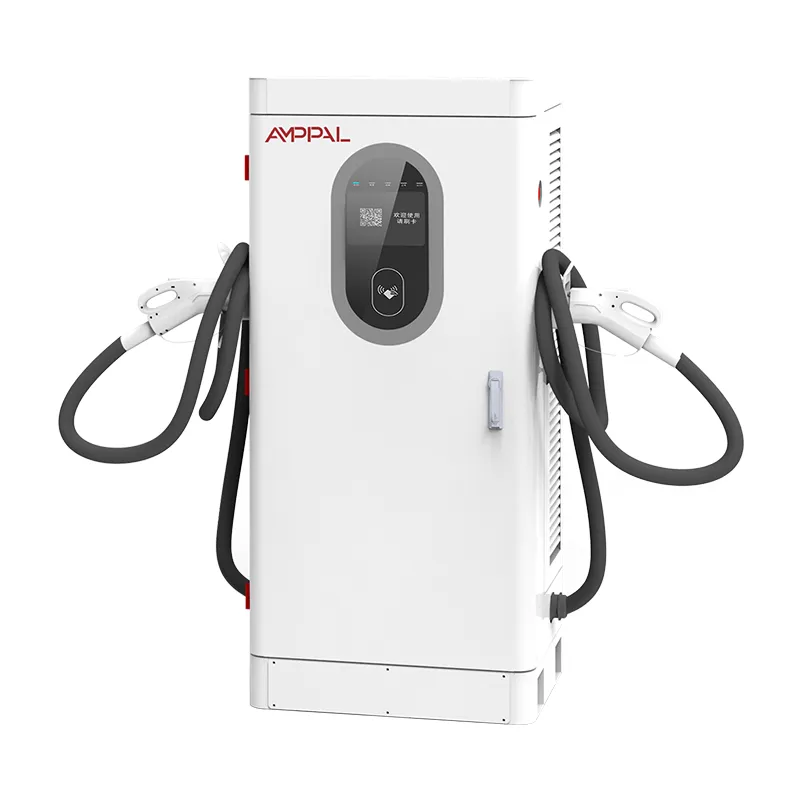
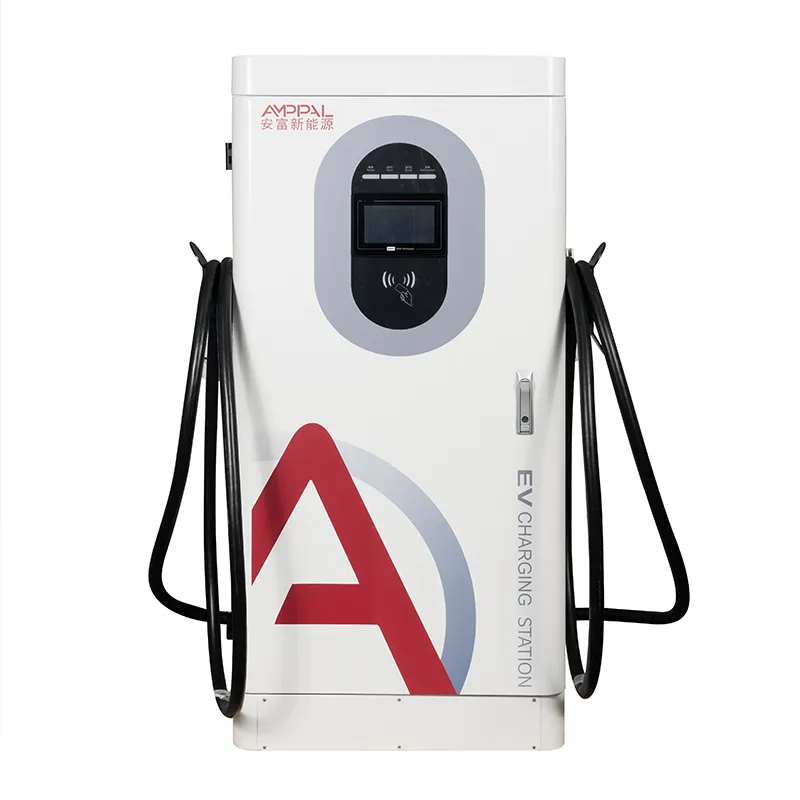
Most fast chargers are designed for open land; this one was designed for the space left over at the edge of a car park. The AF-DC-60-Y-B-O-3/4/5-H is an integrated 60kW DC unit standing 1700 mm tall on a 750 × 550 mm base — about a third of the floor area of a conventional cabinet. That difference decides whether a site can host fast charging at all, because land is the line item nobody puts in the budget.
It mounts on a small reinforced concrete pad, which makes the civil work a one-day job instead of a one-week project. The 7-inch touch screen handles the HMI, and the enclosure supports CCS1, CCS2, CHAdeMO, GB/T, and NACS, so one model serves most import markets.
Slim bodies have a cost too: there is less room for oversized components, which is why the 3-Series is built for 60kW rather than for the top of the power range.

A 0.41 m² base: 750 × 550 mm fits beside a shop door, a pump island, or a narrow parking bay.
A smaller slab and less concrete: the standard reinforced pad from the manual replaces a full equipment plinth.
1700 mm height puts the touch screen and connector at a comfortable reach for most drivers.
One pad per unit means you can add stalls one at a time as demand grows, without redoing civil works.
The slim body leaves room in the same bay for cable management, bollards, and a waiting lane.
AC380V±15% input tolerates rural grids where voltage sags and drift are common.
Factory specification of the AF-DC-60-Y-B-O-3/4/5-H exactly as shipped.
|
Parameter |
Specification |
|
Model |
AF-DC-60-Y-B-O-3/4/5-H |
|
Rated Output Power |
60kW |
|
Overall Dimensions (mm) |
750 × 550 × 1700 |
|
Input Voltage |
AC380V±15% |
|
Output Voltage Range |
200-1000VDC |
|
HMI |
7" touch screen |
|
Peak Efficiency |
95% |
|
Protection Grade |
IP54 |
|
Compatible Connectors |
CCS1/CHAdeMO/CCS2/GB/T/NACS |
|
Operating Temperature |
-25°C ~ +50°C |
|
Warranty |
2 Years Standard |
Convenience-store fronts: the unit sits beside the door, visible from the till, without eating a parking space.
Small car parks under 20 bays: one or two units cover demand on an existing 380V feed without a transformer upgrade.
Gas-station corners: the slim tower fits between the pump island and the boundary fence.
Hotel side lots: one unit serves overnight guests and day visitors from the same pad.
Workshops and small depots: a 60kW tower charges the fleet between jobs, indoors or under a canopy.
Power enters at AC380V three-phase, is rectified and converted to 200-1000VDC, and exits through whichever connector the vehicle expects. The tower layout puts the power modules low, the controller mid-height, and the 7-inch touch screen at eye level, which keeps the centre of gravity down and the interface convenient.
Cooling is forced air through the side intakes. The tower's height gives the airflow a long vertical path that pulls heat away from the modules, and the fans ramp with load, so idle periods stay quiet. In a small shop-front location that matters more than it sounds, because drivers and staff spend the whole session within a few metres of the unit.
OCPP 1.6/2.0 reporting, remote diagnostics, and firmware updates run over Ethernet, WiFi, or 4G — the same backend integration as our larger units. What changes with the compact body is purely physical: less land, less concrete, less disruption to the site.
CE and TUV type approval on the complete unit; UL and CB reports available for export files.
96-hour salt-spray on the enclosure, which matters because compact units often sit closer to the roadside.
Vibration testing on the module mounting, so delivery and rough-site handling do not loosen internal joints.
48-hour full-load burn-in with logs bound to the serial number.
The touch screen is verified for readability in direct sunlight and with gloved hands.
Modules are rated -30°C to +55°C; the complete unit is specified -25°C to +50°C.
Step 1. The slim enclosure is laser-cut from steel and robot-welded on FANUC lines.
Step 2. TRUMPF press brakes fold the body; powder coating and curing follow.
Step 3. The base plate, module rack, and cable glands are fitted on the DC line.
Step 4. The 380V input section and surge protection are wired with torque control.
Step 5. Rectifier modules are installed, then the 7-inch HMI and the station controller.
Step 6. Each unit is load-tested at 60kW with efficiency recorded per unit.
Step 7. A 48-hour burn-in cycles sessions at varying loads.
Step 8. Final inspection and crating; the plant shipped over one million units through 2024.
Pick the 3-Series when the site is physically tight or when you want to start small and grow stall by stall. The 750 × 550 mm base and single-pad install keep the civil cost low, and 60kW still delivers a useful charge in under an hour for most passenger EVs.
Skip it if you already have generous space and plan 150kW-plus sessions; a larger cabinet gives you more headroom for the same pad work. Also skip it if your site cannot supply AC380V, because this unit is fixed to that input class.
For a two-gun layout you will usually install two towers side by side, which doubles the pad work. Weigh that against a single twin-gun cabinet before you order.
One more honesty note: 60kW is a fine workhorse but not a headline number. If your marketing depends on the biggest wattage in the neighbourhood, a compact 60kW will not give you that bragging right — it gives you a station that actually fits.
One SKU covers CCS1, CCS2, CHAdeMO, GB/T, and NACS, so a dealer stocks one model for many markets.
15–20 working days delivery after drawing approval; MOQ from one container.
OEM/ODM branding on the cabinet and the touch-screen start-up screen, with your dealer name printed on the door plate.
CE, TUV, UL, and CB certificates included in the quotation package.
Support from a factory that operates 200+ stations itself, so answers are grounded in real sites.
The narrow body ships at standard container rates, which keeps landed cost predictable for small orders.
The 1700 mm tower ships upright in a steel-framed crate of roughly 1850 × 750 × 700 mm, with fork pockets and two lifting lugs. The connector, cable, and spare fuses travel in a padded accessory box inside the crate.
Because the unit is narrow, two crates can share the width of a 40ft high-cube container in several configurations; the loading plan is sent with the quotation so the count is exact for your order. For a first trial order, a single crate travels as LCL freight without special handling.
Terms are FOB Ningbo or CIF to destination. Invoice, packing list, bill of lading, certificate of origin, and test reports are issued within 3 working days of loading.
2-year standard warranty covering modules, the HMI, and the power stage.
Spare modules and touch screens cross-shipped within 5 working days.
Remote diagnostics over OCPP for faults and firmware updates.
Installation guidance for the concrete pad and grounding on small sites.
A filter cleaning schedule for the vertical airflow path.
Wrong: pouring a slab smaller than the pad drawing in the manual. Right: follow the reinforcement and anchor pattern shown in the install guide.
Wrong: tucking the tower into a corner with no rear clearance. Right: leave the service space specified in the manual for door access.
Wrong: burying the cable gland entry below the finished grade. Right: bring the conduit up inside the pad at the marked position.
Wrong: assuming one 60kW unit covers a 30-bay lot. Right: plan one unit per 4–6 stalls of realistic demand, plus margin.
Wrong: mounting the unit so the touch screen faces the afternoon sun with no cover. Right: orient the HMI away from direct glare to keep it readable and cool.
A convenience-store owner in Ho Chi Minh City, Vietnam put one unit at the shop front in 2025. The slab was poured in a single morning, and store foot traffic covers the electricity cost; the complaint is that the touch screen collects dust in the tropical air, so they wipe it weekly with a dry cloth.
A small hotel in Nairobi, Kenya runs two units for guests and the owner's delivery van. The 1700 mm height fits under the canopy easily, and the narrow base leaves the parking bay usable; the manager wishes the charger reported into the hotel's own dashboard, which OCPP now handles through a third-party platform.
A restaurant group in Bali, Indonesia added a unit beside the car park entry in 2025. The pad cost less than a month of valet parking fees, and the touch screen shows the lunch menu; the only gripe is the cable length for oversized SUVs parked at the far edge of the bay.

A: A 750 × 550 mm base plus the clearance in the manual; the concrete pad is typically about a metre square.
A: Yes, NACS is one of five connector options alongside CCS1, CCS2, CHAdeMO, and GB/T.
A: Passenger EVs and vans mainly; for heavy trucks you would want a higher-power model.
A: AC380V±15% three-phase; it converts to 200-1000VDC for the vehicle.
A: Only if your site lacks a 380V feed; most small commercial sites in 380V markets connect directly.
A: Pad, anchors, conduit, and placement — most sites are charging within two days.
A: 2 years standard on the complete unit, including the touch screen.
A: They can share a feeder sized for the sum, but each unit still needs its own protective device.
A: No, it is IP54 and designed for outdoor use; a canopy is for driver comfort, not for the machine.
Address
No. 237, Weisan Road, Yueqing, Zhejiang, China
Tel
Talk Directly to Our EV Charger Factory
Get factory-direct pricing, custom solutions, and expert support.
- Fast Response – Reply within 24 hours.
- OEM/ODM – Flexible customization and sample orders.
- Certified Quality – CE, TÜV, CB, and CCC options.
- Custom Quotes – Tailored to your specifications.
- Technical Support – Expert help with OCPP, DLB, and system integration.