" "
Products
40kW High-Power Wall-Mounted DC EV Charger for Fleet Depots
  • 40kW High-Power Wall-Mounted DC EV Charger for Fleet Depots40kW High-Power Wall-Mounted DC EV Charger for Fleet Depots
  • 40kW High-Power Wall-Mounted DC EV Charger for Fleet Depots40kW High-Power Wall-Mounted DC EV Charger for Fleet Depots
  • 40kW High-Power Wall-Mounted DC EV Charger for Fleet Depots40kW High-Power Wall-Mounted DC EV Charger for Fleet Depots
  • 40kW High-Power Wall-Mounted DC EV Charger for Fleet Depots40kW High-Power Wall-Mounted DC EV Charger for Fleet Depots
  • 40kW High-Power Wall-Mounted DC EV Charger for Fleet Depots40kW High-Power Wall-Mounted DC EV Charger for Fleet Depots
  • 40kW High-Power Wall-Mounted DC EV Charger for Fleet Depots40kW High-Power Wall-Mounted DC EV Charger for Fleet Depots
  • 40kW High-Power Wall-Mounted DC EV Charger for Fleet Depots40kW High-Power Wall-Mounted DC EV Charger for Fleet Depots

40kW High-Power Wall-Mounted DC EV Charger for Fleet Depots

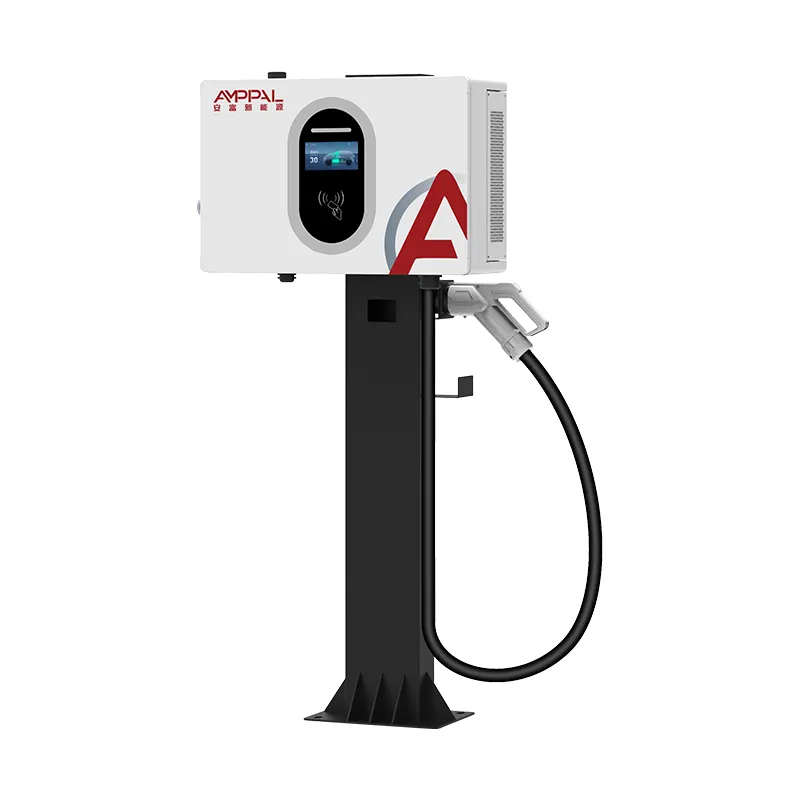
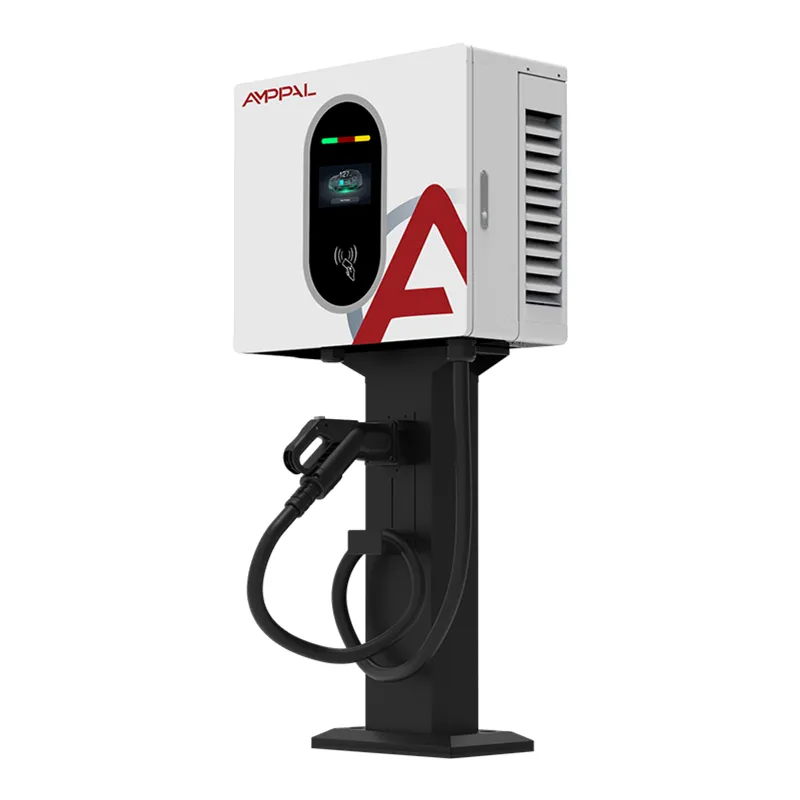
40kW High-Power Wall-Mounted DC EV Charger for Fleet Depots delivers 40kW DC charging at 0-133A from a wall bracket measuring 450 × 660 × 240mm. For underground car parks, leased forecourts and tight urban sites where a floor-standing cabinet will not fit or is not permitted.

The Highest Power We Will Put on a Wall

Forty kilowatts is the practical ceiling for wall mounting, and we are direct about why. Above this, heat output and unit mass make a wall bracket the wrong engineering answer — you end up with a heavy box, forced ventilation constraints, and a structural fixing that most building owners will refuse to sign off on. The AF-DC-040-B-A-O-2-H sits right at that boundary.

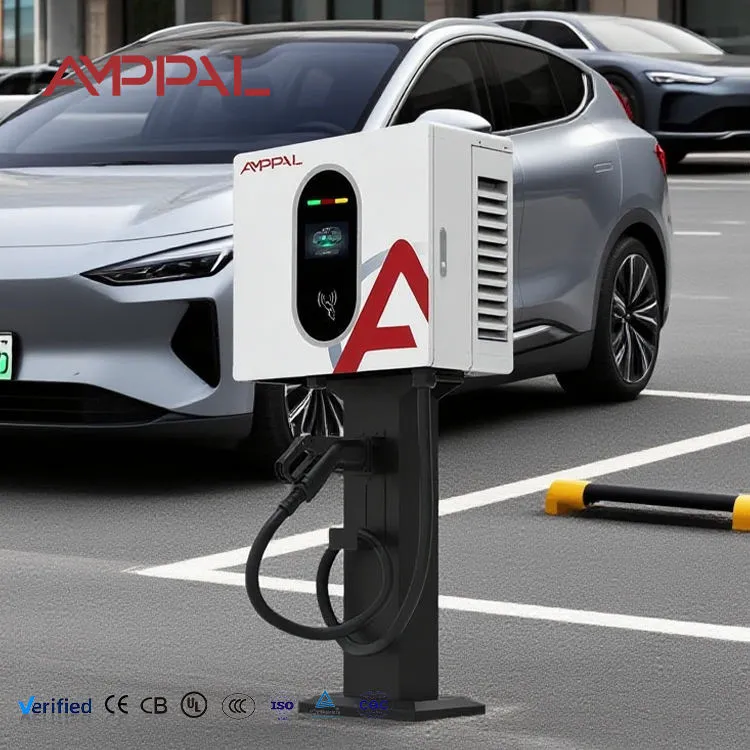
What you get for staying below it is significant. No concrete plinth, no cable trench, no loss of a parking bay to the charger itself, and no permanent alteration to a surface you may only be leasing. In an underground car park with a 2.2 metre ceiling, a wall-mounted unit is frequently the only option that physically works.

Output is 0-133A across 200-1000VDC — the same voltage window as our 60kW and 120kW cabinets, from a box that occupies less wall area than a domestic radiator.

40kW High-Power Wall-Mounted DC EV Charger for Fleet Depots40kW High-Power Wall-Mounted DC EV Charger for Fleet Depots

What Wall Mounting Actually Saves You

No civil works: a floor-standing cabinet typically needs a foundation, conduit routing and reinstatement. Wall mounting removes that line from the project cost entirely.

No lost parking bay: a floor cabinet plus its safety clearance consumes usable area. Bolted to a wall or column, the unit takes none.

Feasible under low ceilings: at 660mm tall on a bracket, it fits basement car parks where a 1.9-metre cabinet cannot pass the ramp height restriction.

Reversible installation: on leased premises the unit comes off the wall and the fixings are made good. Many landlords will approve this when they would refuse groundworks.

Same 450 × 660 × 240 footprint as our 20kW and 30kW models: mixed-power sites share one bracket design and one spares list.

133A output at full voltage range: the current rating holds at 800V rather than tailing off, which is where thin-specified competitors fall short.

40kW High-Power Wall-Mounted DC EV Charger for Fleet Depots40kW High-Power Wall-Mounted DC EV Charger for Fleet Depots

Technical Specifications

Parameter

Specification

Model

AF-DC-040-B-A-O-2-H

Rated Output Power

40kW

Overall Dimensions (mm)

450 × 660 × 240

Input Voltage

AC380V±15%

Output Voltage Range

200-1000VDC

HMI

4.3" touch screen

Peak Efficiency

95%

Rated Output Current

0-133A

Access Control

Swipe card/Scan code/Password

Protection Grade

IP54

Accuracy Class

Level 1.0

Compatible Connectors

CCS1/CHAdeMO/CCS2/GB/T/NACS

Operating Temperature

-25°C ~ +50°C

Warranty

2 Years Standard

Sites Where This Model Is the Only Sensible Fit

Underground and multi-storey car parks: ceiling height and ramp clearance rule out floor cabinets; column mounting suits this unit well.

Leased retail forecourts: tenants who cannot break ground still want DC charging on site.

Historic or planning-restricted city centres: authorities that refuse new street furniture will often permit a wall-fixed unit on an existing structure.

Compact urban filling stations: forecourt area is already committed to fuel islands and circulation; wall space on the shop building is free.

Depot buildings with an existing three-phase board on the wall: short cable runs, minimal installation labour, quick commissioning.

Thermal Design at the Wall-Mount Limit

A 40kW converter running at 95% efficiency dissipates roughly two kilowatts as heat. In a floor cabinet that heat has a large volume and a tall chimney to work with. On a wall you have neither, so the airflow path has to be engineered rather than assumed.

Intake is low on the enclosure, exhaust is high, and the internal baffling keeps hot air off the control electronics and the meter — components whose accuracy drifts when they cook. Fans are temperature-controlled and run only as hard as conditions require, which also keeps the unit acceptably quiet in a residential block.

Output rollback is progressive rather than binary. If ambient temperature and load push module temperature toward its limit, the charger reduces current gradually and the session simply takes longer. It does not trip and dump the driver. This behaviour matters most in enclosed basement car parks with limited air exchange, which is exactly where these units get installed.

40kW High-Power Wall-Mounted DC EV Charger for Fleet Depots40kW High-Power Wall-Mounted DC EV Charger for Fleet Depots

Testing and Certification Records

Compliance with EN IEC 61851-1:2019 and EN IEC 61851-23:2014; CE documentation and serialised test report ship with each unit.

Extended thermal soak specific to this model — full 40kW load held while enclosure and module temperatures are logged, because this is the highest heat density in our wall-mounted range.

100% dielectric strength and insulation resistance testing.

Meter verification against a calibrated reference; Level 1.0 accuracy confirmed per unit and recorded against the serial number.

IP54 verification and 96-hour salt spray on the enclosure finish.

Bracket and fixing pull-test data available on request — useful when a building surveyor asks for structural justification before approving the installation.

Manufacturing Steps

1. Component verification at goods-in: power modules, contactors, meter, connectors and fans checked to specification.

2. CNC punching and press-brake forming of enclosure panels; airflow apertures are part of the punch program, not drilled later.

3. Robotic welding of frame and bracket interface, followed by seam finishing.

4. Surface preparation and electrostatic powder coating with oven cure.

5. Power train assembly — modules, busbars and internal baffling installed; all power terminals torqued and witness-marked.

6. Control and metering assembly, harness routing kept clear of the hot air path.

7. Firmware loading, sensor calibration, meter verification against reference.

8. Extended full-load thermal run, safety testing, IP check, then export packing.

40kW on a Wall, or 60kW on the Floor?

This is the decision most buyers at this power level are actually making, so here is our honest read of it.

Choose the 40kW wall unit when floor space is unavailable, groundworks are prohibited or uneconomic, ceiling height is restricted, or the installation must be reversible. It draws about 60A per phase, which many existing commercial boards can accommodate without an upgrade.

Choose a 60kW floor-standing unit when you have the space and the supply capacity, want dual-gun operation, or need shorter sessions for a public forecourt. Per kilowatt delivered it is usually the better value, and servicing a floor cabinet is easier — the technician works standing at ground level rather than on a platform. If both options are genuinely open to you, the floor unit is normally the stronger buy. This product earns its place when they are not.

40kW High-Power Wall-Mounted DC EV Charger for Fleet Depots

How We Specify Against Competing 40kW Units

Current at high voltage: we hold 133A across the full 200-1000VDC window. Request the same figure at 800V from any alternative before comparing prices.

Thermal behaviour under derating: ask what happens at 45°C ambient in an enclosed space. Progressive rollback keeps sessions running; a hard trip does not.

Metering: Level 1.0 as standard, calibration recorded per serial number.

Structural documentation: bracket pull-test data supplied, which shortens building approval on commercial premises.

Commercial terms: MOQ 1 unit standard with 15-20 working days lead time; 50 units and 25-30 working days for custom branding. Two-year warranty, extendable.

Packaging, Weight and Freight Planning

Each unit ships in a five-layer carton around 540 × 750 × 330mm, gross weight approximately 52kg. This is the heaviest of the three wall-mounted models, so plan for mechanical handling or two people at the installation point.

Ten units per export pallet on heat-treated fumigation-free timber, strapped and stretch-wrapped. A 20-foot container takes about 80 palletised units, a 40-foot high cube roughly 170.

Available terms are EXW, FOB Ningbo or Shanghai, CIF and DDP for most European and Gulf destinations. Sample units go by air or express courier in 5-7 days. Shipping documents include commercial invoice, packing list, CE declaration of conformity, serialised test report and certificate of origin on request.

Support and Serviceable Parts

Two-year warranty across power modules, control board, meter, contactors, fans and screen.

Fans are treated as a serviceable item and can be replaced on site in under thirty minutes with the unit isolated — no return to factory.

Remote fault-code retrieval over OCPP on connected sites; most diagnoses are completed without a visit.

Spare parts dispatched within 48 hours of confirmed fault, 3-5 working days by express courier.

Quarterly filter cleaning is the single maintenance task that matters most on this model, given its heat density. The manual documents the procedure with photographs.

Installation Mistakes Specific to a 40kW Wall Unit

Wrong: fixing to lightweight blockwork or a stud partition. Right: reinforced concrete, solid masonry or a purpose-built steel frame. The unit exceeds 45kg before the cable and gun are attached.

Wrong: installing in a sealed basement bay with no ventilation assessment. Right: confirm air exchange in the space. Two kilowatts of continuous heat in a closed room raises ambient temperature and triggers rollback.

Wrong: mounting the unit above head height to save space. Right: keep the screen at eye level and the gun holster within comfortable reach. Awkward ergonomics generate support calls and damaged cables.

Wrong: undersizing the supply cable for a run of forty metres or more. Right: calculate voltage drop over the actual route at 60A per phase, not just current-carrying capacity.

Wrong: sealing the unit against a wall recess with no rear clearance. Right: follow the bracket spacing. Rear clearance is part of the cooling design, not an installation preference.

Reports From Installed Sites

A shopping centre operator in Istanbul installed six units on basement columns in 2025 after a floor-standing proposal failed the ramp height survey. Their project engineer reported that the deciding technical point was the thermal rollback behaviour — the basement runs warm in August and they had experienced hard trips with a previous supplier's equipment.

A car rental branch at Tbilisi airport runs four units under a canopy. Their fleet supervisor noted 133A is enough to turn a returned vehicle around between rentals, and that the wall mount kept all four bays fully usable, which a cabinet layout would not have.

An installer in Germany who has fitted more than twenty of these across residential blocks raised one consistent point of feedback: the bracket pull-test documentation is what gets these approved by building management, and he asks for it on every project.

Common Pre-Purchase Questions

Q: Can the wall take it?

A: The unit is around 45kg. Solid masonry or reinforced concrete is required; we supply pull-test data for the bracket on request.

Q: What supply current does it need?

A: Approximately 60A per phase at 380V three-phase under full load.

Q: Will it work in a closed underground car park?

A: Yes, subject to a ventilation assessment. It dissipates about 2kW of heat continuously at full load.

Q: How fast is a session?

A: Roughly 45-55 minutes for 20-80% on a typical 60kWh pack, subject to what the vehicle's BMS accepts.

Q: Is 40kW the largest wall-mounted unit you make?

A: Yes. Above this we build floor-standing units, because wall mounting stops being the right engineering solution.

Q: Can it be pole-mounted instead?

A: Yes, with our pole-mount kit, provided the pole is rated for the load. Specify at order time.

Q: Does it support dual guns?

A: No. It is single-gun. For simultaneous multi-vehicle charging, look at our split-type power cabinets.

Q: What is the noise level in a residential building?

A: Fans are speed-controlled and quiet at part load. Under sustained full load in a confined space, expect noise comparable to an outdoor air-conditioning condenser.


Send Inquiry
Contact Info

Talk Directly to Our EV Charger Factory

Get factory-direct pricing, custom solutions, and expert support.

- Fast Response – Reply within 24 hours.

- OEM/ODM – Flexible customization and sample orders.

- Certified Quality – CE, TÜV, CB, and CCC options.

- Custom Quotes – Tailored to your specifications.

- Technical Support – Expert help with OCPP, DLB, and system integration.

X
We use cookies to offer you a better browsing experience, analyze site traffic and personalize content. By using this site, you agree to our use of cookies. Privacy Policy
RejectAccept