" "
Products
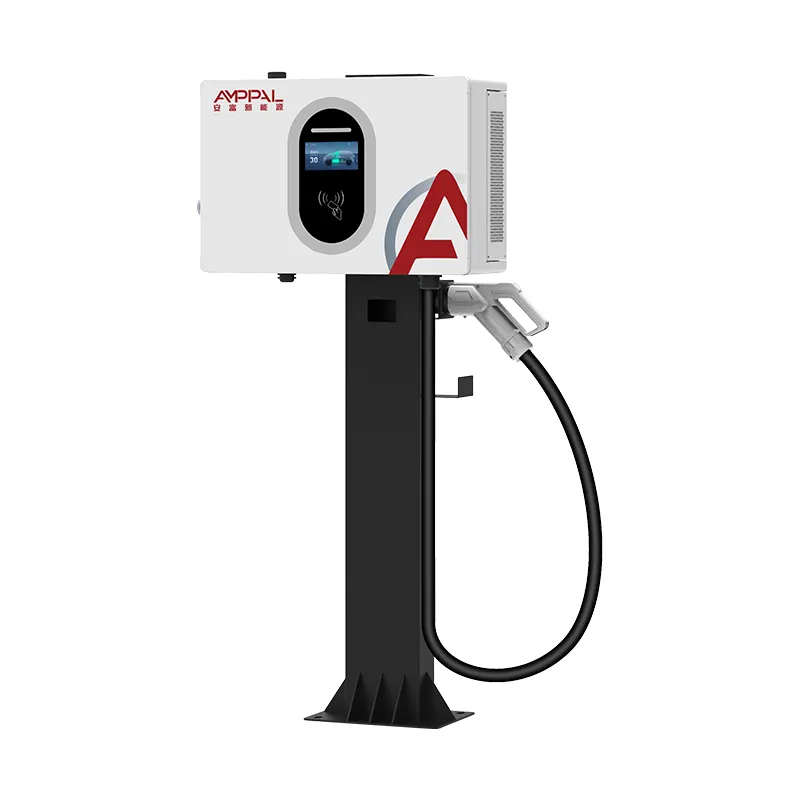
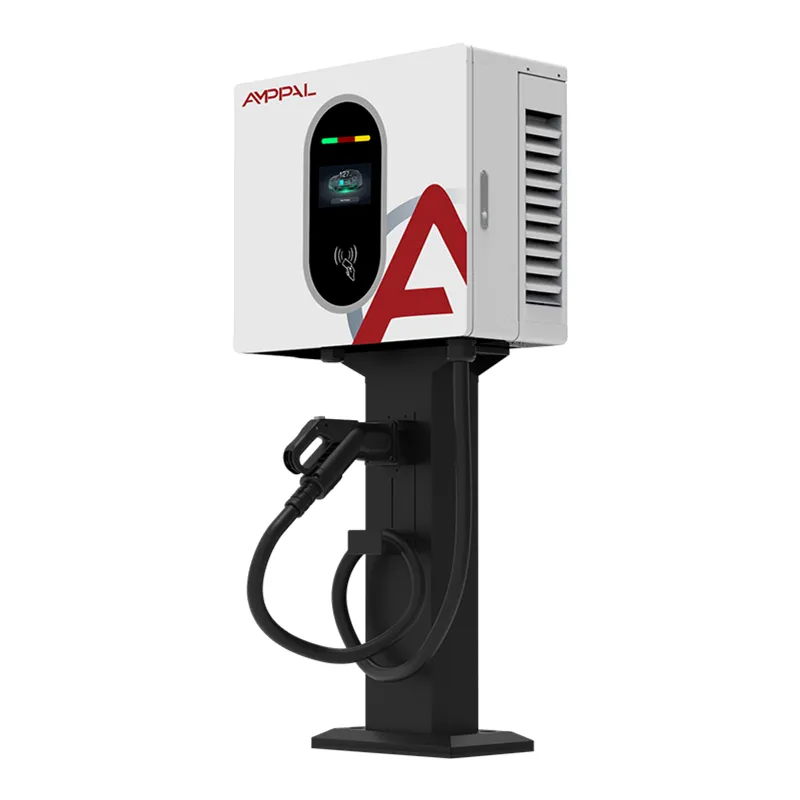
30kW Compact Wall-Mounted DC EV Charger for Dealerships and Workshops
  • 30kW Compact Wall-Mounted DC EV Charger for Dealerships and Workshops30kW Compact Wall-Mounted DC EV Charger for Dealerships and Workshops
  • 30kW Compact Wall-Mounted DC EV Charger for Dealerships and Workshops30kW Compact Wall-Mounted DC EV Charger for Dealerships and Workshops
  • 30kW Compact Wall-Mounted DC EV Charger for Dealerships and Workshops30kW Compact Wall-Mounted DC EV Charger for Dealerships and Workshops
  • 30kW Compact Wall-Mounted DC EV Charger for Dealerships and Workshops30kW Compact Wall-Mounted DC EV Charger for Dealerships and Workshops
  • 30kW Compact Wall-Mounted DC EV Charger for Dealerships and Workshops30kW Compact Wall-Mounted DC EV Charger for Dealerships and Workshops
  • 30kW Compact Wall-Mounted DC EV Charger for Dealerships and Workshops30kW Compact Wall-Mounted DC EV Charger for Dealerships and Workshops
  • 30kW Compact Wall-Mounted DC EV Charger for Dealerships and Workshops30kW Compact Wall-Mounted DC EV Charger for Dealerships and Workshops

30kW Compact Wall-Mounted DC EV Charger for Dealerships and Workshops

30kW Compact Wall-Mounted DC EV Charger for Dealerships and Workshops delivers a full 0-100A across 200-1000VDC. Sized for operators who bill per kWh and need two to three sessions per bay per day without a floor-standing cabinet.

Built Around Session Throughput, Not Headline Power

Charge point operators do not buy kilowatts. They buy sessions per day per bay, because that is what the revenue line is made of. The AF-DC-030-B-A-O-2-H exists at 30kW / 100A for a specific reason: it is the point where a wall-mounted unit starts producing commercially interesting turnover without pushing the site into a grid connection upgrade.

Run the arithmetic. At 30kW a typical 60kWh passenger car goes from 20% to 80% in about seventy minutes. Allow ten minutes for arrival and departure and one bay realistically supports six to eight sessions across a trading day. At 20kW that same bay manages four or five. The hardware costs a little more; the bay earns noticeably more.

The 30kW Compact Wall-Mounted DC EV Charger for Dealerships and Workshops shares its 450 × 660 × 240mm enclosure with our 20kW and 40kW models, so a site can mix power levels on one wall and keep a single spares kit.

Features That Affect Revenue, Not Just Specification Sheets

0-100A across the full voltage band: current is not derated at higher pack voltages, so an 800V vehicle still receives the rated output instead of a quiet slowdown.

Level 1.0 billing accuracy: disputes over kWh delivered are settled by the meter class, and Level 1.0 is what most European operators are required to demonstrate.

Three access methods as standard — RFID card, QR scan and PIN. Sites lose sessions when a driver cannot start a charge; three routes in reduces that.

Wall mounting: no foundation, no trenching, no permanent groundwork on leased surfaces. Installation cost falls by a meaningful margin versus a floor cabinet.

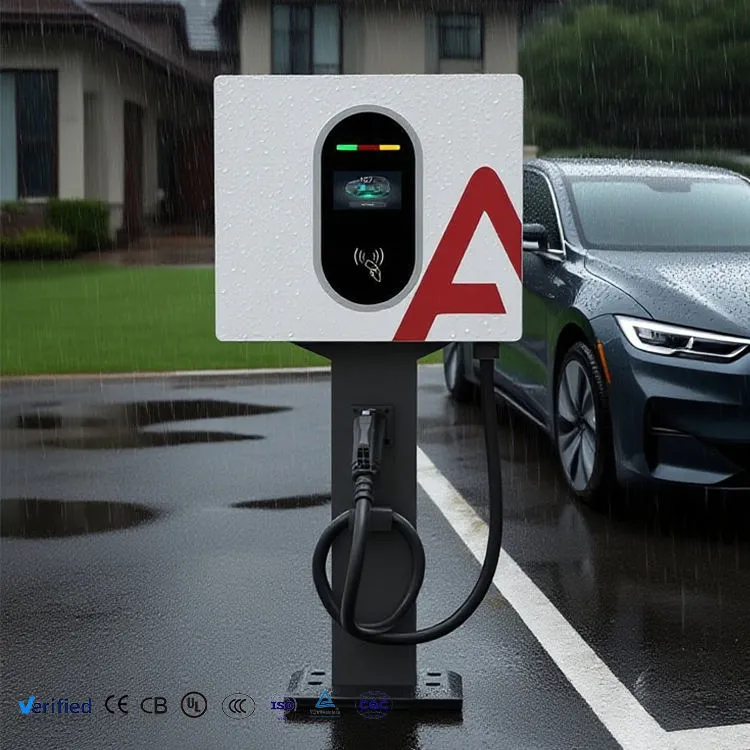
IP54 and -25°C to +50°C: the enclosure is rated for the sort of exposed forecourt where these units usually end up.

95% peak efficiency: at 30kW running several hours a day, the difference between 95% and 91% conversion is real money over a year.

30kW Compact Wall-Mounted DC EV Charger for Dealerships & Workshops30kW Compact Wall-Mounted DC EV Charger for Dealerships & Workshops

Technical Specifications

Parameter

Specification

Model

AF-DC-030-B-A-O-2-H

Rated Output Power

30kW

Overall Dimensions (mm)

450 × 660 × 240

Input Voltage

AC380V±15%

Output Voltage Range

200-1000VDC

HMI

4.3" touch screen

Peak Efficiency

95%

Rated Output Current

0-100A

Access Control

Swipe card/Scan code/Password

Protection Grade

IP54

Accuracy Class

Level 1.0

Compatible Connectors

CCS1/CHAdeMO/CCS2/GB/T/NACS

Operating Temperature

-25°C ~ +50°C

Warranty

2 Years Standard

Deployment Scenarios With Predictable Payback

Retail car parks and supermarkets: dwell time of 60-90 minutes lines up almost exactly with a 20-80% session. Drivers shop, the bay turns over, nobody waits.

Restaurant and roadside service stops: two sittings a day per bay, with charging revenue on top of covers.

Fleet depots with staggered returns: vans arriving through the afternoon get a usable top-up rather than queuing for one high-power unit.

Apartment blocks with shared bays: 30kW keeps a shared bay moving where a 7kW AC point would be occupied all night by one resident.

Taxi and ride-hail ranks: drivers take a 30-40 minute break; 30kW returns roughly 20kWh in that window, which is a shift's worth of urban range.

30kW Compact Wall-Mounted DC EV Charger for Dealerships & Workshops30kW Compact Wall-Mounted DC EV Charger for Dealerships & Workshops

How the Charger Manages a 100A Session

Current does not simply arrive at 100A. On connection, the charger performs an insulation test on the DC output while the contactors are still open. Only after that passes does it close the contactors and begin ramping, following the current target the vehicle's BMS publishes over the communication link.

Through the session the BMS revises that target continuously — as cells warm or the state of charge climbs past roughly 80%, it asks for less. The charger follows down rather than forcing current, which is why the last 20% always takes disproportionately long on any DC charger, ours included.

Thermal management runs independently. Module temperature is sampled continuously and output is rolled back before anything reaches a trip threshold. Users see a slightly longer session on a 45°C afternoon; they do not see a fault and an aborted charge, which is what an unmanaged design produces.

Quality Control and Compliance Evidence

EN IEC 61851-1:2019 and EN IEC 61851-23:2014 compliance, with CE declaration and test report shipped alongside the goods.

Meter calibration against a reference standard on every unit, with the calibration record retained under the serial number.

Continuous full-load run-in at 30kW with thermal imaging of busbar joints and module surfaces.

100% dielectric and insulation testing — no batch sampling on electrical safety.

Enclosure salt-spray tested for 96 hours; gasket compression verified on assembly rather than assumed.

Every unit leaves with a serialised test certificate. If a warranty claim arises, we can look up exactly how that unit performed on the line.

30kW Compact Wall-Mounted DC EV Charger for Dealerships & Workshops30kW Compact Wall-Mounted DC EV Charger for Dealerships & Workshops

Production Sequence

Step 1 — Goods-in inspection of modules, meters, contactors and cable assemblies against purchase specification.

Step 2 — CNC punching and bending of enclosure panels on TRUMPF machinery.

Step 3 — Robotic welding of the structural frame, then grinding of visible seams.

Step 4 — Pre-treatment and electrostatic powder coating, oven cured for adhesion.

Step 5 — Power assembly: modules mounted, busbars torqued and witness-marked, harness routed and clipped away from heat sources.

Step 6 — Control assembly: board, meter, screen and access reader fitted and connected.

Step 7 — Firmware load, sensor calibration and meter verification.

Step 8 — Full-load run-in, safety test battery, IP check, then packing and palletising.

Choosing Between 30kW and the Alternatives

Take the 30kW when your bays turn over in roughly an hour and you are charging for the energy. It is the smallest unit in our range that supports a genuine pay-per-use business case on passenger cars.

Drop to 20kW when parking is measured in half-days — offices, hotels, long-stay car parks. Paying for 100A that nobody uses is waste.

Step up to 40kW when you run larger packs, or to the 60kW+ floor-standing range when you need sub-30-minute sessions or dual-gun operation. One point to check first: 30kW draws around 45A per phase. If your incoming supply is already close to capacity, the grid connection — not the charger — becomes the constraint, and that is a conversation worth having before you order.

Comparison Points When Tendering

Ask any competing 30kW unit for its current rating at 800V. Many quote 100A at 400V and considerably less at the top of the range. Ours holds 100A across the band.

Ask whether Level 1.0 metering is standard or an upgrade. On several competing units it is an upgrade.

Ask about connector options after the order is placed. We build CCS1, CCS2, CHAdeMO, GB/T and NACS on the same platform.

Lead time: 15-20 working days standard, 25-30 with custom branding. MOQ 1 unit standard, 50 for bespoke colour or logo.

Warranty: two years inclusive of power modules, extendable to three or five at the point of order.

30kW Compact Wall-Mounted DC EV Charger for Dealerships & Workshops

Packing, Weights and Shipping Terms

Single-unit export carton measures approximately 540 × 750 × 330mm at around 45kg gross, five-layer board with EPE foam and a sealed moisture liner containing desiccant.

Twelve units per pallet on fumigation-free heat-treated timber, strapped and stretch-wrapped. A 20-foot container holds about 96 palletised units; a 40-foot high cube takes roughly 200.

We quote EXW, FOB Ningbo or Shanghai, CIF and DDP into most of Europe and the Gulf. Samples move by air or express in 5-7 days. Paperwork supplied: commercial invoice, packing list, CE declaration of conformity, serialised test report, and certificate of origin where the destination requires one.

After-Sales Commitments

Two-year warranty covering power modules, control electronics, meter, contactors and HMI.

Fault codes read remotely over OCPP where the site is connected, which resolves most issues without a site visit.

Replacement parts dispatched within 48 hours of confirmation; 3-5 working days transit by DHL or FedEx.

Recommended annual maintenance: fan and filter check, gasket inspection, terminal torque verification, meter spot-check. The procedure is documented in the manual.

Free remote commissioning support for the first installation at any new site, by video call with our engineer.

Operating Errors That Cost Operators Money

Wrong: advertising '30kW fast charging' without qualifying it. Right: state realistic session times. Drivers who expect 20 minutes and wait 70 leave bad reviews that cost more than the tariff difference.

Wrong: installing without checking phase balance across the board. Right: distribute multiple units across phases; unbalanced loading trips supplies and shortens contactor life.

Wrong: mounting the unit where the cable must cross a driving lane. Right: position so the gun reaches the vehicle inlet without the cable lying under a wheel. Cable damage is our most common non-warranty repair.

Wrong: leaving the default tariff in place after commissioning. Right: configure and test-charge once. Operators have run free electricity for weeks because nobody checked.

Wrong: ignoring the fan filter for a year. Right: clean quarterly on dusty sites. Restricted airflow causes thermal rollback, and users experience that as slow charging.

Operator Feedback

A supermarket chain in Croatia put eight units across four stores in 2025. Their facilities manager reported average utilisation of just under three sessions per bay per day in month six, and made the point that the wall mount let them use existing perimeter walls instead of surrendering parking bays to cabinets.

A taxi cooperative in Baku bought five. Their feedback was specific and worth passing on: drivers wanted the screen angled slightly downward for readability while standing close to the unit, so we adjusted the bracket geometry on their repeat order.

A logistics contractor in Turkey running twelve units across three depots noted that the shared enclosure with the 20kW and 40kW models cut their spares holding to one set of fans, one contactor and one screen for the whole estate, rather than three separate kits.

Frequently Asked Questions

Q: How many cars per day can one unit serve?

A: Six to eight passenger cars on a 20-80% session with realistic changeover time, assuming continuous demand through a trading day.

Q: What input current does it draw?

A: Roughly 45A per phase on a 380V three-phase supply at full output. Check board capacity before ordering multiples.

Q: Is 30kW enough for electric vans?

A: For overnight or multi-hour dwell, yes. For rapid mid-shift turnaround on large packs, look at 60kW or above.

Q: Can two vehicles charge at once?

A: No, this is a single-gun unit. Simultaneous multi-gun charging starts with our split-type power cabinets.

Q: Does it work with a solar and storage installation?

A: Yes, through the site energy management system. Tell us your inverter and EMS platform and we will confirm the integration path.

Q: How is billing handled?

A: Level 1.0 metering feeds your OCPP back-office; alternatively, run it standalone with RFID cards and reconcile from the internal session log.

Q: What maintenance does it need?

A: Quarterly filter and fan check on dusty sites, annual gasket and torque inspection. No consumable parts beyond filters.

Q: Can I brand the enclosure?

A: Yes — custom colour and screen graphics from 50 units, no tooling charge for colour changes, 25-30 working days lead time.


Send Inquiry
Contact Info

Talk Directly to Our EV Charger Factory

Get factory-direct pricing, custom solutions, and expert support.

- Fast Response – Reply within 24 hours.

- OEM/ODM – Flexible customization and sample orders.

- Certified Quality – CE, TÜV, CB, and CCC options.

- Custom Quotes – Tailored to your specifications.

- Technical Support – Expert help with OCPP, DLB, and system integration.

X
We use cookies to offer you a better browsing experience, analyze site traffic and personalize content. By using this site, you agree to our use of cookies. Privacy Policy
RejectAccept