" "
Products
20kW Compact Integrated DC EV Charging Station for Retail Parking
  • 20kW Compact Integrated DC EV Charging Station for Retail Parking20kW Compact Integrated DC EV Charging Station for Retail Parking
  • 20kW Compact Integrated DC EV Charging Station for Retail Parking20kW Compact Integrated DC EV Charging Station for Retail Parking
  • 20kW Compact Integrated DC EV Charging Station for Retail Parking20kW Compact Integrated DC EV Charging Station for Retail Parking
  • 20kW Compact Integrated DC EV Charging Station for Retail Parking20kW Compact Integrated DC EV Charging Station for Retail Parking
  • 20kW Compact Integrated DC EV Charging Station for Retail Parking20kW Compact Integrated DC EV Charging Station for Retail Parking
  • 20kW Compact Integrated DC EV Charging Station for Retail Parking20kW Compact Integrated DC EV Charging Station for Retail Parking
  • 20kW Compact Integrated DC EV Charging Station for Retail Parking20kW Compact Integrated DC EV Charging Station for Retail Parking
  • 20kW Compact Integrated DC EV Charging Station for Retail Parking20kW Compact Integrated DC EV Charging Station for Retail Parking

20kW Compact Integrated DC EV Charging Station for Retail Parking

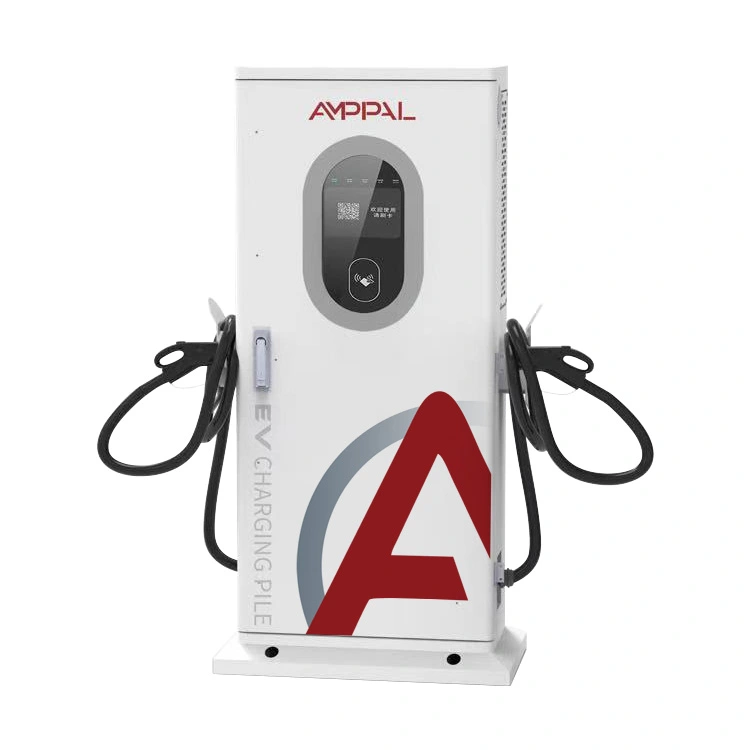
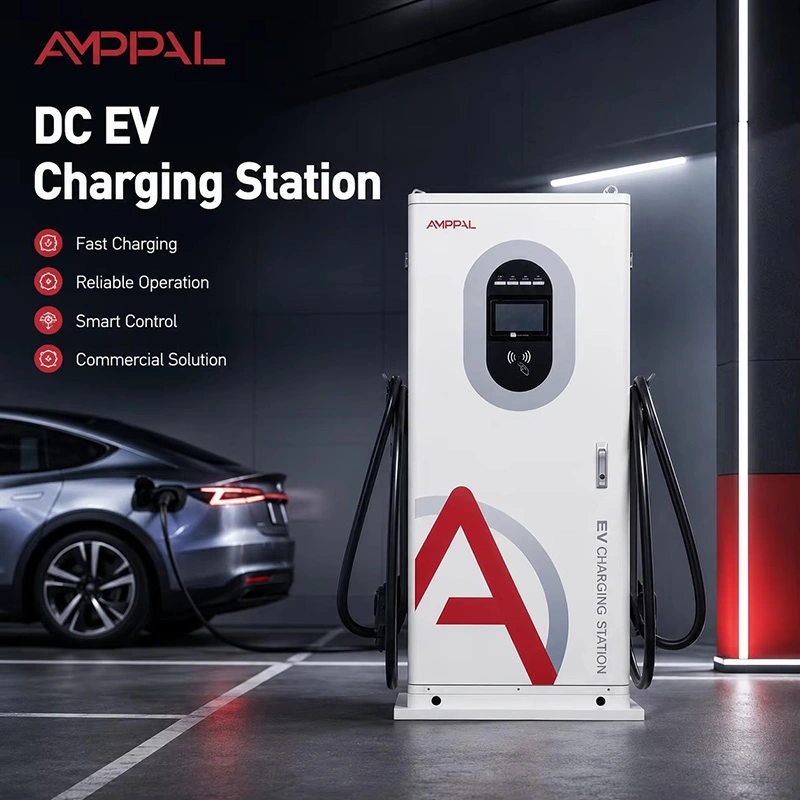
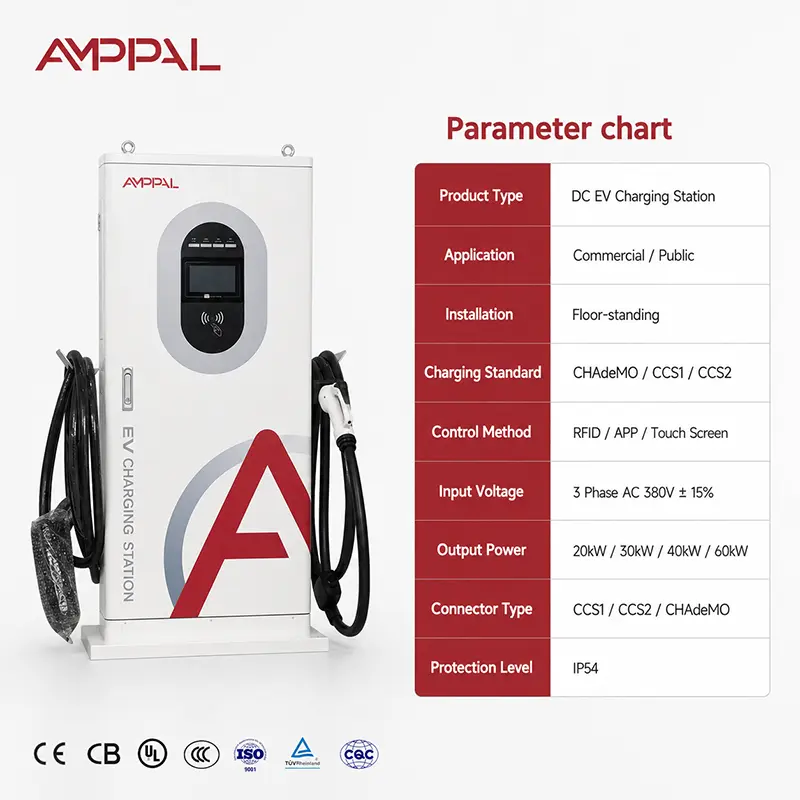
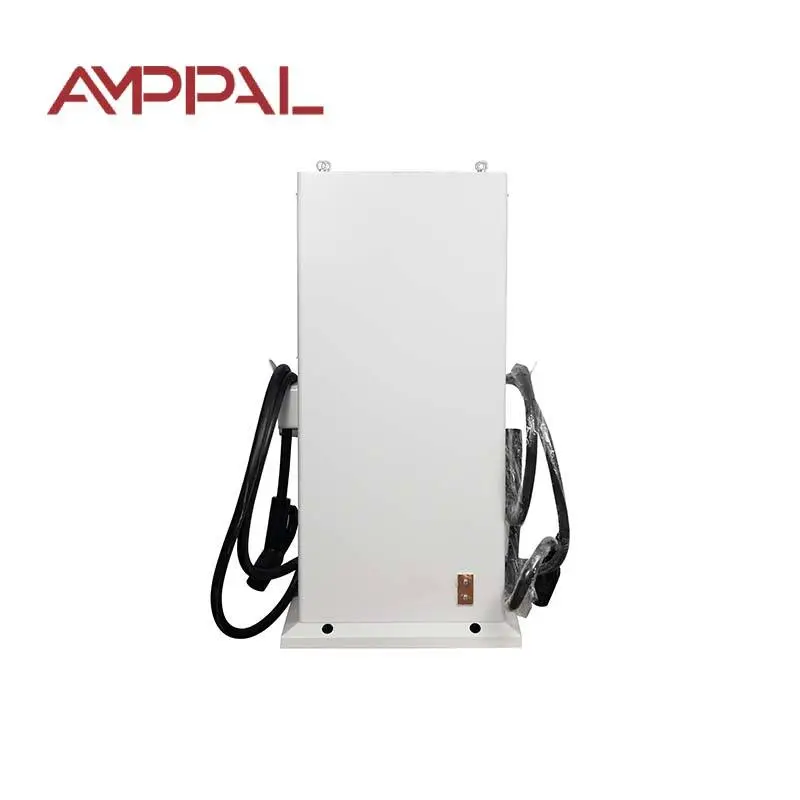
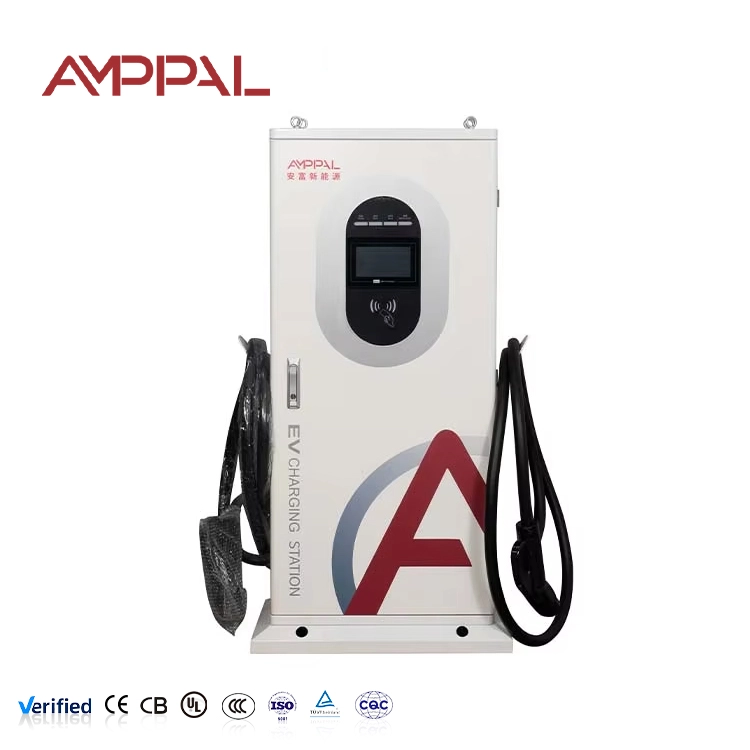
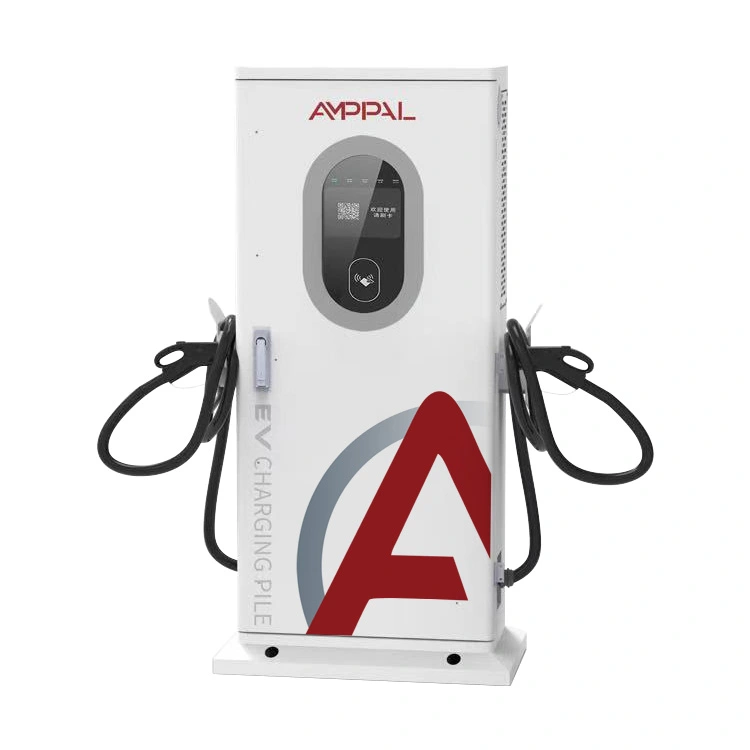
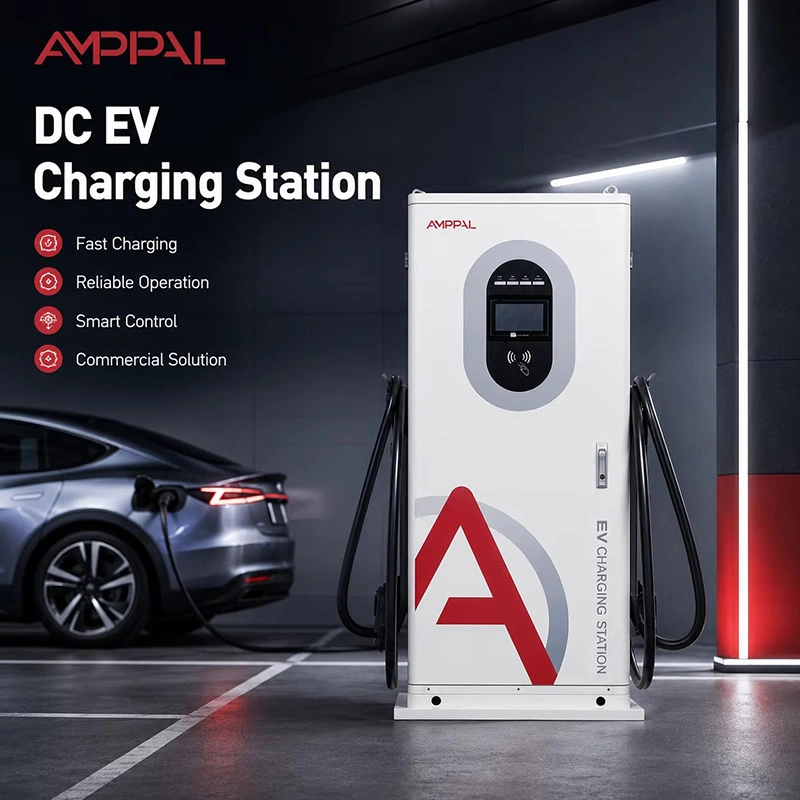
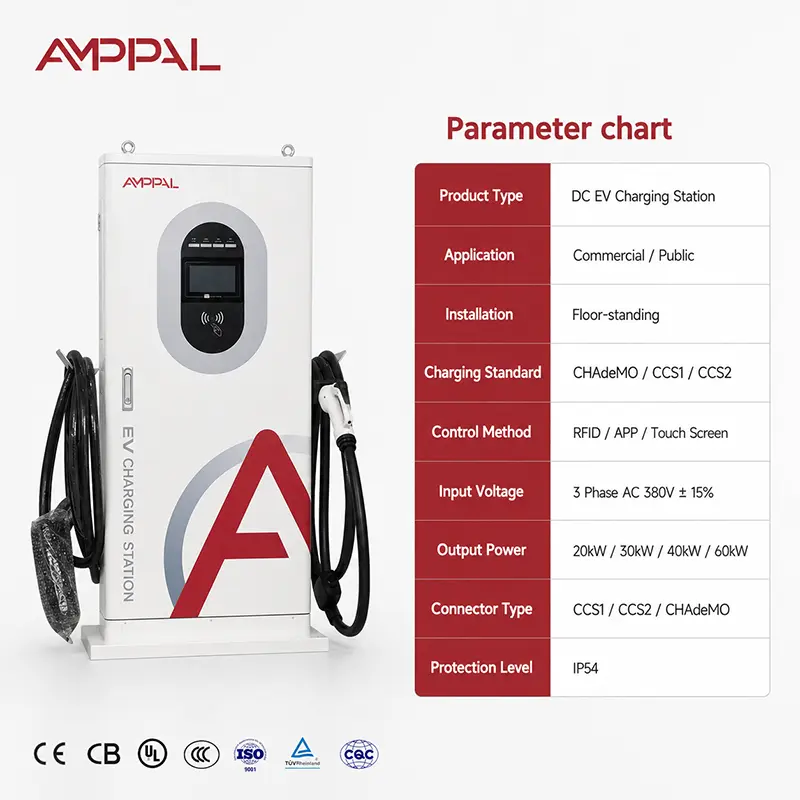
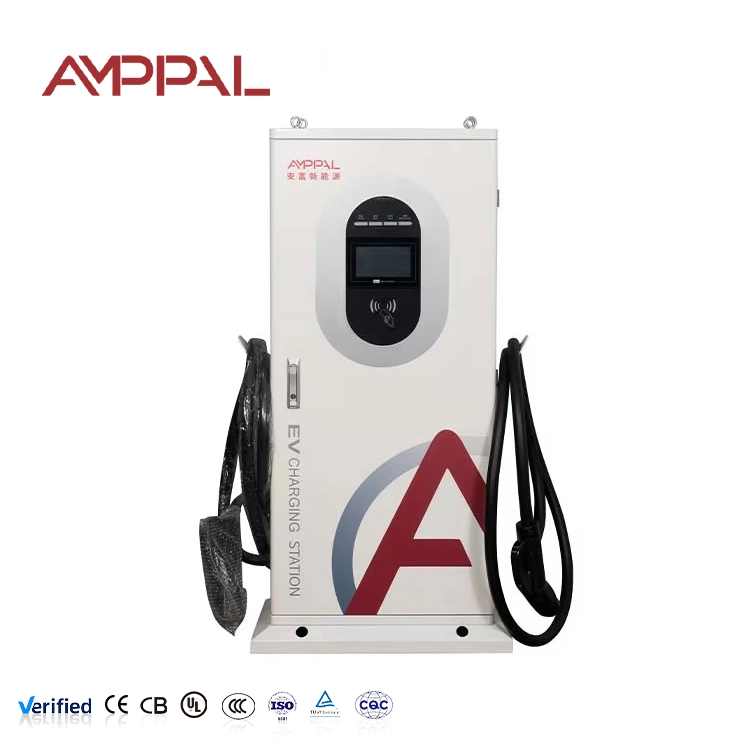
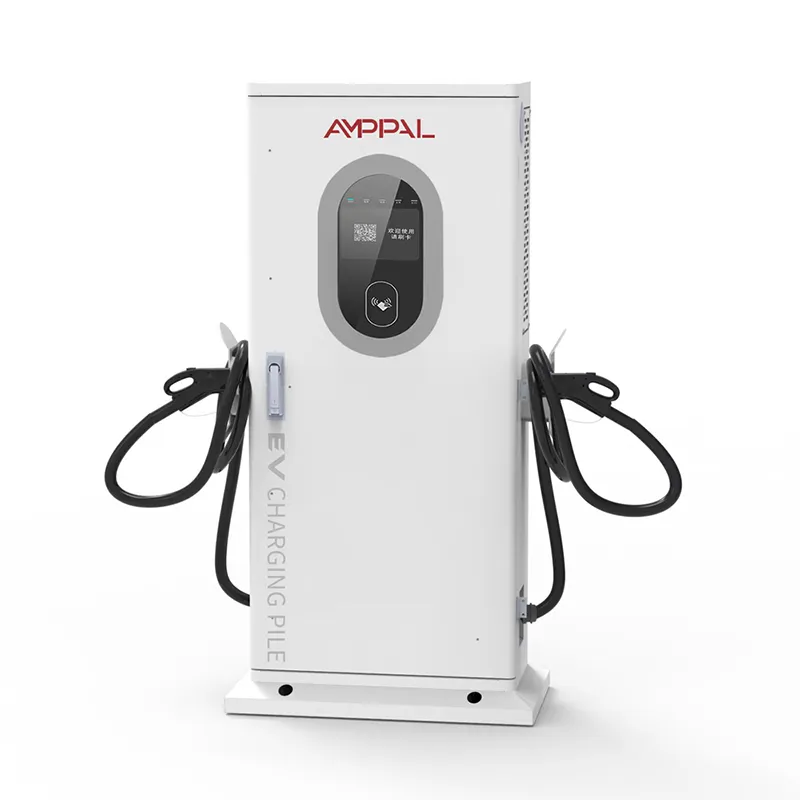
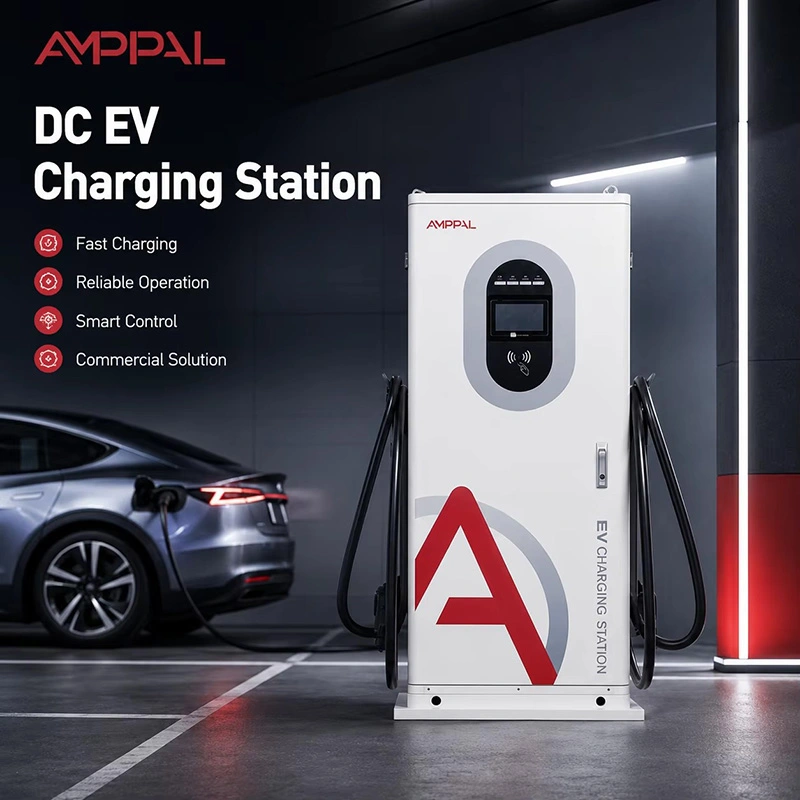
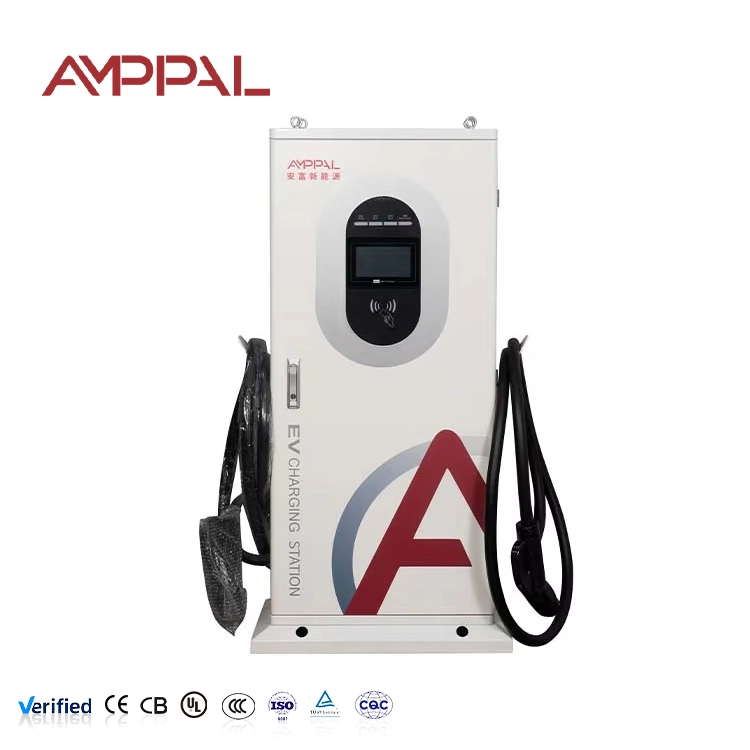
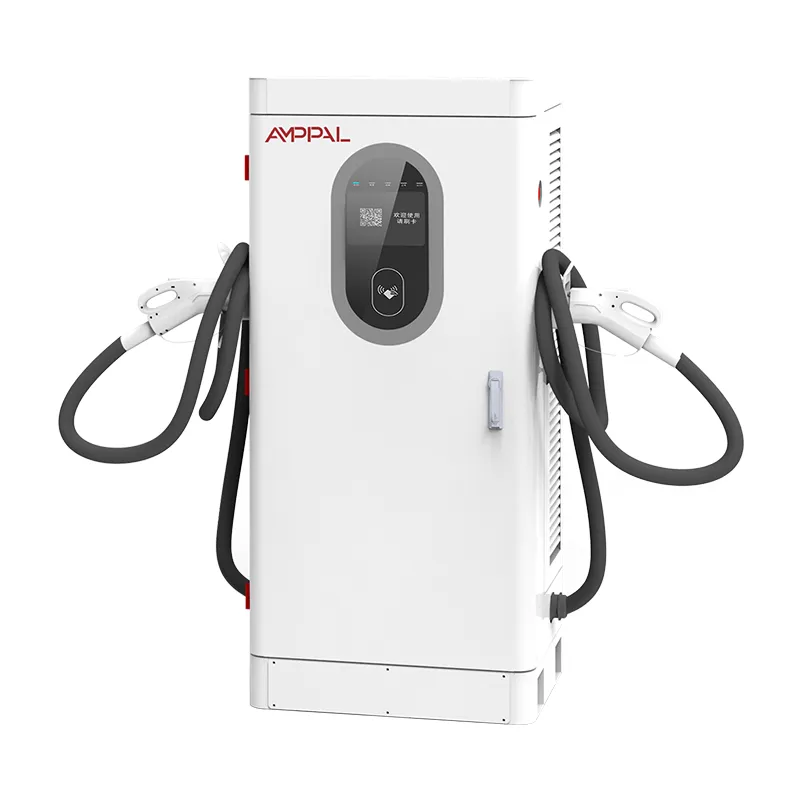
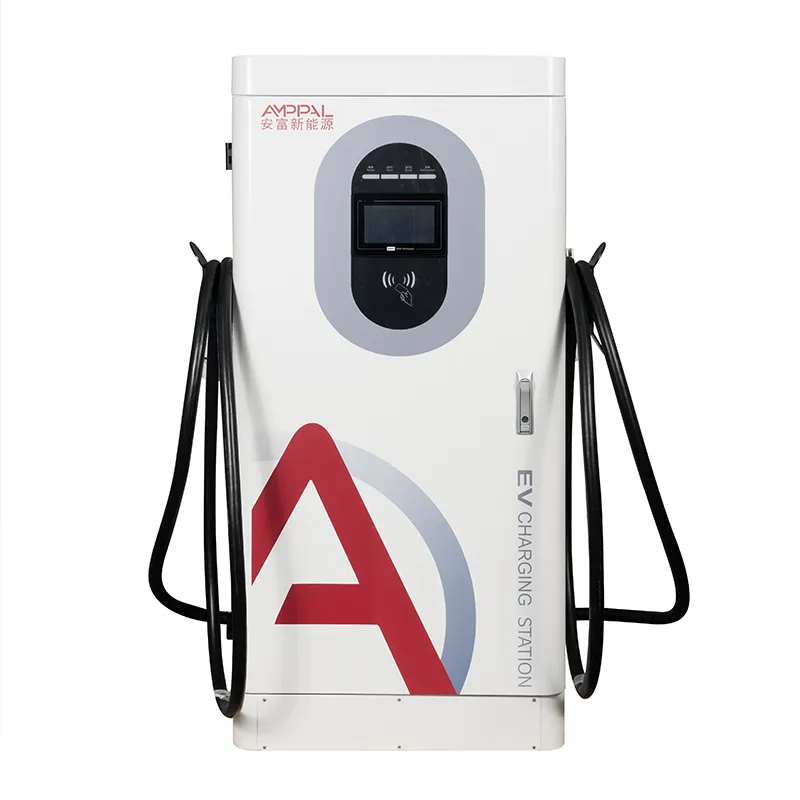
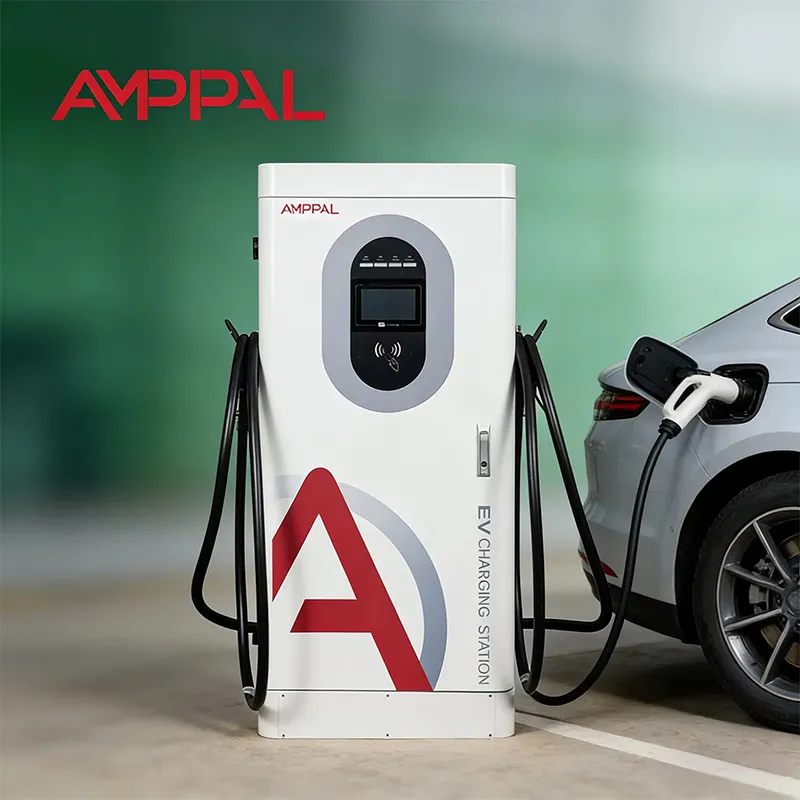
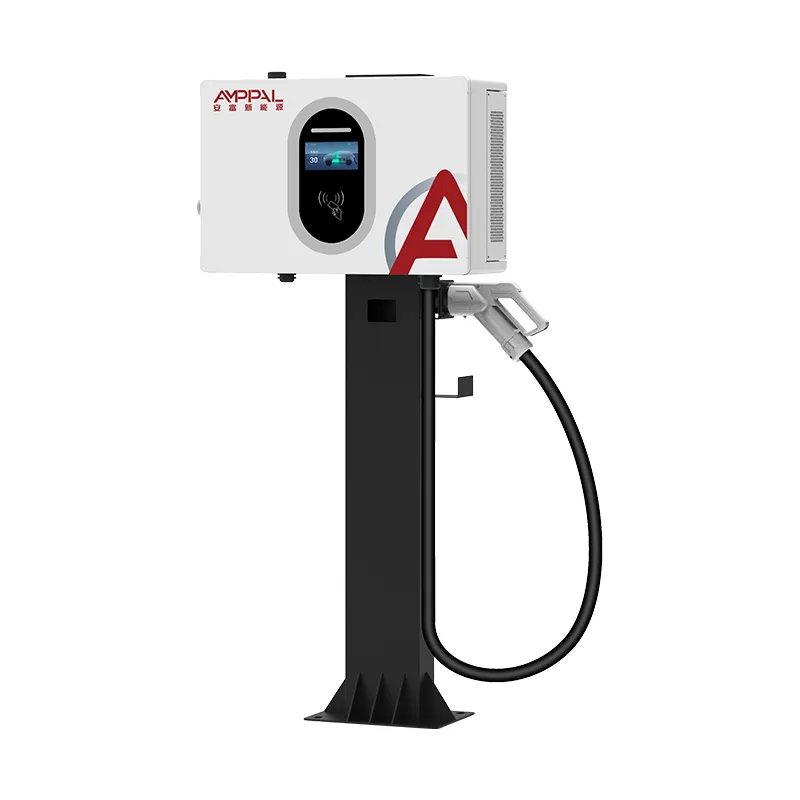
20kW Compact Integrated DC EV Charging Station for Retail Parking is a slim floor-standing 20kW DC post, 1517mm tall with a 7-inch colour screen. Designed so a first-time driver can start a charge without help — card, QR or PIN, four charging modes, clear on-screen guidance.

A Charging Post Built to Be Used by Strangers

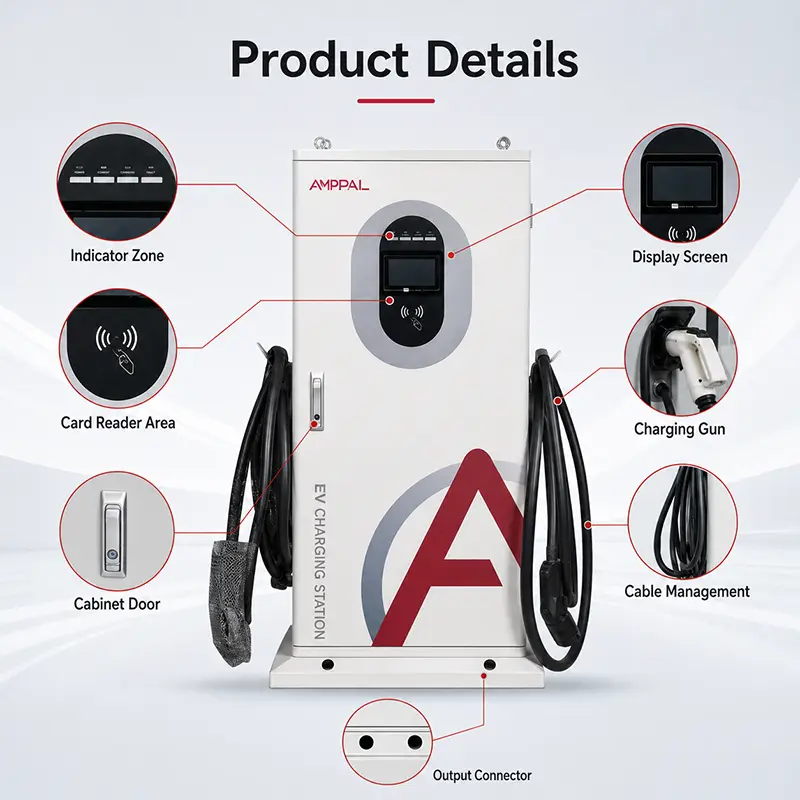
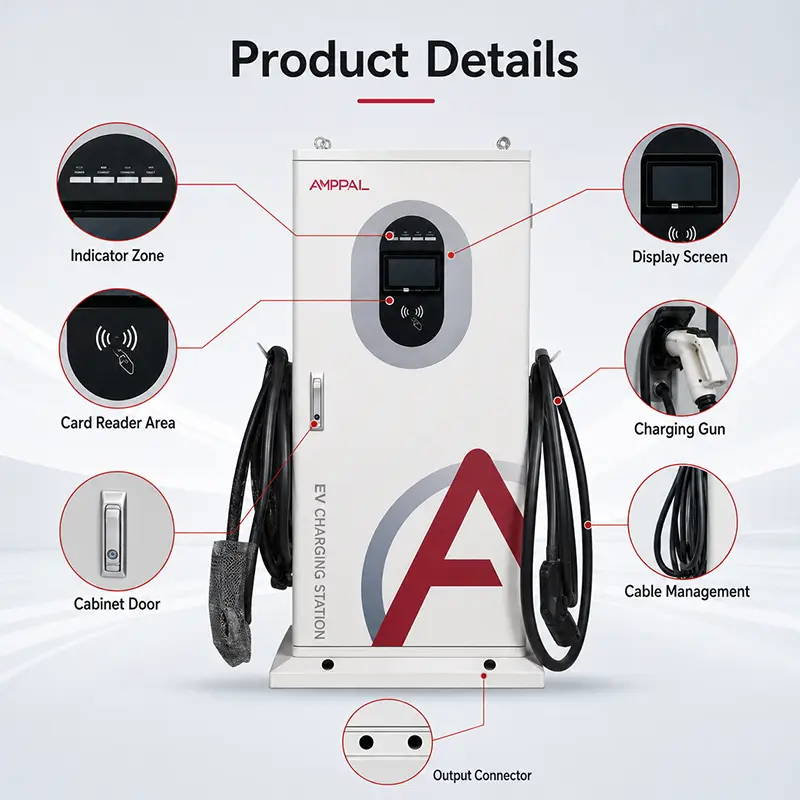
There is a difference between a charger that works and a charger the public can use unaided. The AF-DC-020-Y-B-O-3 is our answer to the second problem. It stands 1517mm tall on its base, which puts the 7-inch colour screen at natural eye level for someone standing beside their car, and the gun holster at waist height where an adult can lift a DC cable comfortably.

The screen is where most of the design effort went. Session status, energy delivered, elapsed time, current tariff and remaining estimate are all on one page — no menu diving. When something goes wrong, the message says what to do rather than displaying a fault code that means nothing to a driver at eleven at night.

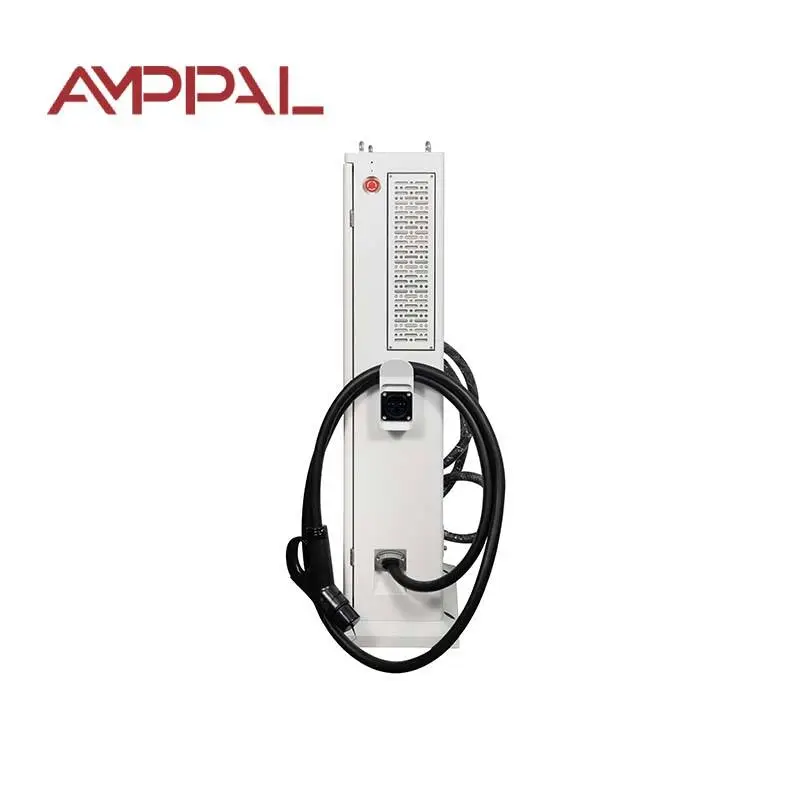
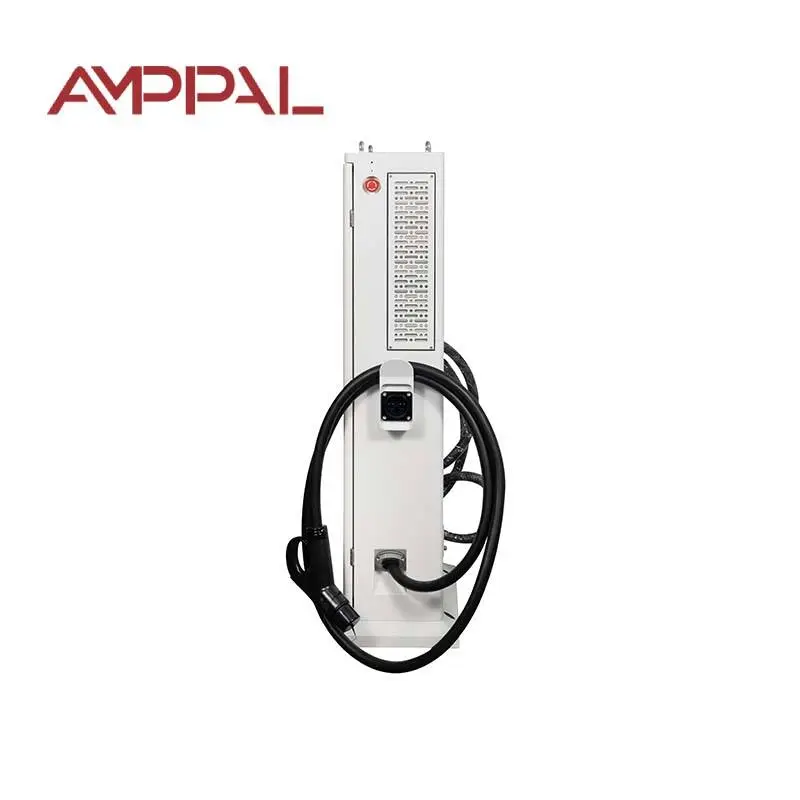
Footprint is deliberately narrow. At 650 × 300mm the post fits at the head of a standard parking bay without intruding into the space, which is what usually forces operators into wall mounting.

20kW Compact Integrated DC EV Charging Station for Retail Parking20kW Compact Integrated DC EV Charging Station for Retail Parking

Details That Reduce Support Calls

7-inch colour touch screen at 1200mm eye height: readable from a standing position without stooping, and large enough for older drivers.

Three start methods — RFID card, QR scan, PIN code. When a phone has no signal, the card still works. When a driver has no card, the QR still works.

Four charging modes: auto full charge, fixed power, fixed amount and fixed time. A driver with twenty minutes selects time; one with a budget selects amount.

Cable holster and hook at working height: the single biggest cause of damaged guns is drivers dropping them on concrete because the holster is awkward.

0-100A across 200-1000VDC: the same voltage window as our large cabinets, so no vehicle is turned away for being an 800V platform.

IP54 enclosure rated -25°C to +50°C, with the electronics compartment sealed separately from the cable entry.

20kW Compact Integrated DC EV Charging Station for Retail Parking20kW Compact Integrated DC EV Charging Station for Retail Parking

Technical Specifications

Parameter

Specification

Model

AF-DC-020-Y-B-O-3/4/5-H

Rated Output Power

20kW

Overall Dimensions (mm)

1517 × 650 × 300 (with base)

Input Voltage

AC380V±15%

Output Voltage Range

200-1000VDC

HMI

7" color touch screen

Charging Modes

Auto/Fixed power/Fixed amount/Fixed time

Rated Output Current

0-100A

Access Control

Swipe card/Scan code/Password

Protection Grade

IP54

Peak Efficiency

95%

Compatible Connectors

CCS1/CHAdeMO/CCS2/GB/T/NACS

Operating Temperature

-25°C ~ +50°C

Warranty

2 Years Standard

Where This Post Works Best

Municipal on-street parking: a narrow post at the bay head is what most city authorities will approve, where a wide cabinet fails the pavement clearance rule.

Hotel and restaurant car parks: guests self-serve without asking reception for help, which is the practical test of any public unit.

Small retail parks: 20kW suits a 60-90 minute shop, and the post looks deliberate rather than industrial next to the storefront.

Residential compounds with shared bays: PIN access lets a management office issue codes without administering an RFID card system.

Workplace visitor parking: QR start means a visitor charges without being enrolled in the company card scheme.

20kW Compact Integrated DC EV Charging Station for Retail Parking20kW Compact Integrated DC EV Charging Station for Retail Parking

What Happens When a Driver Plugs In

The sequence is fixed and takes a few seconds. The post detects the connector, confirms the lock has engaged, then runs an insulation test on the DC side while the contactors remain open. If insulation is below threshold — a wet connector, a damaged cable — it stops there and tells the driver to reconnect.

Passing that, the post and the vehicle exchange parameters. The BMS states target voltage and maximum acceptable current; the post confirms what it can supply and begins ramping. From this point the vehicle is in control of the current, which is why two cars on identical posts can charge at very different rates.

Whichever of the four modes the driver selected governs when the session ends. Auto runs until the BMS calls a stop. Fixed amount, fixed power and fixed time end on their own condition, and the post reports the reason on screen so nobody assumes a fault.

Compliance and Line Testing

EN IEC 61851-1:2019 and EN IEC 61851-23:2014, with CE declaration and serialised test report shipped with each post.

Screen and touch layer tested for readability and response across the full -25°C to +50°C operating range; cold-weather touch failure is a common complaint on public units.

100% insulation resistance and dielectric strength testing.

Gun and holster mechanical cycling on production samples — the holster is a wear point on self-service equipment.

IP54 verification plus 96-hour salt spray on the enclosure and base.

Full-load run-in with thermal logging before packing.

How the Post Is Built

1. Incoming inspection of modules, screen assemblies, readers, contactors and cable sets.

2. CNC punching and forming of the column and base panels; the base flange geometry sets how the post stands true after anchoring.

3. Robotic welding of column to base, seams ground flush on visible faces.

4. Pre-treatment and electrostatic powder coating; public-facing equipment gets an extra coating thickness check.

5. Power assembly — modules, busbars and internal wiring, all power terminals torqued and witness-marked.

6. HMI and access hardware fitted: screen, card reader, QR camera window and keypad, each function-tested.

7. Firmware load, sensor calibration, and a scripted user-interface test covering all four charging modes.

8. Full-load run-in, safety battery, IP check, then crated for export.

Is 20kW the Right Power for a Public Post?

Match power to how long the car is actually parked, not to what sounds impressive in a tender document.

At 20kW a driver receives roughly 20kWh per hour — around 100-120km of range. For a shopping trip, a meal or an office visit that is entirely adequate, and the post costs less to buy and less to connect.

If your bays turn over in under forty minutes, or if drivers arrive expecting to leave quickly, this is the wrong product and we would rather say so now: look at the 60kW or 120kW cabinets. Equally, if the site is purely overnight residential parking, AC posts will serve the same drivers for considerably less money.

20kW Compact Integrated DC EV Charging Station for Retail Parking20kW Compact Integrated DC EV Charging Station for Retail Parking

How This Compares to a Wall Box at the Same Power

Placement freedom: a post goes at the bay head anywhere on the site. A wall box needs a wall in the right place, which frequently does not exist in an open car park.

Public presentation: a finished post with a large screen reads as deliberate infrastructure; drivers trust it more than a box on a wall, and that shows in utilisation.

Screen size: 7-inch colour here against 4.3-inch on the wall-mounted 20kW. For unattended public use the larger screen is worth the difference.

Installation: a post requires a small foundation and cable entry from below; a wall box does not. Budget for that groundwork.

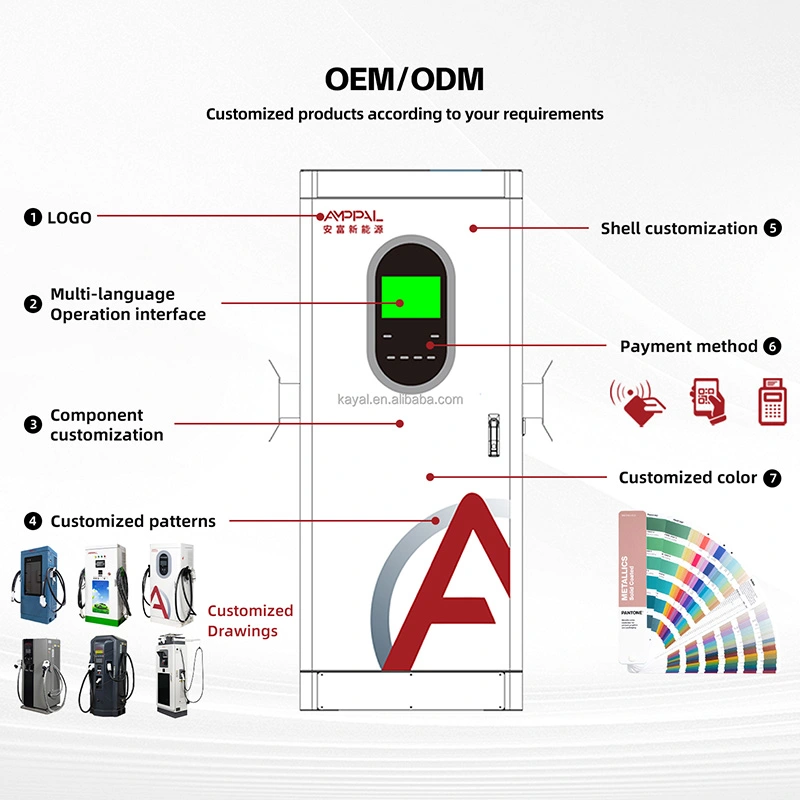
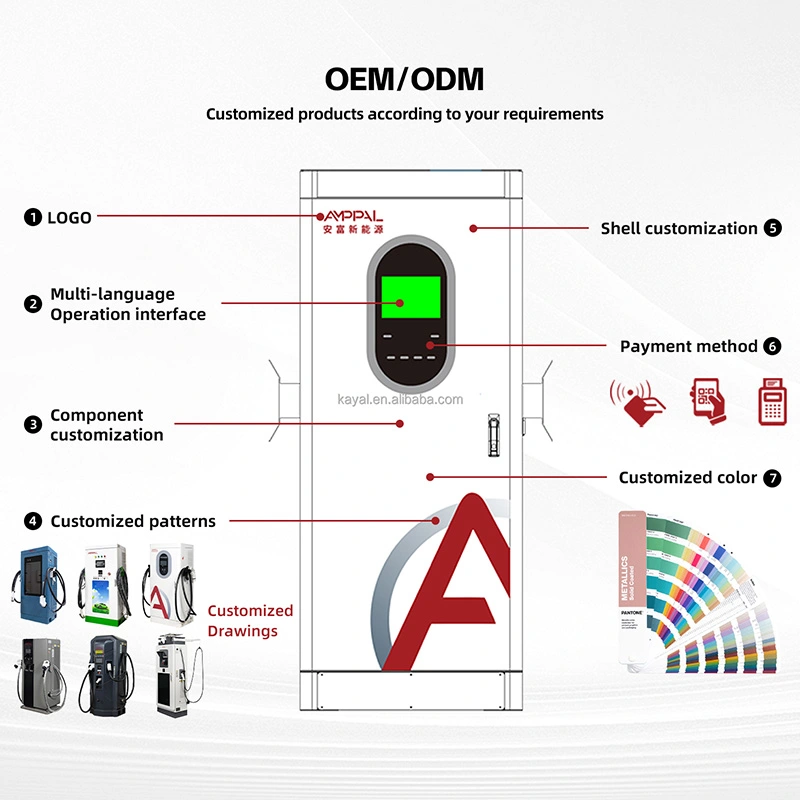
Commercial terms are identical across both: MOQ 1 unit standard, 15-20 working days, two-year warranty, custom branding from 50 units.

Crating and Delivery

Posts ship upright in a plywood crate approximately 1620 × 750 × 420mm, gross weight around 85kg, with foam protection over the screen face and the gun packed separately in the same crate.

Six crates fit a standard export pallet configuration; a 20-foot container takes about 48 posts and a 40-foot high cube around 100, depending on whether anchor kits ship with the order.

Terms available are EXW, FOB Ningbo or Shanghai, CIF and DDP into most European and Gulf destinations. Anchor bolt kits and installation templates ship with the goods at no charge. Documentation includes invoice, packing list, CE declaration, serialised test report and foundation drawings.

Service and Consumables

Two-year warranty across power modules, screen, readers, contactors and cable assembly.

The charging gun and cable are treated as field-replaceable; a distributor stocking two spare gun assemblies can resolve the most common public-site damage within a day.

Remote diagnostics over OCPP where connected, including screen and reader status.

Spares dispatched within 48 hours of confirmation, 3-5 working days by courier.

Recommended service interval: six months on public sites — filter clean, gun and holster inspection, gasket check, screen surface check.

What Goes Wrong on Public Sites

Wrong: installing the post facing direct afternoon sun. Right: orient the screen away from low sun, or fit the high-brightness display option. Unreadable screens generate more complaints than slow charging.

Wrong: anchoring to a thin surface slab. Right: pour a proper foundation to the supplied drawing. Posts get knocked by reversing vehicles and the base takes that load.

Wrong: omitting a wheel stop or bollard in front of the bay. Right: fit one. The cost is trivial against a replacement column.

Wrong: leaving the QR code sticker to fade. Right: check it at each service visit — a bleached QR code silently kills every session that would have started with a phone.

Wrong: assuming vandalism is a hardware problem. Right: lighting and camera coverage protect a public post better than any enclosure rating.

20kW Compact Integrated DC EV Charging Station for Retail Parking

Site Owner Feedback

A municipality in northern Greece installed fourteen posts across four town car parks in 2025. Their transport officer reported that the PIN option turned out to be the most used start method, not the card — visitors without a local account simply took a code from the parking attendant.

A hotel group in Georgia with eleven posts across three properties gave one piece of feedback that changed our recommendation: they asked for the four charging modes to be restricted to auto and fixed time for guest use, because the other two confused people. That configuration is now available as a firmware setting.

An operator in Uzbekistan running nine posts noted that the narrow 300mm depth was decisive — their bays are laid out to a Soviet-era standard with tight circulation, and a deeper cabinet would have failed the fire access survey.

Questions From Buyers

Q: Can a driver use it without an app or account?

A: Yes. PIN and RFID both work standalone. QR is available where you run a back-office platform.

Q: What foundation does it need?

A: A concrete pad to our supplied drawing with cable entry from below. Anchor bolts and template are included.

Q: How visible is the screen in daylight?

A: The standard screen is readable in shade and indirect light. Specify the high-brightness option for open forecourts facing the sun.

Q: Which of the four modes should I enable?

A: For public sites, auto and fixed time cover most drivers. Fixed amount suits prepaid models. You can restrict the menu in firmware.

Q: How long is the charging cable?

A: 5 metres as standard, which reaches inlets on either side of a bay. Longer cables are available but add weight for the user to handle.

Q: Is 20kW enough to justify a public tariff?

A: On dwell-based sites, yes. On transit sites where drivers expect speed, price complaints follow. Match the tariff to the power honestly.

Q: Can I fit two guns?

A: Not on this model. Multi-gun operation starts with our split-type cabinets.

Q: What is the lead time?

A: 15-20 working days standard; 25-30 for custom colour, screen graphics or a restricted firmware build. MOQ 1 unit standard, 50 for branding.


Send Inquiry
Contact Info

Talk Directly to Our EV Charger Factory

Get factory-direct pricing, custom solutions, and expert support.

- Fast Response – Reply within 24 hours.

- OEM/ODM – Flexible customization and sample orders.

- Certified Quality – CE, TÜV, CB, and CCC options.

- Custom Quotes – Tailored to your specifications.

- Technical Support – Expert help with OCPP, DLB, and system integration.

X
We use cookies to offer you a better browsing experience, analyze site traffic and personalize content. By using this site, you agree to our use of cookies. Privacy Policy
RejectAccept