" "
Whatsapp
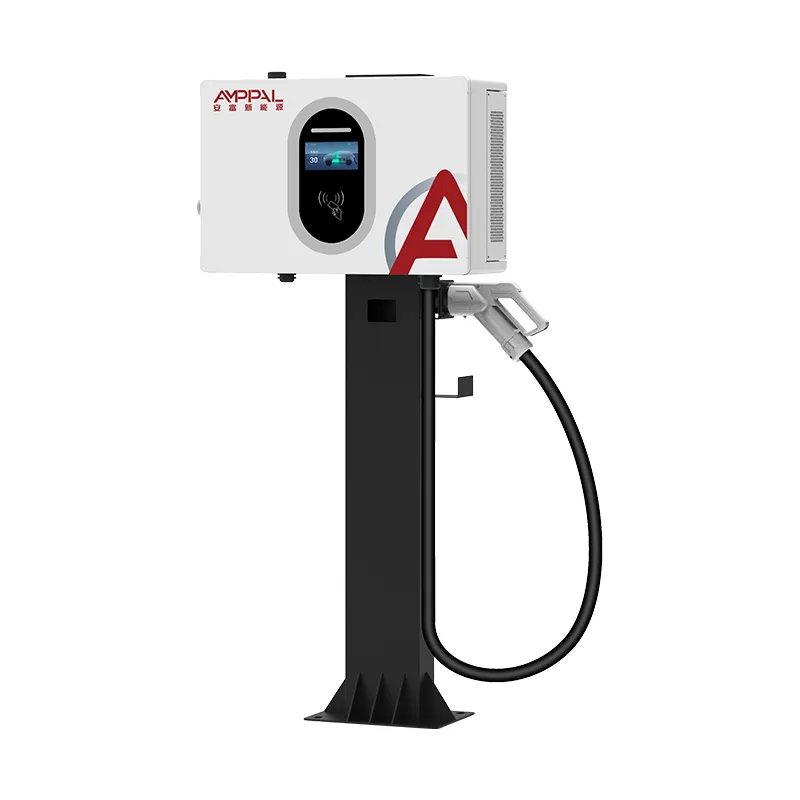
Every kilowatt-hour this charger pulls from your site's transformer arrives as clean, well-behaved AC - that is the engineering decision behind AF-DC-80-Y-B-O-4-H, and it is why this 80kW integrated DC fast charger belongs on a utility-grade checklist rather than a bargain hunt. Power factor sits at ≥0.99 and total harmonic distortion stays ≤5%, figures you rarely see on cheap imports.
Why does that matter on paper? A transformer feeding a poor-power-factor charger carries extra reactive current, runs warmer, and your electricity bill can include reactive-energy charges nobody warned you about.
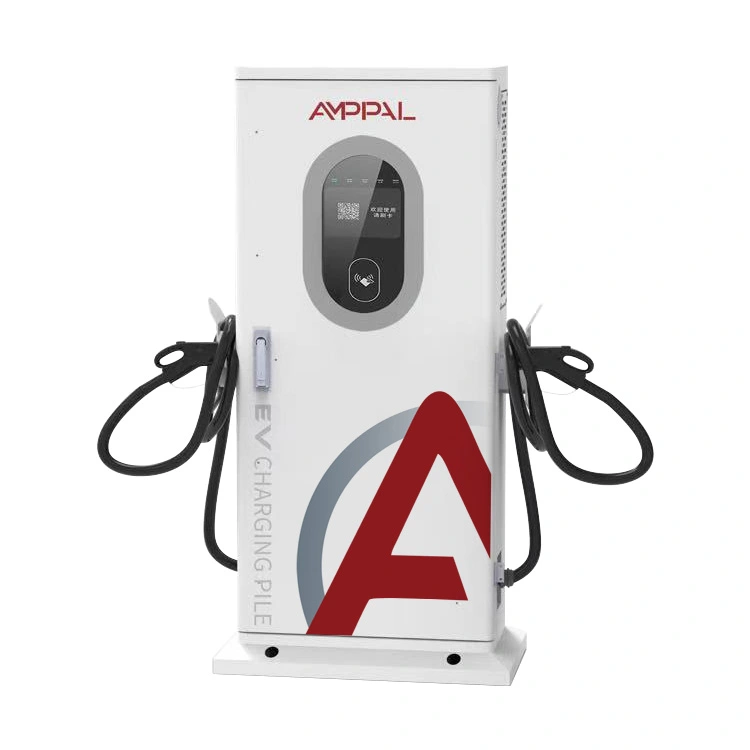
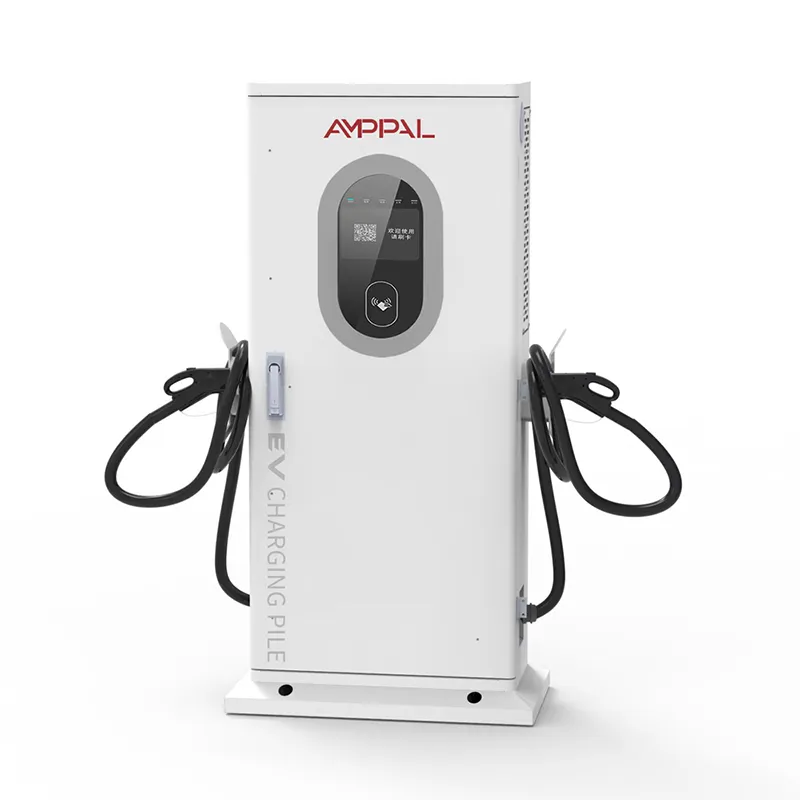
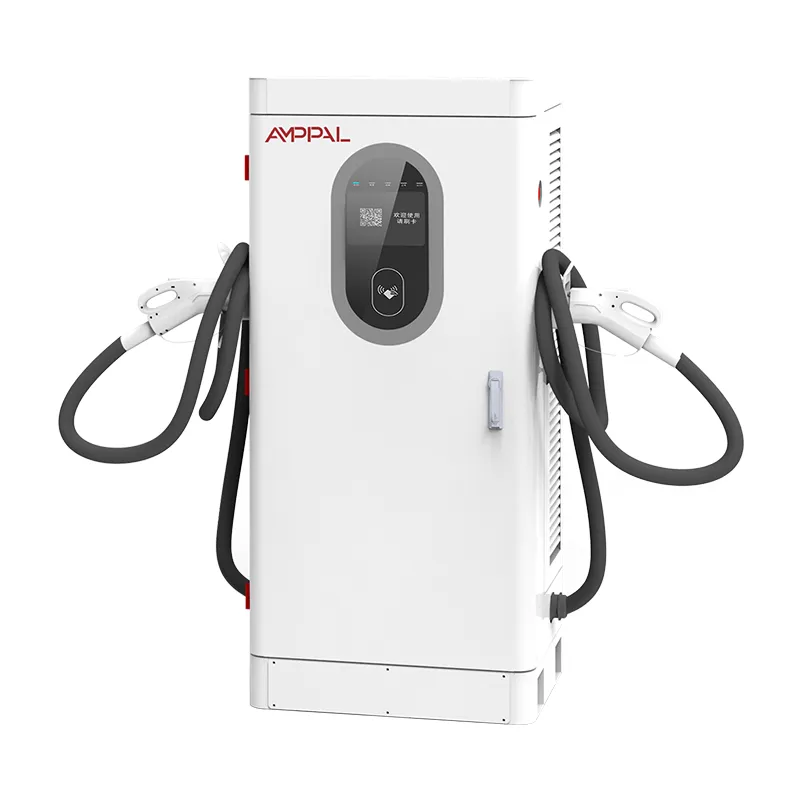
The cabinet is 1620 x 750 x 560 mm, rated 80 kW, output 200-1000VDC with constant power from 300 to 1000V. We build it in Yueqing, Zhejiang, where grid codes treat power quality seriously. This page explains what the numbers mean for your operation.

No reactive-power penalties: at PF ≥0.99 the charger looks like a resistive load to the meter, so utilities billing kVA or reactive energy have nothing to charge you for.
THD ≤5% keeps shared transformers cool: harmonic currents that would circulate in the transformer and neutral wiring are cut to a fraction of what low-end chargers produce.
Simpler grid-connection approval: many utilities demand harmonic and power-factor declarations for DC installs; our test reports cover both at full load.
Neighbor-friendly operation: a hotel or office sharing the feeder will not see flickering lights or resetting electronics when charging sessions start.
Longer site asset life: less reactive current and fewer harmonics mean transformer, cabling and switchgear run cooler and age slower.
95% peak efficiency on top: the same SiC power stage that cleans the input also wastes less energy as heat.
|
Parameter |
Specification |
|
Model |
AF-DC-80-Y-B-O-4-H |
|
Rated Output Power |
80kW |
|
Overall Dimensions (mm) |
1620 × 750 × 560 |
|
Input Voltage |
AC380V±15% |
|
Output Voltage Range |
200-1000VDC (Constant power 300-1000V) |
|
HMI |
7" touch screen |
|
User Authentication |
RFID/APP/Plug & Charge |
|
Payment Methods |
Credit card/QR/Payment terminal |
|
Connectivity |
OCPP 1.6j, Ethernet/4G/WiFi |
|
Power Factor |
≥0.99 |
|
THD |
≤5% |
|
Peak Efficiency |
95% |
|
Protection Grade |
IP54 |
|
Noise Level |
≤65dB |
|
Safety Functions |
13 functions including insulation monitoring, polarity reverse, lightning protection |
|
Compatible Connectors |
CCS1/CHAdeMO/CCS2/GB/T/NACS |
|
Operating Temperature |
-25°C ~ +50°C |
|
Warranty |
2 Years Standard |
Business parks in Germany and France, where one shared 630 kVA transformer feeds offices, CNC machines and chargers on a single busbar.
Hotels in Turkey and Greece, where guests complain about flickering lights if a charger misbehaves on the same feeder as the kitchen.
Fleet depots in the UK and Netherlands running 8-20 chargers, where harmonic accumulation across many units is the real risk.
Mall rooftops in the UAE and Saudi Arabia, where the electrical team reviews every load profile before signing the lease.
Municipal garages in Mexico and Brazil, where the utility inspects power quality before approving a commercial tariff.

A DC charger's rectifier converts AC to DC, and a naive rectifier draws current only in narrow pulses near the voltage peak. Those pulses are harmonics - current at 250 Hz, 350 Hz, 450 Hz and beyond - doing no useful work. The AF-DC-80-Y-B-O-4-H uses an active front-end (PFC) that shapes input current into a smooth sine wave in phase with the voltage.
The second stage converts that clean DC to the 200-1000VDC the vehicle wants, constant power from 300 to 1000V. An 800V truck and a 400V sedan both get close to rated 80 kW across the flat part of their charge curve.
You can verify the behavior yourself: our test reports list THD and PF at 25%, 50%, 75% and 100% load, because a charger that only looks clean at idle is worthless. Send us the site's single-line diagram and transformer kVA, and our engineers will estimate the load impact - usually within a day.
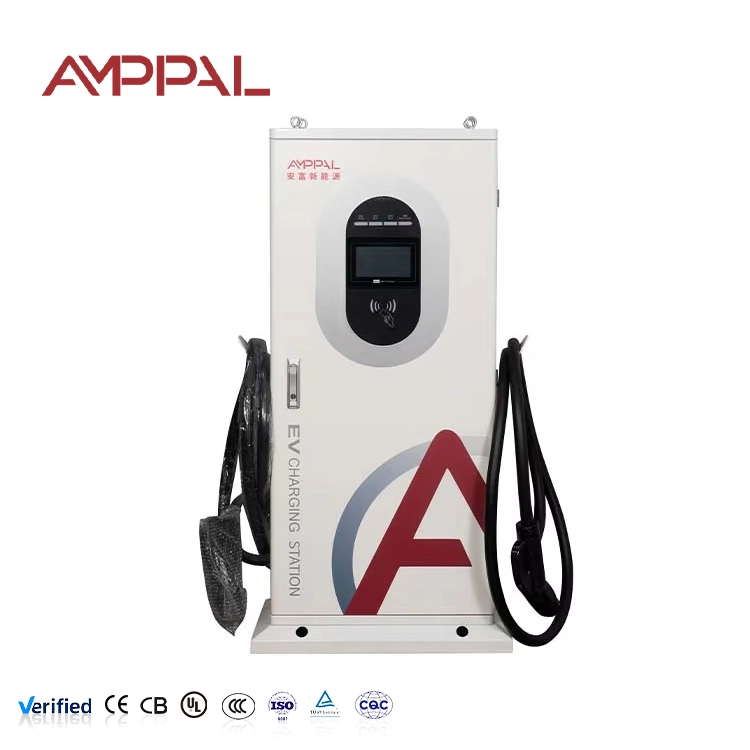
We hold UL, CE, CB, TUV and CCC; ask and we will email the matching certificate files for this unit.
Each batch is burned in for 48 hours at full load, logging temperatures across modules, connectors and PFC inductors.
Power quality is verified per batch on a calibrated load bank, with PF and THD captured at four load points.
The safety set (13 functions) sits under EN IEC 61851-1:2019 and 61851-23:2014.
Cabinets are verified IP54, with salt-spray samples held 96 hours; the operating band runs -25C to +50C.
Stage 1: sheet steel is laser-cut, punched and bent on FANUC-linked lines before powder coating.
Stage 2: a sample from each coating batch enters the salt-spray chamber while production continues.
Stage 3: input stages and PFC boards built on the AC line; power modules on the DC line - separate stations.
Stage 4: incoming inspection of SiC modules, EMI filters, connectors and metering components.
Stage 5: hand wiring with torque-controlled terminals and a visual check of every joint.
Stage 6: for 48 hours at 40C ambient, PF, THD, efficiency and comms stability are logged minute by minute.
Stage 7: firmware flash, OCPP 1.6j test against our server, then a final load-bank check of power quality.
Stage 8: packing and palletizing; pre-shipment photos land in your inbox before the container loads.
Choose the AF-DC-80-Y-B-O-4-H when your site shares a transformer with other loads, your utility asks for power-quality declarations, or you are installing several units whose harmonics would accumulate. If your property manager already flagged power factor in a previous project, this model ends that conversation.
This charger is not for you if the site has a dedicated transformer with generous headroom, your utility never checks harmonics, and you simply want the cheapest 80kW box that charges cars. It is also the wrong pick if you need sub-30-minute sessions for 800V taxis; step up to 120kW or 160kW.
Not sure? Send the single-line diagram and the transformer rating. We calculate harmonic headroom and tell you honestly whether one, two or six units fit your feeder without an upgrade.

Your technical questions about PFC design and grid codes go straight to our engineers in Yueqing, not through a reseller's inbox.
OEM/ODM from one plant: custom color, logo, firmware defaults and your own backend configuration, all done at the factory.
Stock builds leave in 15-20 working days; customized orders run about 7-10 days longer.
Trial orders accepted from 1 unit for new markets; container pricing for 10+ units.
Warranty parts fly by DHL/FedEx within 48 hours of an approved claim; remote diagnostics run over the OCPP connection.
Every crate carries the batch power-quality report as well as the unit - the file your customs broker and utility reviewer may both want. The cabinet weighs roughly 300 kg; the plywood case adds 60-80 kg, and 10-14 crates fit a 40HQ container.
FOB Ningbo or Shanghai applies unless you prefer CIF, CFR or DDP. A pallet diagram is issued before packing so the truck can be pre-booked.
Paperwork shipped with the order: commercial invoice, packing list, origin certificate, CE/TUV files and the PF/THD report.
Two-year term across modules, controller and filtering stage. The PFC section is the part that quietly degrades on cheap units; ours is covered explicitly.
Confirmed claims put spares on a courier within 48 hours - usually 3-5 working days across Europe.
Firmware and parameter updates pushed remotely via OCPP - most issues never need a site visit.
First installs get a video commissioning call - grounding, wiring and backend pairing reviewed live.
Suggested routine: filters cleaned every 6 months, terminals retorqued yearly, and the input waveform re-checked when new loads join the busbar.
Wrong: Landing this charger on a feeder already heavy with motor-drive harmonics, then blaming the unit for site issues. Right: measure the incoming waveform first; our engineers interpret the recording and size mitigation if needed.
Wrong: Assuming the neutral conductor never carries current on a three-phase feed. Right: THD ≤5% keeps neutral load small, but the AC input must still be wired per the manual - 4-core or 5-core as specified.
Wrong: Running the unit from a small generator without checking capacity. Right: a generator feeding this PFC input needs stable voltage and frequency; confirm it is rated for inrush plus continuous load.
Wrong: Skipping the yearly torque check because the unit never trips. Right: a loose terminal under 80kW heats slowly; the 15-minute check is cheaper than a melted lug.
Wrong: Believing PF ≥0.99 lets you ignore other site loads. Right: the charger is clean, but the transformer still serves everything else on the busbar.
A logistics park in the Netherlands installed six AF-DC-80-Y-B-O-4-H units in October 2025 on a shared 630 kVA transformer that also feeds a cold store. Their consultant measured THD at the point of common coupling: 4.9% with six chargers running, versus 11% with two cheaper units they had trialed. Their complaint: the door hinges feel light for the door's weight.
A hotel chain in Turkey fitted four units in Bodrum and Antalya. Their grid-connection application passed without a harmonic study because the test reports were attached. The operations manager notes the 65dB fan noise is audible from the pool deck at night.
A retailer in Mexico City put two units on a rooftop that also feeds an escalator bank. The mall's electrical team had rejected two other brands' chargers over power quality; this one passed review in a week. The gripe: the side QR panel collects dust fast.

A: Total harmonic distortion of the input current stays at or below 5% of the fundamental at full load. Practically, the charger adds little harmonic pollution to your site's electrical system - well inside most utility limits.
A: No. With power factor ≥0.99 the reactive component is negligible, so utilities billing for reactive energy or low power factor have no basis to charge you.
A: No, the active front-end inside the cabinet does both. That is the point of choosing this model over a passive-rectifier charger.
A: Yes, if the generator holds stable voltage and frequency within the AC380V ±15% window and has enough capacity. Confirm the generator size with us before committing.
A: At full load, and also at 25%, 50% and 75% load. The batch report shows all four points - ask for it.
A: CE/TUV certificates, the power-quality test report with PF and THD curves, and English datasheets. These cover most utility reviews in Europe, the Middle East and Latin America.
A: The active PFC stage adds some component cost versus a cheap rectifier - but that is small next to avoided penalties, transformer upgrades and service calls.
A: No, this is a three-phase unit requiring AC380V ±15%. For single-phase sites, look at our wall-mounted DC chargers up to 40kW instead.
Address
No. 237, Weisan Road, Yueqing, Zhejiang, China
Tel
Talk Directly to Our EV Charger Factory
Get factory-direct pricing, custom solutions, and expert support.
- Fast Response – Reply within 24 hours.
- OEM/ODM – Flexible customization and sample orders.
- Certified Quality – CE, TÜV, CB, and CCC options.
- Custom Quotes – Tailored to your specifications.
- Technical Support – Expert help with OCPP, DLB, and system integration.