" "
Whatsapp

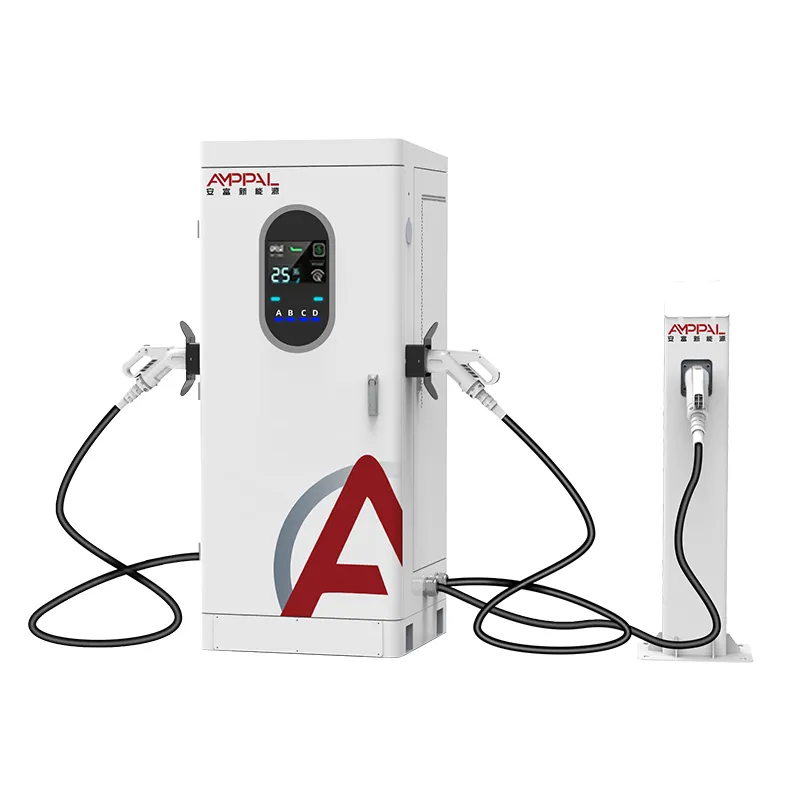
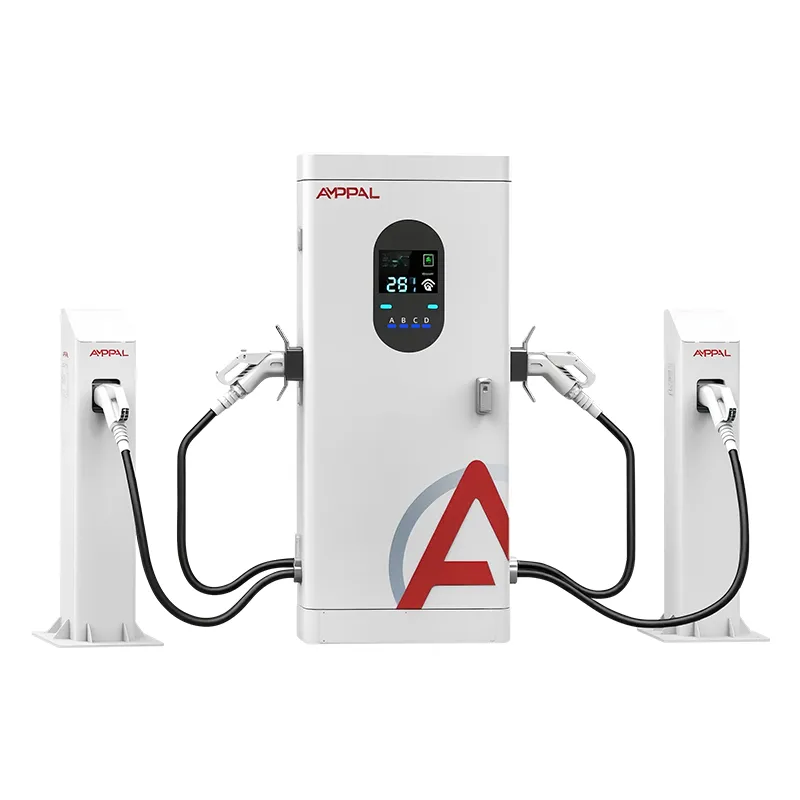
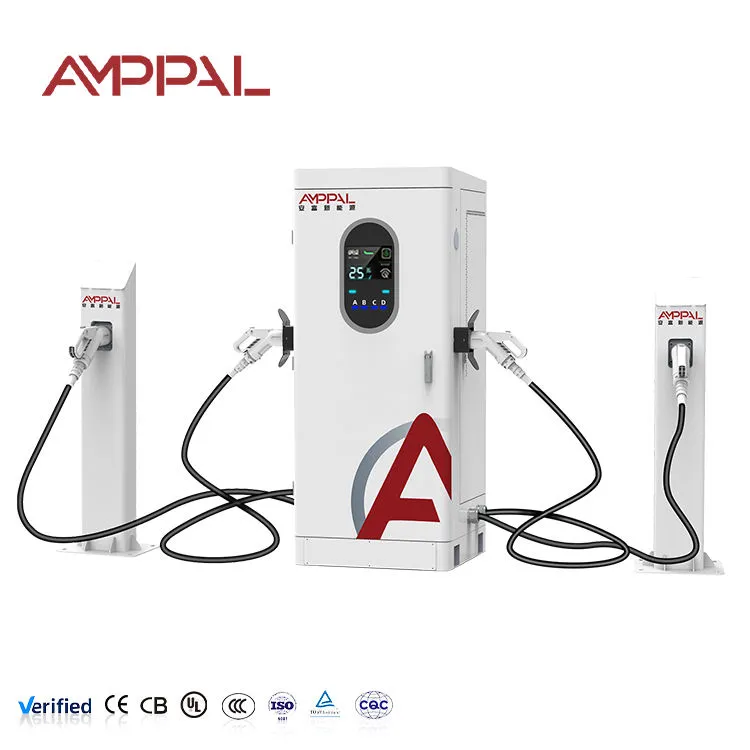
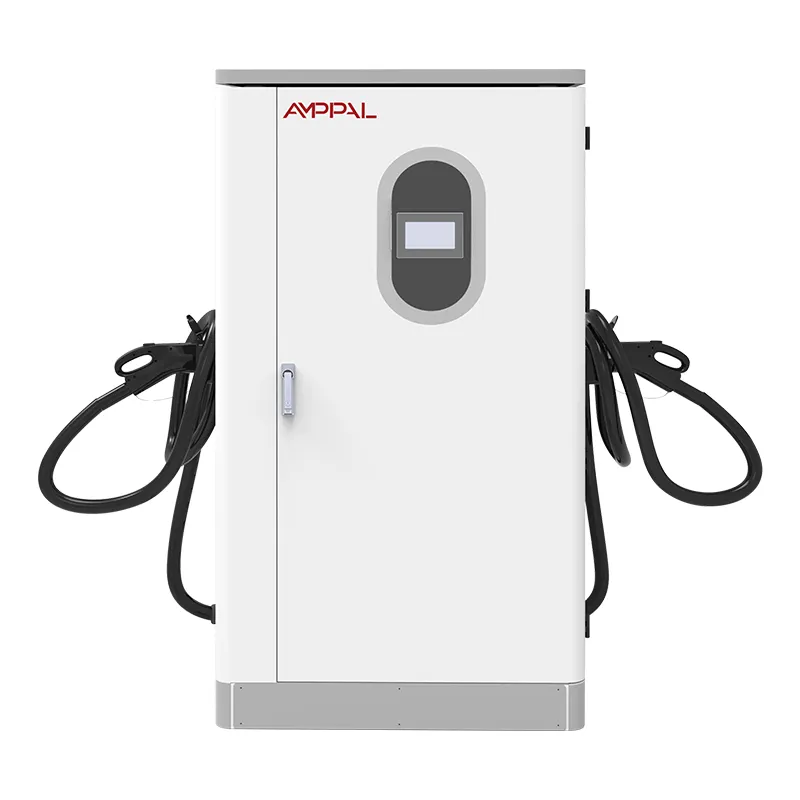
Before the first cable is pulled, a 360kW cabinet forces a site owner to answer a question most installers avoid: where does the energy come from at full load? The AF-DC-360-Y-D-Z-4-H is a four-gun integrated DC charger that draws up to 360kW from one AC380V feed and distributes it across positions A/B/C/D. On paper that is a charger; in practice it is a small substation with a touch screen. The cabinet will happily demand its full input — the question is whether your transformer, feeder and tariff structure can take the hit without drama.
That is why this page is written for project engineers and site owners, not just procurement: input capacity, demand charges, thermal behavior at four-gun full output, and the LED light band's role in a big lot. Get these four right and the cabinet is boringly reliable. Get them wrong and every monthly bill is a surprise.

Full 360kW is reachable but rare: at the 250A ceiling, a lone 800V car takes up to 200kW; the full pool appears when several 800V vehicles charge together — design for the average, not the marketing number.
OCPP 1.6/2.0 load management caps total draw from the backend, so the cabinet can live on a feed smaller than 360kW.
Storage-friendly: the cabinet plays well with battery buffers — charge the buffer off-peak, let it carry the morning rush, cut demand charges.
Derating is published, not discovered: the thermal curve states what output is sustainable at 50C ambient with all four guns hot.
The LED light band doubles as lot signage at night: color states (idle/charging/fault) read from 30 meters, so drivers stop circling.
Per-gun metering and full OCPP telemetry feed the energy-management system that hub operators live in.

|
Parameter |
Specification |
|
Model |
AF-DC-360-Y-D-Z-4-H |
|
Rated Output Power |
360kW |
|
Overall Dimensions (mm) |
1820 × 750 × 735 |
|
Input Voltage |
AC380V±15% |
|
Output Voltage Range |
DC200-1000V |
|
Output Current |
0-250A |
|
HMI |
7" touch screen + LED |
|
Cable Length |
5m/7m |
|
Charging Outlets |
Multi-gun (A/B/C/D) |
|
Protection Grade |
IP54 |
|
Compatible Connectors |
CCS1/CHAdeMO/CCS2/GB/T/NACS |
|
Operating Temperature |
-25°C ~ +50°C |
|
Warranty |
2 Years Standard |
Highway service plazas with a real transformer budget and 24-hour traffic.
City fleet hubs electrifying dozens of vehicles overnight, with solar or storage on site.
Logistics and freight transfer points where trucks and vans arrive in waves.
Airport and coach terminal forecourts with long dwell and high throughput.
Not for sites below 250kW of available input — the cabinet is honest about what it needs, and so should the site be.
The cabinet pulls 360kW only when the site allows it and the vehicles request it. Inside, forced air cools the power modules, with the intake on the vented side; the controller watches module temperatures continuously and trims output along the published derating curve before anything trips. A hot August afternoon at 50C may see output capped below nominal — a deliberate trade, not a failure.
Grid side, the arithmetic is straightforward: 360kW on a 380V three-phase feed means roughly 550A of line current at full load, which decides your breaker, cable cross-section and transformer headroom. Most hub sites feed the cabinet from a 400-500kVA transformer or split the site across two feeds. OCPP load management can also cap the cabinet at, say, 300kW during utility peak windows while a battery buffer covers the rest — the cabinet treats the cap as the new total and divides it among busy guns.
The LED band earns its keep at this scale. On a dark, busy forecourt, its color and blinking pattern tell a driver from 30 meters which gun is free, which is charging, which is faulted. Fewer circling laps mean shorter queues, and per-gun OCPP data lets you check the band's effect on throughput after a month.
Full-cabinet type testing: EMC, dielectric withstand, protective earthing — the file your grid operator's engineer will actually open.
96-hour salt spray on enclosure and guns; coastal hub sites take this seriously.
A 50C thermal soak with the derating data published alongside.
IP54 ingress verification on seals and glands.
CE, TUV, UL, CB, CCC current, plus serialized as-built test records per unit.

1. TRUMPF laser cutting and CNC bending in Yueqing; powder coating with batch salt-spray sampling.
2. PCBA on the dedicated DC line, separate from AC assembly.
3. Torque-controlled busbar and power-module integration — at 360kW a loose joint is a fire risk, so every joint is recorded.
4. Four-gun wiring with per-position contactors and metering.
5. Firmware flash and OCPP handshake against a test backend, including load-management scripts.
6. Full-load burn-in on a resistor bank with per-unit logs.
7. Final QC and serialization.
8. Packing — the standard lead time is 15-20 working days, and the 1 million+ unit annual capacity line keeps big orders on schedule.
Start with the grid, not the cabinet. Ask what your connection can deliver continuously, not what it can survive for a minute. If the answer is below 300kW, a 360kW cabinet should run with OCPP capping or storage — or you should size down to 240kW and spend the saved money on a second unit later.
Where this cabinet is the wrong answer: a site that sees one vehicle at a time does not need four guns; a site without a transformer upgrade path cannot host it honestly; and a site whose tariff punishes high simultaneous demand needs the storage and capping plan signed before purchase, not after the first bill.
Hub projects live or die on documentation: CE, TUV, UL, CB, CCC certificates plus serialized test records ship with the order, and our export desk prepares the full document set for 40+ countries.
OEM/ODM at hub scale: corporate livery, backend naming, per-position connector configuration (CCS1/CCS2/GB/T/CHAdeMO/NACS) at order time.
15-20 working days lead time with production slots for multi-unit orders; MOQ terms per model in the quotation.
The factory is the operator: 200+ stations run by our own team and 500 liquid-cooled units supplied for Saudi NEOM's green hydrogen project — hub-scale references, not just lab data.
A 260-person "little giant" specialist founded in 2014 in Yueqing, exporting to 40+ countries — one plant, one accountable owner.
Each cabinet ships upright in a wooden crate near 2.0 x 0.95 x 1.0 m with foam-cut gun compartments; gross weight and crate dimensions are on the packing list before dispatch. Hub rollouts of several cabinets share one production slot and one shipment window.
Container stow is confirmed per order — six crates in a row per 40 ft HQ under our standard plan, re-checked against actual dimensions every time. Spare modules and gun kits travel in the same container to keep commissioning parts together.
Trade terms FOB, CIF, CFR or DDP from Yueqing with full export documents. For hub projects we also supply the installation dossier: wiring diagram, foundation drawing and the load-management configuration guide.
Two years per cabinet. At hub scale we advise holding one spare module and one gun assembly on site rather than waiting on freight.
48-hour dispatch on stocked spares from Zhejiang when the on-site spare gets used.
Remote OCPP diagnostics and firmware support; load-management scripts tuned with our engineers.
Quarterly maintenance window: filter cleaning, busbar re-torque, all four gun contacts inspected.
Commissioning supervision by video call, plus an operations handover document for your shift staff.
Wrong: letting the cabinet run uncapped into a tariff with brutal demand charges. Right: setting OCPP load caps per time window — the energy arrives later, the bill shrinks.
Wrong: blocking the intake side with signage or bollards. Right: 40 cm of clear space and a monthly filter check; airflow is the cooling system.
Wrong: expecting full 360kW at 50C ambient. Right: reading the derating curve in the manual and telling the site team what August really delivers.
Wrong: parking the spare module anywhere damp. Right: storing spares indoors; a damp module installed months later fails early and blames the charger.
Wrong: using the LED band colors as decoration. Right: standardizing the color meanings on site signage so night drivers read them instantly.
A highway service plaza operator in Saudi Arabia pairs the cabinet with a battery buffer and rooftop solar. In peak season the buffer carries the morning rush while the grid feed stays under its cap; he credits OCPP load management for keeping the demand bill flat. His complaint: at 50C the cabinet derates earlier than he expected — the manual's curve was right, but he wished sales had led with it.
A logistics hub in Germany runs trucks and vans through two cabinets. The LED band cut night-time circling measurably — drivers aim for the green bar instead of reading screens. Minor issue: the first container's crates had no lifting eyes, so his crew rigged straps; we added eyes to later shipments.
A city depot in Turkey integrated the cabinet with its energy management system; per-gun OCPP data now feeds monthly fleet cost reports. The small gripe: firmware updates need a maintenance window, which a 24-hour depot must plan around — remote update scheduling is on our roadmap.

A: Plan for the full-load line current of roughly 550A on a 380V feed; most sites use a 400-500kVA transformer or split across two feeds. Confirm local voltage and code before ordering.
A: Yes — OCPP load management caps total draw from the backend, so the cabinet can operate on, say, a 250kW allowance by throttling during peaks. You buy the full cabinet and grow the grid later.
A: Charge the battery off-peak, discharge it into the morning rush, and let the cabinet's cap keep grid draw under the demand-charge threshold. Our engineers will review the control scheme with your integrator.
A: The controller trims along the published derating curve before any trip. At 50C ambient, full 360kW may not be sustainable for long sessions; the manual's curve tells you what to expect.
A: Limited by the 250A ceiling: about 200kW at 800V, about 100kW at 400V. The full 360kW appears only when several 800V vehicles share the pool.
A: CCS1, CCS2, GB/T, CHAdeMO and NACS, assigned per position at order time. Mixed configurations for mixed fleets are standard.
A: One power module and one gun assembly per cabinet is our advice; both are hot-swappable and covered by the two-year warranty, with 48-hour dispatch when the on-site stock runs out.
A: 15-20 working days from deposit; crates ship in one window with full export documents, serialized test records and the installation dossier.
Address
No. 237, Weisan Road, Yueqing, Zhejiang, China
Tel
Talk Directly to Our EV Charger Factory
Get factory-direct pricing, custom solutions, and expert support.
- Fast Response – Reply within 24 hours.
- OEM/ODM – Flexible customization and sample orders.
- Certified Quality – CE, TÜV, CB, and CCC options.
- Custom Quotes – Tailored to your specifications.
- Technical Support – Expert help with OCPP, DLB, and system integration.