" "
Whatsapp
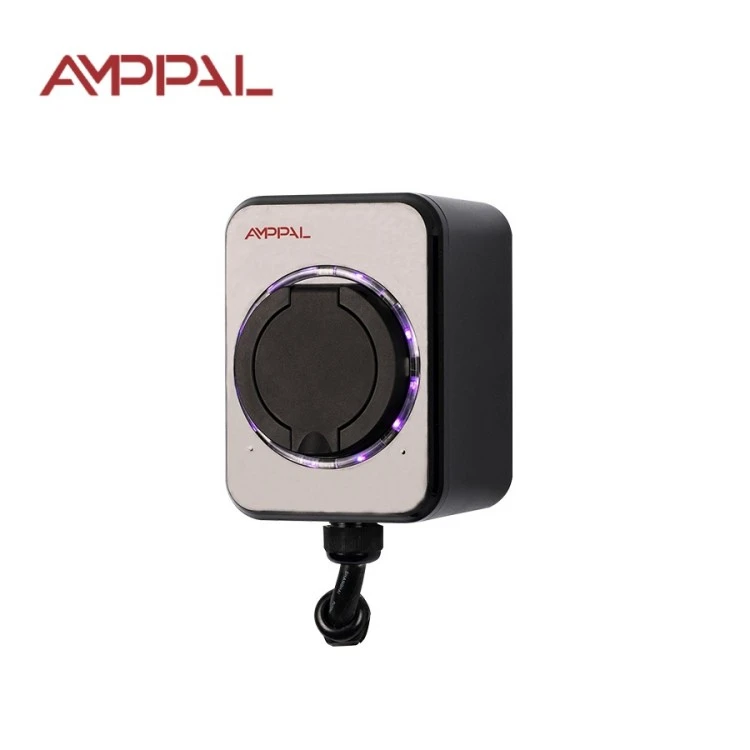
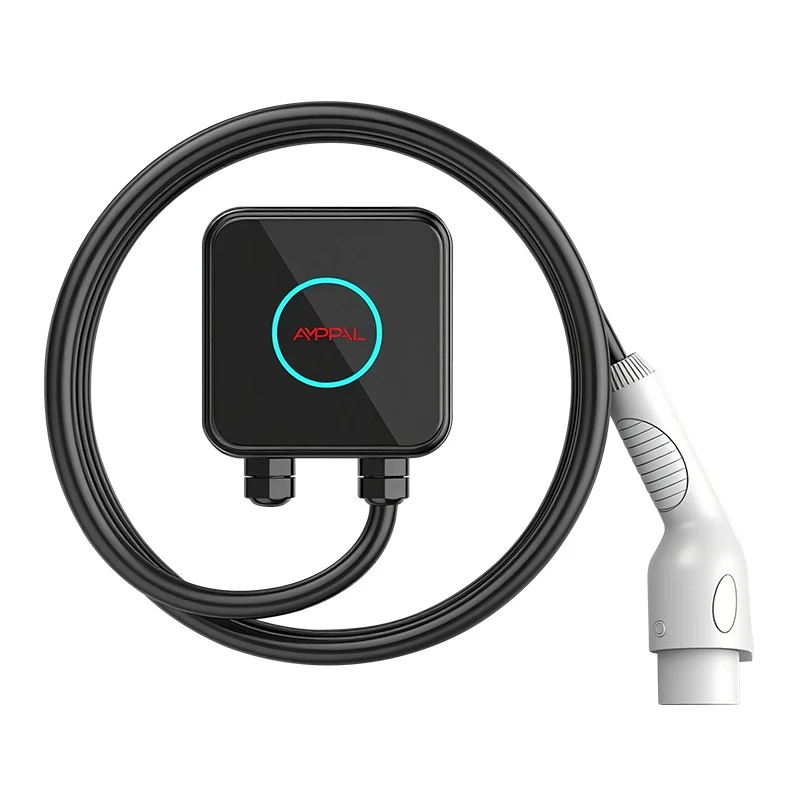
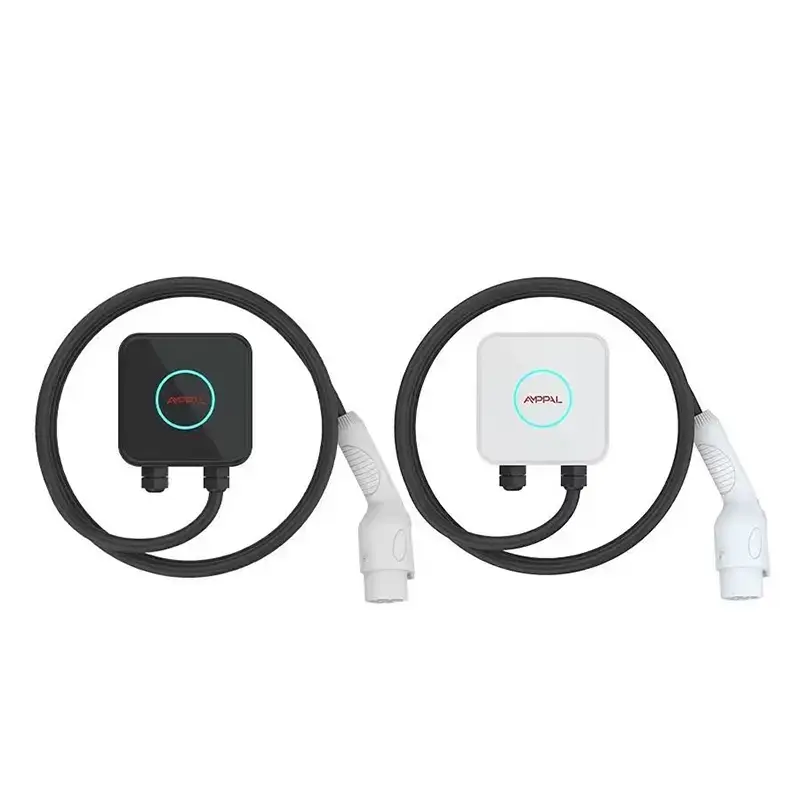
Most first-time EV owners in our export markets do not need a faster charger; they need a safer one. The AMPPAL Standard 3.5kW wallbox (Model AF-AC-3.5-B-A-O-1-SE) is the no-network, no-screen, no-nonsense answer to overnight home charging. It plugs into an ordinary household circuit, charges a small-battery car while you sleep, and stops when the job is done.
At 16A on 220VAC, the unit draws exactly what a normal residential socket loop in most countries can carry. That single decision removes the most common source of home-charging installation pain: the need to run a new 32A dedicated line. For an apartment with an old distribution board, or a garage fed by a thin cable, 3.5kW is often the only realistic option.
The idea is deliberate: fewer features, fewer failure points. No app to update, no cloud account, no WiFi password to lose. Mount it, plug in, and it works the same in 2036 as it does today.

Runs on a standard 16A circuit, so most homes avoid rewiring entirely; the electrician's job shrinks to adding a dedicated outlet and a residual current device.
A UL94 V-0 flame-retardant thermoplastic housing: if the plastic ever ignites, it stops burning within 10 seconds and does not drip flaming material onto the floor.
IP54 protection shrugs off rain splashes, dust, and garage humidity without a cover box.
CE marked and tested against IEC 61851-1:2017, the mode-3 pilot protocol most European AC points reference.
Rated for -20°C to +50°C, so an unheated garage in a Russian winter and a shaded wall in a Middle East summer both work.
No network module means nothing to hack, nothing to configure, and nothing that stops working when the router dies.

|
Parameter |
Specification |
|
Model |
AF-AC-3.5-B-A-O-1-SE |
|
Rated Power |
3.5kW |
|
Input Voltage |
220VAC ±20% |
|
Rated Current |
16A |
|
Frequency |
50/60Hz |
|
Dimensions |
180 × 130 × 120 mm |
|
Housing Material |
Thermoplastic, UL94 V-0 |
|
Protection Grade |
IP54 |
|
Operating Temp |
-20°C to +50°C |
|
Certification |
CE, IEC 61851-1:2017 |
|
Warranty |
2 Years Standard |
Single-family homes where the owner just wants the car full by breakfast, with zero monthly subscription.
Small-battery EVs and plug-in hybrids (10-25 kWh) whose onboard chargers rarely accept more than 16A anyway.
Rental apartments where the landlord provides a cheap, tamper-resistant charging point and bills through the meter.
Holiday homes and country houses used a few days a month, where a 7kW line would be wasted money.
Small van fleets parked overnight at a depot, charging 8-10 hours while drivers sleep.

Charging follows the IEC 61851-1 mode-3 handshake. When you plug in, the wallbox sends a 1 kHz pilot signal down the control wire; the car answers by changing the duty cycle, and the two sides agree on the current. If the car is not ready, the box simply waits — no sparks, no guessing.
Once the car accepts 16A, the box holds that current until the battery management system asks to taper off. The unit watches the loop continuously, and an integrated residual current protection trips the session if it detects leakage. When the car reports full, the box drops to zero and the pilot light sequence ends.
There is no meter or billing logic inside; electricity flows through your home meter like a kettle, and the utility bill shows the cost. That is the point of the Standard family: the charger disappears into the wall.
The V-0 rating is earned, not decorative: the housing compound is tested in a vertical burn chamber and must self-extinguish within 10 seconds without flaming drips.
IEC 61851-1:2017 conformance covers the control pilot function, overcurrent behaviour, and emergency stop response, verified on every production batch.
CE marking rests on a full technical file kept at the Zhejiang factory, including test reports and component declarations, open to audit.
IP54 is verified with a calibrated water-spray test and a dust chamber, not assumed from the drawing.
Temperature cycling between -20°C and +50°C runs on sample units to catch connector and seal issues before shipment.
Every unit gets a hipot (dielectric strength) test at the end of the line; the test record is stored against the serial number.
Production runs on the Zhejiang campus that shipped over one million charging units in 2024; FANUC robot cells and TRUMPF laser cutting handle the metal bracket parts.
1. V-0 grade thermoplastic is injection-moulded into the housing shells.
2. The control board is populated on an SMT line and reflow-soldered.
3. Each board is programmed and its pilot-signal output measured against a reference car simulator.
4. The power section, contactor, and control board are assembled into the base.
5. The housing is sealed with the IP54 gasket and torque-checked screws.
6. A hipot test applies high voltage to confirm insulation integrity.
7. Units soak in a 45°C burn-in chamber for several hours to expose early failures.
8. Final inspection, CE label application, and carton packing precede the QC stamp.
Choose this charger if your car parks at home for at least six hours a night, your battery is under roughly 40 kWh, and your distribution board is old or already crowded. A 16A load is gentle on wiring, gentle on the grid, and gentle on your nerves: there is very little that can go wrong.
Now the honest part. This is the wrong product if you drive 150 km a day and need a daytime top-up, if your car's onboard charger accepts 7kW and your panel has spare capacity, or if you want app control, billing, or multi-user access. Buying a bigger number than your car can eat buys you nothing but heat in the cable.
Check the onboard charger rating in your car's manual before buying; match the charger to the car and the circuit, not the marketing sheet. If you already know you will need networking, skip this family and look at the OCPP stations.
Lead time is 15-20 working days from order confirmation, with batch production scheduled around your delivery date.
MOQ is discussed case by case; a small first order for testing is normal for new distributors.
OEM requests are routine: your logo, your colour, your label, your manual language.
Certification documents (CE declaration, IEC 61851-1 test report) are provided with the shipment.
The factory is a national-level specialised and innovative 'little giant' enterprise with 260+ staff and exports to 40+ countries.
Each charger ships in a foam-padded carton of roughly 31 × 21 × 19 cm with a gross weight near 2.8 kg, including the mounting template, screws, and a printed manual. The small footprint matters when you are air-freighting samples.
Cartons are banded onto pallets for sea freight; a 20-foot container takes roughly 1,000 units and a 40HQ about 2,100, so container costs per unit stay low.
We quote EXW, FOB Ningbo, or CIF and ship with commercial invoice, packing list, certificate of origin, and CE documents. Sea, air, and courier are all available.
Two-year standard warranty covers the charging function and internal components against manufacturing defects.
Priority spare parts are dispatched within 3-5 working days for warranty cases.
RMA is straightforward: a photo or video of the fault, our diagnosis, then a replacement or repair decision.
We recommend an annual inspection: dust the vents, check the cable sheath, and re-torque the wall bracket.
English-speaking after-sales engineers answer within one working day, and we stock spares for the full Standard family.
Wrong: plugging the charger into a shared socket that also feeds the kettle. Right: a dedicated 16A circuit with a 30 mA Type A residual current device.
Wrong: charging with a frayed or kinked cable and hoping for the best. Right: a quick visual check of the cable and plug each month.
Wrong: mounting the box in the open rain because it is IP54. Right: mounting under an eave or in a garage, treating the rating as a backstop, not a lifestyle.
Wrong: coiling the cable tightly on the hook while charging. Right: laying the cable out straight so it stays cool.
Wrong: ignoring a burning smell or a warm plug after a session. Right: unplugging, stopping use, and calling support with the serial number.
A boda-boda fleet owner in Nairobi bought four units in early 2025 to charge electric motorbikes overnight. The box has not failed once in nine months; his only complaint is the missing status light — he checks charge from the bike's screen.
An engineer in Monterrey, Mexico, runs one in his garage for a compact EV with a 28 kWh battery. He likes that installation needed no panel upgrade; he grumbles that the wall bracket is fixed, so he had to drill a second set of holes when he moved it between garages.
A retiree in Split, Croatia, charges a plug-in hybrid at his holiday house two or three days a month. His feedback: the charger itself is invisible, which is exactly what he wanted, though he wishes the manual had a one-page quick start instead of forty pages.
A: Any EV or plug-in hybrid that accepts single-phase 16A charging and uses the socket or cable variant you specify when ordering.
A: No. There is no network module at all; it is a pure plug-and-charge device.
A: We recommend a licensed electrician, mainly to confirm the circuit and add the residual current device.
A: The housing plastic self-extinguishes within 10 seconds in a vertical burn test and does not drip burning material.
A: About 11 hours for a 40 kWh battery; 4-5 hours for a 15 kWh plug-in hybrid.
A: The charger switches off with the supply and restarts the handshake automatically when power returns.
A: Yes, if a 16A circuit with a Type A RCD is available; ask the electrician to verify the loop first.
A: No, this unit has no communication hardware; if you need networking, order the OCPP family instead.
Address
No. 237, Weisan Road, Yueqing, Zhejiang, China
Tel
Talk Directly to Our EV Charger Factory
Get factory-direct pricing, custom solutions, and expert support.
- Fast Response – Reply within 24 hours.
- OEM/ODM – Flexible customization and sample orders.
- Certified Quality – CE, TÜV, CB, and CCC options.
- Custom Quotes – Tailored to your specifications.
- Technical Support – Expert help with OCPP, DLB, and system integration.