" "
Whatsapp
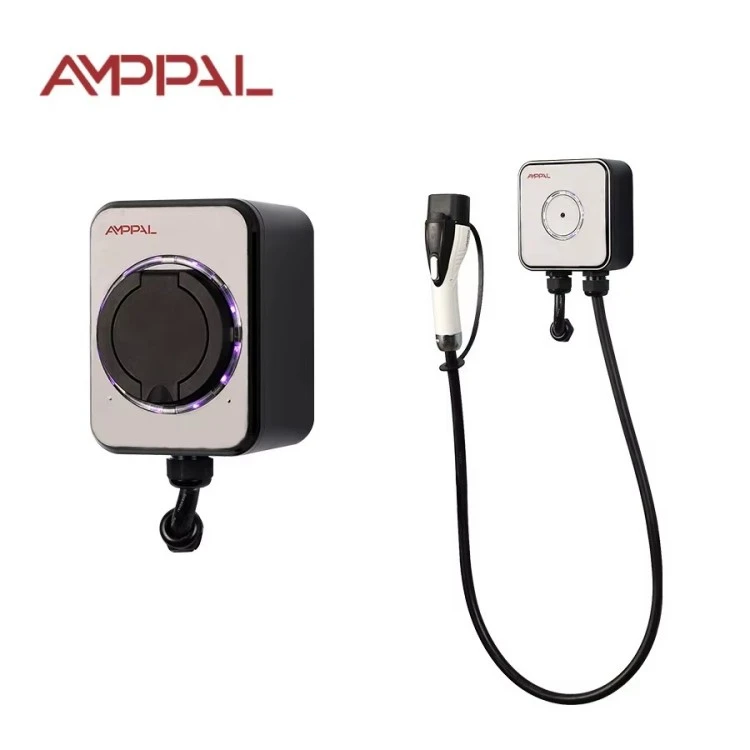
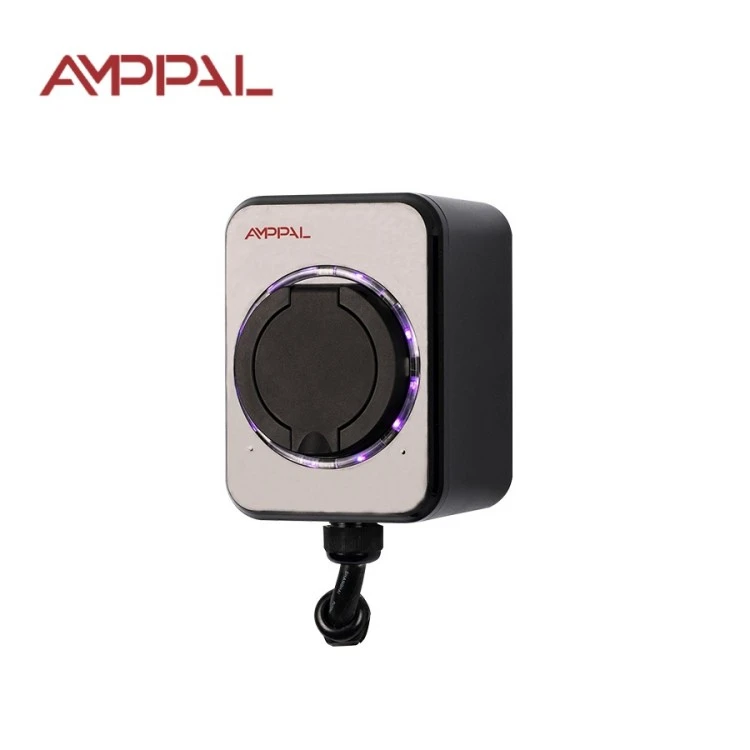
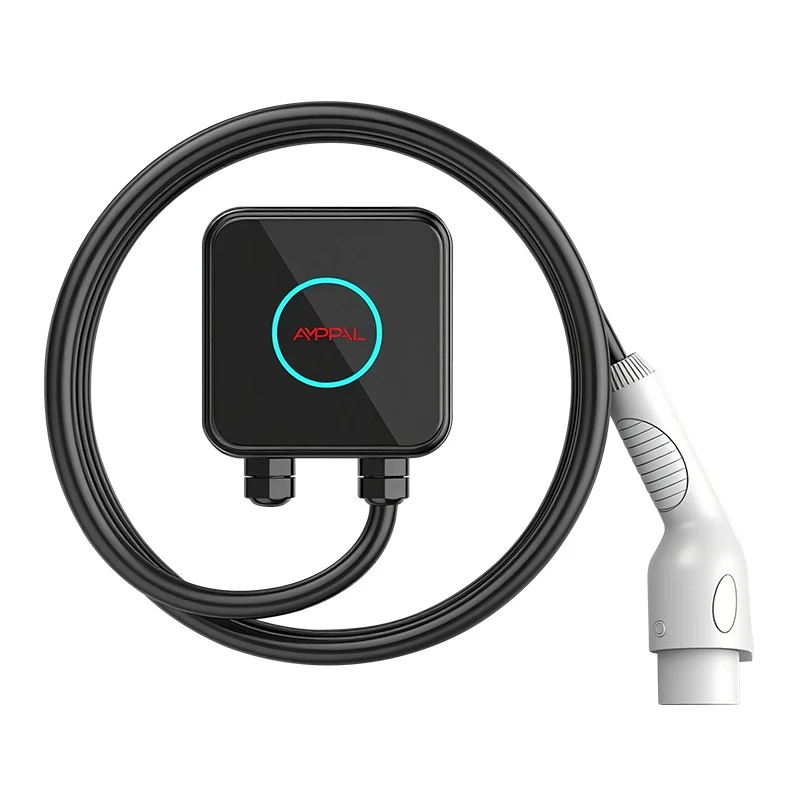
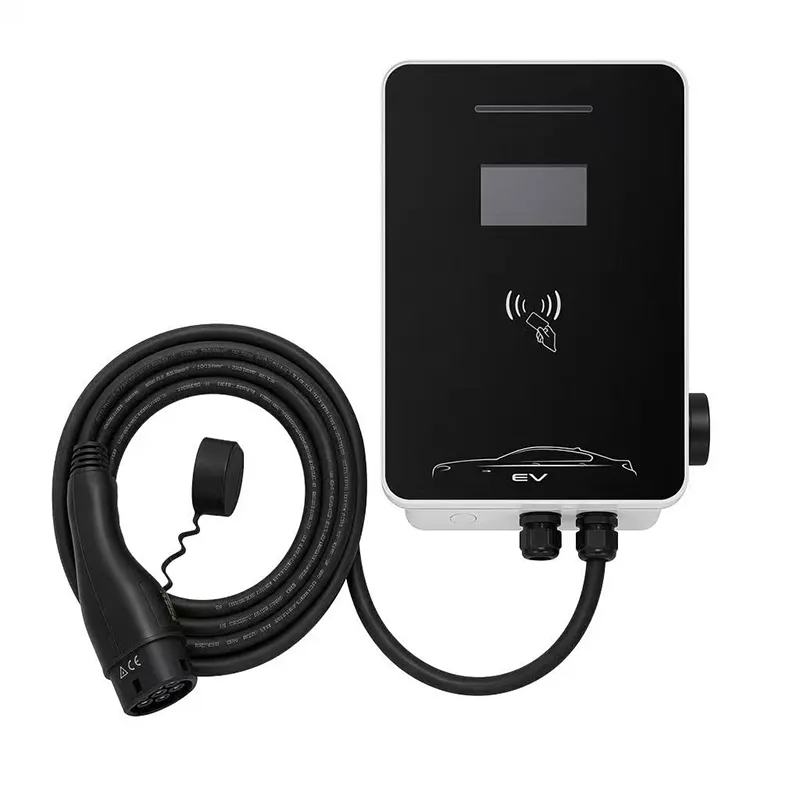
A site with limited incoming power can still serve many EVs — if the stations agree on who draws what. The AMPPAL 11kW OCPP Commercial AC EV Charging Station for Hotels and Apartments (Model AF-AC-11-L/B-A-M-4-SD-P) is built for exactly that negotiation, and three-phase input is the foundation.
An 11kW single-phase charger would demand roughly 46A from one phase, which most commercial panels hate. This station takes about 16A per phase across three phases to deliver the same 11kW, keeping the site's phase balance even and the panel happy. That is the difference between a charger that fits a building and one that forces a service upgrade.
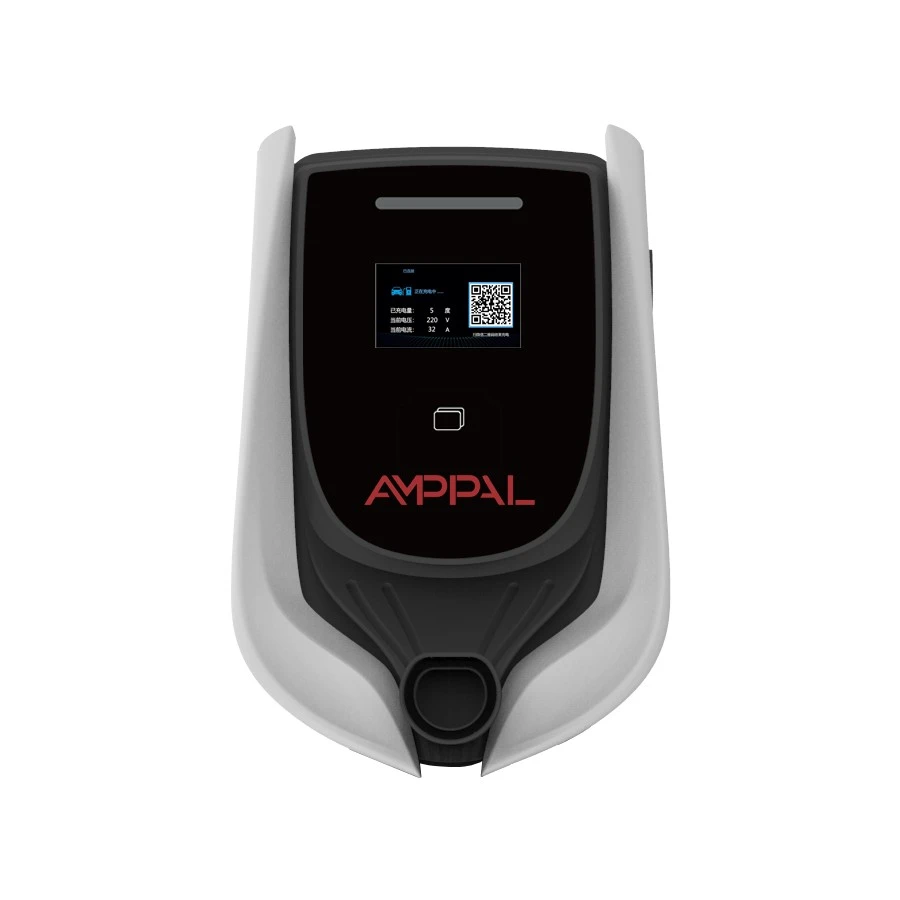
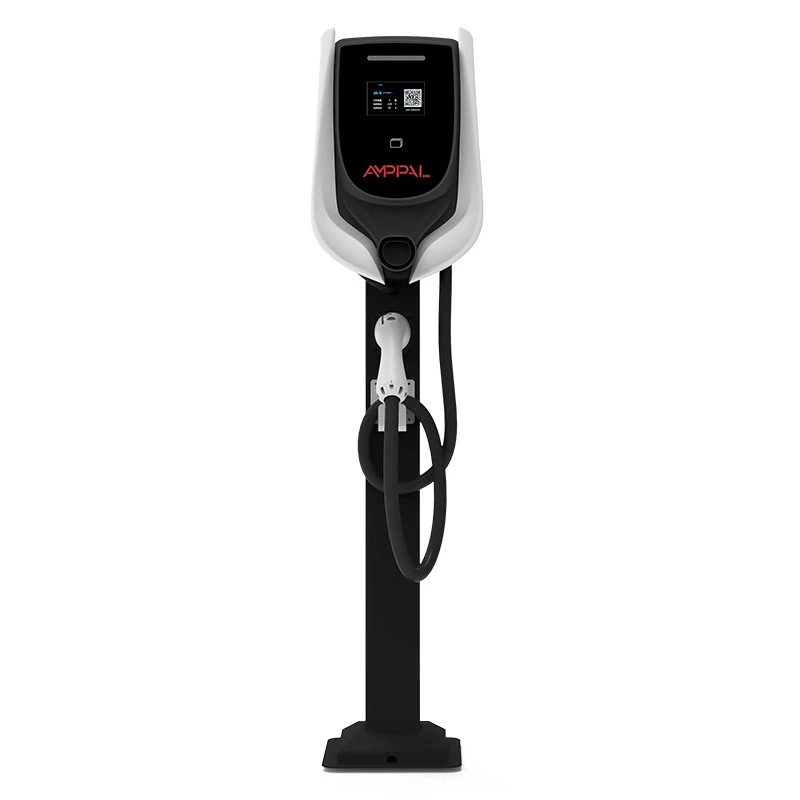
Add the network stack — RFID, LCD, LED strip, OCPP 1.6j over four connectivity options — and you have a station that not only charges fast but reports, bills, and yields to the site's load manager.

Three-phase input at ~16A per phase keeps per-phase loading low, so more stalls fit within the existing service.
Coordinated load management caps the site's total draw, protecting the main breaker when every stall is occupied.
The LED strip shows each station's state from across the lot, which cuts walking checks for site staff.
RFID and OCPP 1.6j keep per-user billing accurate even when ten sessions run at once.
A ≤40dB noise rating lets stations sit near office windows and apartment walls without complaints.
The 4.3-inch LCD shows session details on site, while the backend shows the same data remotely.
|
Parameter |
Specification |
|
Model |
AF-AC-11-L/B-A-M-4-SD-P |
|
Rated Power |
11kW |
|
Input Voltage |
240V |
|
Rated Current |
16A |
|
Communication |
Ethernet, 4G, WiFi, RS485 |
|
Network Protocol |
OCPP 1.6j |
|
User Interface |
4.3" LCD + LED Strip + RFID |
|
Dimensions |
454 × 306 × 147 mm |
|
Protection Grade |
IP54 |
|
Noise Level |
≤40dB |
|
Certification |
UL 2202, UL 2231-2 |
|
Warranty |
2 Years |
Office campuses where employees need a meaningful top-up during an 8-hour day, not just a trickle.
Apartment towers with three-phase house supply and 5-20 resident parking stalls.
Retail plazas and mixed-use developments where turnover matters and guests pay per session.
Small fleet yards charging vans between shifts, with per-vehicle consumption reports.
Buildings with a tight connection limit where the electrical engineer budgets every amp.
Every site has a ceiling: the main breaker, the transformer, the utility contract. Load balancing turns that ceiling into a budget. The stations in a group report their live draw to the management platform or a local controller over RS485, and each unit receives a real-time current limit that keeps the sum under the ceiling.
When a new car plugs in, the group re-allocates: sessions that have been running longest may dip briefly, the newcomer gets a share, and nobody trips the main breaker. When cars finish, the freed capacity returns to the remaining sessions. Drivers see the LED strip change colour; the site engineer sees the numbers in the backend.
OCPP 1.6j carries the transaction and configuration side — start/stop, kWh, tariffs, card IDs — while the load coordination rides the local link. That split is deliberate: billing needs the cloud, current control needs milliseconds, and milliseconds should not wait for a 4G round trip.
UL 2202 covers the complete charging system's construction and electrical safety; UL 2231-2 covers the personnel protection circuitry.
Three-phase balance and phase-loss behaviour are verified in factory testing, including brown-out scenarios.
IP54 is confirmed by calibrated spray and dust tests on production samples.
The ≤40dB acoustic rating is measured at one metre on a test stand, and the record is filed with the batch.
Every unit passes hipot and insulation tests with serial-numbered results kept on file.
We re-test OCPP 1.6j behaviour on a reference backend at each release; load-balancing logic in particular gets checked against multi-unit scenarios.
Assembly takes place on the Zhejiang campus that shipped over one million charging units in 2024, where FANUC robots and TRUMPF laser equipment share the floor with the AC and DC lines.
1. Enclosure steel is laser-cut and press-braked, then powder-coated.
2. Incoming relays, contactors, and boards are checked against approved supplier lists.
3. Power and communication boards are SMT-built and reflow-soldered.
4. Three-phase wiring is assembled and torque-checked with calibrated drivers.
5. Firmware is flashed and the unit registers with a test OCPP backend.
6. RS485 load-balancing handshakes are exercised between paired units.
7. Hipot, insulation, and powered burn-in run on every station.
8. Nameplate, UL marks, and carton packing close the line.
Work backwards from the service. If the building has three-phase supply and the engineer can give each stall a 16A-per-phase circuit, an 11kW station per stall is the right density for offices, apartments, and mixed-use lots. If the site is single-phase only, the 7kW OCPP station is the honest choice — this unit needs three phases to be worth its price.
Now the blunt part. This is the wrong product for a two-car driveway (a 3.5kW or 7kW unit costs less and does the job), for any site planning sub-30-minute turnover (that is DC territory), and for a location whose electrical engineer has not confirmed the three-phase supply on paper. Ordering before the panel audit is how upgrade costs appear.
When in doubt, buy the load-managed group: stations of this family can be mixed with lower-power siblings on one site, coordinated under a single ceiling. That flexibility is usually cheaper than guessing the exact power mix on day one.
Standard dispatch is 15-20 working days; phased site rollouts can be booked into planned production slots.
OEM options cover enclosure branding, LCD boot screen, and RFID card artwork.
OCPP 1.6j integration is documented, and our engineers help your platform connect on the first deployment.
UL 2202 and UL 2231-2 certificates are provided with the shipment for your consultants and inspectors.
We operate 200+ charging stations ourselves, and our engineers support the NEOM green hydrogen project's 500 liquid-cooled units — scale that shows in the factory.
Each station ships in a foam-cradled carton near 60 × 44 × 32 cm with a gross weight around 14 kg, including the wall bracket, starter RFID cards, and manual. Corner-drop tested, with the model nameplate and UL mark printed on the carton face.
Palletised sea freight takes about 20-24 stations per pallet and roughly 250 per 40HQ container; mixing the 3.5kW, 7kW, and 11kW OCPP variants in one shipment is standard for distributors.
We quote EXW, FOB Ningbo, or CIF with commercial invoice, packing list, certificate of origin, and UL certificate copies for the customs broker.
Two-year warranty against manufacturing defects on the station and internal modules.
Firmware updates push remotely through the backend; load-balancing parameters can be tuned without a site visit.
Need a reader, a panel or a module? Dispatch is 3-5 working days from confirmation.
Remote diagnostics read OCPP status and logs with your engineer on a call.
Parts availability runs five years past end of production for this family.
Wrong: letting a local electrician assume each station can pull full 11kW without checking the service. Right: confirming three-phase capacity and setting the load ceiling before energising the group.
Wrong: configuring load balancing once and forgetting it after the building adds tenants. Right: reviewing the ceiling whenever the site's loads change.
Wrong: reading the LED strip from 50 m away and guessing. Right: agreeing a colour legend with site staff — green means free, blue means charging, red means fault.
Wrong: mounting stations directly behind a bedroom wall because the rating is 40dB. Right: a shared wall or corridor position; 40dB is quiet, but quiet is not silence.
Wrong: relying on the cloud for current control. Right: keeping load coordination on the local RS485 or controller link so it survives network hiccups.
A facility manager at an office campus near Munich runs eight stations for 300 employees. The load ceiling is 45kW, and during the morning plug-in rush the system trims long sessions to fit newcomers; his only complaint is that the initial backend integration took a full day of calls before the tariff logic behaved as expected.
The board of a 40-storey apartment tower in Istanbul installed six stations in the underground garage, where three-phase supply was already in place. Residents like the per-owner reports; the board notes the station's LCD shows English menus, which a few older residents asked about, and the property team printed a one-page card in Turkish.
A retail plaza in Melbourne added four stations at the entrance rows. The operator charges per session through the backend and says the LED strip is the cheapest customer service tool on site — drivers spot a free bay from the car. His one wish: a longer standard cable, though he admits most drivers park within reach anyway.

A: About 16A per phase across three phases delivers ~11kW, so no single phase carries a heavy 46A load.
A: No. This family mixes 3.5kW, 7kW, and 11kW units under one coordinated load ceiling.
A: The group re-allocates within the ceiling; running sessions may dip briefly, and capacity returns as cars finish.
A: It is gentler than a single-phase 11kW circuit and keeps phase balance even — that is the point of the design.
A: It shows each station's state at a glance from across the lot, which saves staff walking checks.
A: Quieter than a fridge compressor at one metre, which is why the unit suits offices and residential walls.
A: Yes, it will charge at a lower rate using the phases it can reach; the station and the car negotiate the safe current.
A: Known RFID cards still work from the local list, transactions are stored, and everything uploads when the link returns.
Address
No. 237, Weisan Road, Yueqing, Zhejiang, China
Tel
Talk Directly to Our EV Charger Factory
Get factory-direct pricing, custom solutions, and expert support.
- Fast Response – Reply within 24 hours.
- OEM/ODM – Flexible customization and sample orders.
- Certified Quality – CE, TÜV, CB, and CCC options.
- Custom Quotes – Tailored to your specifications.
- Technical Support – Expert help with OCPP, DLB, and system integration.