" "
Whatsapp
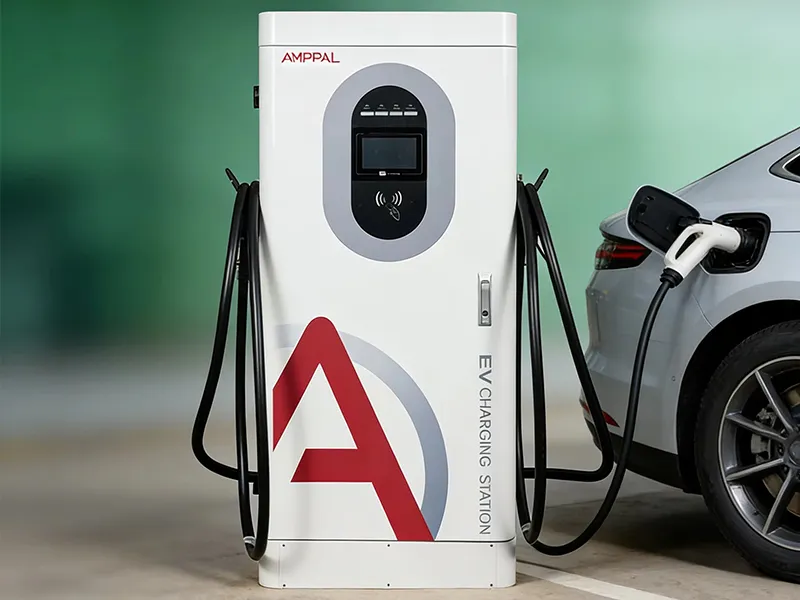
Plug a single EV into the AF-DC-120-Y-D-Z-4-H and it draws the full 120kW; plug in a second and the cabinet quietly re-slices the budget to 60kW each. That re-slicing, not the power module itself, is what decides whether drivers leave you a five-star review or a one-star rant.
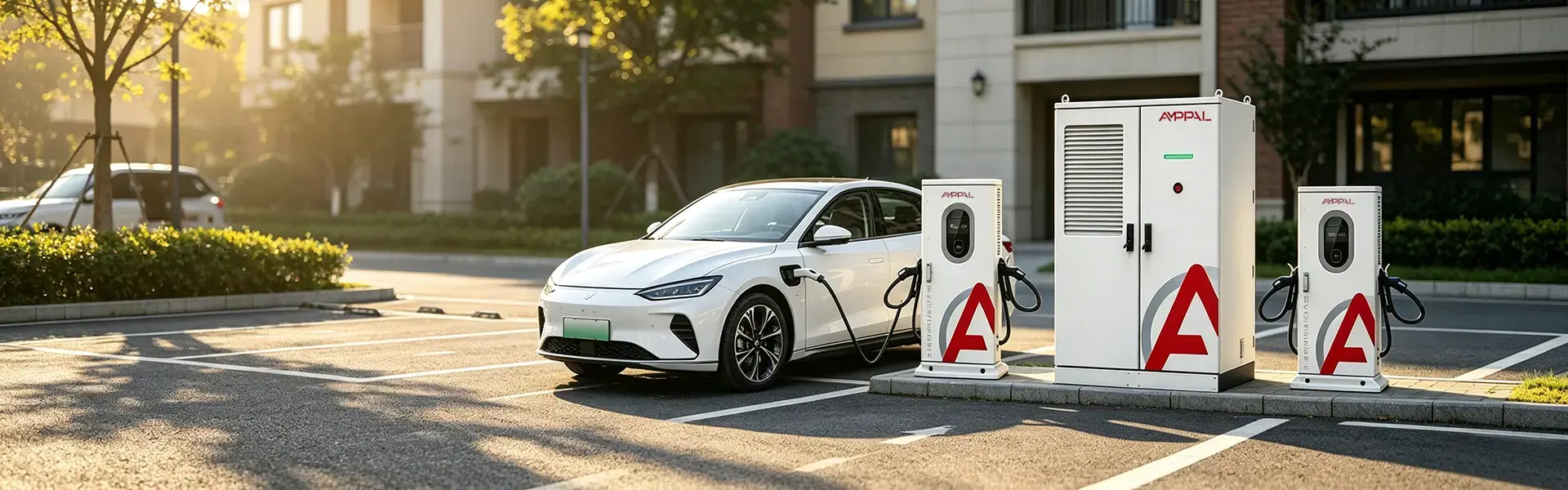
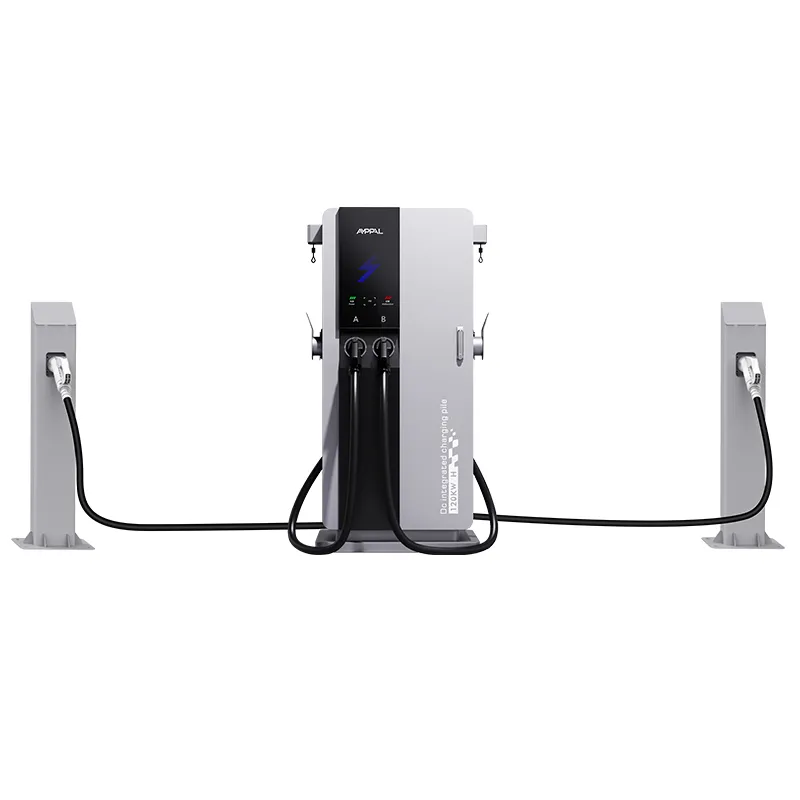
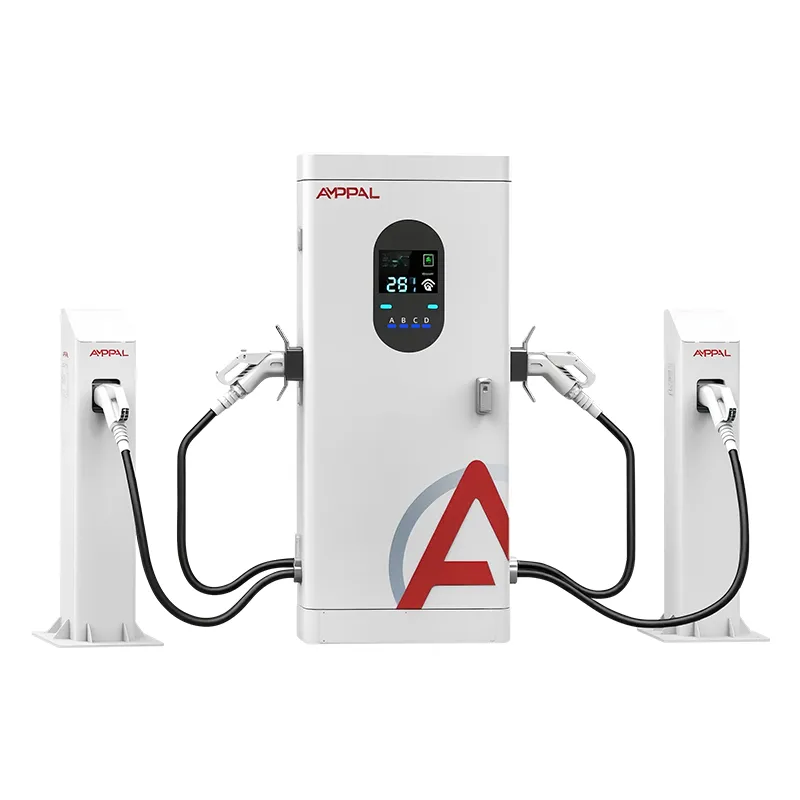
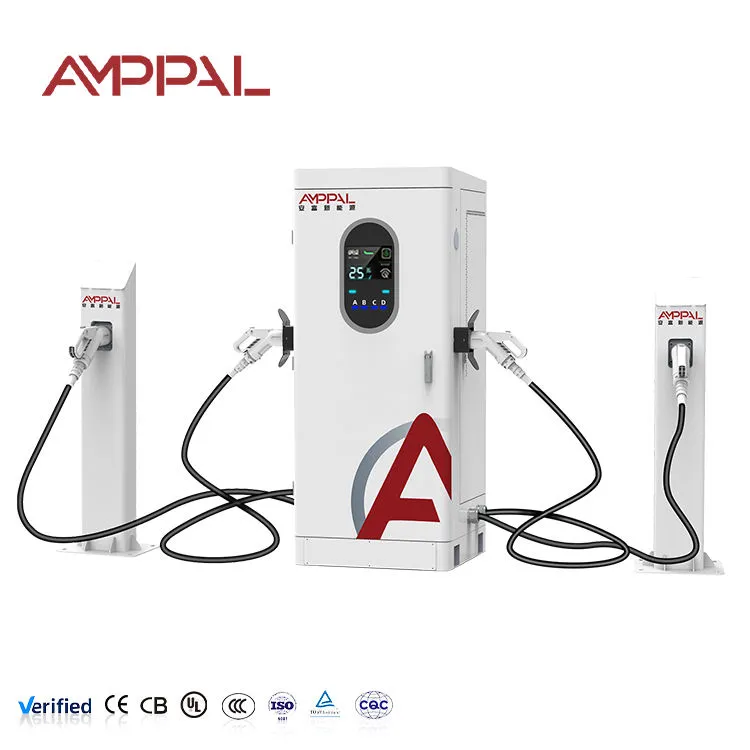
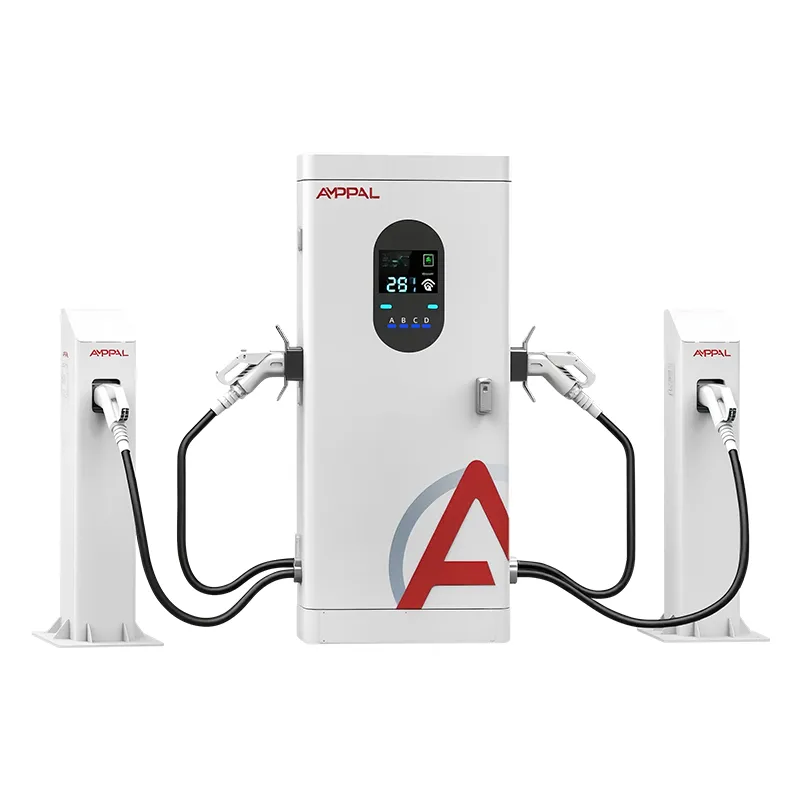
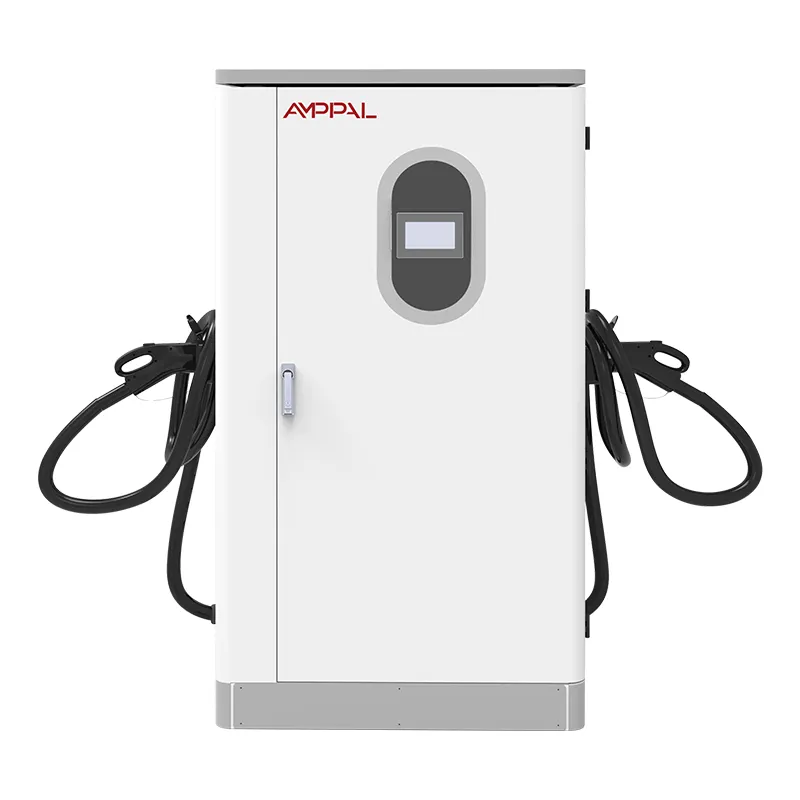
This 120kW Multi-Gun DC EV Charger for Multiple Vehicles and Fleet Charging is an integrated multi-gun DC charger: one cabinet, one AC380V input, four outputs sharing a single power pool. It is not four chargers bolted together. It is one 120kW machine whose software decides where the energy goes, second by second. Operators who understand that software shape the queue experience.

Allocation rules you set, not the factory: first-come-first-served, even split, or a priority gun — changed on the touch screen or through the OCPP backend, no cabinet opening.
Idle guns stop paying rent: when position C is empty, its share flows to the busy guns automatically. 120kW never parks itself in an unused socket.
The screen tells the truth: each session shows live voltage and current, so the driver who "slowed down" can see it is allocation, not a fault. That one screen ends more arguments than any helpdesk ticket.
Current limits are part of the math: output tops out at 250A, so an 800V vehicle alone can take the full 120kW, while a 400V car peaks around 100kW. The cabinet shows both numbers live.

|
Parameter |
Specification |
|
Model |
AF-DC-120-Y-D-Z-4-H |
|
Rated Output Power |
120kW |
|
Overall Dimensions (mm) |
1820 × 750 × 735 |
|
Input Voltage |
AC380V±15% |
|
Output Voltage Range |
DC200-1000V |
|
Output Current |
0-250A |
|
HMI |
7" touch screen + LED |
|
Cable Length |
5m/7m |
|
Charging Outlets |
Multi-gun (A/B/C/D) |
|
Protection Grade |
IP54 |
|
Compatible Connectors |
CCS1/CHAdeMO/CCS2/GB/T/NACS |
|
Operating Temperature |
-25°C ~ +50°C |
|
Warranty |
2 Years Standard |
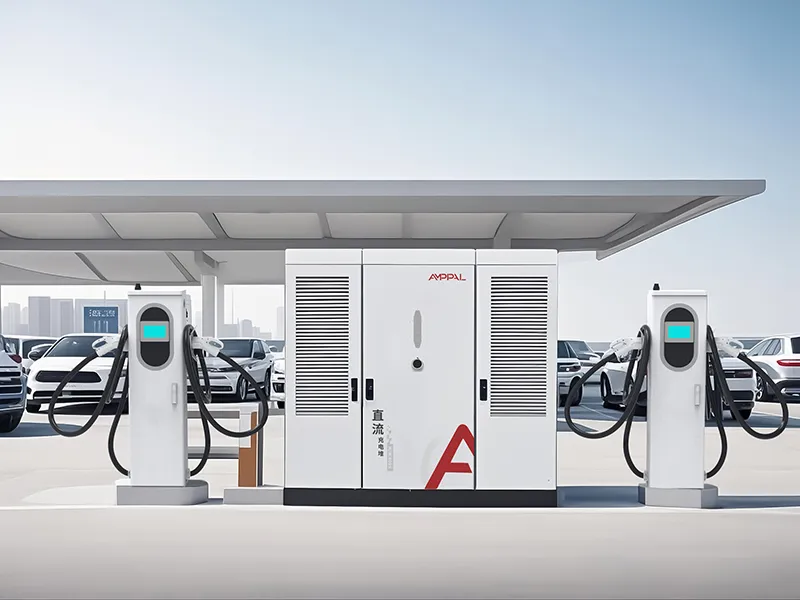
Urban taxi depots: three taxis sip 30kW each while one high-voltage sedan takes the rest of the pool.
Hotel and mall parking: overnight guests charge at a relaxed pace; a daytime visitor alone gets close to the full 120kW.
Small fleet yards with 4-8 EVs and a single 120kW feed line the landlord will not upgrade.
Highway pit stops with burst arrivals — four guns absorb a small wave without a second transformer.
Ride-hailing hubs in hot climates: the forced-air cooling and IP54 enclosure handle 40-degree days and dusty curbsides.
The controller samples every connected gun's request continuously — battery voltage, current demand, and the rule you selected. First-come-first-served is the default: the first car gets what it asks for, the second takes from what remains, later arrivals split the leftover. Even split divides the pool among occupied guns.
Here is the math drivers actually feel. One car alone: the full pool. Two cars: 60kW each. Four cars: 30kW each — assuming the vehicles can accept those numbers. Two caveats matter. First, the 250A ceiling: a 400V battery asking for 300A gets capped near 100kW, so the "full 120kW" moment belongs to 800V vehicles.
What the driver sees, then, is a step-down when someone new plugs in and a slow current taper as their own battery climbs. Neither is a fault. The screen shows the new split within a second, and the LED band changes color so the queue knows which gun is free.

Type testing on the full cabinet, not a bench sample: EMC, dielectric withstand and protective earthing verified on the 1820x750x735 unit as shipped.
96-hour salt spray on enclosure and gun housings — the coastal-corrosion check that matters in Gulf and Southeast Asian sites.
Thermal soak at 50C ambient with doors closed; the derating curve is printed in the manual, not discovered on site.
IP54 rain and dust testing on door seals and cable glands before the unit leaves the line.
Serialized records: each cabinet's test file can be requested with the shipment — useful when a project tender asks for proof.
1. Laser cutting on TRUMPF machines and CNC press-brake bending — the sheet-metal stage sets up the IP54 story.
2. Powder coating and curing, with a salt-spray sample pulled from every batch.
3. PCBA assembly on the DC line; AMPPAL runs AC and DC assembly separately, so DC cabinets never share tooling with AC gear.
4. Power module integration with torque-controlled busbar assembly — a loose busbar shows up months later as a hot spot.
This cabinet fits sites where four vehicles can plug in at once and sessions run 25-60 minutes: depots, malls, hotels, small highway stops. Work backwards from your target. Roughly, at 40kW average per occupied gun, a 50kWh top-up takes about 75 minutes when the cabinet is full, and about 25 minutes when one car has the pool alone.
Be honest about the mismatches. If your whole business is one fast lane with one vehicle at a time, a single-gun 120kW or 160kW costs less. If you need four simultaneous 120kW sessions, this cabinet is four times too small — buy separate units.
OEM/ODM without drama: logo, color, gun labels and backend naming configured at order; MOQ terms are set per model in the quotation, and sample units ship before volume.
15-20 working days standard lead time on this model, counted from deposit and approved artwork.
A certification set that answers tenders in the Middle East, EU and the Americas: CE, TUV, UL, CB, plus CCC at home.
Reference projects with real operating data: 500 liquid-cooled units supplied for Saudi Arabia's NEOM green hydrogen project, 200+ stations run by our own team.
A 260-person factory founded in 2014 in Yueqing, Zhejiang — "China's electrical capital" — exporting to 40+ countries.
The cabinet ships upright in a wooden crate sized to the 1820x750x735 mm body with about 100 mm clearance per side; the four guns ride in foam-cut compartments beside it. Crate envelope comes out near 2.0 x 0.95 x 1.0 m, and the final gross weight is stated on the packing list before dispatch.
For container loads, plan around that envelope: a 40 ft HQ fits six crates in a single row with room for accessories, and we re-check the stow plan against the actual container dimensions on every order. No two customers pack the same mix, so the final loading diagram is confirmed with you before the truck leaves.
Terms are your call — FOB, CIF, CFR, DDP or EXW from our Yueqing plant — and the shipping documents (commercial invoice, packing list, bill of lading, certificate of origin) are prepared by our export desk, which handles 40+ destination countries a year.
Two years on the unit. On multi-gun cabinets the gun assemblies see the most wear — we stock all four positions.
Spare gun assemblies (with 5m or 7m cable) dispatched from the Zhejiang plant within 48 hours for stocked items.
Remote diagnostics via the OCPP connection: most configuration faults are solved over the backend without a site visit.
An annual service checklist sent with every order: clean air filters, re-torque busbars, inspect gun contacts for burn marks.
Commissioning support: a remote call with our engineers to walk through the first session end to end.
Module-level spares, not board-level promises: power modules are hot-swappable and stocked for the full warranty period.
Wrong: parking so the 5m cable is stretched taut, then blaming the charger when the connector wears. Right: matching cable length to bay layout — 7m guns on far lanes, 5m on close lanes, cables returned to holsters after each session.
Wrong: stacking boxes against the vented side of the cabinet. Right: keeping 40 cm of clear space around the intake and blowing the filter clean monthly.
Wrong: telling a 400V driver "you'll get 120kW" because the sign says 120kW. Right: quoting the real number — around 100kW on 400V, full 120kW on 800V — and pointing at the live screen.
Wrong: feeding the cabinet from a shared outlet or an undersized breaker. Right: a dedicated AC380V+-15% line, correctly rated breaker, and proper earth bonding — the wiring diagram is in the manual.
Wrong: leaving a gun lying on wet asphalt while the next car queues. Right: holstering after use; the LED band shows green only when the gun is seated and ready.
A taxi depot manager in Dubai runs first-come-first-served and told us the LED band cut his queue disputes in half — drivers see which gun is free before they park. His complaint: direct sun makes the 7-inch screen hard to read mid-afternoon, so he bolted a small canopy over the cabinet.
A mall operator in Kuala Lumpur ordered 7m guns on the outer positions so rear-port cars can reach without shuffling. Revenue per cabinet climbed after he switched to even split, because no single car hogged the pool at dinner rush.
A haulage company in Warsaw runs four vans through one cabinet overnight. At -15C the cabinet started and held temperature fine. Their note: the buzzer volume on session end cannot be silenced from the app, so a night-shift worker has to walk to the screen — minor, but they asked for it in the next firmware.

A: With even split, yes — 120 divided by four occupied guns. With first-come-first-served, the first car keeps what it asked for and the rest share what remains. The screen shows the live split.
A: Almost certainly not. The cabinet re-allocates the pool when a new session starts; his current steps down in one move and the screen updates. It is policy, not failure.
A: Yes, one designated position can be reserved a share; the other three split what is left. Two priority guns would need two cabinets — the math does not allow it.
A: No — the 250A output ceiling limits a 400V car to roughly 100kW. Full 120kW appears on 800V vehicles. That is why we publish the current spec instead of marketing shortcuts.
A: Order by bay geometry. Close lanes take 5m (cheaper, less cable to manage); cross-lane reach needs 7m. Mixed orders are normal — specify per position.
A: Yes, from the touch screen or through OCPP, any time, no hardware change. Two weeks of A/B data usually settles which rule fits your site.
A: The other three keep working. Gun assemblies are field-replaceable and stocked; a failed position shows as a fault on screen and in OCPP.
A: Both. Tell us your platform before shipment and we test the handshake against it, so commissioning does not turn into a debugging session.
Address
No. 237, Weisan Road, Yueqing, Zhejiang, China
Tel
Talk Directly to Our EV Charger Factory
Get factory-direct pricing, custom solutions, and expert support.
- Fast Response – Reply within 24 hours.
- OEM/ODM – Flexible customization and sample orders.
- Certified Quality – CE, TÜV, CB, and CCC options.
- Custom Quotes – Tailored to your specifications.
- Technical Support – Expert help with OCPP, DLB, and system integration.