" "
Whatsapp
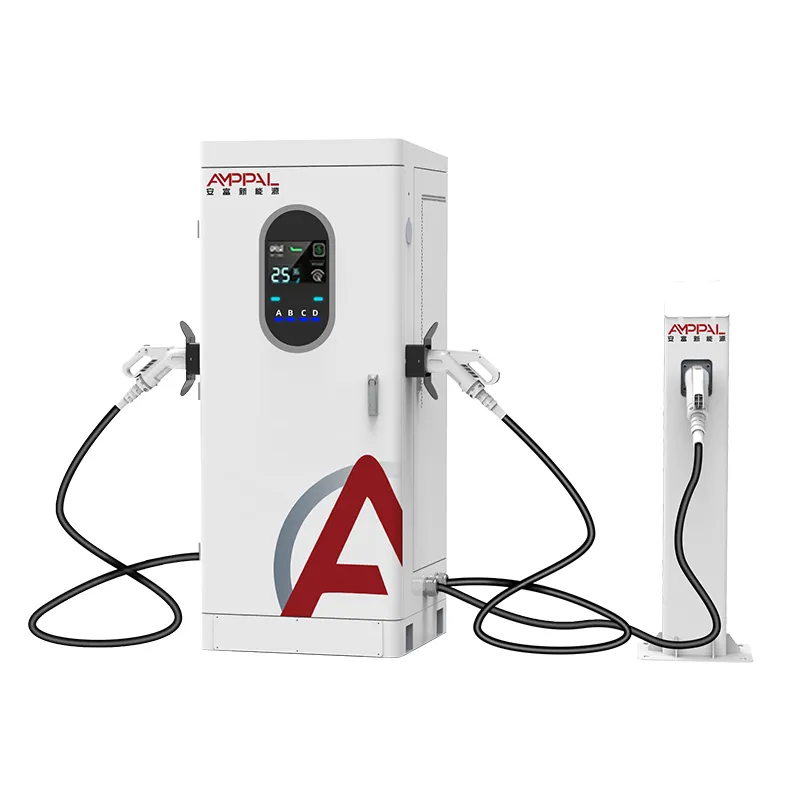
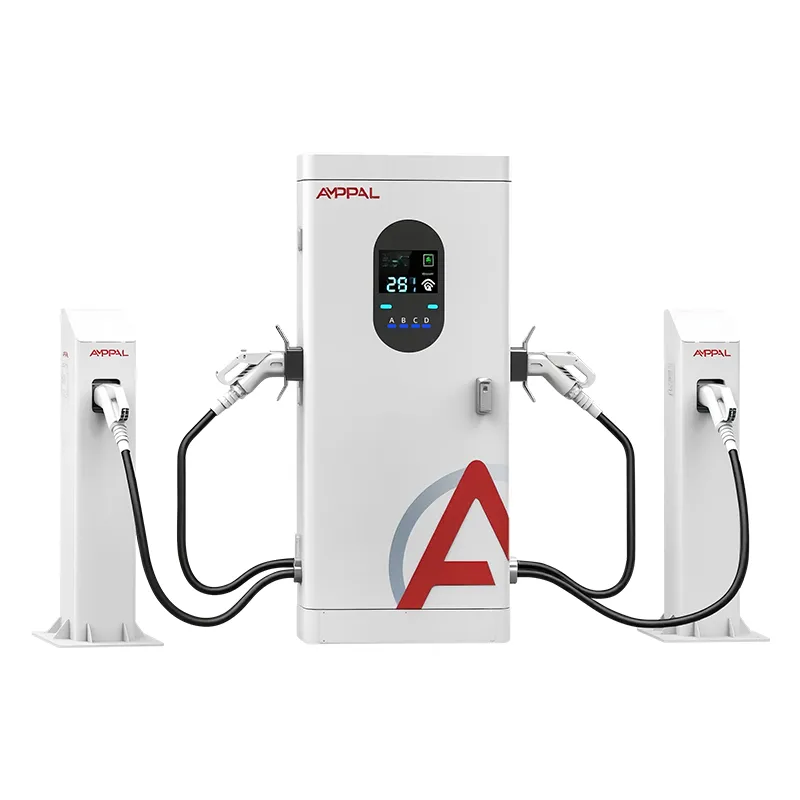
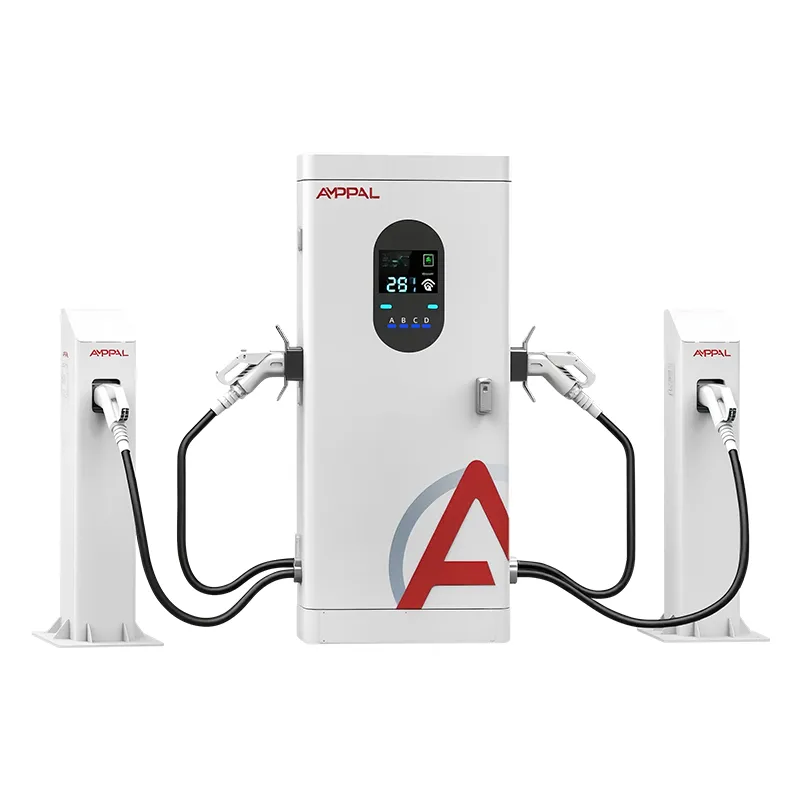
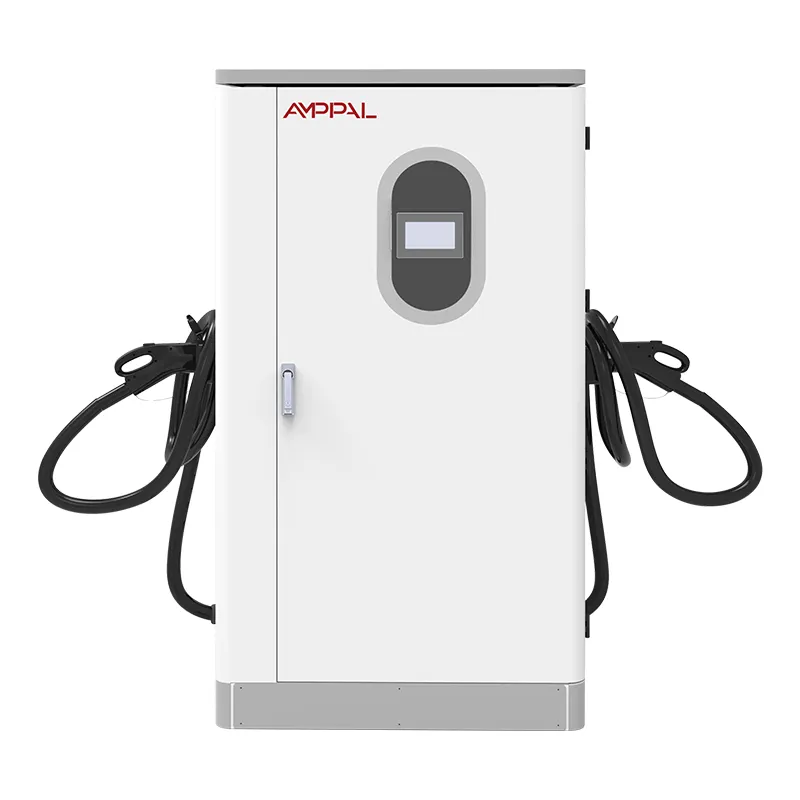
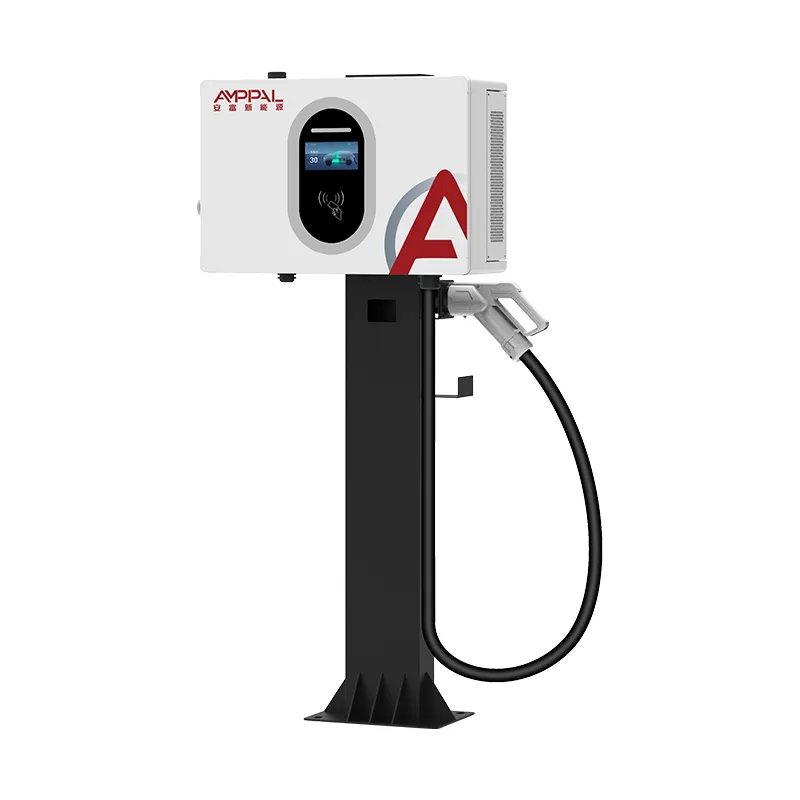
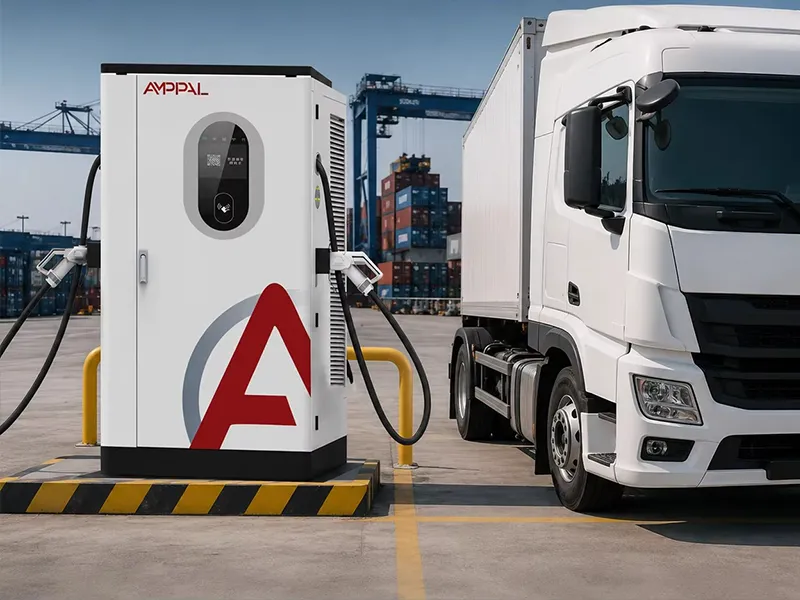
A taxi, a delivery van, and a commuter sedan rarely want the same amount of power at the same moment — which is exactly why a fixed-output charger leaves money on the table. The AMPPAL 240kW Multi-Gun High-Power DC EV Charger for Bus and Fleet Depots pools 240kW behind four guns (A/B/C/D) and hands it out by demand, not by schedule. A delivery van with a 90kWh pack can take a big slice; a sedan that only needs 20kWh to finish its route takes a small one; a ride-hail car plugs in for a 25-minute top-up and leaves. Everyone is served from the same 380V input, and the cabinet simply re-balances as sessions start and stop.
The operating problem this solves is real: mixed fleets are unpredictable. Pure "one power for all" forces a choice between over-charging small cars and under-charging big ones. Dynamic allocation lets each vehicle take what it can use, which keeps utilization high without anyone waiting behind a truck for an hour.

Big pack, big share: when only the van is plugged in it draws up to the pool; when the lot fills, every vehicle still gets a usable slice — no gun starves.
Sedans stop blocking trucks: a taxi finishing at 80% tapers its own demand naturally, and the freed power flows to heavier vehicles.
Peak-tariff control: OCPP load management lets you cap the cabinet's total draw during expensive hours and release it at night.
Voltage-aware by design: 400V cars take up to about 100kW each (250A ceiling), 800V vehicles up to 200kW solo — the screen shows the real split.
Cable geometry per bay: 5m guns for close-in sedans, 7m for vans with side ports or trucks parked across the aisle.
Per-gun metering for cost allocation: each fleet department pays for its own energy from the OCPP report.

|
Parameter |
Specification |
|
Model |
AF-DC-240-Y-D-Z-4-H |
|
Rated Output Power |
240kW |
|
Overall Dimensions (mm) |
1820 × 750 × 735 |
|
Input Voltage |
AC380V±15% |
|
Output Voltage Range |
DC200-1000V |
|
Output Current |
0-250A |
|
HMI |
7" touch screen + LED |
|
Cable Length |
5m/7m |
|
Charging Outlets |
Multi-gun (A/B/C/D) |
|
Protection Grade |
IP54 |
|
Compatible Connectors |
CCS1/CHAdeMO/CCS2/GB/T/NACS |
|
Operating Temperature |
-25°C ~ +50°C |
|
Warranty |
2 Years Standard |
Last-mile delivery yards: vans charge deep overnight, courier cars top up between runs.
Ride-hail hubs: drivers arrive in bursts after shift; 20-30 minute sessions keep the rotation fast.
Company car parks with a few electric light trucks in the maintenance fleet.
Suburban charging plazas mixing commuters with delivery vans and the occasional long-range SUV.
Tourist and shuttle depots where vehicles range from city cars to 12-seat vans.
Set the allocation rule per site: even split for fairness, first-come-first-served for speed, or priority for a vehicle class that must always leave on time — a night delivery run, say. The controller re-evaluates every connected gun continuously, so when the taxi unplugs at 80%, its share slides to the van within a second or two.
Pair the rule with OCPP scheduling for the tariff game: cap total draw to, say, 160kW during the 4-9pm peak and release full 240kW after midnight. The cabinet obeys the cap and divides whatever is allowed among occupied guns. Remember the 250A ceiling while planning: at 400V a lone car peaks near 100kW, at 800V near 200kW — a full 240kW moment is a high-voltage, full-pool moment, not a promise to every plug.
The 5m/7m cable choice is part of the operation, not an afterthought. Measure your bays: vans often carry side-mounted ports on the left, sedans rear, ride-hail cars front. Put the 7m guns where port variety is highest and keep 5m guns for predictable close bays. Mixed cable orders per position are standard from the factory.
96-hour salt spray on enclosure and guns — the report our Gulf buyers file with their municipality.
Full-cabinet EMC and dielectric type tests, with CE, TUV, UL and CB certificates current.
A 50C ambient thermal soak, and the derating curve is published in the manual.
IP54 ingress tests on seals and glands; the cabinet has survived monsoon-season sites in Southeast Asia.
Serialized as-built test records per unit, available for tender documentation.
1. TRUMPF laser-cut and CNC-bent enclosure, powder coated with batch salt-spray sampling.
2. PCBA on the DC assembly line — a separate floor from AC, so no shared tooling or contamination.
3. Torque-controlled busbar and module assembly; joints recorded per unit.
4. Per-position gun wiring: contactors, metering and strain relief on all four lanes.
5. Firmware flash and OCPP handshake against a test backend.
6. Full-load burn-in on a load bank with per-unit logs.
7. Final QC and serialization.
8. Handover to packing — the 15-20 working day lead time covers this whole chain, and the factory's 1 million+ unit annual capacity keeps the line full.

Work out your fleet's evening demand first: count vehicles, average pack size, and the hours they sit. If you have eight vans at 80kWh each arriving at 7pm, that is 640kWh to move by morning. One 240kW cabinet delivers about 240kWh per hour of full output, so two to three hours of concentrated charging plus overnight taper covers it.
Where this cabinet is the wrong answer: if your fleet is all heavy trucks wanting 150kW-plus per session, you need dedicated high-power units, not shared lanes. If your site runs only small cars, a 120kW or 160kW four-gun cabinet costs less and wastes less. And if the grid only grants you 100kW, no 240kW cabinet is honest — size the connection before the charger.
You are buying from the factory, not a trading desk: Zhejiang Anfu New Energy Technology Co., Ltd., founded 2014, 260+ employees, a national-level "little giant" specialist enterprise.
OEM/ODM: paint, logo, gun labels and backend naming configured at order; MOQ per model is in the quote.
15-20 working days lead time, with the assembly line above as the proof, not the promise.
Certificates ready for tenders: CE, TUV, UL, CB, CCC — the same set we use in 40+ export countries.
Operating credibility: 200+ stations run by our own team, 500 liquid-cooled units at Saudi NEOM, 1 million+ units delivered cumulatively by 2024.
Each cabinet ships upright in a wooden crate about 2.0 x 0.95 x 1.0 m with foam-cut gun compartments; gross weight is stated on the packing list before dispatch. For multi-unit site orders we schedule production slots so all crates leave in one shipment window.
Container planning is confirmed per order — a 40 ft HQ carries six crates in a row under our standard stow, and we re-check the plan against actual box dimensions every time because accessory kits vary.
FOB, CIF, CFR or DDP from Yueqing; export documents (invoice, packing list, bill of lading, certificate of origin) are prepared by our desk. First-time fleet buyers get the customs checklist in advance.
Two years, modules and guns included. Mixed-fleet sites cycle connectors harder; budget a gun replacement around year three on the busiest position.
48-hour dispatch on stocked spares from the Zhejiang plant.
Remote OCPP diagnostics and firmware updates for allocation logic changes.
Annual checklist: filters, busbar torque, gun contacts, and a cable-jacket inspection — fleets kill cables faster than chargers.
Commissioning call with an engineer; we also join your operations meeting to explain the allocation rules to your team.
Wrong: assuming the morning shift will notice a slow gun by feel. Right: a 30-second glance at the OCPP dashboard — a gun serving half its usual energy is a contact or cable symptom.
Wrong: setting even split during the evening van rush. Right: priority or first-come rules in peak windows, even split overnight.
Wrong: leaving 7m cables coiled tight on the holster all day. Right: loose loops; 7m cables flex more and wear at the holster end first.
Wrong: washing the cabinet with a pressure washer. Right: a damp cloth on the enclosure; the IP54 rating handles rain, not jets.
Wrong: ignoring the LED band color because "nobody reads it". Right: drivers do read it; the band tells the queue which gun is free and cuts idle circling.
A last-mile delivery operator in the Netherlands runs six vans and four courier cars through one cabinet. The priority rule on the van position fixed his 6am dispatch — vans leave full, couriers catch up through the day. His complaint: in week two his electrician had a phase reversed, which the cabinet's phase monitor flagged immediately; the screen readout saved a service call.
A ride-hail hub manager in Mexico City switched from even split to first-come after a week of dashboard watching; session count per day rose from 38 to 51. The 7m gun on the outer lane is used constantly. Minor gripe: drivers wanted a timer visible on the screen — it exists, but two of his drivers never noticed it.
A suburban mall in Turkey mixes commuter sedans and a maintenance van fleet. Off-peak scheduling cut the demand-charge bill enough that the cabinet paid for its own controller upgrade in four months. The small complaint: screen response slows below 5C in winter, which he accepted after we explained the LCD spec.

A: The 250A output ceiling limits a 400V vehicle to about 100kW. Full 240kW needs 800V-class vehicles and an empty pool — plan fleet math around the current limit, not the marketing number.
A: Use even split during shared hours, or priority for the class that must leave first. OCPP lets you change the rule remotely, so test for a week and read the per-gun data.
A: Yes, if your tariff carries demand charges. Capping total draw to 160kW in peak windows can cut billed demand substantially; the energy still arrives, just later and cheaper.
A: Measure the port side. Many vans charge on the left; a 7m gun reaches a left-side port from either aisle position. 5m suits sedans parked nose-in.
A: Yes — the four positions are connector-configurable at order time (CCS1/CCS2/GB/T/CHAdeMO/NACS). Tell us your fleet mix and we assign per position.
A: The cabinet is rated to -25C ambient and starts normally; gun cables stiffen in cold, so crews should avoid tight coils. Wide-temperature modules are available for harsher sites.
A: More connectors to inspect. The annual checklist covers all four gun contacts and cable jackets; the modules themselves are the same hot-swappable parts.
A: 15-20 working days from deposit; multi-unit orders share one production slot so the crates ship together.
Address
No. 237, Weisan Road, Yueqing, Zhejiang, China
Tel
Talk Directly to Our EV Charger Factory
Get factory-direct pricing, custom solutions, and expert support.
- Fast Response – Reply within 24 hours.
- OEM/ODM – Flexible customization and sample orders.
- Certified Quality – CE, TÜV, CB, and CCC options.
- Custom Quotes – Tailored to your specifications.
- Technical Support – Expert help with OCPP, DLB, and system integration.