" "
Products
160kW High-Power DC EV Fast Charging Station for Fleet Depots
  • 160kW High-Power DC EV Fast Charging Station for Fleet Depots160kW High-Power DC EV Fast Charging Station for Fleet Depots
  • 160kW High-Power DC EV Fast Charging Station for Fleet Depots160kW High-Power DC EV Fast Charging Station for Fleet Depots
  • 160kW High-Power DC EV Fast Charging Station for Fleet Depots160kW High-Power DC EV Fast Charging Station for Fleet Depots
  • 160kW High-Power DC EV Fast Charging Station for Fleet Depots160kW High-Power DC EV Fast Charging Station for Fleet Depots
  • 160kW High-Power DC EV Fast Charging Station for Fleet Depots160kW High-Power DC EV Fast Charging Station for Fleet Depots
  • 160kW High-Power DC EV Fast Charging Station for Fleet Depots160kW High-Power DC EV Fast Charging Station for Fleet Depots
  • 160kW High-Power DC EV Fast Charging Station for Fleet Depots160kW High-Power DC EV Fast Charging Station for Fleet Depots
  • 160kW High-Power DC EV Fast Charging Station for Fleet Depots160kW High-Power DC EV Fast Charging Station for Fleet Depots

160kW High-Power DC EV Fast Charging Station for Fleet Depots

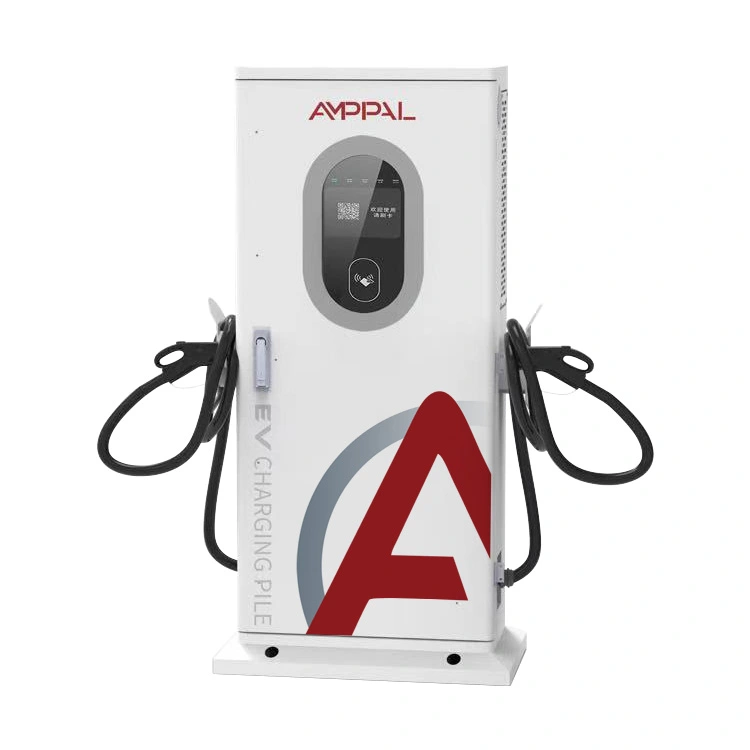
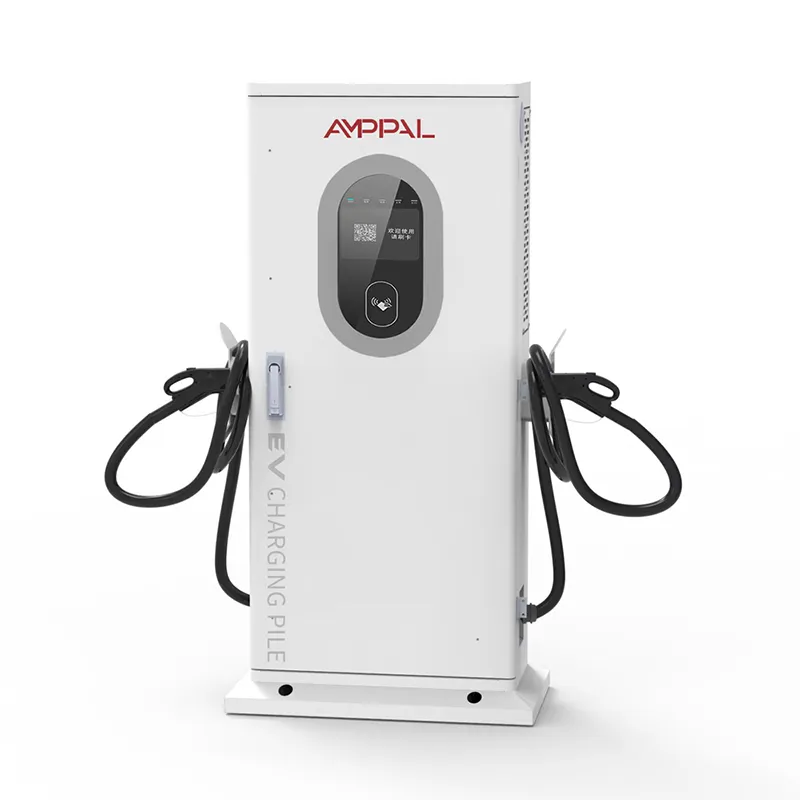
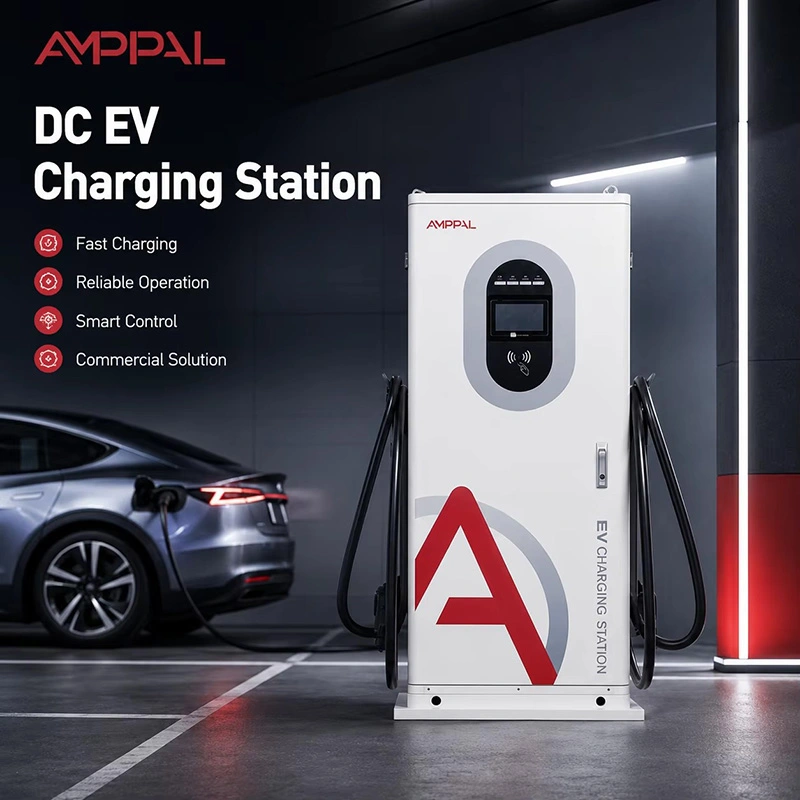
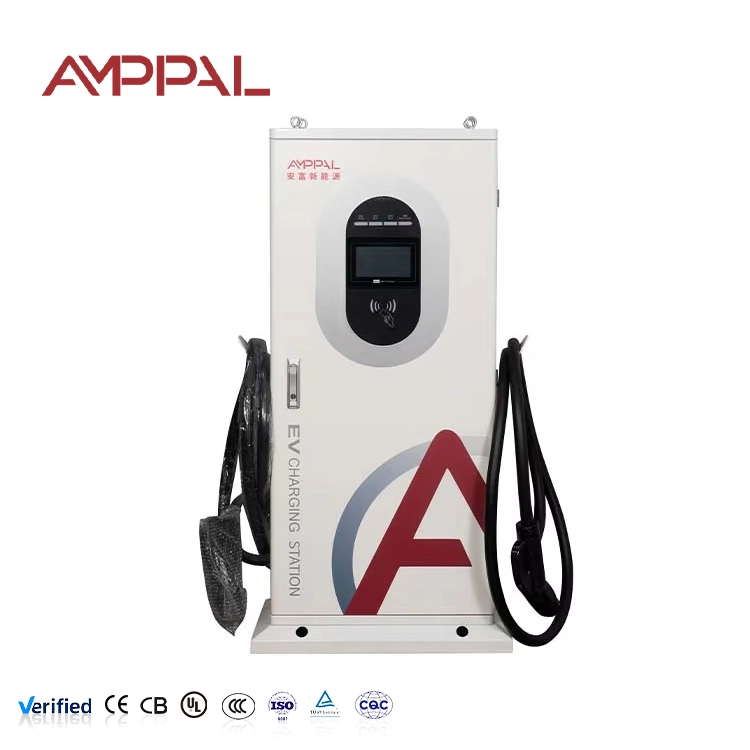
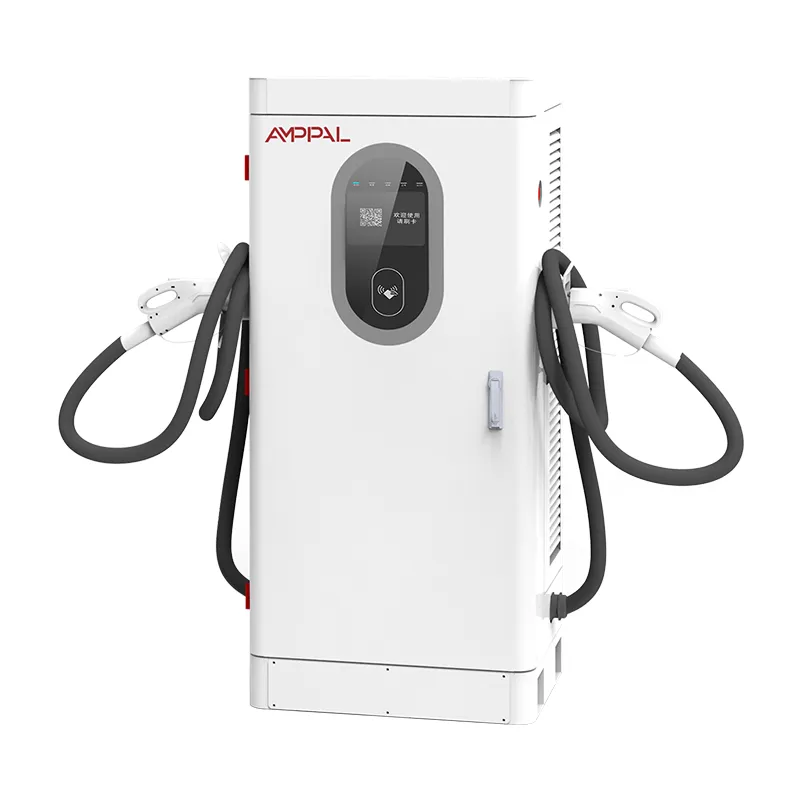
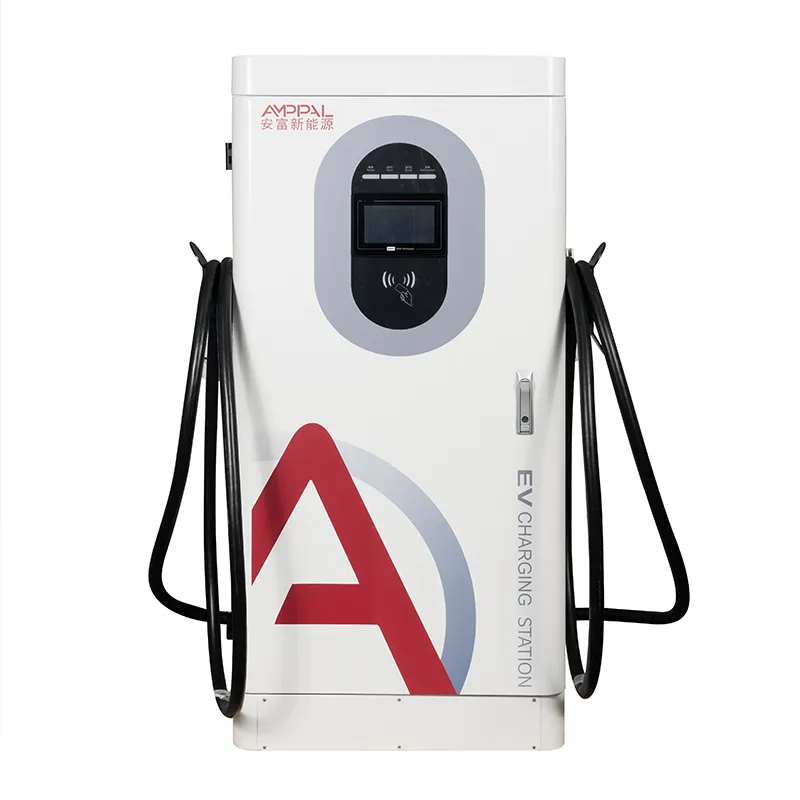
160kW High-Power DC EV Fast Charging Station for Fleet Depots is built for highway charging sites where peak-hour queues can impact operations. AMPPAL AF-DC-160-Y-B-O-4-H is a 160kW integrated DC fast charger designed for service areas, trunk corridors and unattended sites: single-gun 160kW delivery, two-connector power sharing, 13 safety functions, -25C cold start, +50C managed derating. 200-1000VDC, IP54, OCPP 1.6j.

Built for the Highway, Where Waiting Time Is Revenue

A highway charging site lives or dies by its peak-hour queue, and the AF-DC-160-Y-B-O-4-H is built to shrink that queue during the 90 minutes a day when it matters. It is a 160kW floor-standing integrated DC fast charger - 1620 x 750 x 560 mm - delivering constant power from 300 to 1000VDC, with an output window from 200 to 1000V covering everything from a 400V sedan to an 800V truck.

Highway sites differ from city sites in three ways: drivers arrive in bursts, nobody is around to babysit the machines, and the weather is whatever the region decides. So this cabinet leads with throughput logic (single-gun 160kW or two-connector sharing), unattended operation (13 safety functions), and wide-temperature engineering (-25C cold start, +50C managed derating).

AMPPAL is a China EV charger manufacturer from Yueqing, Zhejiang - the factory that supplied 500 liquid-cooled ultra-fast units for the NEOM green hydrogen project in Saudi Arabia. This cabinet is the volume workhorse from that plant, shipped to 40+ countries.

160kW High-Power DC EV Fast Charging Station for Fleet Depots160kW High-Power DC EV Fast Charging Station for Fleet Depots

What Separates a Corridor Cabinet From a City Cabinet

Single-gun 160kW: one 800V car draws the full cabinet - the scenario that matters at a corridor stop where every minute counts.

Two-connector sharing: a second connector lets a 400V car take a share (say 60kW) while the first keeps the rest, so the bay is never idle while a small car trickle-charges.

Peak-hour logic: at 15-minute session lengths one bay serves 4 cars per hour at full power; two connectors with sharing push station throughput without doubling the footprint.

13 safety functions tuned for unattended sites: insulation monitoring, polarity reverse, lightning protection, over-temperature, emergency stop and more - the machine fails safe, not silent.

Weather resilience: starts at -25C and holds rated power to +50C ambient; above that it derates gradually instead of tripping.

160kW High-Power DC EV Fast Charging Station for Fleet Depots160kW High-Power DC EV Fast Charging Station for Fleet Depots

Technical Specifications

Parameter

Specification

Model

AF-DC-160-Y-B-O-4-H

Rated Output Power

160kW

Overall Dimensions (mm)

1620 × 750 × 560

Input Voltage

AC380V±15%

Output Voltage Range

200-1000VDC (Constant power 300-1000V)

HMI

7" touch screen

User Authentication

RFID/APP/Plug & Charge

Payment Methods

Credit card/QR/Payment terminal

Connectivity

OCPP 1.6j, Ethernet/4G/WiFi

Power Factor

≥0.99

THD

≤5%

Peak Efficiency

95%

Protection Grade

IP54

Noise Level

≤65dB

Safety Functions

13 functions including insulation monitoring, polarity reverse, lightning protection

Compatible Connectors

CCS1/CHAdeMO/CCS2/GB/T/NACS

Operating Temperature

-25°C ~ +50°C

Warranty

2 Years Standard

Choosing the Site: Corridors, Peaks and Queues

Motorway service areas in Germany, France and Croatia, with bays sized for the 10:00-14:00 and 16:00-19:00 peaks when most daily sessions happen.

Trunk logistics corridors in the UAE and Saudi Arabia linking ports to inland depots, where 800V trucks need 40-60 minute top-ups.

Intercity bus and coach stations in Turkey and Greece, where schedules are fixed and a slow charger breaks the timetable.

Remote corridor nodes in Kazakhstan and Uzbekistan, where the nearest technician is 400km away - the 4G link matters more than the kW number.

Airport EV-rental return hubs in Mexico and Brazil, where returning cars arrive empty at the same hour and must turn around fast.

160kW High-Power DC EV Fast Charging Station for Fleet Depots160kW High-Power DC EV Fast Charging Station for Fleet Depots

One Pool, Two Connectors: How 160kW Splits

Think of the cabinet as a 160kW pool with one or two taps. In single-connector mode all 160kW goes to one vehicle - ideal for an 800V car at 15% SOC. In two-connector mode the pool divides: a typical allocation is 100kW to the first vehicle and 60kW to the second, or 80/80, depending on the site policy.

The allocation rule is configurable: prioritize the first car, balance equally, or cap one connector at a fixed share. Our engineers set the default at commissioning and you change it through the backend without a site visit. What you cannot do is give both cars 160kW at once - the pool is the pool.

The practical effect on queues: a station with two 160kW cabinets and four connectors can run four simultaneous sessions - say 160 + 100 + 60 + 60 - clearing a 12-car lunch-hour surge in about 90 minutes. That is the number for your feasibility study.

Certifications and the Cold-Start Evidence

CCC, TUV, CE, UL and CB are held by the factory; certificate copies specific to this cabinet are available on request.

Units run a 48-hour full-load regime with continuous temperature logging on modules, cables and connectors.

Cold-start verification: units are conditioned at -25C and must reach full output within the specified ramp time - tested per batch in winter.

The 13 safety functions fall within EN 61851-1:2019 and 61851-23:2014 compliance.

Salt-spray samples run 96 hours per batch and IP54 is verified - essential for coastal corridors; the range is -25C to +50C.

Eight Build Stages, Tracked Per Serial Number

Stage 1: steel for the cabinet is cut, punched and bent on CNC lines with FANUC robots, welded and powder coated.

Stage 2: a batch sample enters the 96-hour salt spray chamber while production continues.

Stage 3: AC input stage and DC power modules assembled on separate lines with individual test stations.

Stage 4: incoming inspection of SiC modules, contactors, high-voltage cabling and metering components.

Feasibility Check: Should This Be Your Highway Unit?

Choose the AF-DC-160-Y-B-O-4-H when your site sits on a corridor, your peak hour brings more than 6-8 cars per bay, and your transformer can feed 160kW per cabinet. It pays for itself fastest where the marginal revenue from a shorter queue is real: motorway concessions, truck corridors and airport returns.

This product is not for you if your site is a small town center with 3 cars a day - a 60kW or 80kW unit earns the same revenue for a third of the hardware cost. It is also the wrong tool if your fleet is heavy Class-8 trucks sustaining 350kW+; those need our split-type or liquid-cooled series.

Before ordering, send three numbers: expected peak-hour vehicles, average vehicle mix (400V vs 800V), and transformer capacity. We will model the queue and tell you how many cabinets - and which allocation - clears your peak. If the answer is fewer than you hoped, you will hear that too.

The Advantage of a Manufacturer Contract

Your counterpart in Yueqing signs the contract - not a reseller quoting someone else's inventory and lead time.

OEM/ODM depth: custom color, logo, connector configuration and backend defaults, handled by a 260+ employee plant.

Delivery of standard cabinets takes 15-20 working days; OEM variants add about 7-10 days.

Trial orders from 1 unit for new markets; corridor-scale orders of 10+ units unlock wholesale pricing.

Under the 2-year warranty, spares leave within 48 hours of approval and remote diagnostics use the same OCPP link that carries billing.

160kW High-Power DC EV Fast Charging Station for Fleet Depots160kW High-Power DC EV Fast Charging Station for Fleet Depots

Shipping a 160kW Cabinet: Lifting, Crating, Documents

At 340 kg plus crate, this is a forklift job, not a two-man carry - plan the receiving bay before delivery day. The plywood case uses foam cradles around the screen and connector bay, and a 40HQ container holds 10-12 crates.

FOB Ningbo or Shanghai is standard; CIF, CFR and DDP on request. A pallet diagram is sent before packing so your forwarder can confirm truck sizing.

Invoice, packing list, origin certificate, CE/TUV copies and the OCPP guide travel with the goods.

Uptime Support for Unattended Corridor Sites

Two years per unit. For unmanned highway sites we recommend a local spare module - air freight to a service area is what actually costs you uptime.

Within 48 hours of approval, spare parts are on a DHL or FedEx flight; allow 3-5 working days to Europe.

Remote firmware updates, tariff changes and reboots via OCPP - most corridor sites never need a physical visit for software issues.

Commissioning support by video for first installs, with a written checklist for grounding, cable sizing and backend pairing.

For corridors, the routine is simple: air filters twice a year, terminal torque checks annually, antenna inspection after storms.

Wrong vs Right: Operating a Highway Cabinet

Wrong: Putting a 160kW cabinet on a feeder sized for 60kW and blaming the unit when the breaker trips. Right: confirm the transformer and cable carry the full load - the manual gives the minimum AC cable spec.

Wrong: Assuming two connectors mean two full 160kW sessions. Right: the pool splits; set the allocation policy at commissioning and post realistic per-bay times.

Wrong: Parking a truck so its trailer blocks the cabinet's air intake in summer. Right: keep 50cm clearance around the enclosure; airflow is what holds full power at 50C.

Wrong: Letting the 4G signal drop and never checking, then wondering why remote reboots fail. Right: verify signal strength at commissioning and add an external antenna if needed.

Wrong: Ignoring a repeated ground-fault log because 'it still charges'. Right: insulation monitoring catches early failures - send us the log; a 5-minute remote review beats a mid-winter breakdown.

Corridor Operators Talk: Three Field Reports

A motorway concessionaire in southern Germany installed six AF-DC-160-Y-B-O-4-H units at two service areas in September 2025. Their queue model predicted a 40-minute worst case at Sunday peaks; measured data shows 25 minutes, because sharing keeps both connectors busy.

A logistics operator in Saudi Arabia runs four units at a depot on the Jeddah-Riyadh corridor for 800V delivery trucks. The 50C summer derating impressed their maintenance chief: units reduce power gracefully in the afternoon rather than shutting down. The gripe: sand collects in the lower vent slots.

A highway service operator in Kazakhstan deployed two units at a remote node with only 4G connectivity. One unit lost its SIM profile during a carrier change; remote reconfiguration via the web tool brought it back in an hour without a 400km service trip.

FAQ

Q: How many cars can one cabinet serve at once?

A: With two connectors, two sessions run simultaneously, sharing the 160kW pool - for example 100/60 or 80/80 per your allocation policy. Single-connector mode delivers the full 160kW to one vehicle.

Q: Is this unit suitable for unattended highway sites?

A: Yes - that is a core design target. The 13 safety functions (insulation monitoring, polarity reverse, lightning protection, over-temperature, emergency stop and more) make it fail safe, and OCPP 1.6j over 4G enables remote monitoring, reboot and firmware updates.

Q: What happens at -25C?

A: The unit starts and reaches full output; cold-start behavior is verified per batch in our test chamber. Standard operating range is -25C to +50C.

Q: What happens at +50C?

A: The cabinet holds rated power up to 50C ambient. Above that, power reduces gradually per a protection curve - the station stays available instead of tripping offline.

Q: Can it charge heavy trucks?

A: Yes for medium-duty and many Class-7 trucks at 160kW or shared power. Sustained 350kW+ Class-8 charging needs our split-type or liquid-cooled series - send your truck specs and we will recommend the right family.

Q: What connectivity do I need at a remote site?

A: Ethernet, 4G or WiFi - at least one. For corridor sites we recommend 4G with a backup SIM; all OCPP traffic, billing data and remote management run over that link.

Q: How long does installation and commissioning take?

A: Site prep (pad, trenching, transformer) dominates the timeline. Cabinet mounting, wiring and backend pairing typically take one working day per unit with our video support.

Q: Can the allocation policy be changed later?

A: Yes, remotely via the OCPP backend - first-car priority, balanced sharing, or a fixed cap per connector. No site visit needed.


Send Inquiry
Contact Info

Talk Directly to Our EV Charger Factory

Get factory-direct pricing, custom solutions, and expert support.

- Fast Response – Reply within 24 hours.

- OEM/ODM – Flexible customization and sample orders.

- Certified Quality – CE, TÜV, CB, and CCC options.

- Custom Quotes – Tailored to your specifications.

- Technical Support – Expert help with OCPP, DLB, and system integration.

X
We use cookies to offer you a better browsing experience, analyze site traffic and personalize content. By using this site, you agree to our use of cookies. Privacy Policy
RejectAccept