" "
Whatsapp
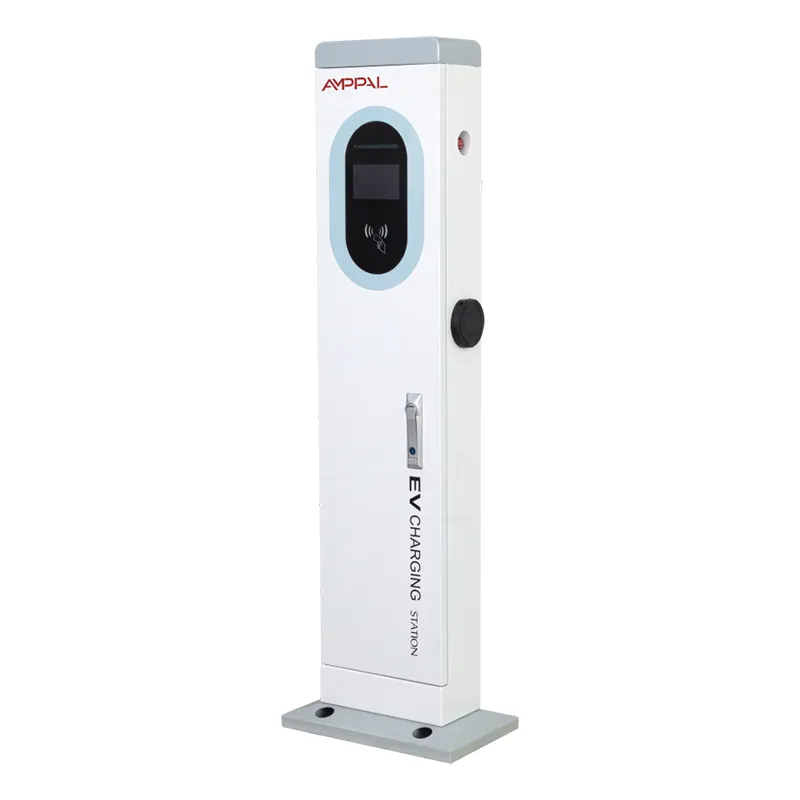
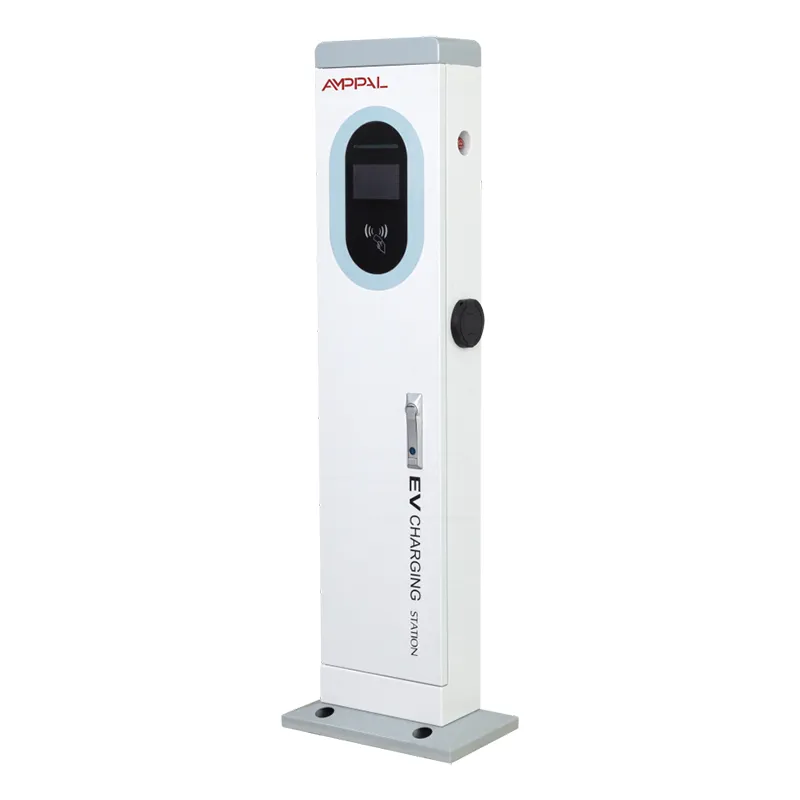
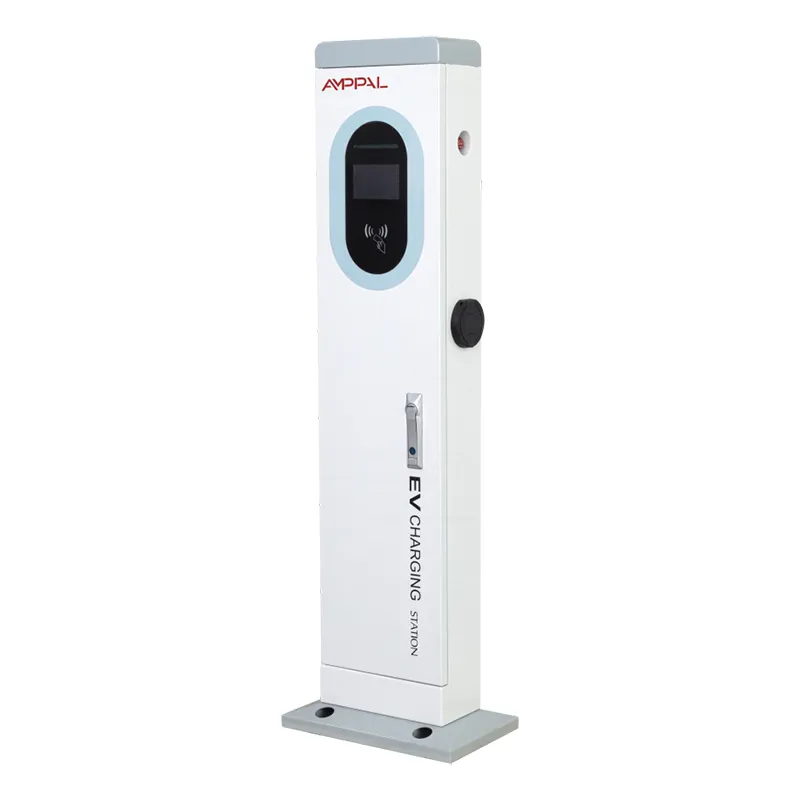
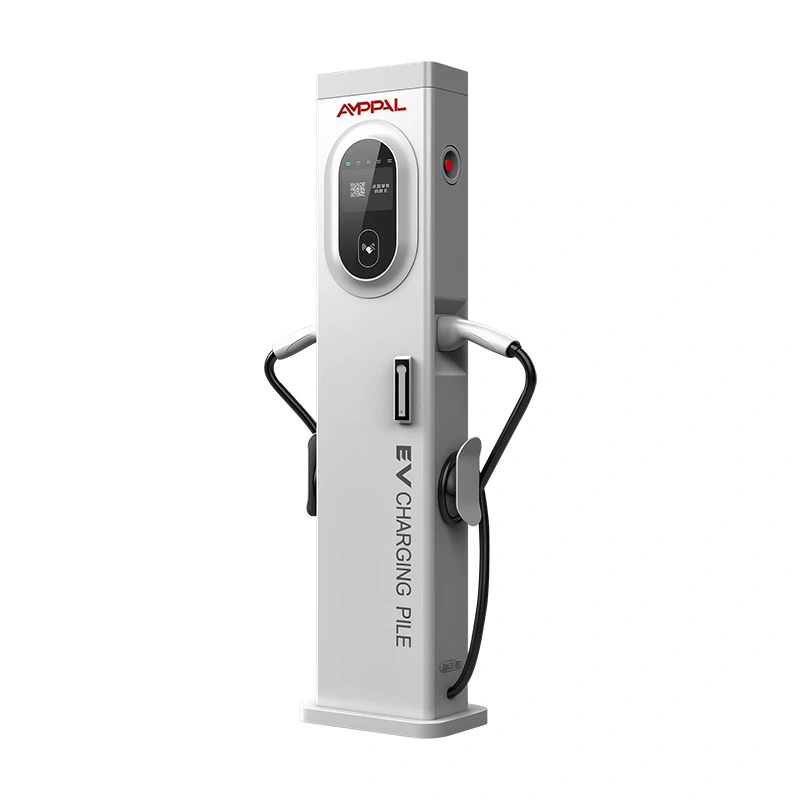
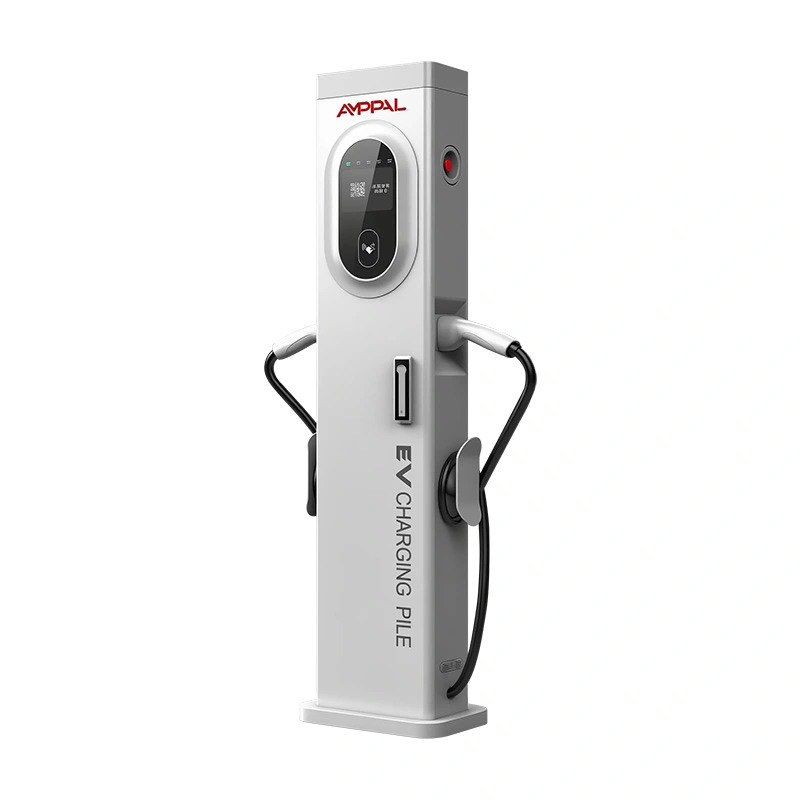
A charging station that cannot take money from strangers is an expense, not a business. The AMPPAL 22kW Commercial AC EV Charging Station Tower for Retail and Public Parking (AF-AC-22kW tower) was designed around that sentence: two 11kW AC guns on a 410 x 240 x 1400 mm column, a 5-inch color touch screen, and three payment methods built into the unit itself.
Walk-up drivers tap a credit card, members wave an RFID card, and casual users scan a QR code with the operator's APP. No attendant, no booth, no cash box - the tower opens the session, measures the energy, charges the right price and issues the receipt.
That self-service loop is what makes a 24-hour site affordable. The hardware costs the same as any other tower; the difference is that this one closes the revenue circle on its own.
Credit card terminal - contactless tap for Visa, Mastercard and local schemes; the default expectation at European sites.
RFID card reader - issue cards to hotel guests, company drivers or gated-community residents at a price you set.
APP scan-to-charge - a QR on the screen, payment from a phone, no card in hand; fits casual and roaming users.
Per-method pricing - charge members less than walk-ins; the backend applies the tariff per authentication type.
Receipt on screen and by email - the 5-inch display shows kWh, price and a QR receipt, which keeps petty-cash arguments away.
Settlement trail - every session links a payment record to an OCPP charging record, so reconciliation becomes a download, not a hunt.
|
Parameter |
Specification |
|
Model |
AF-AC-22kW Series |
|
Rated Power |
22kW |
|
Input Voltage |
220VAC ±20% |
|
Dimensions |
410 × 240 × 1400 mm |
|
User Interface |
5" Color Touch Screen |
|
Payment Options |
Credit Card / RFID / APP |
|
Communication |
Ethernet, 4G, WiFi |
|
Protection Grade |
IP54 |
|
Operating Temp |
-20°C to +50°C |
|
Certification |
CE Compliance |
|
Warranty |
2 Years |
Hotel and resort car parks charging guests after midnight, with no night staff at the gate.
Airport and station parking run remotely, where a cash booth costs more than the charger.
Fleet depots using one RFID card per vehicle or per driver.
Retail lots and restaurant car parks where customers pay while they shop, without queuing at a counter.
Public street bays in towns that want charging without building a manned office.
The driver plugs in, then the 5-inch screen offers the three payment routes. With a card, the tap takes seconds; with RFID, the reader identifies the card and applies that card's tariff; with the APP, the QR opens the operator's page for remote start and stop.
The tower keeps the session running locally even if the network blips - charging continues, and the record queues for upload when the connection returns. That matters at sites where 4G coverage is decent but not perfect.
Money moves through your merchant account, not through us. The tower passes the transaction to the acquirer, then pulls the session record into the operator dashboard, where price per kWh, session totals and charge-point reports line up for monthly reconciliation.
Conformity rests on the Low Voltage and EMC directives, and the CE file is maintained for each series in the range.
The payment terminal is a certified module; card data is handled by the terminal and never stored in the tower.
IP54 enclosure verified by lab and third-party testing - the card reader and screen survive rain and dust.
96-hour salt-spray testing on the enclosure finish, standard for coastal sites.
Operating tests across -20C to +50C, including card reading in cold weather.
Beyond the unit itself, the plant carries CCC, TUV, UL and CB scope; each serial number has its own report attached.
Column steel is formed in-house — laser cutting and CNC punching to the 410 x 240 section.
TRUMPF press brakes form the column; FANUC robots weld it.
Powder coating is applied, with batch samples sent for salt-spray testing.
The AC line fits the control unit, contactor, screen, card reader and both 11kW guns.
IP54 sealing is verified at the screen bezel, card reader bezel and cable entries.
Each tower runs a two-gun load test plus a live payment-terminal test with test cards.
Final QC matches serial number to test report and CE file before the unit is released to shipping.
Lead time is 15-20 working days from confirmation; payment branding is applied before packing.
If you sell into Europe - Germany, France, the Netherlands - card must be on the unit, full stop. European drivers expect contactless payment the way they expect it at a parking machine, and we configure the terminal for your acquirer before shipping.
If you sell to hotels, offices or gated communities, RFID earns its keep: one card per guest or employee, a tariff you control, and no card fees on every session. The APP is the cheapest route to run and the best fit for younger casual users - and it gives you a direct channel for promotions.
Who should not buy this tower: a site that will only ever run staff charging with free sessions. If nobody pays, the payment hardware is cost you do not need - order the same tower without the terminal, or a simpler unit. And if your market is cash-only, this product is not for you.
Zhejiang Anfu New Energy Technology Co., Ltd. runs AC and DC on separate lines in Yueqing, so payment models never queue behind other product types.
Payment modules are configured and tested in-house; the tower arrives with the terminal ready for your acquirer's settings.
Certification files (CE, CCC, TUV, UL, CB) are ready to send to payment providers and utilities that ask.
1,000,000+ units delivered by 2024 across 40+ countries, with payment-enabled towers already running in the EU and the Gulf.
OEM and ODM - your logo on the screen boot, your card design, your packaging; MOQ discussed per project.
Towers leave in vertical wooden crates with internal bracing around the screen and card reader. Anchor bolts, drilling template and mounting hardware ship in the same crate, so installers can start the day the tower arrives.
The 1400 mm length governs container loading: crates lie flat and stack, typically 60-80 units per 20-ft container depending on crate dimensions. We confirm the exact count and the freight per crate before you book.
Shipping is normally FOB Ningbo or Shanghai; EXW and CIF can be arranged. The pack includes invoice, packing list, bill of lading and a copy CE certificatey - are ready inside the 15-20 working day lead time.
2-year warranty on the tower, screen, card reader and RFID module, covering defects in materials and workmanship.
Spare card readers and screens stocked - the payment path is the first thing to protect on a revenue unit.
Remote diagnostics over 4G or Ethernet, including payment-terminal status checks.
Guidance for operators: keep the card reader face clean and run a test transaction weekly.
User manual, tariff-configuration guide and OCPP setup guide ship with every unit.
Wrong: using one merchant account for towers in three countries. Right: set up local acquirers per market - card schemes decline foreign-flagged transactions more often than you think.
Wrong: hiding the price until after charging. Right: show the tariff on the 5-inch screen before the session starts - surprise pricing is the top driver of chargebacks.
Wrong: relying on WiFi at a public site. Right: fit a 4G SIM so payment keeps working when the building network is down.
Wrong: letting the RFID card list grow without expiry dates. Right: set validity periods per card so ex-employees and past guests stop charging on your account.
Wrong: never reconciling sessions against payments. Right: pull the OCPP session log and the payment report monthly and match them before the acquirer statement arrives.
A German bakery-chain owner put a 22kW tower in each of two store car parks in early 2025. His customers tap a card while the bread is being bagged. His note: the first chargeback arrived within a month - a driver who saw the price only after plugging in. The tariff now sits on the idle screen, and the problem stopped.
A Romanian hotel group runs RFID cards for repeat guests and cards for walk-ins at four locations. The manager's summary after nine months: the tower collects what the reception desk used to collect by hand. His gripe is the terminal height - tall drivers bend slightly, which he calls a first-world complaint.
A Kuwaiti site operator bought ten towers for a mixed retail and residential development, with different tariffs per card group and per APP user level. His feedback: reconciliation that used to take a day now takes an hour, and the 4G fallback saved him twice when the mall's WiFi failed.
A: Contactless Visa, Mastercard and major local schemes; we configure the terminal for your acquirer before shipping.
A: The reader supports standard RFID card formats, and cards are programmed through the backend with validity dates you set.
A: The session continues and the record queues locally; payment is completed when the connection returns.
A: You do. We supply the terminal and backend integration, but the money flows through your acquirer, not through us.
A: Yes - both guns belong to one device, so a single APP account can start and stop either bay.
A: The terminal module is PCI-certified, and card data never touches the tower's storage or our servers.
A: Yes - tariffs are assigned per authentication type in the backend, so RFID members, APP users and card walk-ins can each have their own rate.
A: Pull the OCPP session log and the payment report monthly and match them; the dashboard lists both per device.
Address
No. 237, Weisan Road, Yueqing, Zhejiang, China
Tel
Talk Directly to Our EV Charger Factory
Get factory-direct pricing, custom solutions, and expert support.
- Fast Response – Reply within 24 hours.
- OEM/ODM – Flexible customization and sample orders.
- Certified Quality – CE, TÜV, CB, and CCC options.
- Custom Quotes – Tailored to your specifications.
- Technical Support – Expert help with OCPP, DLB, and system integration.