" "
Whatsapp
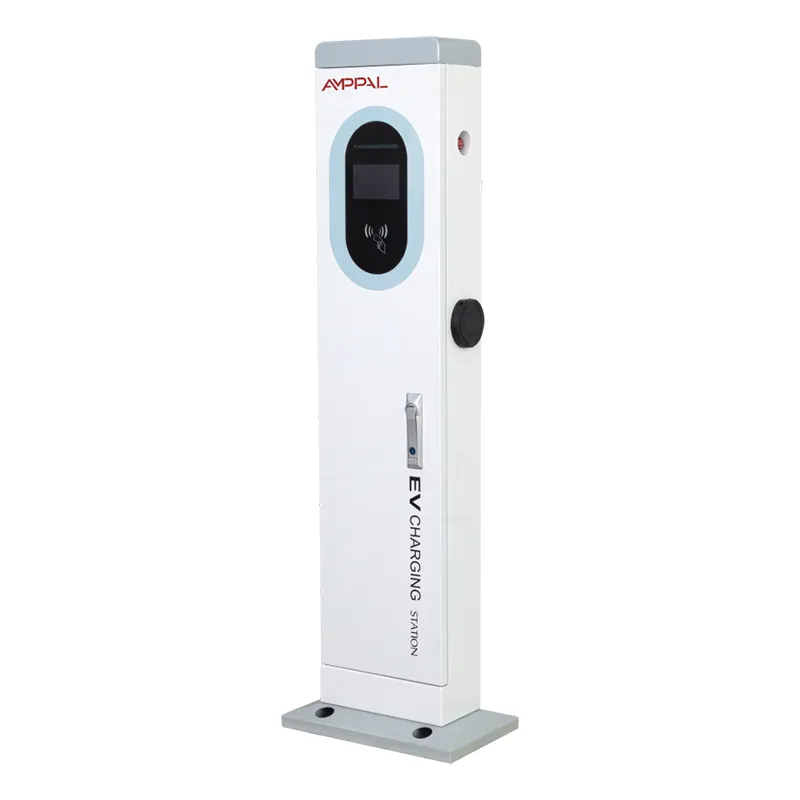
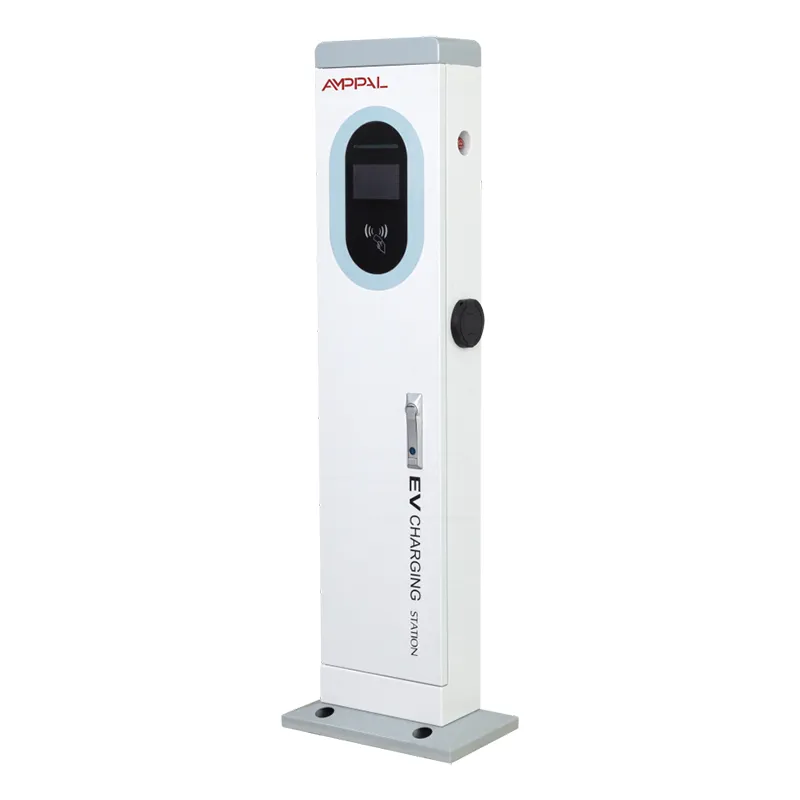
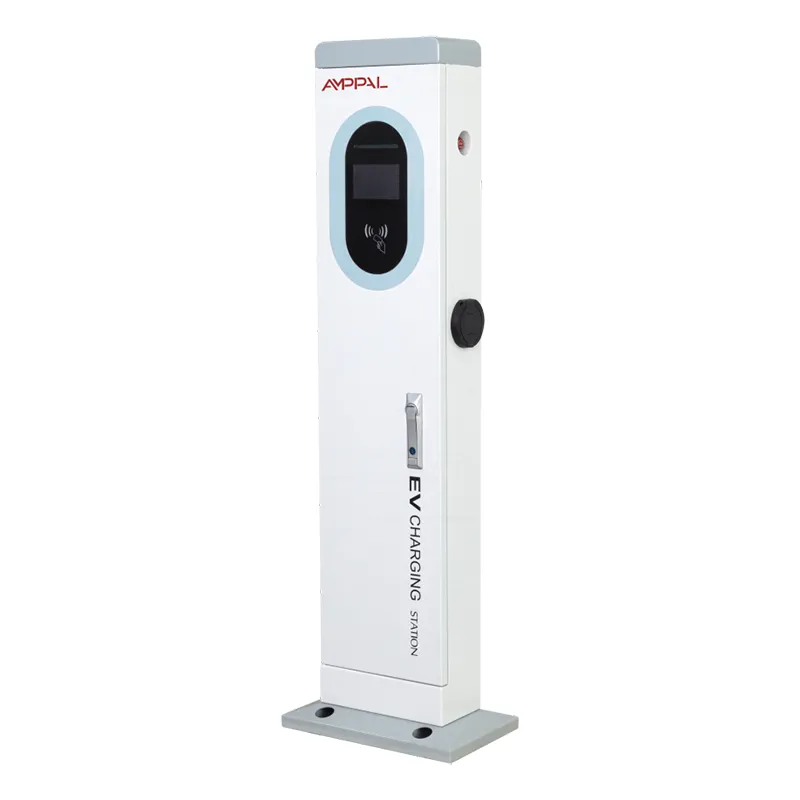
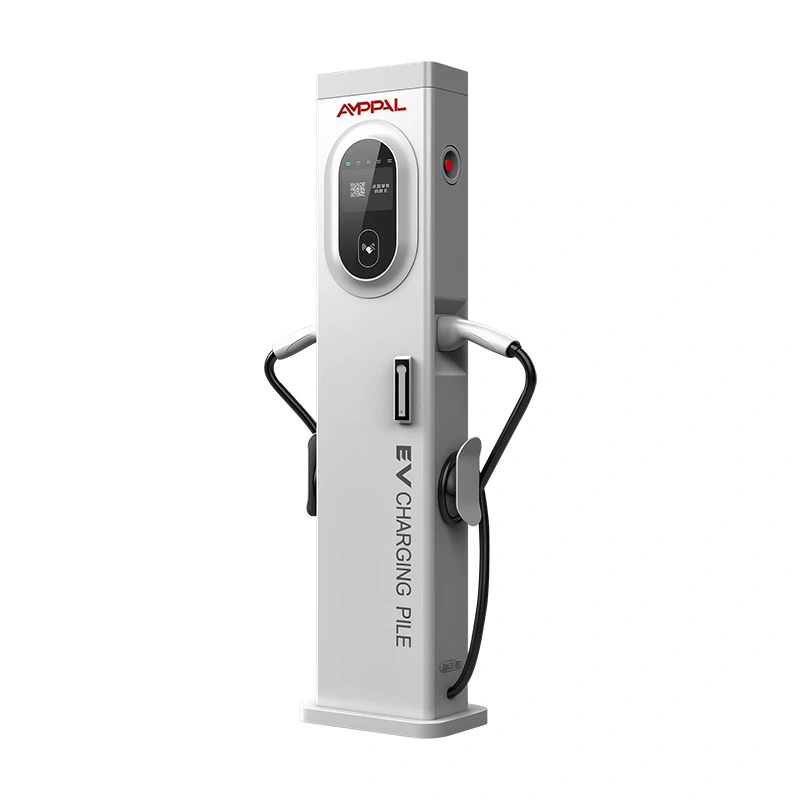
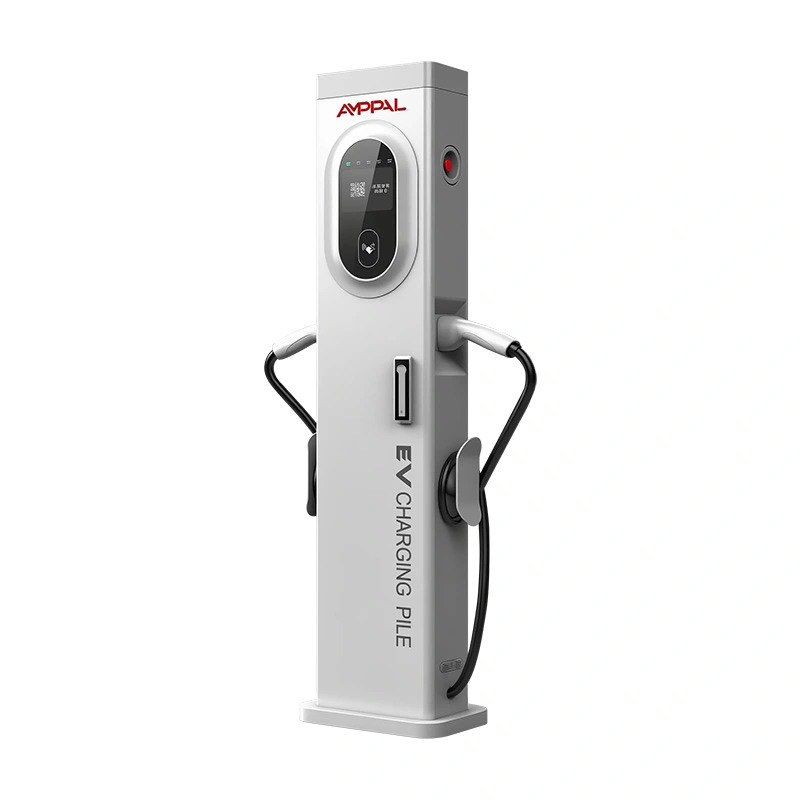
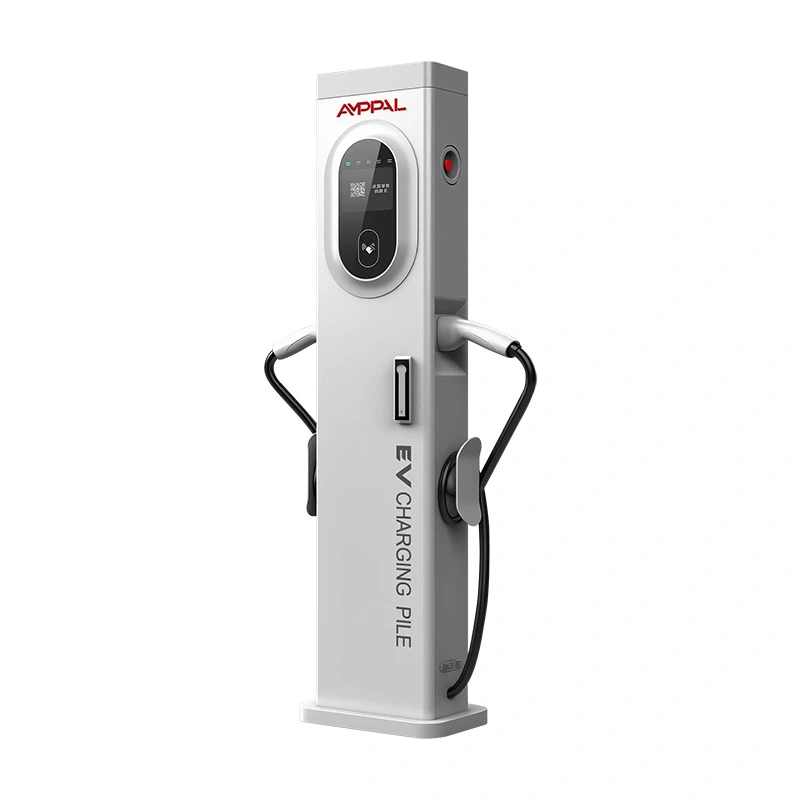
Before you order the most powerful AC tower we make, check what your cars can actually accept. The AF-AC-44kW carries two 22kW AC guns on one 410 x 240 x 1400 mm column - 44kW in total, the top of our AC range. The most common mistake here is blaming the charger for a speed the car itself decides.
AC charging speed is capped by the vehicle's onboard charger. Most passenger EVs ship with 7kW or 11kW onboard units, so on this tower they draw 7kW or 11kW no matter what. The 44kW tower earns its price only when two vehicles that can each take 22kW plug in at the same time.
That narrows the honest buyer list: operators with 22kW-capable European cars, light commercial vans, or mixed fleets where two high-power vehicles often arrive together. This page tells you whether you are on that list.
Two 22kW sessions at once - two 22kW-capable vehicles charge at full speed simultaneously, a combined 44kW.
Overnight turnaround for vans - a 60kWh van battery refills in under three hours at 22kW, not seven.
One column, two bays, one foundation - the same 410 x 240 base and shared hardware as the rest of the series.
Ready for next-generation cars - onboard chargers are climbing, and 22kW units already appear in several European models.
Full payment and networking stack - 5-inch touch screen, credit card, RFID, APP, Ethernet, 4G and WiFi.
Honest flexibility - a 7kW car charging here is unharmed, just slower; the tower gives it exactly what its onboard unit asks for.
|
Parameter |
Specification |
|
Model |
AF-AC-44kW Series |
|
Rated Power |
44kW |
|
Input Voltage |
220VAC ±20% |
|
Dimensions |
410 × 240 × 1400 mm |
|
User Interface |
5" Color Touch Screen |
|
Payment Options |
Credit Card / RFID / APP |
|
Communication |
Ethernet, 4G, WiFi |
|
Protection Grade |
IP54 |
|
Operating Temp |
-20°C to +50°C |
|
Certification |
CE Compliance |
|
Warranty |
2 Years |
Delivery and service fleets running vans with 22kW onboard chargers, parked overnight.
Airport transfer and hotel shuttle depots where two high-power vehicles return together.
Municipal utility yards running electric service vehicles.
Commercial car parks that want the top AC tier ready for the next generation of cars.
Mixed fleet and guest sites - staff vans on RFID, visitor cars on card or APP, same tower.
An AC charger is closer to a smart socket than a pump: it supplies alternating current, and the vehicle converts it with its own onboard charger. That onboard unit sets the ceiling. A car with a 7kW onboard unit draws 7kW from any AC tower, including this one; an 11kW car draws 11kW; only vehicles with 22kW onboard units use the full 22kW per gun.
The practical test: look up the vehicle's AC charging spec before buying hardware. If your whole fleet lists 7kW or 11kW, a 22kW tower would serve it at the same speed - and this 44kW tower would serve it at the same speed too, for more money.
Where the tower shines: two 22kW-capable vehicles on the two guns at once. That is a full charge for a 60-70kWh van battery in under three hours, with two bays served from one column, one network module and one foundation.
CE marking under the EU Low Voltage and EMC directives, documented per model series.
44kW combined load testing - both guns run at 22kW simultaneously for the full rated session length.
IP54 verified by lab and third-party testing, including the high-current cable entries.
96-hour salt-spray testing on the enclosure finish for coastal fleet depots.
Temperature testing across -20C to +50C, with full-power behaviour checked at both ends.
Serial-numbered test reports per unit; the factory holds CCC, TUV, UL and CB alongside CE.
Sheet steel is laser-cut and CNC-punched to the 410 x 240 profile in-house.
TRUMPF press brakes form the column; FANUC robots weld it.
Powder coating is applied, with batch samples sent to salt-spray testing.
The AC line fits the control unit, high-current contactors, screen and both 22kW guns.
IP54 sealing is verified at the bezels and the heavier cable entries.
Each tower runs a two-gun full-load test plus payment and network tests.
Nothing leaves until QC has reconciled serial number, test data and CE paperwork.
Standard lead time is 15-20 working days; larger fleet orders are scheduled in production batches.
Buy it when: your vehicles carry 22kW onboard chargers (check the spec sheet, not the brochure), or your site must be ready for next-generation cars, or two high-power vehicles routinely park together overnight.
Do not buy it when: your fleet's onboard units top out at 7kW or 11kW. The tower charges them at exactly the same speed as a cheaper 22kW unit - you would be paying for steel and contactors that never work. Buy the 22kW dual-gun tower instead, and if those vehicles only ever charge one at a time, even a 14kW tower covers you.
Also consider the supply side: 44kW of continuous load is a serious feed. Confirm your site's capacity and the local electrical code with a qualified electrician before ordering. The tower does not create power; it passes it through.
Zhejiang Anfu New Energy Technology Co., Ltd. delivered 1,000,000+ charging units by 2024, including 500 liquid-cooled ultra-fast chargers for the NEOM green-hydrogen project in Saudi Arabia.
Separate AC and DC assembly lines in Yueqing keep fleet-scale AC orders on schedule.
OCPP 1.6 and 2.0 native - the tower talks to fleet management platforms without middleware.
Certification files (CE, CCC, TUV, UL, CB) ready for utilities and incentive schemes.
OEM and ODM - fleet livery, card branding, custom packaging; MOQ discussed per project.
Towers travel upright in braced wooden crates protecting the screen and both holsters. Anchor bolts, template and fixings are packed with the unit and travel in the same crate. Fleet orders of 20+ units are packed in matched batches, so every site in a rollout gets identical hardware and documents.
The 1400 mm length sets the loading plan: crates lie flat and stack, typically 60-80 towers per 20-ft container depending on crate dimensions. We confirm the exact count per container before booking, which matters for large rollouts with staged deliveries.
Terms run FOB Ningbo or Shanghai, or EXW and CIF where you handle freight. Documentation: invoice, packing list, bill of lading, plus a CE certificate copyy - are prepared within the 15-20 working day lead time.
2-year warranty on the tower, both guns, screen and payment module.
Spare guns and control boards stocked - fleet sites cannot wait weeks for a part.
Remote diagnostics and firmware updates over 4G or Ethernet, with OCPP-based fleet reporting.
Quarterly maintenance checklist: anchor-bolt torque, cable inspection, connector wear check.
Manual, installation drawing and fleet OCPP integration guide ship with every unit.
Wrong: buying 44kW because it sounds fast. Right: check each vehicle's AC charging spec - most cars cap at 7-11kW, and the tower cannot change that.
Wrong: drawing 44kW from a circuit sized for a 7kW charger. Right: have an electrician verify supply capacity and protection before installation.
Wrong: parking two 22kW vans on one gun each and forgetting the second bay. Right: schedule the fleet so high-power vehicles pair up overnight - the second gun is the whole point.
Wrong: assuming the tower reports to any fleet software. Right: confirm OCPP 1.6 or 2.0 compatibility with your platform before ordering.
Wrong: skipping the anchor torque check on a high-use yard. Right: re-torque quarterly and re-seal the base plate annually.
A Danish logistics operator runs six towers for a fleet of electric vans with 22kW onboard chargers; two vans pair up per tower overnight. His numbers after eight months: 180 km added per van per night, one contactor fault replaced under warranty, and no queue at the depot since the pairing rule was posted.
A Croatian airport-transfer company bought four towers in 2025 for shuttle vans. The owner's honest review: I almost bought these for the wrong reason - the pitch sounded like speed. Then I checked the vans, and 22kW each is exactly what they eat. His complaint: the cables are heavy, and drivers must coil them properly.
A Turkish municipality tested one tower for two municipal vans. Their finding: the tower is overkill for vans that rarely need more than 40 kWh overnight, so they plan to move it to a busier site. They also noted the price is justified only when both guns are actually used.
A: Yes, mostly. They will charge at 7kW on this tower exactly as on a cheaper 22kW or 14kW unit; buy the smaller tower.
A: Vehicles with 22kW onboard chargers - several European models and electric vans; check the vehicle's AC spec, not the fast-DC figure.
A: No. Each gun is capped at 22kW, so one car gets 22kW maximum; the 44kW figure means both guns together.
A: Two, one per gun. At 22kW each, a 60-70kWh van battery refills in under three hours.
A: A supply sized for the full load and the local electrical code, verified by a qualified electrician before installation.
A: Yes, in installed terms - one foundation, one network module and one installation visit replace two of each.
A: Yes - each gun negotiates its own speed; the 7kW car draws 7kW while the van draws 22kW.
A: Yes, through native OCPP 1.6 or 2.0 - the tower appears as one device with two connectors in most platforms.
Address
No. 237, Weisan Road, Yueqing, Zhejiang, China
Tel
Talk Directly to Our EV Charger Factory
Get factory-direct pricing, custom solutions, and expert support.
- Fast Response – Reply within 24 hours.
- OEM/ODM – Flexible customization and sample orders.
- Certified Quality – CE, TÜV, CB, and CCC options.
- Custom Quotes – Tailored to your specifications.
- Technical Support – Expert help with OCPP, DLB, and system integration.