" "
Products
720kW Split-Type Ultra-Fast EV Charger for Heavy-Duty EV Fleets
  • 720kW Split-Type Ultra-Fast EV Charger for Heavy-Duty EV Fleets720kW Split-Type Ultra-Fast EV Charger for Heavy-Duty EV Fleets
  • 720kW Split-Type Ultra-Fast EV Charger for Heavy-Duty EV Fleets720kW Split-Type Ultra-Fast EV Charger for Heavy-Duty EV Fleets

720kW Split-Type Ultra-Fast EV Charger for Heavy-Duty EV Fleets

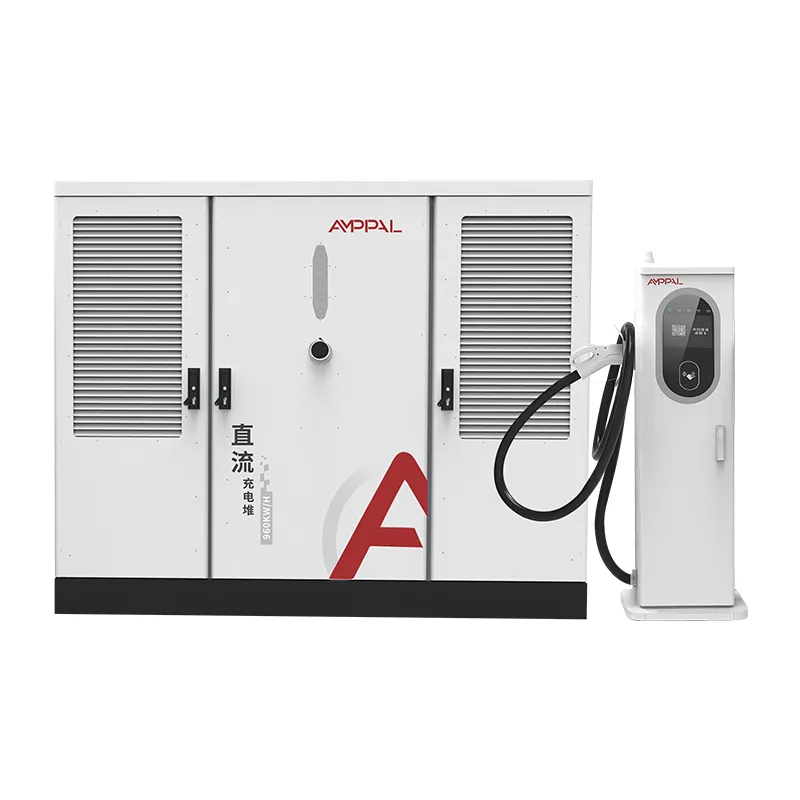
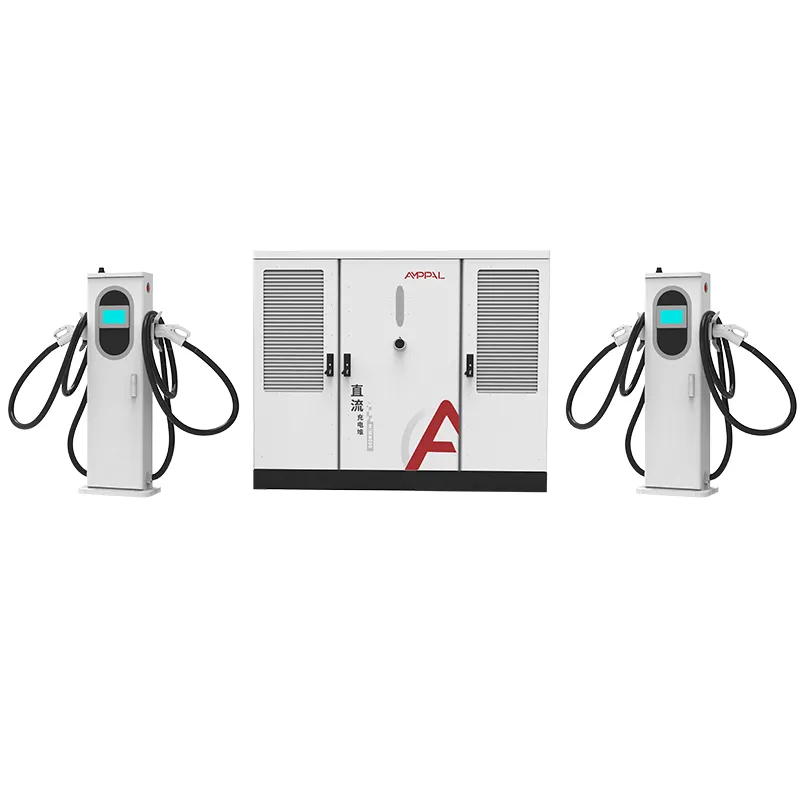
AMPPAL 720kW Split-Type Ultra-Fast EV Charger for Heavy-Duty EV Fleets scales from 2 to 16 guns on a single 2200 x 1800 x 1000 mm power cabinet. Open a two-bay station and add terminals as traffic builds, or commission all 16 outlets on day one. 300-1000VDC constant power, UL 2202-2022 and UL 2231-2, factory-direct from a China manufacturer.

Scaling from 2 to 16 Guns on One Cabinet

A charging site is a bet on a number nobody knows: how many cars will show up in year three. The AF-DC-720-Series is built to lose that bet gracefully.

The cabinet is fixed at 720kW, but the outlet count is a dial, not a decision. Two terminals or sixteen, they bolt to the same cabinet, share the same power pool, and report to the same OCPP backend. You start small where traffic is uncertain, and expand where it is proven.

This page walks through the expansion path, the queue behaviour at different gun counts, and the phased-investment rhythm that works for real station budgets.

The pattern we see across 40+ export countries is consistent: operators who phase their terminals beat operators who guess the final size on day one.

720kW Split-Type Ultra-Fast EV Charger for Heavy-Duty EV Fleets720kW Split-Type Ultra-Fast EV Charger for Heavy-Duty EV Fleets

Why Gun Count Defines the Customer Experience

Peak power sells the project; gun count decides whether drivers come back. The relationship between them deserves a closer look.

More guns mean shorter waits even when the 720kW pool is unchanged, because power per session drops before a driver is turned away.

A 16-gun site with 720kW gives each active session about 45kW on average, enough for a slow-but-complete charge; a 4-gun site gives 180kW per car.

Queueing math is simple: with 16 guns and a 15-minute average session, the site clears roughly 60 vehicles per hour at full utilisation.

Fast bays and slow bays can coexist: assign 600A liquid-cooled terminals to trucks and 250A air-cooled ones to cars on the same cabinet.

Terminals can be staged in batches, so the same cabinet serves 4 guns this quarter and 8 next quarter without a second power room.

Remote OCPP control lets you cap gun power during peak grid hours and lift it at night, which changes the experience without changing hardware.

Technical Specifications

Parameter

Specification

Model

AF-DC-720-Series

Rated Output Power

720kW

Cabinet Dimensions (mm)

2200 × 1800 × 1000

Standard Terminal (mm)

1517 × 650 × 300 (250A)

Liquid-Cooled Terminal (mm)

1630 × 600 × 500 (600A)

Input Voltage

AC480V±10%, 50/60Hz

Output Voltage Range

300-1000VDC constant power

Charging Outlets

2-16 guns

Standards

UL 2202-2022, UL 2231-2

Power Factor

≥0.99

Noise Level

≤65dB

Protection Grade

IP54

Operating Temperature

-25°C ~ +50°C

Warranty

2 Years Standard

Planning Scenarios for 720kW Stations

Greenfield highway sites opening with 4 guns and adding 4 more every six months as traffic matures.

Urban hubs where the landlord grants floor space for the cabinet now and terminal positions as tenants sign up.

Depot-plus-public hybrids: 2 heavy-duty liquid-cooled bays for the fleet, 6 air-cooled bays for the public, all on one cabinet.

Temporary or event charging where a 16-terminal configuration is installed for a season and partly removed after.

Multi-stage tenders where the utility approves 720kW of capacity once and the operator phases the hardware.

Power Sharing Logic Across 2 to 16 Outlets

The controller treats 720kW as one pool and every terminal as a tap. When a session starts, the pool checks its request against what is free and grants power; sessions already running are not interrupted, they simply see the pool shrink around them.

At 16 active sessions, each car gets roughly 45kW, which still moves an average EV from 20% to 80% in about an hour. At 4 active sessions, each car can pull up to 180kW, and a single vehicle can take the full 720kW if nothing else is charging.

The priority setting in OCPP lets an operator protect the fleet bays: a depot can cap public terminals at 30kW while guaranteeing 600A for its own trucks. All of this is configuration, not engineering.

Voltage requests matter too. The 300-1000VDC output range covers the 400V-class cars and the 800V-class trucks on the same bus, so no gun is stranded by architecture.

Compliance Testing and Quality Assurance

Expansion flexibility means nothing if the certification does not cover the configuration you ship, so every combination is tested as a system.

UL 2202-2022 and UL 2231-2 listing applies to the cabinet with 2 to 16 outlets, not just a reference configuration.

IP54 enclosure testing covers cabinet and terminals; samples are water-jet and dust tested per the listing program.

Power factor is measured at full load on every cabinet and must read ≥0.99 before release.

A 48-hour burn-in runs each unit through partial-load, full-load, and no-load cycles, with data logged per serial number.

Factory quality gates include torque audits, cable-routing checks, and a final connector insertion test on every gun.

Inside Our Factory: Robot Welding to Final Test

Step 1. CNC punching and laser cutting shape the enclosures from coated steel coils.

Step 2. FANUC welding robots assemble frames; TRUMPF press brakes fold the outer panels.

Step 3. Powder coating and oven curing give the IP54-rated finish its durability.

Step 4. AC wiring of breakers and distribution happens on the AC line; DC module assembly is done separately.

Step 5. The allocation controller is flashed with the customer's OCPP and terminal-count configuration.

Step 6. A full 720kW load test verifies efficiency, power factor, and output ripple.

Step 7. Units run the 48-hour burn-in; any fault triggers rework and a fresh test cycle.

Step 8. Final inspection and crating; the plant's annual capacity exceeds one million units, and 2024 deliveries passed one million.

Sizing Guide: Guns, Power, and Queue Behaviour

Start with the queue you will accept. If a 10-minute wait is the limit, a station needs roughly one gun per 12 vehicles per hour of peak demand. That rule of thumb puts a busy highway plaza at 8 to 16 guns, and a small town site at 2 to 4.

Then check the power per gun. Below about 40kW average, sessions stretch past an hour and drivers leave. If your forecast puts average power under 40kW, the answer is fewer guns, not more.

Do not buy 16 guns for a site with 720kW of capacity and a 20-car daily volume. The cabinet supports it, but the queue model does not need it, and the terminal investment sits idle. Start at 4, grow to 8, watch the data.

One honest note: if your site will never exceed 4 guns and never see trucks, an integrated unit at a lower power class is the cheaper answer. The split architecture's flexibility has a price, and you should not pay it for a corner lot.

Why Site Operators Pick AMPPAL for Growth

Terminals are ordered in batches against one cabinet, so the second expansion costs a terminal shipment, not a new electrical installation.

15-20 working days delivery after drawing approval, and MOQ of one container, which suits phased rollouts.

OEM/ODM branding, custom cable lengths, and connector mixes per batch, so each expansion can follow the market.

UL 2202-2022 and UL 2231-2 listed; CE, CB, and TUV for other regions.

A 2014-founded manufacturer with 260+ employees and 40+ export countries, plus 200+ stations we operate ourselves.

Crating, Container Loading, and Documents

The cabinet is crated in a steel-framed wooden box with lifting lugs; terminals are palletized with cables coiled and connectors padded. Loading plans are drawn per order so a 40ft high-cube container takes the cabinet plus the terminal batch you actually ordered.

Terms are FOB Ningbo or CIF to destination. The document set, invoice, packing list, bill of lading, and UL test reports, leaves our office within 3 working days of sailing.

For phased projects we can split shipments, sending the cabinet first and later terminal batches, with separate paperwork each time.

After-Sales Support and Field Service

Two-year standard warranty on the cabinet, terminals, modules, and controller.

Spare terminals and power modules in stock; cross-ship exchange for warranty failures within 5 working days.

Remote OCPP diagnostics for queue settings, power caps, and fault logs, without a technician visit.

Commissioning guidance for each expansion batch, including a checklist for adding guns to a running cabinet.

Firmware updates and configuration templates shared with every customer, so new terminals join the pool automatically.

Usage Notes for Multi-Gun Configurations

Wrong: adding terminals beyond the rated 16 outlets. Right: stop at 16 and order a second cabinet when the queue demands it.

Wrong: setting every gun to max power in the OCPP backend. Right: configure per-terminal caps so the pool is not exhausted by one stall.

Wrong: leaving unused terminals powered in winter. Right: use standby mode per outlet to cut idle losses.

Wrong: mixing 50Hz and 60Hz regions on one shared feeder. Right: confirm the site input matches AC480V ±10% at 50/60Hz before installation.

Wrong: skipping the quarterly filter clean on air-cooled terminals as gun count grows. Right: put terminal maintenance on a schedule that scales with the outlet count.

What Station Operators Say After Six Months

A highway operator in Texas, United States opened with 6 guns on a 720kW cabinet and expanded to 12 after five months. His report: the second terminal batch was online in two days, and the cabinet never needed to be opened during the expansion.

A bus depot manager in Baku, Azerbaijan runs 16 guns on one cabinet and complains only that the OCPP dashboard does not show per-gun session history back far enough for his monthly reports. The hardware itself has logged 99.2% uptime.

A mall developer in Dubai, UAE started with 4 guns at 720kW and describes the queue as manageable, but admits he underestimated how many drivers would charge during evening peak, and plans a second cabinet rather than pushing all 16 guns at this location.

720kW Split-Type Ultra-Fast EV Charger for Heavy-Duty EV Fleets

FAQ: Scaling Your Station

Q: Can the 720kW cabinet really start with 2 guns?

A: Yes, the minimum order is 2 terminals; more are added later against the same cabinet.

Q: How long does it take to add terminals to a running station?

A: Typically one working day for mounting, cabling, and OCPP configuration.

Q: What happens to power per gun as the site fills up?

A: The pool divides evenly by request; at 16 sessions each gets about 45kW, at 4 sessions about 180kW.

Q: Do I need a bigger feeder if I add guns later?

A: No, the 720kW input stays the same; only the outlet hardware changes.

Q: Can trucks and cars share the cabinet?

A: Yes, with 600A liquid-cooled terminals for trucks and 250A air-cooled ones for cars.

Q: Is 16 guns the hard limit?

A: Yes per cabinet; beyond that, add a second cabinet and keep the sites separate in OCPP.

Q: Which connectors can the terminals carry?

A: CCS1, CCS2, GB/T, CHAdeMO, and NACS, assignable per terminal.

Q: What is the delivery time for a phased rollout?

A: Each batch ships 15-20 working days after its drawing approval, so phasing does not slow you down.


Send Inquiry
Contact Info

Talk Directly to Our EV Charger Factory

Get factory-direct pricing, custom solutions, and expert support.

- Fast Response – Reply within 24 hours.

- OEM/ODM – Flexible customization and sample orders.

- Certified Quality – CE, TÜV, CB, and CCC options.

- Custom Quotes – Tailored to your specifications.

- Technical Support – Expert help with OCPP, DLB, and system integration.

X
We use cookies to offer you a better browsing experience, analyze site traffic and personalize content. By using this site, you agree to our use of cookies. Privacy Policy
RejectAccept