" "
Whatsapp
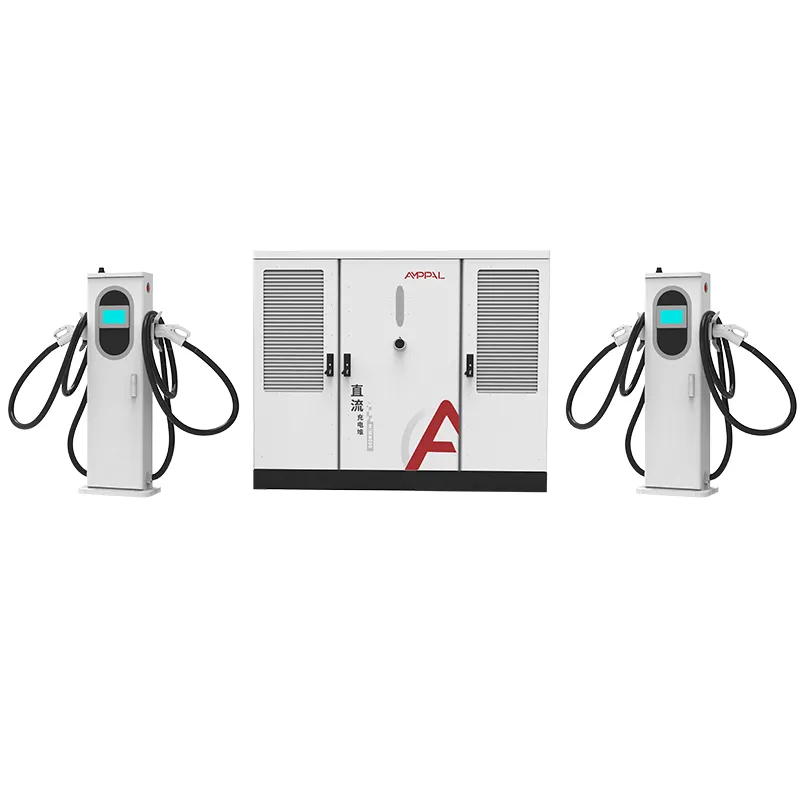
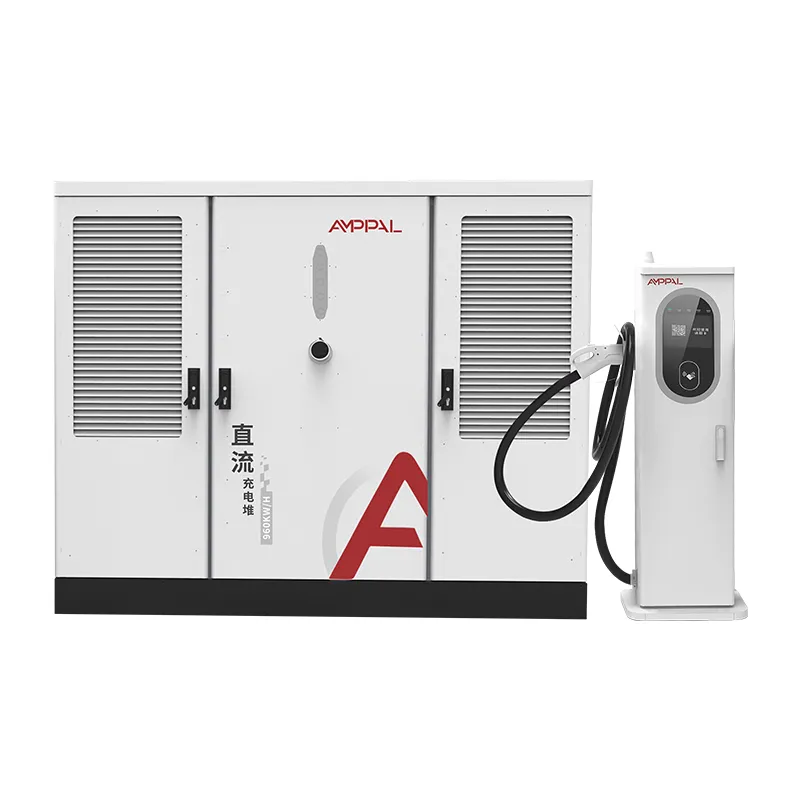
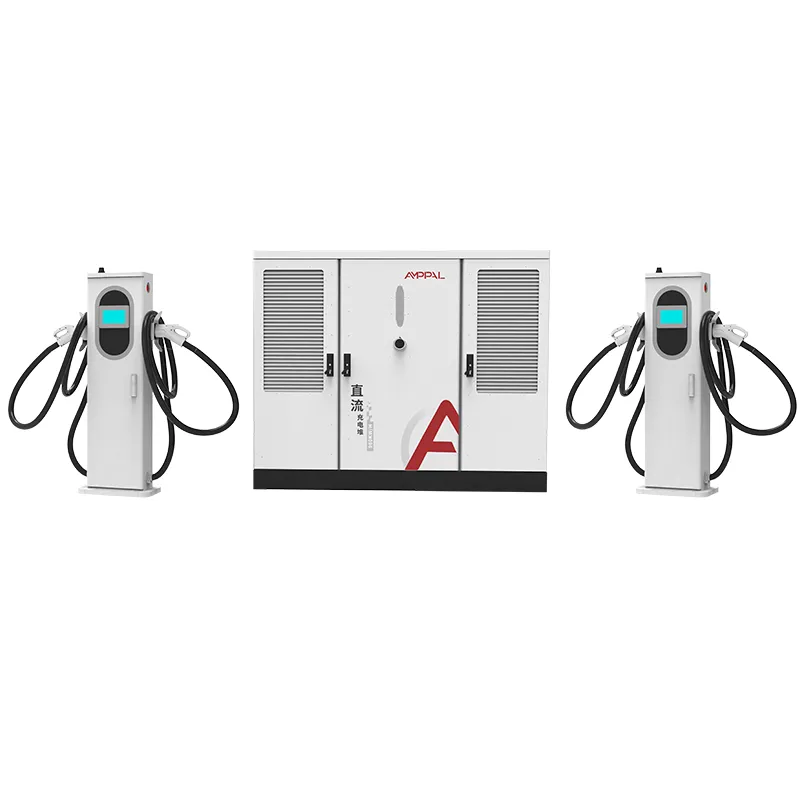
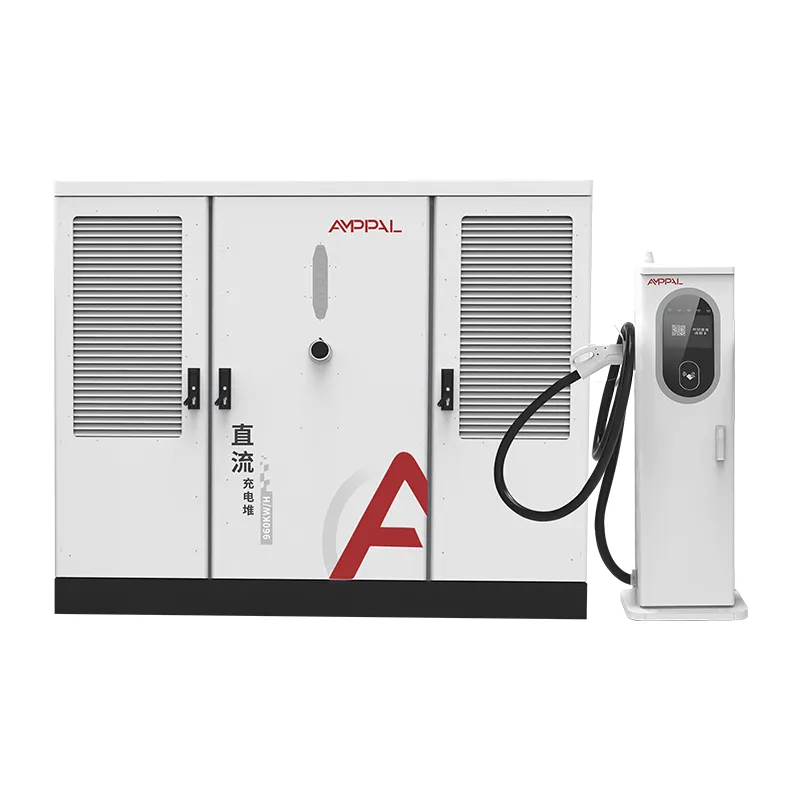
Most charging sites are laid out backwards: the heaviest, noisiest equipment ends up standing in the middle of the parking area, next to the cars. A split-type system turns that around. The 2200 x 1800 x 1000 mm power cabinet, the part that does AC-to-DC conversion and carries the 65 dB of fan noise, goes into a corner, a utility room, or behind a fence. What sits beside the vehicle is only the terminal, a 1517 x 650 x 300 mm dispenser with a cable and a connector.
That separation sounds simple, yet it changes almost everything about how a station is built and run. Heavy input cabling runs to the cabinet once; the DC feed to each terminal is short and easy to route under the bay. You stop arguing with landlords about floor space, because the most expensive square metres in a building are the ones under a car.

Six practical differences separate this layout from an integrated 600kW cabinet, and none of them is cosmetic.
Cabinet placement is free: put the power unit in a machine room, a fenced corner, or under a canopy, while the terminal takes only the small patch beside the bay.
Growth means adding terminals, not cabinets. A site that starts with 4 guns can move to 8 or 12 using the same cabinet, because power pool and outlet count are independent decisions.
A faulty dispenser stops one bay, not the station. Swap a terminal in about 30 minutes while the other guns keep charging.
Heat and noise leave the passenger zone. The fans live with the cabinet, so drivers wait in quiet.
Cable runs stay short. The DC link between cabinet and terminal is sized for the bay, not for the whole lot, which lowers installed cost per stall.
One cabinet, 2 to 16 guns. Terminal count is chosen at order time and changed later, so your power investment is not locked to today's traffic.
|
Parameter |
Specification |
|
Model |
AF-DC-600-Series |
|
Rated Output Power |
600kW |
|
Cabinet Dimensions (mm) |
2200 × 1800 × 1000 |
|
Standard Terminal (mm) |
1517 × 650 × 300 (250A) |
|
Liquid-Cooled Terminal (mm) |
1630 × 600 × 500 (600A) |
|
Input Voltage |
AC480V±10%, 50/60Hz |
|
Output Voltage Range |
300-1000VDC constant power |
|
Charging Outlets |
2-16 guns |
|
Standards |
UL 2202-2022, UL 2231-2 |
|
Power Factor |
≥0.99 |
|
Noise Level |
≤65dB |
|
Protection Grade |
IP54 |
|
Operating Temperature |
-25°C ~ +50°C |
|
Warranty |
2 Years Standard |
Fleet depots where buses or trucks park in rows and the power room can sit at the back wall.
Highway plazas where curb space next to the stall is worth more than the cabinet's footprint.
Gas-station conversions where the canopy structure exists but the kiosk room is the only indoor spot.
Urban sites with noise limits: the terminal is silent and the noisy hardware is enclosed away from homes.
Multi-storey car parks where the ground floor is reserved for vehicles and the cabinet lives in a service corridor.
Inside the cabinet, rectifier modules convert AC480V ±10% input into a 300-1000VDC constant-power bus. A controller on the cabinet side talks to each terminal over the DC link and decides in real time how much of the 600kW each active gun receives.
Terminals are deliberately simple: they hold the connector, the cable management, the payment or OCPP handshake, and, in the liquid-cooled variant, a 600A-rated cooling loop. Because the intelligence lives in the cabinet, upgrading a site from 250A air-cooled terminals to 600A liquid-cooled ones does not require a new power unit.
When a car pulls in, the system reads its voltage request, allocates power, and ramps up. When the session ends, that slice of the 600kW pool is released to the next vehicle within seconds. Stations on OCPP 1.6 or 2.0 can monitor and cap the whole site remotely.
The AF-DC-600-Series leaves our Yueqing factory with the certificates North American projects ask for, backed by tests every unit repeats before packing.
UL 2202-2022 for EV charging system equipment and UL 2231-2 for the personnel protection system; both appear on the unit label.
IP54 ingress protection verified by dust and water-jet tests on sampled enclosures.
96-hour salt spray on cabinet and terminal housings, for coastal sites.
Every cabinet runs a full-load burn-in before crating; test records are kept per serial number.
CE, CB, and TUV marks cover the markets that use them, so one production line serves 40+ countries.
Step 1. Steel coils are cut and punched on CNC turret presses, then laser-cut where profiles demand it.
Step 2. FANUC robot arms weld the cabinet frame and terminal enclosures on the same lines used for high-volume export units.
Step 3. TRUMPF bending machines fold the panels; housings are powder-coated and oven-cured.
Step 4. AC-side components, breakers, contactors, and distribution, are wired on a dedicated AC assembly line.
Step 5. Rectifier modules and the controller are fitted on the DC line, kept separate from AC work to avoid cross-contamination.
Step 6. Each cabinet is loaded to full 600kW on a resistive load bank and checked for efficiency, power factor, and ripple.
Step 7. Units run a 48-hour burn-in with cycling loads; failures are reworked and retested, not shipped.
Step 8. Final inspection checks torque, cable routing, labels, and serial records before crating.
Choose split if you plan to grow, if the parking area is valuable, or if you need to isolate noise and heat. Choose it if your utility room can take a 2200mm-tall cabinet and the site has a path for the DC feed.
Skip it if you run a single 2-gun site with no expansion plan: an integrated unit costs less and installs faster. Skip it if the site has no place at all for a large cabinet, and skip it if traffic is under about four sessions per day per gun, because the payback math rarely works at that utilization.
When in doubt, send us the site plan. We calculate DC cable length, voltage drop, and terminal count before you commit.
Factory-direct pricing from Zhejiang Anfu New Energy Technology Co., Ltd., a manufacturer founded in 2014 with 260+ employees.
Delivery in 15-20 working days after drawing approval; MOQ starts at one container.
UL 2202-2022 and UL 2231-2 listed, not self-declared.
OEM/ODM: your logo, your HMI colour, your cable length, your OCPP server settings.
The 200+ charging stations we operate ourselves give us operating data we actually use in design.
The cabinet ships in a steel-framed wooden crate of roughly 2300 x 1900 x 1150 mm, with padding and lifting points; terminals travel on pallets with cables coiled and protected. A 40ft high-cube container holds one cabinet and up to eight terminals, depending on the mix.
We ship FOB Ningbo or CIF to your port. Commercial invoice, packing list, bill of lading, and UL test reports are issued within 3 working days of loading.
For US-bound orders we prepare the extra documentation your broker asks for, including the certificate of origin.
Two-year standard warranty covers power modules, terminals, and the controller; modules are replaced, not repaired in the field.
Spare terminals and power modules are stocked for fast dispatch; an exchange unit can be sent before you return the faulty one.
OCPP enables remote diagnosis: our engineers read logs and adjust parameters without a site visit.
24-hour response on warranty claims via email or WhatsApp; replacement dispatch within 5 working days.
Maintenance advice: clean terminal filters quarterly, torque-check terminations annually, and apply firmware updates when released.
Wrong: mounting the terminal where the DC cable has to cross the vehicle lane. Right: route the feed under the bay or along a protected wall so it cannot be driven over.
Wrong: blocking the cabinet's rear ventilation panel. Right: keep 500mm clearance behind and above the cabinet for airflow.
Wrong: using the terminal as a pulling anchor for the cable. Right: guide the cable by hand and let the strain relief take the load.
Wrong: leaving the station on default OCPP credentials. Right: change passwords and enable remote monitoring before the first customer session.
Wrong: assuming every gun can draw 600kW at once. Right: plan sessions knowing power is shared across 2-16 guns.
A fleet operator in Jeddah, Saudi Arabia runs three 600kW split cabinets across a 26-bay depot. His comment after eight months: the terminals held up fine through the summer, but the cabinet room needed a second air conditioner. He undersized the room, not the charger.
A site developer in Kazakhstan paired the cabinet with eight air-cooled terminals at a highway plaza. The deciding factor, he told us, was being able to add four more terminals later without touching the power room, and the 65dB fans never reached the drivers' waiting area.
A distributor in Mexico City raised the opposite issue: the terminal's cable is stiff when new. It loosens after a few weeks of use, and we now pre-flex cables at the factory before shipping. His fleet of ten units has not seen a single module failure since.
A: Yes. Terminal count is set at order time but changed later; the cabinet already supports 2-16 guns.
A: The standard air-cooled terminal is nearly silent; the liquid-cooled one hums about as loud as a desktop PC.
A: AC480V ±10% at 50/60Hz, the North American commercial standard.
A: Within practical cable distance, yes; we calculate voltage drop and cable size from your site plan.
A: Most sites feed the cabinet directly from a 480V service; if your utility delivers medium voltage, a transformer steps down first.
A: The cabinet derates by that module's share and keeps charging; you swap the module while the rest of the station runs.
A: CCS1, CCS2, GB/T, CHAdeMO, and NACS, in any mix across the terminals.
A: For a 2-gun corner site, yes, an integrated unit is cheaper; for any site with a growth plan, no.
Address
No. 237, Weisan Road, Yueqing, Zhejiang, China
Tel
Talk Directly to Our EV Charger Factory
Get factory-direct pricing, custom solutions, and expert support.
- Fast Response – Reply within 24 hours.
- OEM/ODM – Flexible customization and sample orders.
- Certified Quality – CE, TÜV, CB, and CCC options.
- Custom Quotes – Tailored to your specifications.
- Technical Support – Expert help with OCPP, DLB, and system integration.