" "
Whatsapp
Renting and driving electric should not be a contradiction, yet thousands of tenants hear the same two words from landlords: no installations.
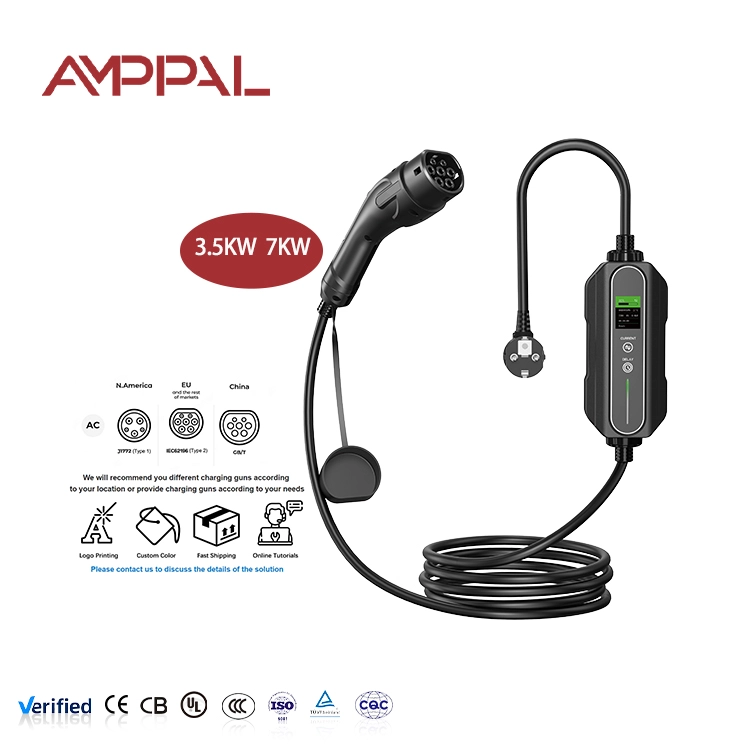
The 7kW Portable AC EV Charger with Acrylic Housing for Home and Outdoor Charging (Acrylic Panel Type, AF-AC-7kW) sidesteps that conversation entirely. Nothing is mounted, nothing is cored through a wall, and nothing has to be restored when you leave.
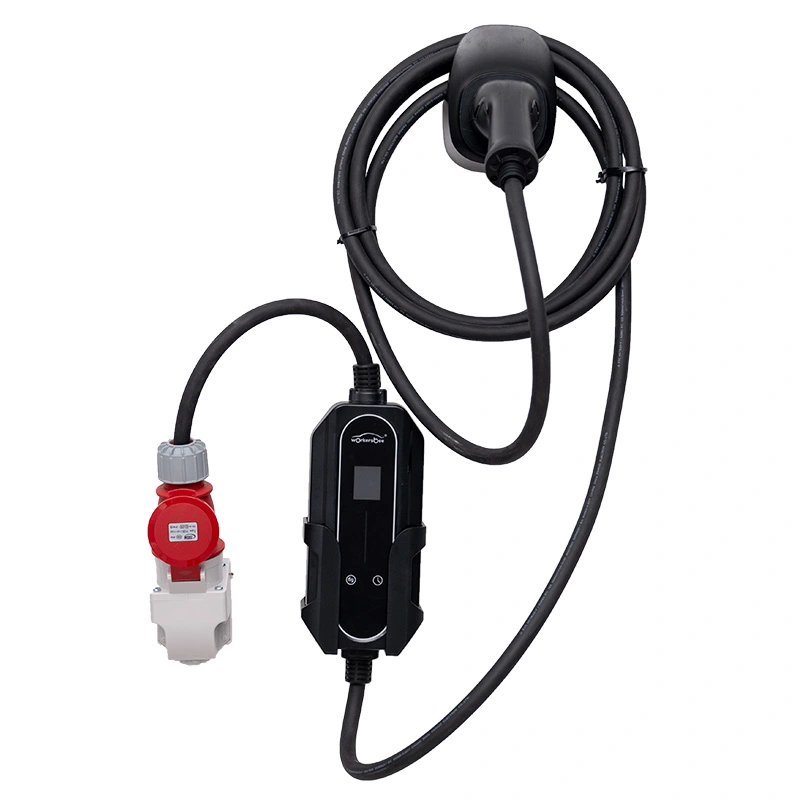
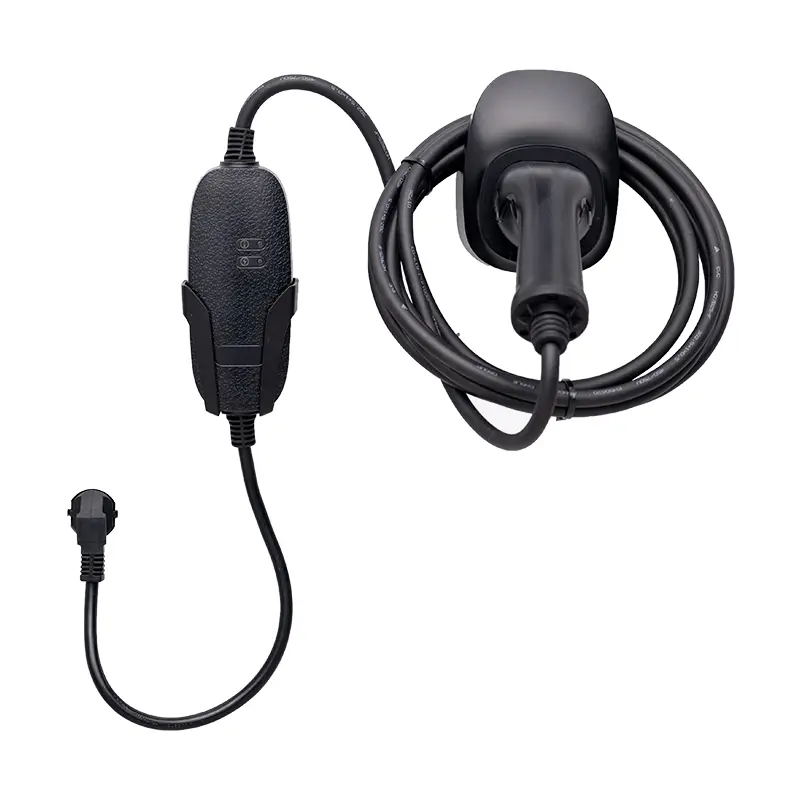
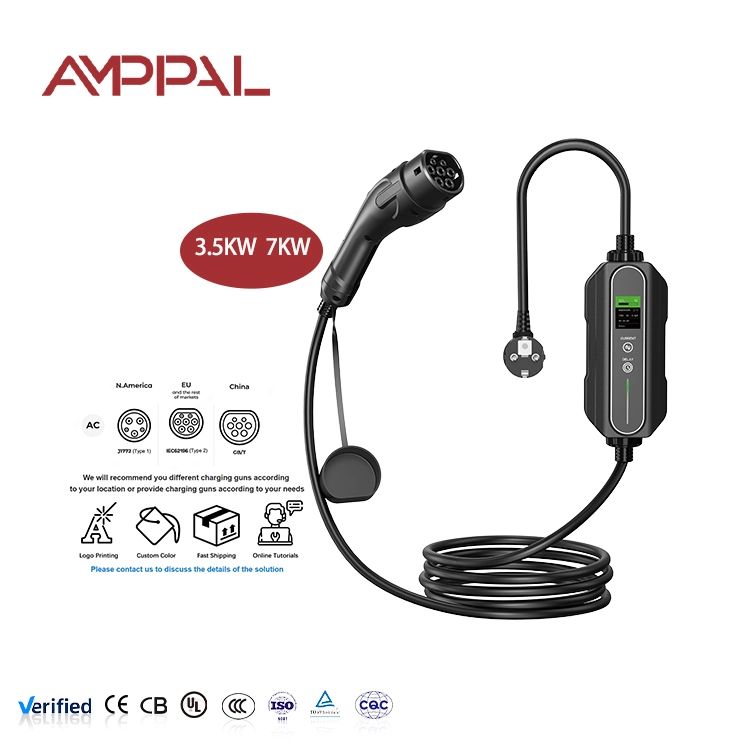
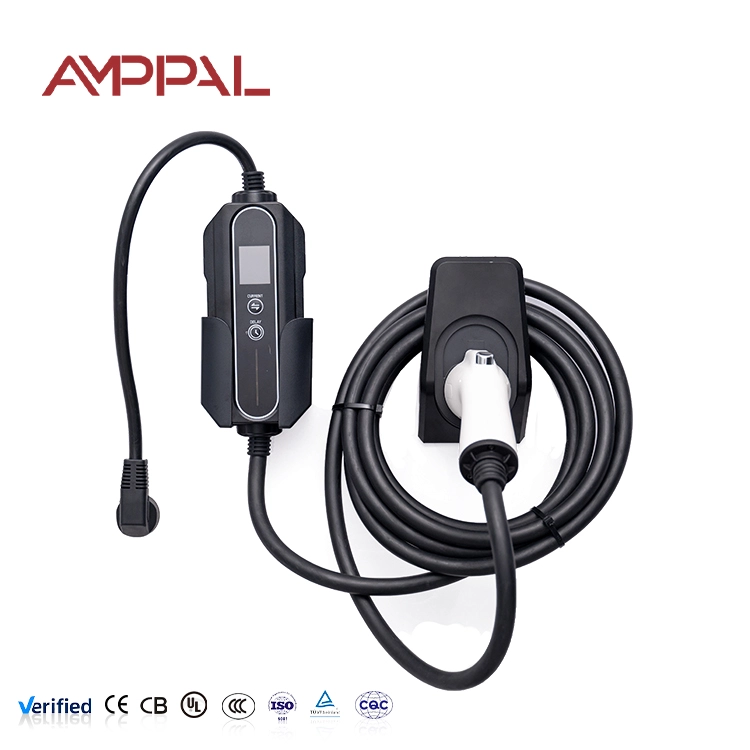
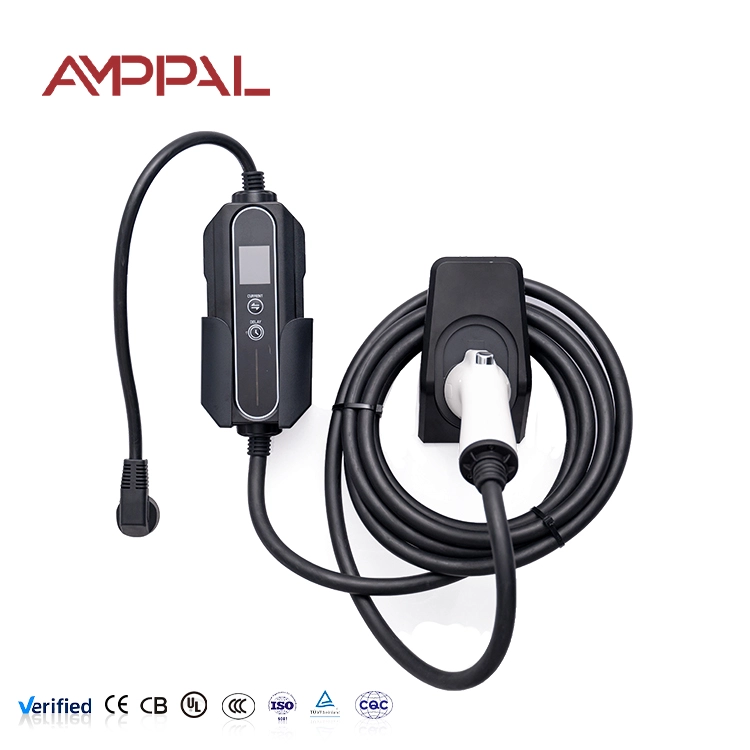
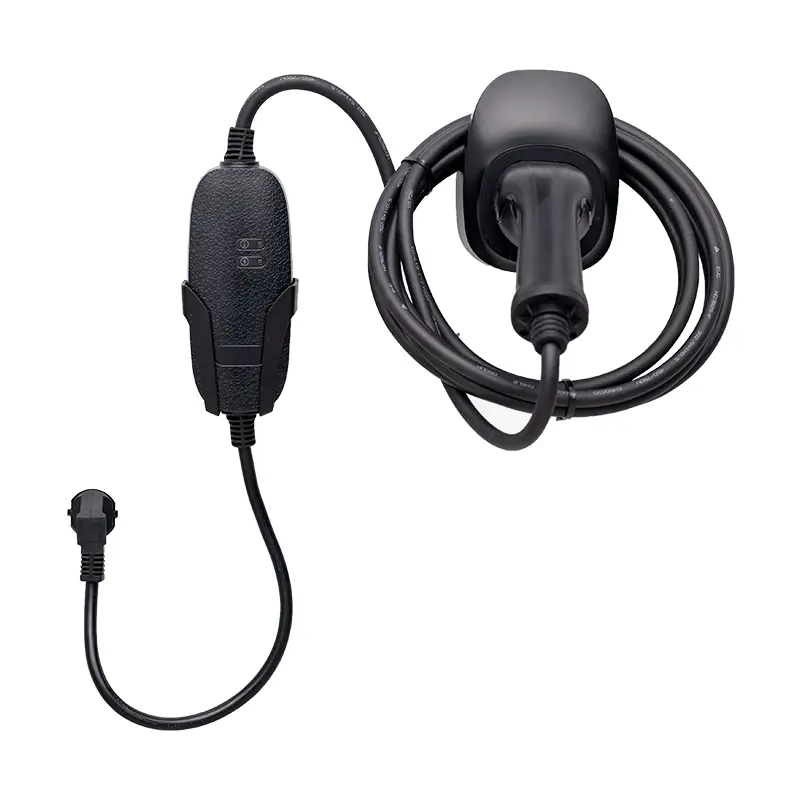
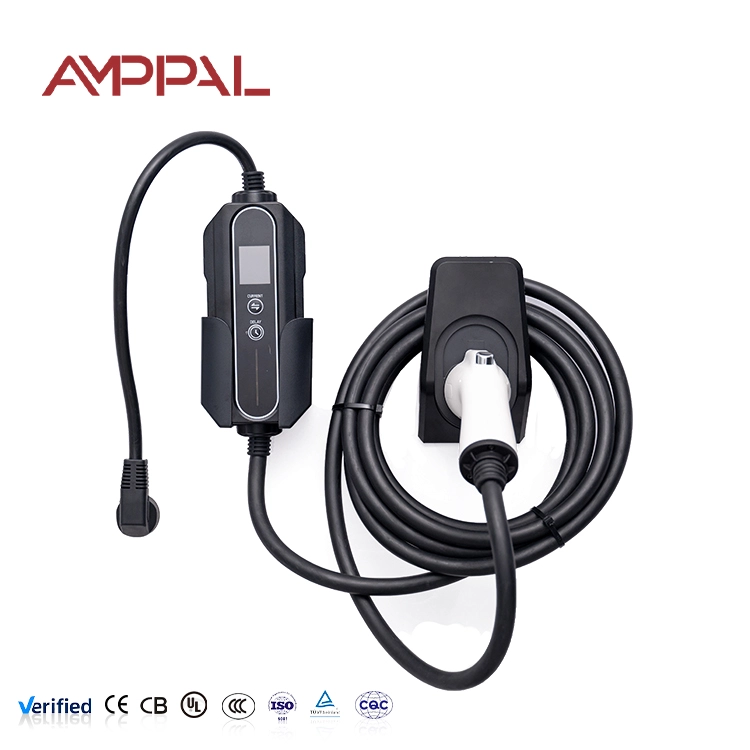
It is a compact box with a PC/ABS body, a polished acrylic front panel, and an LCD that reports current, voltage and fault codes. You plug its 32A input into a suitable socket, connect the Type 2 gun to the car, and it charges at up to 7kW.
When the lease ends, you spend thirty seconds unplugging and carrying it to the moving van. The charger that cost you nothing in installation fees follows you to the next address.

No drilling, no mounting brackets, no landlord permission form — the unit stands on the floor or hangs from its own strap.
Full 7kW single-phase speed, which is roughly twice the throughput of a 16A unit and comfortably fills a 50 kWh battery overnight.
The whole setup packs away in the trunk of the car, so a house move does not mean re-buying charging hardware.
Acrylic panel resists scratches and fingerprints far better than painted metal, which matters when the unit travels between homes.
IP55 means it can sit outside on a shared balcony or in a communal garage without babysitting.
2-year factory warranty follows the serial number, not the address — your coverage survives the move too.
|
Parameter |
Specification |
|
Product Name |
Portable AC Charging Box (Acrylic Panel Type) |
|
Model |
AF-AC-7kW |
|
Rated Output Power |
7kW |
|
AC Power Supply |
220VAC ±20% |
|
Rated Input/Output Current |
32A |
|
Human-Computer Interaction |
LCD display, APP Mini Program Control (optional) |
|
Operating Temperature |
-30℃ ~ +50℃ |
|
Networking |
APP Mini Program Control (optional) |
|
Operation Mode |
Plug and charge / APP control |
|
Executive Standard |
CQC, CE, TUV |
|
Charging Cable Length |
5 meters (standard) |
|
Protection Grade |
IP55 |
|
Protection Functions |
Overvoltage, undervoltage, overload, short circuit, grounding, over temperature, emergency stop, leakage protection |
Apartment dwellers with a private parking spot but no wallbox: a 32A socket on a dedicated circuit, and the box lives in the boot between charges.
Shared houses where the driveway is rented month by month — the charger is personal property, not a fixture you must negotiate over.
Expats on two-year assignments who refuse to fund someone else's property with a permanent installation.
Landlords who install nothing themselves but allow tenants a plug-in device; the box leaves no trace at move-out, which settles deposit disputes before they start.
Small businesses leasing yard space — a fleet of two vans can share one box parked in a lockable cabinet.
Single-phase 7kW at 230V means the box pulls about 32A. That is why the input side matters: a standard 16A household socket is physically and electrically wrong for this unit, and using an adapter is the fastest way to trip a breaker or worse.
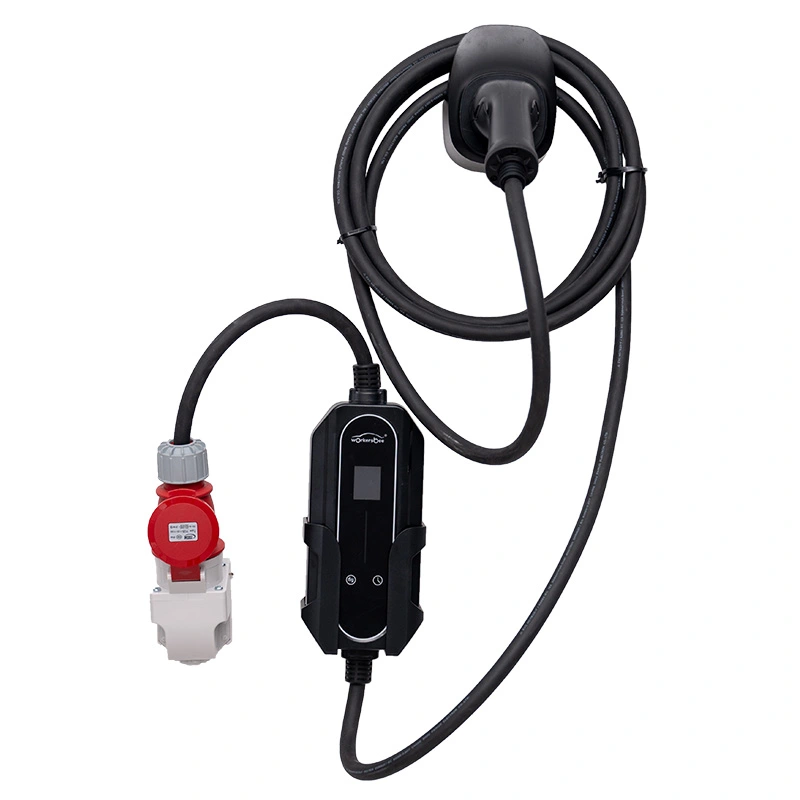
So the box ships with an input cable terminated to match your market — commonly a CEE blue 32A industrial plug or a UK 32A commando, or a bare tail for a qualified electrician to hardwire. The car side stays a standard Type 2 gun.
Before the contactor closes, the unit talks to the vehicle through the control pilot signal and confirms both sides agree on 32A. Residual current, ground continuity and temperature are monitored for the whole session.
A 50 kWh battery takes roughly 7 hours at this rate — plug in when you get home, and the morning commute starts full. The LCD and optional APP Mini Program let you watch progress without walking outside.

The test sequence at AMPPAL starts with dielectric withstand and insulation resistance on every assembled board, before the enclosure is even closed.
CQC, CE and TUV certificates sit on file per batch; buyers can request the report numbers before shipment.
Each finished unit then runs a 30-minute full-load burn-in, followed by a ground-continuity re-check and an LCD function walk.
Dust and spray tests for the IP55 rating are performed on complete units, including the acrylic panel-to-case joint.
Random units from every batch are pulled for a 10,000-cycle contactor endurance run and a 96-hour salt spray exposure.
Climate chamber testing proves operation across -30℃ to +50℃, which is wider than the -25℃ to +40℃ many portable chargers claim.
AMPPAL builds these boxes in Yueqing, Zhejiang — the region locals call the capital of electrical appliances in China. The company, founded in 2014, runs separate assembly lines for AC and DC charging products.
The acrylic panel is cut and polished on CNC equipment, the PC/ABS housing is injection-molded on robotic cells developed with FANUC and TRUMPF, and the control boards pass wave soldering before conformal coating.
Assembly follows a fixed routing: power stage, RCD and contactor installation, board bring-up, panel fit, then the two-stage test bench. Operators sign off each step, and the serial number written at the end ties the unit to its full test history.
Annual plant capacity exceeds one million charging units, and cumulative deliveries since founding have passed one million. For a portable product, the last QC check is tactile: handle, latch, cable strain relief and panel finish are inspected by hand.
Before buying, check what your parking spot actually offers. A 32A single-phase supply is common in newer European builds and many UK properties with an electric cooker circuit, but it is not universal.
If your rental has only 16A sockets and the landlord will not fund a circuit upgrade, the honest recommendation is the 3.5kW version of this family instead of forcing 7kW into the wrong socket.
If you own your home and plan to stay a decade, a fixed wallbox with load management usually costs less per kW and looks tidier — the portable format makes sense when mobility is the point.
If your property has three-phase supply, the 11kW portable model from the same acrylic family will charge faster; 7kW is the sweet spot for single-phase homes.
A product that resells cleanly to a demographic nobody serves well: tenants, movers, expats, seasonal workers.
15-20 working days lead time on standard configurations, with OEM logo printing on the acrylic panel done in the same cycle.
Low MOQ — a first trial order of a few dozen units is acceptable, so you test the market before committing to a container.
Region-specific input plugs and Type 2/GB/T guns configured at the factory, plus certificates (CE/TUV/CQC) and test reports for each market.
AMPPAL exports to 40+ countries and runs its own 200+ station charging network, so your supplier actually uses the technology it sells.
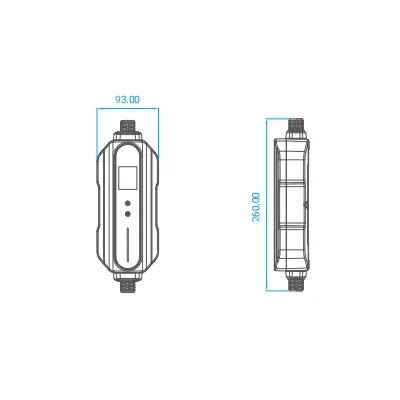
Retail packaging is designed for the moving box, not the warehouse: a compact carton with the unit, cable, strap and manual, weighing about 7-9 kg total so it travels as checked luggage or a courier parcel without drama.
Palletized export orders run 80-120 units per 20-foot container depending on carton dimensions, each pallet stretch-wrapped and labeled per your spec.
Air freight is practical for this weight class — many of our renter-market customers start with air-shipped samples — while full containers go by sea. Commercial invoice, packing list and certificates accompany every shipment.
2-year warranty registered by serial number; if you move to another country within that period, coverage still applies through our export network.
Common spares — control boards, LCD panels, input cables — are stocked and dispatched within 5 working days.
Fault diagnosis by photo or LCD code over email or WhatsApp, with replacement parts or a repair return arranged from there.
Firmware updates, including APP Mini Program improvements, distributed through the factory portal.
For the unit itself: keep the acrylic clean with a damp cloth only, and re-torque nothing — there are no user-serviceable parts inside.
Wrong: using a 16A-to-32A plug adapter because the socket is 'close enough'. Right: install or locate a genuine 32A circuit; the adapter is the failure point.
Wrong: coiling the input cable tightly on the strap while the unit runs at full load. Right: uncoil fully before charging so heat can dissipate.
Wrong: storing the box outside in winter and expecting the LCD to be readable instantly. Right: let it warm up a few minutes before use.
Wrong: leaving the gun on the ground where cars drive over it. Right: hang the gun in the provided holder and keep the connector cap on.
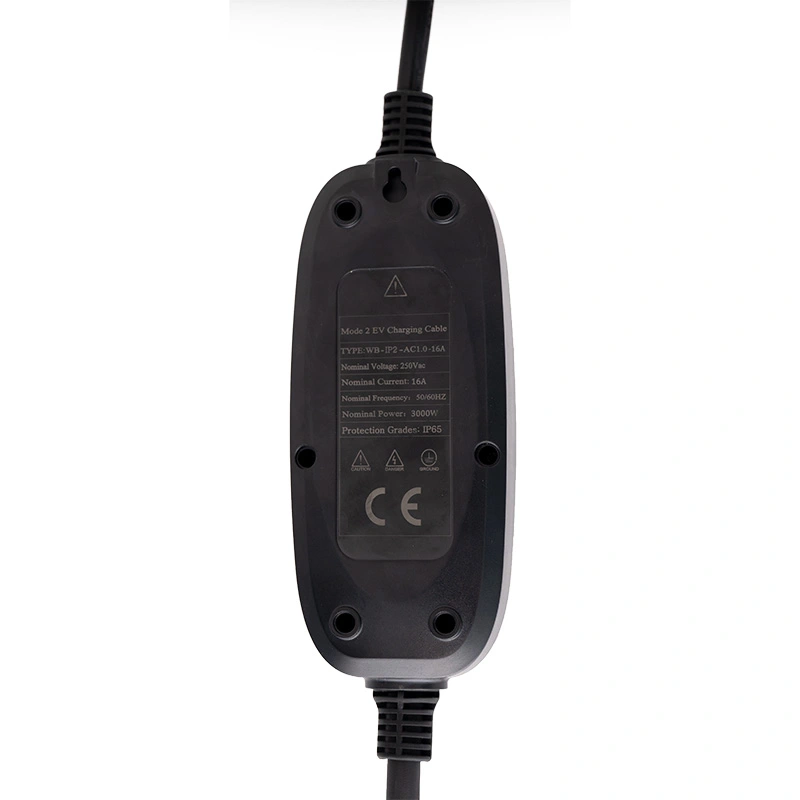
Wrong: assuming any electrician understands EVSE. Right: show the installer the unit's rating plate and ask for a dedicated 32A breaker.
A tenant in Munich, Germany, who changes flats every two years told us the deposit math settled it: 'My landlord agreed to a plug-in box in one email. No drilling, no painting, no restoration clause. At my old flat the wallbox debate ran for three months and ended in a no.'
An importer in Dubai sells the 7kW model to expat communities on two-year contracts: 'They want the speed but they know they are leaving. The acrylic panel looks premium on a balcony, and the light weight means it goes in the luggage when the contract ends. One complaint: the 5-meter cable is short if the socket sits far from the parking spot.'
A UK self-employed courier charges his van from a rented lock-up: 'The unit lives in a cabinet with a 32A commando socket I paid the landlord to fit. It is the only charger I found that I could take with me when the lock-up lease changed. Nearly a year in, zero faults.'

A: Yes — unplug, coil, carry. No hardware stays behind, and the warranty follows the serial number, not the property.
A: A dedicated 32A single-phase circuit, typically via a CEE blue 32A industrial socket or a hardwired connection.
A: Most do, because nothing is drilled or mounted; offer to show the unit and the IP55 rating before asking permission.
A: No. This unit is rated 32A; for 16A-only homes the 3.5kW model is the correct choice.
A: About 7 hours at full 7kW output — an overnight charge for most daily commutes.
A: Only if no 32A socket exists; the charger itself is plug-and-charge with no programming.
A: Order the input plug for your destination market; the Type 2 gun covers most of Europe and GB/T is available.
A: Consider the 11kW portable model instead — it uses a 16A three-phase input and charges faster.
Address
No. 237, Weisan Road, Yueqing, Zhejiang, China
Tel
Talk Directly to Our EV Charger Factory
Get factory-direct pricing, custom solutions, and expert support.
- Fast Response – Reply within 24 hours.
- OEM/ODM – Flexible customization and sample orders.
- Certified Quality – CE, TÜV, CB, and CCC options.
- Custom Quotes – Tailored to your specifications.
- Technical Support – Expert help with OCPP, DLB, and system integration.