Whatsapp
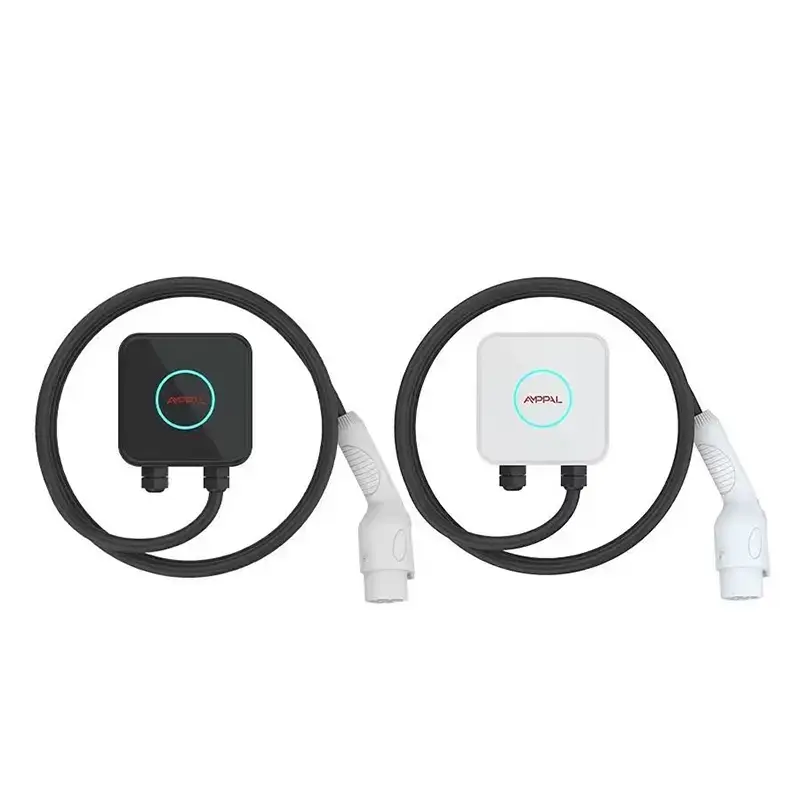
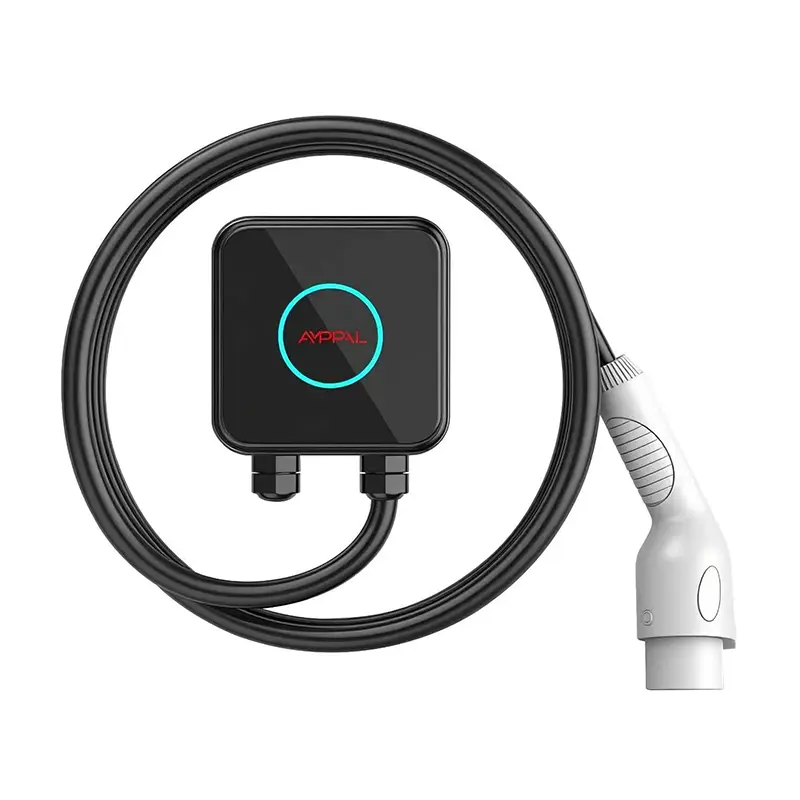
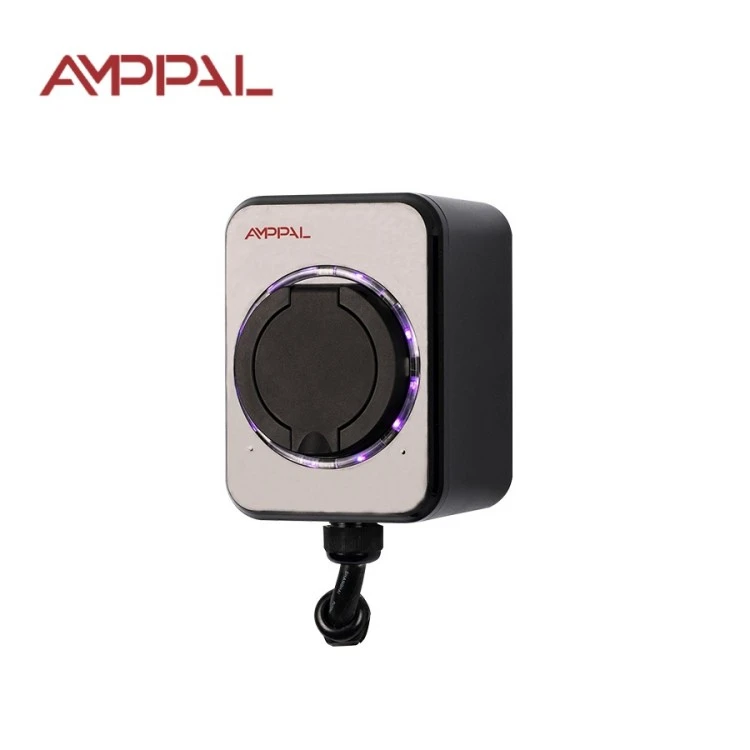
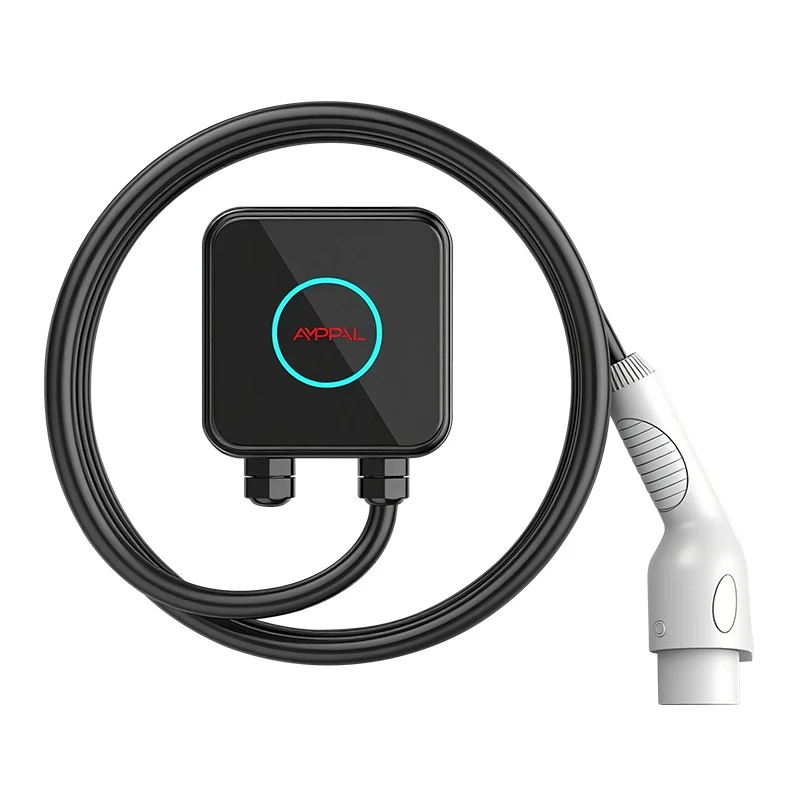
A 150 by 150 by 65 mm box is roughly the size of a thick hardcover novel or a home router. That is the entire body of the AMPPAL 3.5kW Compact - every component, safety relay and control board inside it.
Most wall boxes on the market are three to five times this volume. In a cramped basement bay, beside a water heater, or on a wall half a meter wide, that difference decides whether you can install a charger at all.
We built this unit for the spaces everyone else ignores: narrow condo parking bays, old apartment buildings without an electrical room, stairwell landings, even a shared courtyard wall. If your wall has 150 mm of free width, it has room for this charger.
Small size is not a styling trick. It changes the physical math of an EV charger install in four ways.
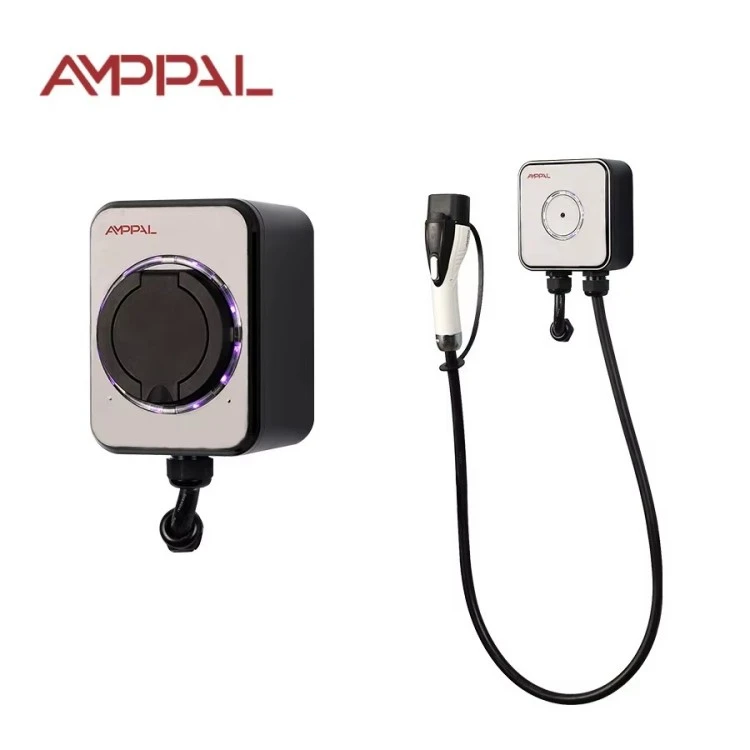
First, mounting height. A 65 mm deep unit protrudes less from the wall, so it can sit in a passageway without blocking foot traffic - next to a basement staircase, where a 120 mm deep box would stick out into the walkway.
Second, it fits inside existing enclosures. Contractors in Italy and Poland have mounted the Compact inside a pre-existing metal distribution cabinet, protecting it from weather and vandalism without new masonry.
Third, cable routing. The cable enters and exits close to the wall, so a surface conduit run looks clean and needs only two wall plugs.
Fourth, weight. At roughly 1 kg the unit fixes with four screws into plasterboard or brick; no need to hunt for a stud or drill into concrete.
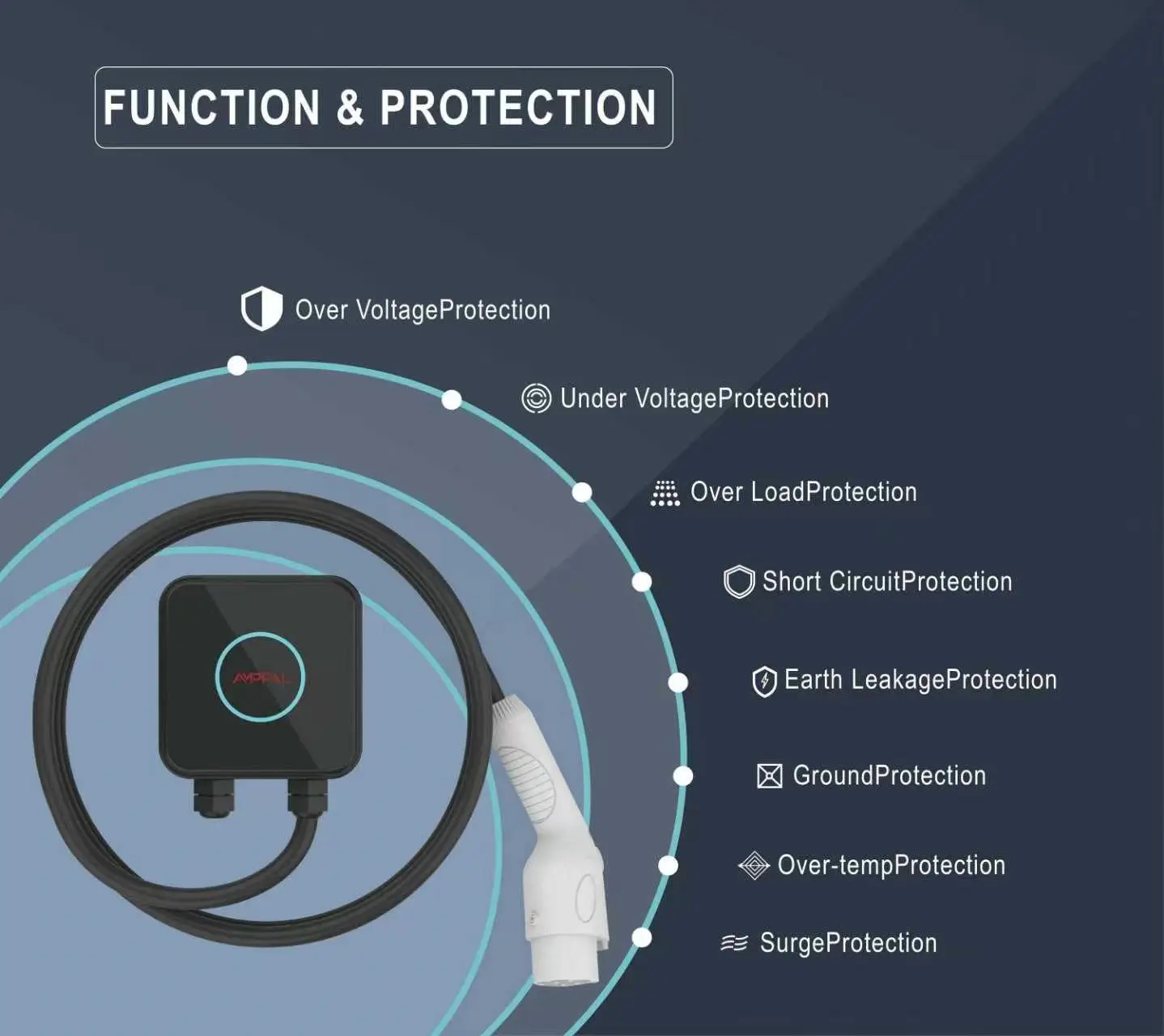
The 3.5kW Compact Wallbox AC EV Charger for Home and Office Charging is a Mode 3 charging station per IEC 61851-1:2017. It does not convert AC to DC - that job stays in the car. What it does is manage the safe handshake: pilot signal, relay control, earth continuity check, and automatic stop when charging completes or a fault appears.
With no transformer and no DC power stage, the enclosure shrinks dramatically. Thermal load at 3.5kW is modest: the housing is a thermoplastic shell rated UL94 V-0 (flame retardant), and heat dissipates through the case surface without fans.
IP54 means the unit resists dust and water splashes from any direction - not submersion, but rain, condensation and hose-down cleaning pass easily. The control board is conformal-coated as standard, unusual at this price, so it survives humid coastal garages.
|
Parameter |
Specification |
|
Model |
AF-AC-3.5-B-A-O-1-SA |
|
Rated Power |
3.5kW |
|
Input Voltage |
220VAC ±20% |
|
Rated Current |
16A |
|
Frequency |
50/60Hz |
|
Dimensions |
150 × 150 × 65 mm |
|
Housing Material |
Thermoplastic, UL94 V-0 |
|
Protection Grade |
IP54 |
|
Operating Temp |
-20°C to +50°C |
|
Certification |
CE, IEC 61851-1:2017 |
|
Warranty |
2 Years Standard |
The realistic use cases are specific, and we list them plainly.
1) Narrow private bays in apartment basements, especially in older European and Southeast Asian buildings where a 2.2 m aisle leaves no wall.
2) Second homes and holiday cottages on a 16A single-phase supply.
3) Rented parking spots where the landlord wants a minimal footprint and a removable unit.
4) Garage walls shared with boilers, water softeners or tool cabinets.
5) Fleet depots running a cheap pilot installation before committing to full-size equipment.
Where it does not belong: a 22kW three-phase car, a site with only 3-phase power available (this unit is single-phase 220VAC only), or a driveway where faster daytime charging is a genuine need.
Three engineering choices make small size work outdoors-adjacent.
Heat: at 3.5kW total dissipated loss stays under 40W at full load. The case doubles as a heatsink - ribbed internal surfaces conduct heat to the outside face, and load tests show surface temperature below 55C at 35C ambient.
Dust and water: the IP54 rating comes from a gasketed front cover and cable glands that clamp the cable sheath, not epoxy potting. That keeps the unit serviceable - a technician can open it, swap a relay, and close it without factory tools.
CE marked and tested to IEC 61851-1:2017, the governing standard for AC Mode 3 charging equipment.
Housing material carries UL94 V-0 flammability rating - the case will not sustain a flame, a real consideration in shared basements.
Every unit passes 100% electrical safety testing: earth continuity, insulation resistance at 500V DC, and dielectric withstand at 1.5kV.
Sample units undergo a 96-hour salt spray test and a 500,000-cycle relay endurance test in our laboratory.
Incoming inspection checks contactors, MCU and current sensors against batch certificates; reject rate is logged by lot.
The plant holds CE, TUV, CB and UL certifications for the AMPPAL family, audited by external notified bodies.
Production at our Yueqing plant (Zhejiang, the 'capital of electrical appliances') runs on a fixed sequence:
1) SMT PCB assembly with automated solder-paste inspection.
2) Conformal coating applied and cured.
3) Relay, sensor and MCU board fitted into the rear housing half.
4) Cable gland and 5m cable installed, torque-controlled.
5) Automated functional test at 230V with a simulated vehicle load.
6) 100% high-pot and earth-continuity safety test.
7) Visual inspection and serial number laser marking.
8) Packed with mounting kit and quick-start card, palletized after a 24-hour burn-in sample check.
Robot-assisted lines supplied with FANUC (Shanghai) and TRUMPF (Germany) partners handle sheet metal for our larger stations; the Compact runs on a dedicated AC line. Annual plant capacity exceeds one million units.
Let us be direct: 3.5kW is a slow charge by modern standards. It suits cars that park overnight - commuters, plug-in hybrids and city EVs with 20-40 kWh usable batteries.
Do not buy it if your daily drive exceeds about 150 km with no alternative charging. In that case a 7kW Compact or an 11kW/22kW station is the honest recommendation.
Also skip it if your home has 3-phase wiring and your car accepts 11kW - the wall box becomes the bottleneck.
What makes this unit the right call: tight physical space, a 16A single-phase circuit you will not upgrade, or a secondary property needing a cheap, unobtrusive charger.
Factory direct from Zhejiang Anfu New Energy Technology Co., Ltd. (founded 2014, national-level specialized enterprise) - you deal with the manufacturer, not a trading company.
Standard lead time 15-20 working days; samples ship in 3-5 working days by air.
OEM and ODM welcome: logo, cable length, plug type (Type 1/Type 2/GB/T) and color from 100 units.
Documentation pack: CE declaration, IEC 61851-1 test report, manual, factory inspection certificate for customs.
Export track record to 40+ countries including UAE, Saudi Arabia, Russia, Germany, France, Malaysia, Thailand, Vietnam, Mexico and Brazil; NEOM and Sime Darby are reference partners.
MOQ from 1 unit for testing; volume tiers from 50 and 500 units.
Each unit ships in a 210 x 210 x 120 mm carton weighing about 1.6 kg with charger, 5m cable, mounting kit and manual. The box is courier-friendly, so air freight stays cheap: 40 units stack into a single 0.1 m3 parcel bay.
For sea freight, 1,200 units load into a 20-foot container on 24 shrink-wrapped pallets, 50 cartons each.
Trade terms: FOB Ningbo or Shanghai, EXW or CIF on request. Paperwork covers commercial invoice, packing list, CE declaration and certificate of origin; we handle L/C and D/P routinely.
2-year standard warranty on manufacturing defects; labor and return-shipping agreed per case.
Spare parts (relay, control board, cable) dispatched within 7 working days; priority air for Europe and the Middle East.
Free remote diagnosis: send a photo or video of the fault LED and our engineers reply within one business day.
User maintenance is light: check cable sheath for cuts, tighten wall screws, blow dust out twice a year.
Extended warranty and on-site service contracts exist for dealers in Germany, France and the UAE.
Wrong: mounting flush against a wooden wall with the rear vents covered. Right: leave a 30 mm air gap and keep vents clear - IP54 protects against water, not blocked airflow.
Wrong: plugging the charger into a domestic socket via an adapter. Right: hard-wire it to a dedicated 16A breaker (type A or B RCD, 30 mA) so the earth continuity check works as designed.
Wrong: coiling the 5m cable tightly on the hook while charging. Right: uncoil fully before a session; a coiled cable under load heats up and can trip the thermal cut-out.
Wrong: mounting fully exposed to horizontal rain. Right: install under cover or in a parking shelter; IP54 tolerates spray, not hours of driving rain.
Wrong: dropping the connector on the floor where cars drive over it. Right: store the gun in its holder so the pins stay clean and dry.
A property manager in Warsaw installed six units in a 1970s apartment basement last autumn. The 150 mm width let him fit chargers between the fuse boards and the staircase - no full-size station could occupy that spot. His note: the fixed cable ran short for the last bay, so the second batch got 7m cables.
A car dealer in Penang uses the Compact as a showroom demo charger. 'Customers see it next to a paperback and immediately get the size,' he says. Minor complaint: the LED ring is bright in a dark showroom, and he tapes it over at night.
A camper owner in Bavaria charges his plug-in hybrid at a garden shed on a 16A circuit. After one season of rain and -8C frost, zero faults; he admits the 2-year warranty is what gave him the nerve to try - something we advise against without an electrician, though it worked.
A: No. It must be hard-wired to a dedicated 16A circuit with an RCD.
A: Roughly 14-15 km at 230V; a 30 kWh battery fills in about 8.5 hours.
A: Yes - UL94 V-0, the highest flammability class for plastics.
A: Under a roof or shelter, yes; IP54 handles splash and dust, not continuous horizontal rain.
A: Any Mode 3 AC-compatible EV works with the plug variant you order: Type 1, Type 2 or GB/T.
A: The 150x150x65 mm body is thermally optimized for 16A; the 7kW Compact covers 32A in the same footprint.
A: Charging stops and a fault LED shows; it restarts only after the fault clears.
A: Yes - four screws and a standard 16A connection; an electrician does the move in about 20 minutes.
Address
No. 237, Weisan Road, Yueqing, Zhejiang, China
Tel
Talk Directly to Our EV Charger Factory
Get factory-direct pricing, custom solutions, and expert support.
- Fast Response – Reply within 24 hours.
- OEM/ODM – Flexible customization and sample orders.
- Certified Quality – CE, TÜV, CB, and CCC options.
- Custom Quotes – Tailored to your specifications.
- Technical Support – Expert help with OCPP, DLB, and system integration.